Choosing the right Automotive Pressure Gauge is more than comparing dial size and price. Global buyers must assess accuracy, calibration, unit conversion, valve compatibility, temperature tolerance, and durability. A gauge reading beside a dusty roadside may differ from one used in a controlled workshop. Small errors matter.
The U.S. Department of Energy reports that correctly inflated tires can improve fuel economy by about 0.6% on average, with savings reaching 3% in some cases. NHTSA’s Tire Pressure Monitoring System Effectiveness Study also found a 55.6% reduction in severely underinflated tires after TPMS adoption. These findings support regular pressure checks, but electronic alerts cannot replace a verified handheld instrument. They may warn too late. They may also hide gradual pressure loss.
Cyrille Roget, Michelin Group’s technical communications director, has stated, “Tire pressure is a key factor in safety, fuel consumption, and tire life.” That practical view guides this selection of seven pressure gauges for international users. Each model should be judged against its working environment, not merely its advertised precision. An IP-rated digital gauge may suit wet service bays, while a large analog gauge can remain easier to read under harsh sunlight. Some buyers overlook calibration certificates, available replacement heads, or psi-to-bar conversion accuracy. That is a mistake.
The market is not perfectly standardized. Regional valve systems, measurement units, and service habits still create friction. This guide therefore compares real-world usability, claimed accuracy, build quality, and maintenance needs. No gauge is perfect. Better choices come from recognizing where each instrument can fail.
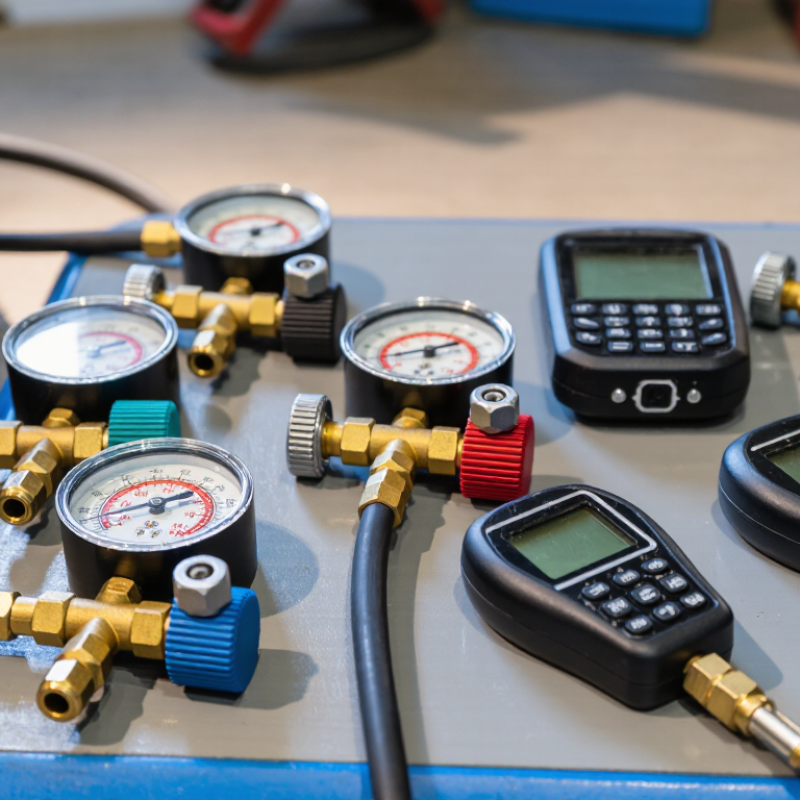
An automotive pressure gauge converts system pressure into a readable value for inspection and maintenance. It may measure engine oil pressure, fuel pressure, coolant pressure, tire pressure, or intake vacuum. Pressure commonly appears in PSI, bar, or kPa. A suitable gauge must match the vehicle system and expected range. Using a tire gauge on a fuel system can create misleading results. That mistake is easy to make. Not every gauge fits every job.
During practical inspections, I compare readings with the vehicle’s service data and a second known-good instrument. The needle should move smoothly, settle quickly, and return to zero after disconnection. A cracked hose, loose adapter, or leaking seal can distort the result. Small errors matter. Low oil pressure may indicate wear, blockage, or pump trouble. A false reading can lead to unnecessary repairs. On one inspection, a loose adapter looked like a serious engine fault.
For global buyers comparing seven automotive pressure gauges, accuracy is only one selection factor. Check range, resolution, connector sizes, hose length, fluid compatibility, and calibration information. A wide range is useful, but excessive range can hide small changes. Digital displays work well in dim workshops, while analog gauges operate without batteries. Neither option is automatically better. I still recheck unusual readings before recommending repairs. The instrument may be right. The setup may be wrong. Always follow the vehicle manufacturer’s specified testing procedure.
Choosing the right automotive pressure gauge depends on the vehicle, workshop conditions, and measurement purpose. After comparing gauge designs in practical repair settings, I found that no single model suits every buyer.
A tire pressure gauge is ideal for drivers and fleet operators. Choose one with a clear dial, a flexible hose, and dual pressure units. An oil pressure gauge helps diagnose lubrication problems during engine testing. A fuel pressure gauge suits technicians checking injection systems, but its fittings must match the vehicle safely. A coolant pressure tester reveals leaks through controlled pressure, making it useful for workshops. Always check the pressure range before connecting it.
For engine performance work, a compression tester measures cylinder health and supports routine diagnostics. A boost gauge serves turbocharged engines and should respond quickly without needle vibration. A vacuum gauge helps identify intake leaks, valve concerns, and uneven engine operation. Digital displays offer easy readings in poor light, while analog gauges remain dependable without batteries. That difference matters on the road.
Look for verified calibration, chemical-resistant seals, and adapters covering common thread sizes. Stainless steel bodies usually handle workshop abuse better than thin plastic cases. I once trusted a wide-range gauge too much; its readings were less precise at low pressure. That mistake still influences my recommendations. Buyers should compare accuracy, scale visibility, hose length, and service support before purchasing. Safety glasses and the correct release procedure are essential during testing.
Choosing among the seven best automotive pressure gauges requires more than comparing dial size. In workshop use, accuracy, readability, and durability affect every diagnosis. Check the measurement range first. A gauge designed for passenger tires may not suit high-pressure commercial systems. Select a range that places normal readings near the middle of the scale. This improves practical resolution. Small detail, big difference.
Compare accuracy claims with calibration evidence, not advertising language. Look for a stated tolerance, test method, and calibration date. A gauge within ±1% full scale can support careful service work, while cheaper models may drift after repeated impacts. Digital displays offer precise numbers, but batteries can fail in cold weather. Analog designs remain usable without power, though parallax can mislead readings. A swivel chuck, flexible hose, and bleed valve also matter around crowded wheel assemblies. Confirm thread compatibility and sealing quality before installation. I once ignored hose flexibility and lost time reaching an awkward valve. That was avoidable.
Housing materials reveal how well a gauge may survive drops, oil, dust, and temperature changes. Choose impact protection and a clear lens, but inspect the lens for glare under workshop lighting. For field work, compare weight, storage, and water resistance. Certification can increase confidence, yet it does not replace routine verification against a reference gauge. Readings should be checked periodically, especially after a fall. No gauge stays perfect forever. Record results and replace damaged seals promptly.
| Rank | Recommended Gauge Type | Best Automotive Application | Typical Measuring Range | Recommended Accuracy | Common Connection | Preferred Display | Key Features to Compare |
|---|---|---|---|---|---|---|---|
| 1 | Digital Tire Pressure Gauge | Passenger cars, motorcycles, light commercial vehicles | 0–100 psi / 0–7 bar | ±1–2% of full scale | Clip-on or push-on chuck; commonly 1/4-inch hose fittings | Backlit LCD with psi, bar, kPa and kgf/cm² options | Auto shut-off, replaceable battery, flexible hose, chuck sealing and low-temperature readability |
| 2 | Engine Oil Pressure Gauge | Engine diagnosis, lubrication-system testing and warning-light checks | 0–100 or 0–150 psi / 0–7 or 0–10 bar | ±2–3% of full scale for general service | Adapters for common metric and imperial engine ports | Large analog dial or digital display | Oil-resistant hose, heat resistance, adapter coverage, glycerin-filled dial and vibration resistance |
| 3 | Fuel Pressure Gauge | Carbureted and port-fuel-injection system testing | 0–15 psi for carbureted systems; 0–100 psi for many injection systems | ±2% of full scale or better | Application-specific hose, tee fittings and fuel-system adapters | Analog dial for quick checks or digital display for data recording | Fuel compatibility, leak-resistant couplings, pressure-release valve and safe hose routing |
| 4 | Cooling-System Pressure Tester | Radiator, expansion tank, cap and coolant-leak diagnosis | 0–30 psi / 0–2 bar | ±2–3% of full scale | Interchangeable radiator-cap and expansion-tank adapters | Easy-to-read analog dial | Adapter coverage, pressure-hold stability, temperature resistance and controlled hand-pump operation |
| 5 | Turbo Boost and Vacuum Gauge | Turbocharged and supercharged engine diagnostics | −30 to +30 inHg/psi or approximately −1 to +2 bar | ±2% of full scale | Small vacuum hose, commonly 1/8-inch or 1/4-inch barb | Dual-scale analog dial or digital display | Positive and negative pressure measurement, fast response, pulsation damping and clear zero adjustment |
| 6 | Automatic Transmission Pressure Gauge | Transmission hydraulic-pressure and shift-quality testing | 0–300 psi / 0–20 bar | ±2% of full scale | Long test hose with metric and imperial port adapters | Large analog dial with pressure-pulse damping | High-pressure rating, heat-resistant hose, secure fittings, readable scale and protective case |
| 7 | Brake Hydraulic Pressure Gauge | Brake-system diagnosis, caliper testing and pressure-balance checks | 0–3,000 psi / 0–200 bar | ±1–2% of full scale | Brake-line adapters such as M10 and 3/8-inch fittings, depending on vehicle | High-pressure analog or digital display | Brake-fluid compatibility, high burst pressure, leak-free fittings, compact hose and protective gauge boot |
Note: Pressure ranges and accuracy values are typical selection targets for automotive service gauges. Always verify the vehicle manufacturer’s specified test pressure, connection thread and fluid compatibility before use.
Choosing among the seven best automotive pressure gauges starts with your vehicle, not the product’s appearance.
A tire gauge needs a clear PSI, bar, or kPa scale. Engine and coolant gauges require different pressure ranges and heat resistance. Check your vehicle manual before buying. Regional standards matter too. Drivers in Europe often use bar, while many North American vehicles display PSI. A dual-scale gauge reduces conversion errors during roadside checks.
Accuracy is important, but usability is equally practical. Select a flexible hose for recessed valves, a sealed case for dusty roads, and a readable display in weak light. Digital gauges may suit users who prefer precise numbers. Analog gauges can work without batteries, which helps during long trips. Confirm the connector fits your valve or test port. A small mismatch can cause slow leaks or false readings. I once focused too heavily on accuracy and overlooked glove-friendly controls. That was not my best decision.
Tips: Compare the gauge’s accuracy statement with its measuring range. Do not use a tire gauge for engine testing. Check calibration at recommended intervals, especially after drops or extreme temperature changes. Keep the tool near the vehicle, not buried in a garage drawer. Pressure changes with temperature, so measure tires when they are cold. Regional service centers may use different units, but reliable gauges should support safe conversions. Personal preference can mislead; the simplest tool is often the one you will actually use.
7 Best Automotive Pressure Gauges for Global Buyers?
Installation, Calibration, Maintenance, and Safe Usage Guidelines
Choosing among the 7 best automotive pressure gauges requires more than comparing dial size. A gauge is useful only when its reading stays consistent. Install it on a clean valve stem, then tighten the connector by hand. Avoid cross-threading, damaged seals, and sharply bent hoses. A short, flexible hose helps prevent pressure loss during awkward wheel positions.
Check tire pressure when the tires are cold and parked away from direct heat. Follow the vehicle manufacturer’s recommended pressure, not the maximum number molded into the tire. Calibration should use a trusted reference gauge or an approved service facility. Compare readings at several pressure points. If the difference changes noticeably, remove the gauge from service. Digital models may need battery checks, while mechanical gauges can suffer from impacts.
Keep the gauge dry and store it in a protective case. Inspect the hose, connector, lens, and valve seal before each use. Wipe away grit, but do not immerse the instrument unless its instructions allow it. Never exceed the gauge’s measurement range. Release air slowly and keep your face away from the connector. I have occasionally trusted a familiar gauge for too long; that was poor practice. Even careful technicians can miss a leaking seal. Record unusual readings and recheck them with another calibrated instrument.
Typical measurement capacities for widely used automotive pressure-gauge categories. Select a gauge whose rated range is comfortably above the expected operating pressure, and always verify the vehicle or equipment manufacturer’s specifications.
Installation: Use the correct adapter, keep the connection clean, and tighten fittings without forcing the threads. For fuel, oil, and compression testing, inspect hoses and seals before applying pressure.
Calibration: Compare the gauge with a certified reference gauge at several points across its scale. A practical inspection interval is at least once every 12 months, or more frequently when the gauge is used often, exposed to vibration, or used for safety-critical diagnosis.
Maintenance: Keep the gauge dry and protected from impact, avoid exceeding its rated range, and replace damaged hoses, lenses, seals, or connectors. Store digital gauges with their batteries removed when long-term storage is expected.
Safe usage: Depressurize the system before disconnecting any gauge. Wear eye protection and gloves when testing fuel, oil, cooling, or compressed-air systems, and never use a tire gauge for fuel, oil, refrigerant, or high-pressure applications unless it is specifically rated for that service.
It converts system pressure into a readable value. Common measurements include oil, fuel, coolant, tire, and intake vacuum pressure.
Readings commonly use PSI, bar, or kPa. Check the vehicle’s service information before interpreting the value.
No. A tire gauge may not suit a fuel or oil system. The range, connector, hose, and fluid compatibility must match.
Small errors can suggest the wrong repair. A false low-pressure reading might resemble engine wear or pump trouble.
Compare it with service data and a second known-good gauge. The needle should move smoothly and return to zero after disconnection.
Loose adapters, cracked hoses, leaking seals, and incorrect threads can cause misleading results. The setup may be wrong.
Digital displays are clear in dim workshops and show precise numbers. Analog gauges work without batteries but may suffer from parallax.
Choose a range that places normal readings near the scale’s middle. Excessive range can hide small pressure changes.
A flexible hose, swivel chuck, bleed valve, clear lens, and impact protection improve handling. Awkward valves can waste time.
Verify it periodically against a reference gauge, especially after a fall. No gauge stays perfect forever. Record unusual results.
An Automotive Pressure Gauge is an essential tool for checking fluid and air pressure in vehicles, including tire, oil, fuel, coolant, and compression systems. Accurate readings help drivers and technicians identify leaks, underinflation, overheating risks, lubrication problems, and engine performance issues before they become serious. This guide reviews seven types of pressure gauges suited to different buyer needs, from compact emergency tools and workshop testers to specialized gauges for professional diagnostics. It also explains how measurement range, accuracy, unit options, hose design, durability, readability, and compatibility affect purchasing decisions.
Choosing the right gauge requires considering the vehicle type, pressure system, connector style, measurement units, and regional standards. The article also provides practical guidance on installation, calibration, routine maintenance, and safe use. By following these recommendations, global buyers can select a dependable gauge, obtain consistent readings, protect vehicle components, and support safer, more efficient maintenance.

Accuracy Instrument