10 Best Waterproof Pressure Gauges for Industrial Use?

Time:2026-10-26 Author:Sienna
0%

Industrial pressure systems rarely fail at the gauge alone. However, a damaged dial, fogged lens, or corroded connection can hide a dangerous reading. That is why selecting a reliable Waterproof Pressure Gauge requires more than checking the advertised pressure range.

Recent market analyses from Grand View Research and MarketsandMarkets describe steady growth in industrial instrumentation and process automation. Their findings reflect wider investment in monitoring equipment across manufacturing, water treatment, energy, and chemical processing. The International Society of Automation also emphasizes accurate measurement, calibration, and environmental protection in control systems. These points matter when gauges face washdown spray, humidity, dust, vibration, or outdoor temperature changes.

Small details matter.

This guide evaluates ten pressure gauges for demanding industrial conditions. Each option is considered for enclosure protection, case material, dial visibility, accuracy, connection type, pressure range, and serviceability. We also consider practical installation issues, such as whether the gauge remains readable behind a machine guard or survives repeated cleaning near a stainless-steel pipe.

ASME B40.100 provides an important technical reference for pressure gauge performance, terminology, and testing. Yet compliance alone does not guarantee the best field result. A gauge suitable for compressed air may perform poorly with pulsating hydraulic pressure or corrosive process media. That distinction is easy to overlook.

No ranking is perfectly universal.

Our selection combines manufacturer specifications, recognized engineering practices, and real-world usability. Some products may appear similar on paper but differ noticeably in sealing quality, movement stability, or long-term readability. Treat this list as a practical starting point, not a substitute for application-specific engineering review.
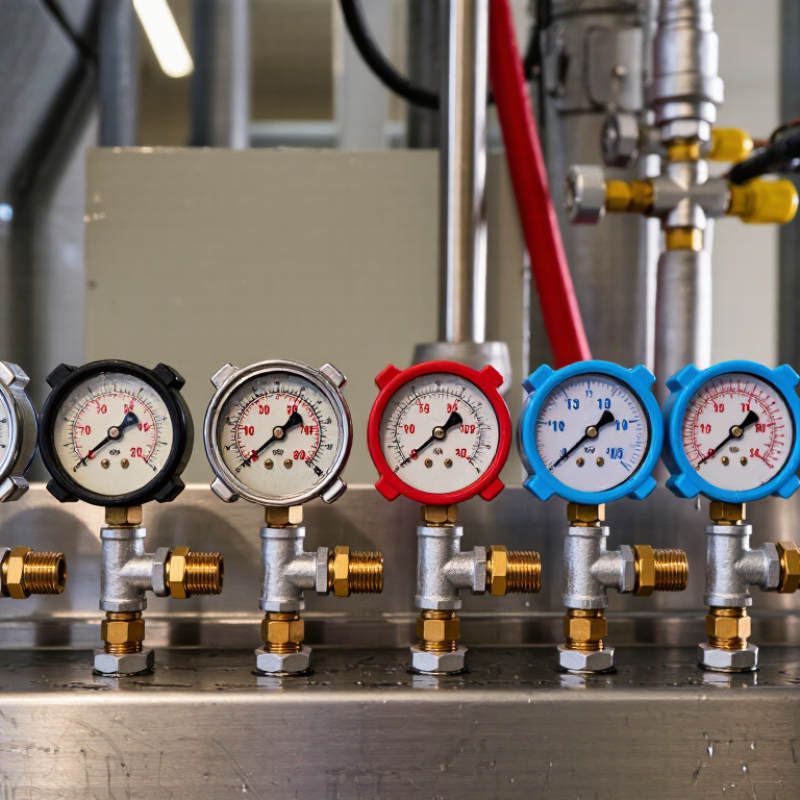
10 Best Waterproof Pressure Gauges for Industrial Use?

What Are Waterproof Pressure Gauges and How Do They Work?

Waterproof pressure gauges are mechanical instruments designed to measure fluid or gas pressure in wet, dusty, or outdoor environments. Their sealed cases help prevent water, condensation, and particles from reaching the dial and internal mechanism. However, “waterproof” does not always mean safe for permanent underwater use. The specified ingress protection rating must match the installation conditions. That distinction matters.

Inside the gauge, pressure moves a sensing element, commonly a Bourdon tube or flexible diaphragm. As pressure rises, the element changes shape slightly. A linked movement transfers this motion to a pointer across the dial. Some models use glycerin or silicone filling to reduce pointer vibration caused by pumps and machinery. This makes readings easier to observe near active equipment.

In field inspections, technicians should check the connection, sealing surface, pressure range, and temperature before installation. A gauge operating near its maximum scale can wear faster and provide less dependable readings. Small errors matter. I have seen condensation create confusing readings even when the outer case looked intact. Regular visual checks, zero-point testing, and comparison with a calibrated reference can reveal drift early. A damaged window, loose fitting, or cracked seal deserves attention, not a temporary workaround. Calibration intervals should reflect pressure cycles, vibration, moisture, and the consequences of an incorrect reading.

Key Features for Reliable Industrial Pressure Measurement

Reliable industrial pressure measurement starts with protection from water, dust, and process moisture. A waterproof pressure gauge should have a verified ingress protection rating suitable for its installation environment. Outdoor pipelines, washdown areas, and humid plants demand different levels of protection.

Select a pressure range that places normal readings near the middle of the dial. This improves readability and reduces measurement stress. Accuracy class, dial size, and pointer stability also matter during inspections. Stainless steel housings resist corrosion, while compatible wetted materials help prevent process contamination. For aggressive fluids, a diaphragm seal may provide safer separation and longer service.

Temperature changes can affect readings, especially near hot pipes or cold storage systems. Check the gauge’s operating temperature before installation. Vibration is another common problem. A liquid-filled design can steady the pointer, but it may not solve severe mechanical movement. I have seen clear gauges become difficult to read after months of shaking.

Connections must match the pipework and remain accessible for calibration. Use suitable isolation valves, and never force a fitting into alignment. Small installation errors can create large reading differences. Regular calibration against a traceable reference supports dependable records. It is easy to postpone this task. That is a mistake worth questioning. Inspect seals, lens clarity, pointer movement, and zero position during every planned maintenance visit.

How to Choose the Right Waterproof Pressure Gauge

Choosing among the 10 best waterproof pressure gauges requires more than checking an IP rating. Start with the medium, pressure range, temperature, and installation environment. A gauge should normally operate near the middle of its scale, not at the limit.

For outdoor pumps, washdown lines, and humid process rooms, IP65 may resist water jets, while IP67 offers temporary immersion protection under IEC 60529.

Verify the test conditions, because “waterproof” is not always permanent.

Material selection matters. Stainless steel housings resist corrosion better than painted surfaces in coastal or chemical areas. The wetted parts must match the fluid, especially when acids, solvents, or oxygen are present.

Choose a pressure range at least 25% above normal operating pressure, while checking the manufacturer’s overpressure rating. NIST Technical Note 1297 emphasizes evaluating measurement uncertainty, not just the displayed accuracy.

A gauge reading 100 psi should not be trusted blindly without considering calibration, temperature, vibration, and connection errors.

Industry demand also supports careful specification. Grand View Research estimated the global pressure sensor market at over 13 billion dollars in 2022, reflecting wider investment in monitored industrial systems.

My own practical mistake was selecting a sealed gauge with the wrong connection material; moisture stayed out, but corrosion began inside the fitting.

It looked suitable. It was not.

Check thread standards, dial visibility, pulsation resistance, and calibration records before installation.

A filled case can reduce pointer movement, although it may complicate servicing in very hot environments.

Comparing the 10 Best Waterproof Pressure Gauges for Industrial Use

Comparing the 10 Best Waterproof Pressure Gauges for Industrial Use

Choosing among ten waterproof pressure gauges requires more than checking an IP number. The strongest options include stainless-steel bourdon tube, glycerin-filled, digital, differential, diaphragm-seal, sanitary, panel-mount, compact, remote-seal, and heavy-duty models. IP67 units survive temporary immersion, while IP68 supports deeper, manufacturer-defined immersion under IEC 60529. NEMA 4X adds protection against corrosion and hose-directed water. No gauge wins every plant. A chemical washdown area needs different protection than a dry compressor room.

Pressure accuracy also matters. Many industrial analog gauges offer ±1% to ±2% of span. Digital models can reach ±0.25%, but only with proper calibration and stable power. The 2024 Global Pressure Sensor Market report from Fortune Business Insights valued the market at about USD 15 billion, showing strong demand for reliable measurement equipment. The report concerns sensors, not gauges, so direct comparisons require care. That distinction is easy to miss. I once selected a sealed gauge without checking the process connection; condensation later distorted its readings.

Tips: Match wetted materials with the process fluid. Confirm the pressure range before installation. Select a gauge that normally operates near the middle of its scale. Check the datasheet for IP or NEMA testing conditions. Inspect seals, lens clarity, and zero return during maintenance. Calibration records should include temperature and reference equipment. A waterproof housing cannot correct vibration, pulsation, or poor mounting. Small details decide service life.

10 Best Waterproof Pressure Gauges for Industrial Use

This comparison uses common industrial pressure-gauge specifications without identifying manufacturers. Maximum pressure ranges are shown in bar, while accuracy is expressed as the percentage of full-scale reading. Waterproof industrial gauges commonly use sealed cases with ingress protection such as IP65 or higher, making them suitable for washdown areas, outdoor installations, hydraulic systems, and process equipment.

Installation, Calibration, and Maintenance Guidelines

Installation, calibration, and maintenance determine whether a waterproof pressure gauge remains trustworthy in harsh industrial service. Select a range where normal pressure stays near the middle third of the scale. This improves readability and reduces mechanical stress. Install the gauge upright, away from vibration, heat, and direct chemical spray. Use a suitable diaphragm seal when process fluids may clog the pressure port. Tighten the connection with a torque wrench, not the case. Small details matter.

Calibration should follow the site’s risk assessment and measurement history. ASME B40.100 recommends considering accuracy, service conditions, and testing requirements during gauge selection. NIST Technical Note 1297 also stresses documented uncertainty when reporting measurements. Compare the gauge with a traceable reference at several points, including rising and falling pressure. Record zero error, hysteresis, ambient temperature, and the technician’s method. A practical interval may begin at six or twelve months, then change after reviewing drift data. That judgment is not always perfect. Real vibration can expose weaknesses that bench testing misses.

During maintenance, inspect the lens, seal, mounting thread, and drain path. Look for condensation inside the case. Check for pointer movement after isolation and depressurization. The U.S. Department of Energy reports that compressed-air systems often lose 20–30% of generated air through leaks, making reliable pressure readings financially important. Replace damaged gauges rather than forcing adjustments in the field. Keep calibration certificates linked to each instrument’s identification number, location, and service history. One missed record can weaken an otherwise careful control system.

FAQS

What should I check before choosing a waterproof pressure gauge?

Check the installation environment, pressure range, accuracy, connection, and temperature limits. Outdoor pipes need stronger moisture protection. Do not rely on appearance alone.

What do IP67 and IP68 indicate?

IP67 supports temporary immersion under defined test conditions. IP68 supports deeper immersion specified by the manufacturer. Read the test details. The numbers are not interchangeable.

Is a waterproof housing enough for every industrial area?

No. Washdown zones, humid plants, and dry compressor rooms create different demands. Corrosive areas may also need added housing protection. Water resistance cannot solve every problem.

How should I select the pressure range?

Choose a range that places normal readings near the middle of the dial. This improves readability and reduces measurement stress. A gauge near its limit worries me.

Are digital gauges always more accurate than analog gauges?

Not always. Digital models may reach about ±0.25% accuracy with stable power and proper calibration. Many analog models provide about ±1% to ±2% of span. Accuracy depends on conditions.

Which materials suit aggressive process fluids?

Match wetted materials with the process fluid to reduce corrosion and contamination. A diaphragm seal can separate the gauge from harsh media. Compatibility must be verified.

How do temperature and vibration affect readings?

Heat from nearby pipes and cold storage can shift readings. Vibration can make the pointer unstable. Liquid filling may steady movement. It cannot cure severe shaking.

What installation and maintenance practices improve reliability?

Match the connection to the pipework, keep it accessible, and use a suitable isolation valve. Never force an incorrectly aligned fitting. Inspect seals, lens clarity, zero position, and pointer movement during maintenance. Calibration delays are tempting. They should still be questioned.

Conclusion

This guide explains how a Waterproof Pressure Gauge protects pressure measurement systems from rain, splashes, humidity, dust, and other demanding industrial conditions. It describes how these gauges use sealed housings, pressure-sensitive elements, and readable displays to provide dependable readings in pipelines, machinery, process equipment, and outdoor installations. The article also highlights essential features such as corrosion-resistant materials, suitable pressure ranges, accuracy, connection types, temperature tolerance, shock resistance, and clear dial visibility.

Readers will learn how to choose the right gauge by evaluating operating pressure, fluid compatibility, environmental exposure, installation space, and maintenance requirements. A comparison of ten leading design options focuses on practical differences in durability, readability, accuracy, and application suitability without promoting any specific brand. The guide concludes with essential advice on correct installation, initial calibration, routine inspections, cleaning, leak checks, and timely replacement, helping users maintain safe, consistent, and reliable industrial pressure monitoring over the equipment’s service life.

Sienna

Sienna

Sienna is a skilled marketing professional with a deep expertise in our company’s core products and services. With a passion for innovation and detail, she plays a pivotal role in crafting insightful blog posts that not only highlight the unique features of our offerings but also provide valuable......