Pressure Instruments are becoming essential wherever operators must control force, flow, level, and safety. In a refinery, a pressure gauge may sit beside a vibrating pump. In a cleanroom, a digital transmitter may monitor only a few pascals. Each device serves a different measurement problem.
Market research reflects this expanding demand. MarketsandMarkets’ Pressure Sensors Market report, published in 2024, projects continued growth through 2028, driven by industrial automation, vehicles, medical equipment, and connected devices. Grand View Research also identifies process industries, energy, and manufacturing as major pressure-sensing application areas. These reports offer useful direction, but market estimates vary because suppliers define products and regions differently. That limitation deserves attention.
Selection is not simply about choosing the highest accuracy. Buyers must examine pressure range, media compatibility, temperature limits, process connection, output signal, calibration evidence, and maintenance access. A transmitter exposed to corrosive gas needs different materials than a gauge measuring clean compressed air. Small details matter. A poorly specified diaphragm can create drift, downtime, or unsafe readings.
This guide reviews ten widely used types of Pressure Instruments for global buyers. It considers practical applications, technical strengths, limitations, and purchasing risks. The discussion follows established measurement principles from ISO 10012 and calibration practices associated with ISO/IEC 17025 laboratories. No instrument fits every plant. Even experienced teams can overlook installation conditions. Careful verification remains the strongest safeguard.
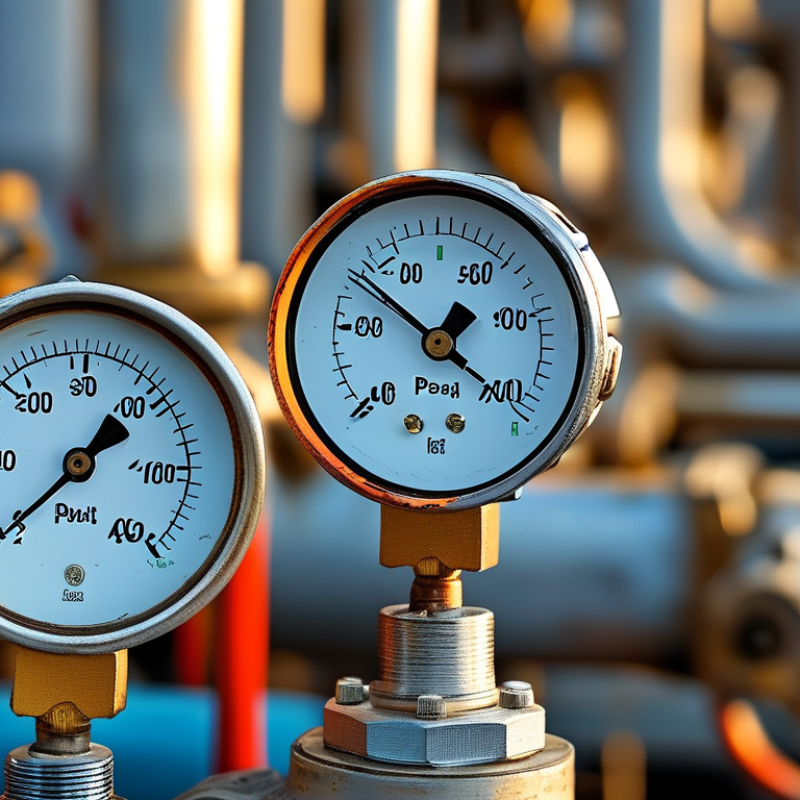
Pressure instruments convert force per unit area into usable information for safety, control, and maintenance. The SI Brochure defines the pascal as the derived SI unit for pressure. NIST Technical Note 1297 also stresses uncertainty evaluation during measurement. That detail matters in a hot process line.
The ten core types include gauge, absolute, differential, vacuum, compound, Bourdon-tube, diaphragm, bellows, piston, and electronic pressure instruments. Gauge instruments compare pressure with atmosphere. Absolute instruments reference a vacuum. Differential models compare two process points, often across filters or flow restrictions. Vacuum and compound instruments cover pressures below, near, and above atmospheric pressure. Mechanical devices use elastic deformation. Electronic units commonly use piezoresistive or capacitive sensing, then transmit a calibrated signal. They are not interchangeable.
Selection depends on range, fluid compatibility, temperature, vibration, accuracy, and required response time. A diaphragm instrument may suit corrosive media with an isolation seal. A piston design may provide strong reference stability. An electronic transmitter can support remote monitoring, but wiring and drift remain practical concerns.
According to MarketsandMarkets’ 2023 pressure sensor forecast, the market was projected to grow from about 13.8 billion dollars in 2023 to 20.5 billion dollars by 2028.
The IEA’s World Energy Outlook 2023 reports that industry uses roughly 37% of global final energy, increasing the value of reliable process measurement.
Field experience still exposes a weakness: specifications often ignore installation errors. Calibration records, impulse-line layout, and temperature effects deserve equal attention.
Sometimes, the “best” instrument is simply the one technicians can verify.
Mechanical pressure instruments remain practical choices for factories, water systems, and process equipment. Pressure gauges provide direct readings at pumps, filters, and compressed-air lines. Their dial can reveal a sudden blockage before a motor overheats. Manometers use liquid columns to compare pressure differences with clear physical evidence. They work especially well during airflow testing and low-pressure measurements. Pressure switches convert pressure changes into electrical signals. They can start alarms, stop pumps, or protect equipment from unsafe pressure.
Selection requires more than matching the connection size. Check the pressure range, process temperature, wetted materials, and expected pulsation. A gauge operating near its maximum range may wear quickly and provide misleading readings. A manometer needs stable mounting, correct fluid density, and careful reading at eye level. Switches require suitable contact ratings and a clear reset strategy. Field inspections often expose simple problems, such as blocked impulse lines or loose fittings. Still, instrument failure is not always obvious. A clean dial does not prove accurate measurement.
Tips: Choose a working range around the middle of the scale. Install a snubber where pressure pulses are visible. Verify readings against a calibrated reference during scheduled maintenance. Record the date, conditions, and observed deviation. Small notes matter. They may reveal a drift pattern before production suffers. Avoid assuming factory settings remain perfect after vibration, heat, or repeated cycling.
Electronic pressure instruments are moving from simple gauges toward connected measurement systems. Pressure transmitters convert process pressure into stable electrical signals for control rooms. Sensors measure pressure at the point of use, often inside compact equipment. Controllers then compare readings with setpoints and adjust valves, pumps, or alarms.
Global buyers should examine accuracy, drift, response time, and installation conditions. A transmitter beside a vibrating compressor needs stronger mechanical protection. A sensor in a clean process may require different materials and calibration practices.
According to MarketsandMarkets, the pressure sensor market could grow from about USD 13.8 billion in 2023 to USD 20.6 billion by 2028.
The report identifies industrial automation and connected equipment as major demand drivers.
Connectivity is useful, but it is not automatically better. Grand View Research reported strong growth in the global pressure sensor market through 2030, supported by automation, medical equipment, and transportation applications. Still, buyers can overestimate digital features while underchecking impulse lines and calibration intervals. That mistake is surprisingly common. During practical commissioning, a well-installed basic transmitter may outperform an advanced device with poor mounting. IEC 61298 testing principles can support repeatable performance comparisons, but real operating conditions remain decisive. Buyers should request traceable calibration records, documented overload limits, environmental ratings, and clear communication protocols. Data from market reports guides procurement; site evidence should make the final decision.
Top 10 Types of Pressure Instruments for Global Buyers
Specialized pressure instruments support demanding process and industrial applications, from steam lines to chemical dosing systems. The main types include gauge pressure gauges, absolute pressure gauges, differential pressure gauges, vacuum gauges, compound gauges, pressure transmitters, pressure switches, diaphragm-sealed instruments, manometers, and pressure calibrators.
Each type solves a different measurement problem. Differential instruments monitor filter blockage, flow, and tank levels. Absolute instruments suit vacuum systems and sealed vessels. Diaphragm seals protect sensors from corrosive fluids, crystallizing media, and high-temperature slurry. Pressure transmitters provide continuous signals for control systems, while switches offer simple alarm or shutdown functions. In the field, a wet impulse line can distort readings. Pulsation can damage a poorly selected gauge. Small details matter.
A 2024 MarketsandMarkets report estimated the global pressure sensor market at about USD 15.6 billion in 2023, with projected growth to USD 21.9 billion by 2028. This expansion reflects wider automation across energy, water treatment, pharmaceuticals, and manufacturing. Buyers should check pressure range, accuracy, process connection, wetted materials, temperature limits, and calibration traceability. Standards such as IEC 61511 also influence safety-related instrument selection. Yet specifications alone do not guarantee reliability. Installation quality remains an uncomfortable weak point. Even an advanced instrument can fail when piping design, impulse-line routing, or maintenance discipline is overlooked.
| No. | Instrument Type | Measured Parameter | Typical Measurement Range | Typical Accuracy | Common Process Connection | Typical Output or Display | Primary Industrial Applications |
|---|---|---|---|---|---|---|---|
| 1 | Mechanical Pressure Gauge | Gauge pressure | 0 to 1,000 bar | Approximately ±0.5% to ±2.0% of full scale | Radial or back-mounted threaded connection; commonly 1/4 or 1/2 inch | Analog pointer and dial | General plant utilities, compressed air, water systems, hydraulics, and process equipment |
| 2 | Differential Pressure Transmitter | Pressure difference between two points | A few mbar to approximately 40 bar differential | Approximately ±0.05% to ±0.1% of calibrated span | Two impulse connections, often with 1/4-inch or manifold-mounted ports | 4–20 mA, HART, or digital fieldbus | Flow measurement, filter monitoring, level measurement in closed tanks, and process equipment diagnostics |
| 3 | Absolute Pressure Transmitter | Pressure referenced to a sealed vacuum | 0 to 1 bar absolute up to approximately 700 bar absolute | Approximately ±0.05% to ±0.25% of span | Threaded or flange-mounted process connection | 4–20 mA, HART, or digital communication | Vacuum processes, distillation, condensers, metering systems, and applications affected by atmospheric pressure changes |
| 4 | Gauge Pressure Transmitter | Pressure relative to atmospheric pressure | −1 to 0 bar vacuum through 0 to 1,000 bar gauge | Approximately ±0.05% to ±0.25% of span | Threaded, flanged, or hygienic process connection | 4–20 mA, HART, IO-Link, or digital fieldbus | Process control, pump monitoring, hydraulic systems, compressed gas, and water treatment |
| 5 | Vacuum Gauge or Vacuum Transmitter | Pressure below atmospheric pressure | Atmospheric pressure down to approximately 10⁻⁶ mbar, depending on technology | Approximately ±0.5% to ±5.0% of reading or full scale | Threaded, flange, clamp, or specialized vacuum fitting | Analog display, digital display, 4–20 mA, or relay output | Vacuum packaging, laboratory systems, freeze-drying, vacuum furnaces, and semiconductor processing |
| 6 | Pressure Switch | Pressure threshold or set point | Approximately −1 to 400 bar | Set-point repeatability commonly ±0.5% to ±2.0% of full scale | Threaded connection; diaphragm, piston, or bellows sensing element | Electrical switch contact, such as SPDT or DPDT | Pump protection, compressor control, burner systems, alarms, and safety interlocks |
| 7 | Digital Pressure Gauge | Gauge, absolute, or differential pressure | Commonly 0 to 700 bar; application-dependent | Approximately ±0.05% to ±0.5% of full scale | Threaded connection; some models include remote sensors | LCD or LED display; optional data logging or electrical output | Calibration, maintenance, hydraulic testing, pneumatic systems, and portable field measurement |
| 8 | Pressure Calibrator | Pressure generation and reference measurement | From vacuum to approximately 1,000 bar, depending on configuration | Approximately ±0.025% to ±0.1% of reading | Test hose, quick-connect fitting, or threaded adapter | High-resolution digital display; may source 4–20 mA and document results | Instrument calibration, commissioning, maintenance, verification, and laboratory testing |
| 9 | Sanitary Pressure Transmitter | Gauge or absolute pressure in hygienic processes | Typically −1 to 40 bar gauge | Approximately ±0.1% to ±0.25% of span | Tri-clamp, hygienic threaded, or aseptic diaphragm-seal connection | 4–20 mA, HART, IO-Link, or digital display | Food and beverage, pharmaceutical, biotechnology, dairy, and clean-in-place systems |
| 10 | High-Temperature or Flush-Diaphragm Pressure Transmitter | Pressure in hot, viscous, corrosive, or particle-laden media | Typically 0 to 400 bar; temperature capability depends on seal and installation | Approximately ±0.1% to ±0.5% of span | Flush diaphragm, flange, threaded connection, or remote diaphragm seal | 4–20 mA, HART, or digital communication | Petrochemical processing, polymer production, pulp and paper, chemical plants, and high-temperature vessels |
| Selection guidance: Actual ranges, accuracy, materials, temperature limits, ingress protection, and certifications vary by design and application. Buyers should verify compatibility with the process medium, operating temperature, pressure class, connection standard, hazardous-area requirements, and required output signal before specification. | |||||||
Global buyers rarely choose a pressure instrument from a catalog title alone. They compare measurement range, accuracy, process connection, output signal, and operating conditions. A steam line may need a rugged gauge, while a clean process may require a sanitary transmitter. The medium matters. Corrosive fluid, pulsation, vibration, and temperature can change the specification completely. Start with the pressure type: gauge, absolute, differential, vacuum, or compound. Then define the required range. Keep normal pressure near the middle of the scale. Do not size at the maximum limit.
Experienced buyers also check wetted materials, seal compatibility, ingress protection, and response time. For remote monitoring, compare 4–20 mA, digital communication, and local display options. Pressure switches suit simple alarm duties, but transmitters offer continuous data. Differential instruments help measure filters, flow, and tank levels. Mechanical gauges remain useful where power is unavailable. Ask for calibration data, traceability, test points, and operating instructions. A low price can hide installation labor or frequent recalibration.
During supplier evaluation, request drawings and a sample datasheet before placing a large order. Confirm thread standards, flange dimensions, electrical entry, and spare-part availability. Check how the instrument performs after temperature cycling and vibration. These details often expose weak assumptions. I would not treat stated accuracy as a complete answer; mounting position and impulse lines can introduce errors. Field feedback should update the specification. Sometimes the first selection is wrong. That is useful information, if the team records why.
: A pressure gauge shows pressure directly on a dial. It can monitor pumps, filters, and compressed-air lines. A sudden rise may indicate a blockage. A clean dial proves nothing.
A manometer compares pressure through liquid-column movement. It suits airflow testing and low-pressure measurements. Mount it steadily and read the liquid at eye level. Small errors matter.
A pressure switch converts pressure changes into electrical signals. It can activate alarms, stop pumps, or protect equipment. Check its contact rating and reset method before installation.
Choose a working range near the middle of the scale. Operating close to maximum pressure may cause faster wear. It can also produce misleading readings. Do not size by connection alone.
Check pressure range, temperature, pulsation, connection type, and wetted materials. Consider whether the fluid is corrosive, hot, or likely to crystallize. These details often decide service life.
It measures the pressure difference between two points. Typical uses include monitoring filters, airflow, flow, and tank levels. A growing difference may suggest filter blockage.
Diaphragm seals protect sensing parts from corrosive fluids and hot slurry. They also help with crystallizing media. Seal compatibility still requires careful checking.
Compare the instrument with a calibrated reference during scheduled maintenance. Record the date, operating conditions, and observed deviation. Small notes may reveal gradual drift. Do not trust factory settings forever.
Pressure Instruments are essential tools for measuring, monitoring, and controlling pressure across industrial, process, and utility systems. This overview introduces their purpose, key measurement principles, and major categories. Mechanical options such as pressure gauges, manometers, and pressure switches provide direct, practical, and often highly reliable readings. Electronic instruments, including pressure sensors, transmitters, and controllers, support greater accuracy, remote monitoring, automation, and data integration.
The article also examines specialized pressure instruments designed for demanding applications involving temperature changes, corrosive media, vibration, or strict process requirements. For global buyers, selecting the right instrument involves comparing measurement range, accuracy, materials, connection types, output signals, environmental ratings, maintenance needs, and compliance requirements. By clearly defining operating conditions and performance expectations, buyers can choose pressure measurement solutions that improve safety, process stability, efficiency, and long-term reliability while ensuring compatibility with their systems.

Accuracy Instrument