Industrial Metrology Whitepaper & Sourcing Guide

CE Certification & Thermal Precision: How Accurate Are Oven Thermometers? Manufacturers & Factories Audit

An authoritative technical analysis on bimetallic thermal hysteresis, CE compliance standards (EN 13190 / EN 60751), calibration tolerances, and global procurement strategies for enterprise-grade temperature monitoring.

Featured Precision Measurement Instrumentation (Top Selection)

Explore our factory-direct, CE-certified industrial pressure gauges, SF6 density monitors, and mechanical temperature sensors designed for severe industrial environments.
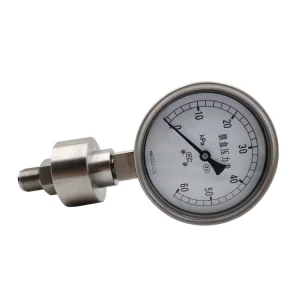
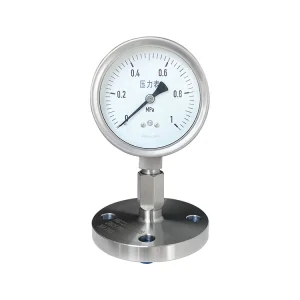
Laser Welded Diaphragm Seal Pressure Gauge
China Laser Welded Diaphragm Seal Pressure Gauge from China Manufacturers and Suppliers for Low-Pressure Applications Supplier, Factories
View Technical Specs
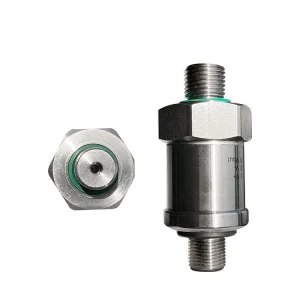
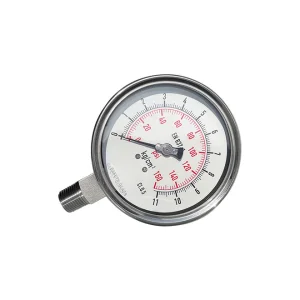
Vibration Resistant SS Pressure Gauge
China Vibration-Resistant SS Pressure Gauge for Hydraulic Systems – Shatter-Proof | Bottom Supplier, Suppliers
View Technical Specs
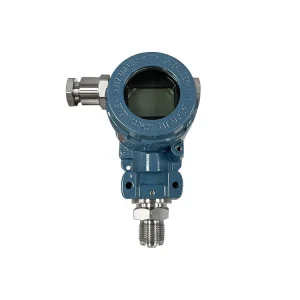
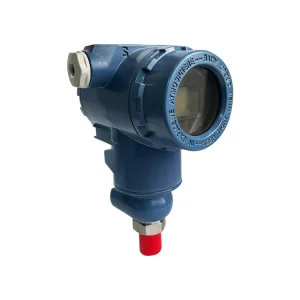
2088 Pressure Transmitter
OEM China 2088 Pressure Transmitter Factory | Reliable Suppliers for High-Performance Pressure Measurement Solutions Manufacturer, Suppliers
View Technical Specs
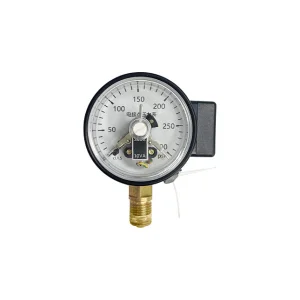
Electric Contact Pressure Gauge
OEM 50mm Electric Contact Pressure Gauge 0-300 PSI - China Suppliers and Factory for Industrial Pressure Monitoring Manufacturer, Suppliers
View Technical Specs
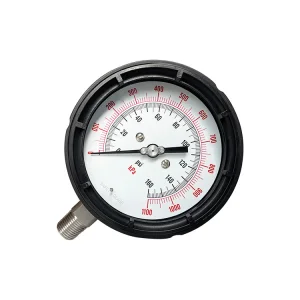
Common Rail Pressure Gauge
China 4.5″ 160 PSI Common Rail Pressure Gauge – Solid Front Phenolic Case Suppliers, Factories
View Technical Specs
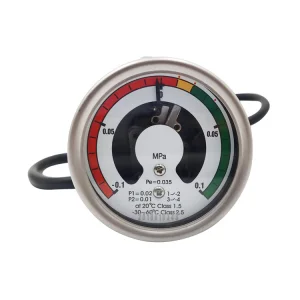
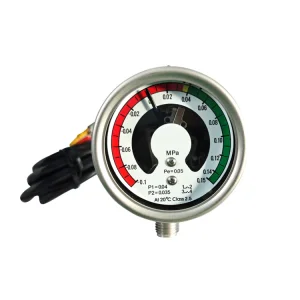
SF6 Gas Density Monitor
China 63mm 2.5 Dia SF6 Gas Density Monitor -0.1 to 0.1 MPa - China Suppliers Factory for High-Voltage Equipment Manufacturer, Factory
View Technical Specs
SF6 Gas Density Leak Detection
OEM China SF6 Gas Density Monitor: Reliable Leak Detection System from Leading Suppliers & Factory Manufacturer, Factory
View Technical Specs
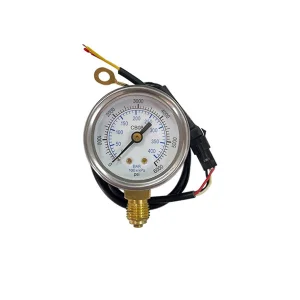
CNG Pressure Gauge
China China Suppliers Factory CNG Compressed Natural Gas Pressure Gauge for Auto Cars - Accurate Pressure Monitoring Supplier, Factories
View Technical Specs
Executive Summary: Navigating Thermal Measurement Precision & Regulatory Compliance

In high-temperature processing, commercial food service, and heavy industrial thermal management, a discrepancy of even ±5°C can result in severe batch failure, energy inefficiency, or breach of critical health and safety regulations. Global OEMs and enterprise buyers frequently grapple with a fundamental query: How accurate are oven thermometers produced by tier-1 manufacturers, and how does CE Certification guarantee metrological integrity?

Metrological Tolerance

Standard commercial oven thermometers typically exhibit accuracy ranges from ±1.5% to ±2.5% of full-scale deflection (FSD) (EN 13190 Class 1.5 or Class 2.0). Enterprise-grade industrial bimetallic and capillary units manufactured under ISO 17025 accredited calibration achieve precision as tight as ±1.0% FSD (Class 1.0).

Thermal Hysteresis & Drift

Uncalibrated or non-compliant thermometers experience mechanical hysteresis up to ±15°C over extended thermal cycling due to bimetallic strip degradation, stem expansion mismatch, and poor seal hermeticity. Premium engineering mitigates thermal drift using pre-stressed, heat-treated helical coils.

CE Certification Mandate

CE Certification serves as proof that temperature measurement devices comply with the EU’s Pressure Equipment Directive (PED 2014/68/EU), Electromagnetic Compatibility (EMC Directive 2014/30/EU for digital/electric units), and RoHS/REACH material safety compliance.

ABOUT US: Huzhou Accuracy Instrument Co., Ltd.

20 YEARS OF EXPERIENCE AND RESEARCH

Huzhou Accuracy Instrument CO LTD is professionally engaged in the development, sales and service of industrial mechanical pressure gauges, bi-metal thermometers, SF6 manometer, pressure sensor. Products are widely used in various applications such as Mechanical Engineering, Chemical Engineering, Food Industry, Pharmaceutical, and high technology electric appliances.

Established over two decades ago, our pressure gauge manufacturing facility spans 3,000 square meters, equipped with advanced production lines and rigorous quality control systems. As an industry leader, we integrate innovation with precision engineering to deliver reliable measurement solutions for global clients.
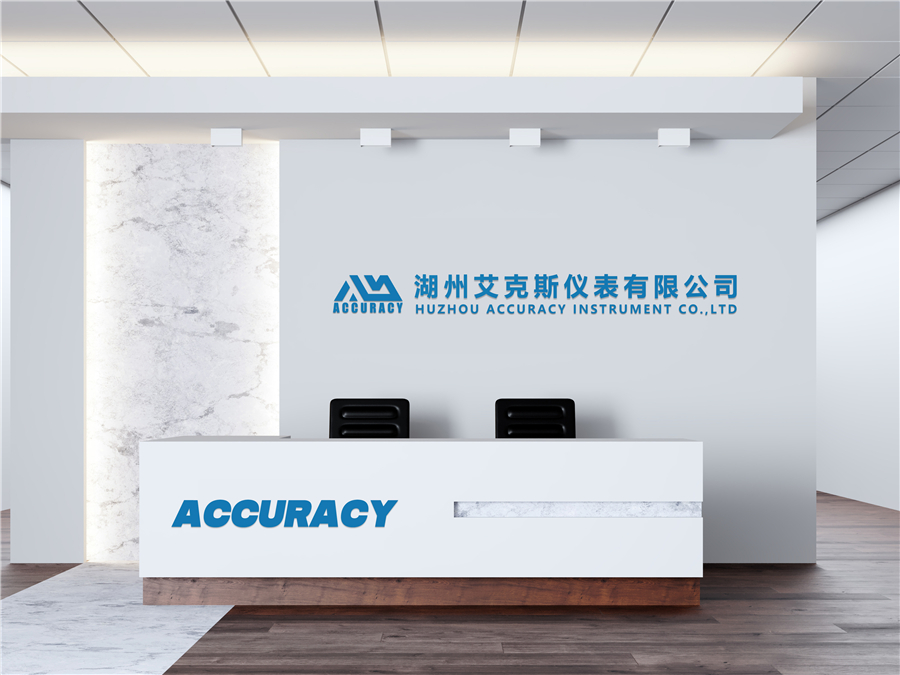
Huzhou Accuracy Instrument Factory Infrastructure

Our Core Strengths & Operational Capability

Expert Teams

  • R&D Department (20 specialists): Focuses on material innovation, smart sensor integration, and compliance with international standards (e.g., ISO, API).
  • Production Workforce (120 technicians): Utilizes automated assembly and laser calibration technologies to ensure product durability and accuracy.
  • Sales & Service Unit (15 professionals): Provides 24/7 technical support and customized solutions across 30+ countries.

Capacity & Global Reach

Annual output exceeds 2 million units, covering industrial-grade gauges (e.g., stainless steel gauge, black steel gauge, shock-proof gauge, sf6 gauge, thermometer, pressure sensor) for oil/gas, HVAC, and pharmaceutical sectors.

Products exported worldwide, with certifications including ISO, SGS, and CE, earning recognition for corrosion resistance and ±0.5% precision.

Quality Commitment

Our laboratory conducts 100% pressure cycle tests and environmental simulations, adhering to ISO 9001 and ISO 17025 standards. Continuous improvement drives our reputation for "zero-leak" performance in extreme conditions, supported by a one-year warranty.

Certificate Display & Quality Governance

We have long followed the concept of "reasonable price, accurate delivery, good quality" and several business management models to keep our production quality above the required benchmark under ISO9001:2008 certified.
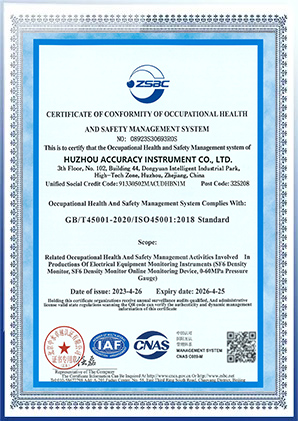
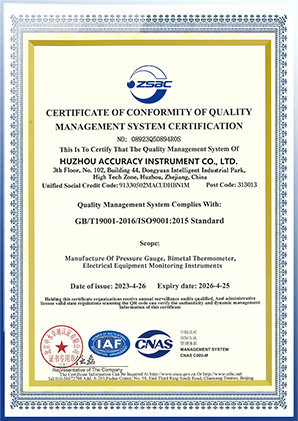
ISO Quality Certificate
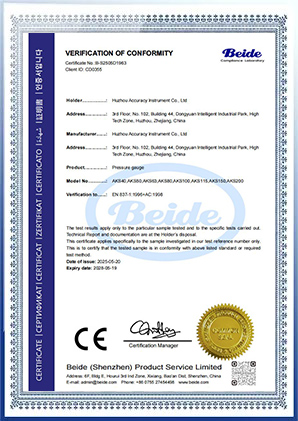
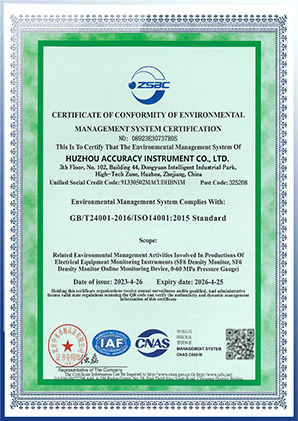
CE Conformance Certificate
SGS Inspection Report
Calibration Laboratory Certification
Factory Compliance Document
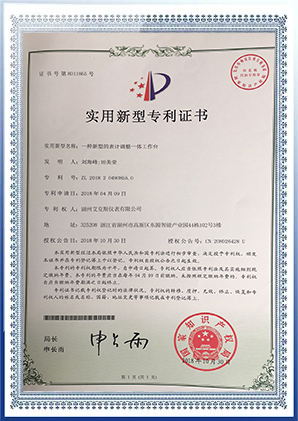
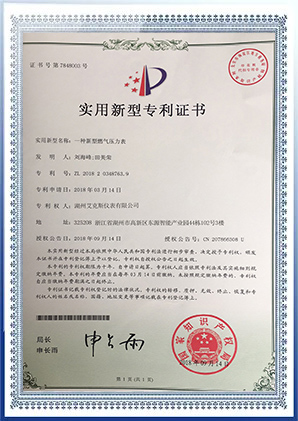
Patented Thermal Technology Certificate
Technical Deep-Dive: Thermal Sensing Mechanisms & Accuracy Benchmarks

To evaluate how accurate oven thermometers truly are, industrial buyers must examine the underlying physical mechanics governing thermal sensing: Bimetallic Coil Expansion, Liquid Expansion Capillaries, and Digital Thermocouple/RTD Sensors.

Thermometer Type Operating Principle Standard Accuracy Class Temperature Range Primary Industrial Application
Industrial Bimetallic (Direct Stem) Helical bonding of two metals with unequal expansion coefficients ($\alpha_1 \neq \alpha_2$). Class 1.0 / Class 1.5 (±1.0% to ±1.5% FSD) -50°C to +600°C Commercial Baking Ovens, Curing Furnaces, Process Lines
Capillary Gas/Liquid Expansion Fluid displacement via micro-capillary tube to Bourdon sensing element. Class 1.0 (±1.0% FSD) -200°C to +700°C Remote Oven Panels, Hazardous Chemical Heat Treaters
Electrical Contact Bimetal Bimetal stem integrated with micro-switch contacts for control logic. Class 1.5 (±1.5% FSD) 0°C to +400°C Automated Thermal Cut-Off, Industrial Oven Control
Digital Intelligent Transmitter (RTD/TC) Pt100 resistance change or Seebeck effect voltage transduced digitally. ±0.1% to ±0.2% of Reading -200°C to +1300°C High-Precision Semiconductor & Aerospace Annealing

Key Factors Influencing Oven Thermometer Accuracy in Real-World Operations:

  • Stem Immersion Depth ($L_{imm}$): Insufficient stem penetration into the thermal chamber leads to heat dissipation along the outer sheath, resulting in cold-spot measurement errors of up to 10-15%.
  • Thermal Hysteresis & Fatigue: Inexpensive bi-metals suffer structural deformation after repeated thermal shock cycles between room temperature and 300°C+. High-quality manufacturers employ artificial aging (heat-treatment cycles at 450°C) during production to lock in structural stability.
  • Hermetic Dial Sealing: Oven environments emit moisture, grease vapor, and combustion gases. Inadequate case sealing causes fogging of the glass dial face and internal corrosion of the pointer pivot gear, degrading accuracy over time.
CE Certification Requirements for Thermal & Pressure Instrumentation

Understanding CE certification is crucial when sourcing measuring instruments from global manufacturers. CE mark signifies that the product complies with strict EU safety, health, and environmental protection standards.

Applicable Harmonized Directives

For industrial mechanical and electrical temperature monitors, CE verification mandates compliance with several distinct directives:

  • EN 13190 Standard: Specifies requirements for dial-type bimetallic and expansion thermometers including scale spacing, pointer damping, accuracy class limits, and over-temperature limits.
  • Pressure Equipment Directive (PED 2014/68/EU): Applies to thermowells, flanged diaphragm seals, and direct-mount pressure transmitters operating in pressurized lines.
  • Electromagnetic Compatibility (EMC 2014/30/EU): Ensures electric contact bimetal thermometers and 4-20mA smart transmitters do not radiate RF interference nor succumb to ambient industrial electrical noise.
  • RoHS Directive 2011/65/EU: Guarantees all solder joints, sensing bulbs, and casing materials are free of hazardous substances like lead, mercury, and cadmium.
Traceable Factory Calibration Protocols

CE compliance is complemented by robust factory calibration procedures. Leading factories utilize automated calibration rigs mapped against national metrology standards (NIST / NIM):

  • Multi-Point Thermal Bath Calibration: Each bimetal probe is immersed in controlled silicone oil/dry-well baths at minimum 3 calibration points (e.g., 20%, 50%, 90% of scale).
  • Laser Alignment & Dial Printing: To eliminate parallax error, modern factories utilize high-precision vision systems to align pointers with laser-etched dial markings tailored to individual probe non-linearities.
  • Zero-Adjustment Mechanism: Quality oven gauges incorporate an accessible external calibration screw on the back of the case or bezel to allow re-zeroing after years of heavy industrial service.
Global B2B Procurement Demand & Macro Industry Solutions

As global automation and food safety standards tighten, OEM equipment manufacturers across North America, Europe, and Asia Pacific require reliable thermal instrumentation suppliers.

2M+
Annual Units Output
±0.5%
Highest Precision Class
30+
Countries Exported
100%
Cycle Tested

Commercial Bakery & Food Processing

Demands food-grade SS316 stem construction, shatter-proof tempered glass or polycarbonate lenses, and NSF/FDA material compliance to prevent contamination during continuous 250°C baking cycles.

Industrial Heat Treating & Metallurgy

Requires heavy-duty bimetal and capillary thermometers with solid-front cases, hermetic nitrogen filling, and vibration damping for high-heat powder coating and tempering furnaces.

Automotive & Energy Systems

Specialized applications such as CNG gas auto monitoring, SF6 high-voltage equipment gas density control, and common rail pressure calibration demand ultra-rugged, explosion-proof, and CE-certified sensors.

Technology Roadmap: Next-Generation Temperature & Pressure Sensing

The measurement instrumentation sector is undergoing a rapid digital transition. Modern manufacturing plants are integrating traditional mechanical robustness with AI-driven predictive analytics.

Hybrid Analog-Digital Sensing

Future thermal management systems utilize hybrid bimetal transmitters that retain direct-reading analog dials for local maintenance visual checks while embedding micro-RTD elements connected via 4-20mA HART or MODBUS protocol to central SCADA networks.

Nanotech Bimetallic Alloys & Smart Coatings

R&D initiatives at Huzhou Accuracy Instrument focus on high-entropy alloy bimetal coils that eliminate mechanical fatigue and thermal creep, extending recalibration intervals from 12 months to 60 months even under continuous 500°C exposure.

Frequently Asked Questions (FAQ) - Metrology & Compliance

In-depth technical answers to critical engineering and procurement queries regarding oven thermometer accuracy and manufacturing specs.

Q1: How accurate are standard mechanical oven thermometers compared to digital probes?
Standard industrial bimetal mechanical oven thermometers typically achieve Class 1.0 to Class 1.5 accuracy (±1.0% to ±1.5% of full-scale value, equivalent to roughly ±2°C to ±4°C on a 0-300°C dial). High-end digital probes (RTD Pt100) achieve higher precision (±0.1°C to ±0.5°C). However, mechanical thermometers require no batteries, offer extreme durability, and provide instant visual feedback in harsh, high-vibration ambient conditions where digital electronics fail.
Q2: Why does an oven thermometer show a different temperature than the oven's built-in digital display?
Discrepancies arise due to 3 primary reasons: 1) Sensor Placement: Oven digital sensors are often positioned near heating elements or back walls, missing central rack temperatures. 2) Thermal Hysteresis: Built-in electronics often display smoothed, averaged temperatures, whereas a direct bimetal thermometer reads real-time localized ambient heat. 3) Calibration Drift: Built-in sensors drift over time due to grease accumulation and thermal cycling.
Q3: What specific requirements does CE certification impose on oven thermometer manufacturers?
CE Certification requires manufacturers to establish a documented Quality Management System (ISO 9001), ensure mechanical compliance with EN 13190, conduct pressure boundary safety checks under the Pressure Equipment Directive (PED 2014/68/EU) for sealed systems, and verify chemical/material non-toxicity under RoHS/REACH regulations.
Q4: How can industrial clients recalibrate a bimetallic oven thermometer in the field?
Many industrial dial thermometers manufactured by Huzhou Accuracy Instrument feature an external calibration adjustment screw located on the back of the case or hex nut. To recalibrate: 1) Immerse the stem into a verified thermal calibration bath or ice/boiling water reference. 2) Hold the stem stationary. 3) Use a wrench or screwdriver to adjust the calibration screw until the pointer aligns precisely with the reference temperature mark.
Q5: What stem length and diameter should be selected for commercial baking or heat-treatment ovens?
The stem length must be long enough to extend past the oven insulation wall into the active airflow zone—typically a minimum of 100mm to 300mm. Stem diameter (typically 6mm or 8mm) must balance thermal response speed (thinner stems react faster, e.g., $T_{90} < 15$ seconds) against mechanical rigidity (thicker stems withstand physical impact and high velocity air flows).
Complete OEM Instrumentation Catalog (Bottom Selection)

Direct factory supply for stainless steel pressure gauges, bimetal control switches, and high-accuracy transmitters.
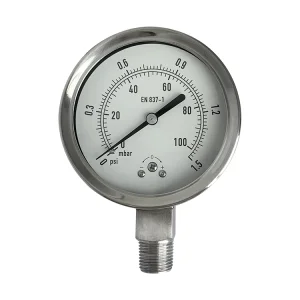
Stainless Steel Mechanical Pressure Gauge
OEM 100mm Stainless Steel Mechanical Pressure Gauge – China Suppliers & Factory for Low-Pressure Measurement Manufacturers, Factories
View Technical Specs
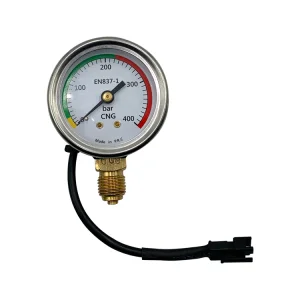
CNG Pressure Gauge Auto Systems
OEM CNG Pressure Gauge for Auto Gas Systems - China Suppliers & Factory Direct Quality Monitoring Solution Manufacturers, Supplier
View Technical Specs
SF6 Gas Density Monitor 63mm
China 63mm 2.5 SF6 Gas Density Monitor - China Suppliers & Factory for High-Voltage Equipment Safety Manufacturer, Factories
View Technical Specs
CE Certified Common Rail Gauge
CE Certification 4.5 160 PSI Common Rail Pressure Gauge - Reliable China Factory with Premium Quality and Leading Suppliers Supplier, Factory
View Technical Specs
3051 Pressure Transmitter
CE Certification China 3051 Pressure Transmitter GPAP - High-Precision Intelligent Transmitter from Leading Suppliers & Factory Supplier, Factory
View Technical Specs
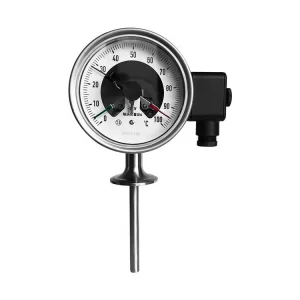
Bimetal Thermometer Electrical Contact
OEM Bimetal Thermometer with Electrical Contact | China Suppliers & Factory for Accurate Temperature Control Manufacturers, Factories
View Technical Specs
Flanged Diaphragm Pressure Gauge
China China Factory Suppliers 4 Flanged Diaphragm Pressure Gauge – Stainless Steel, 0–1 MPa Range for Corrosive Media Manufacturers, Suppliers
View Technical Specs
Thin Film Pressure Sensor
China China AKS Thin Film Pressure Sensor - 316 SS Pressure Transducer, 0.5% Accuracy - Leading Suppliers and Factory Factories, Factory
View Technical Specs