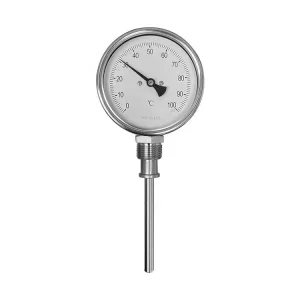
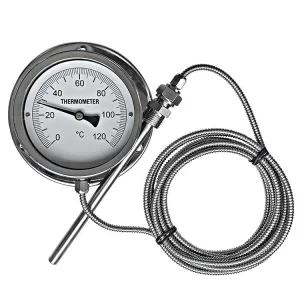
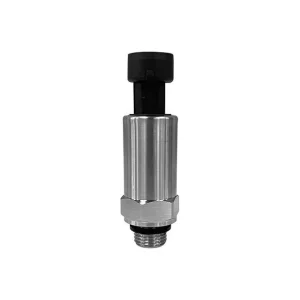
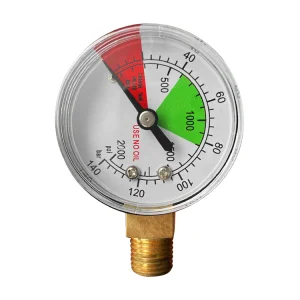
Explore high-accuracy mechanical manometers, bimetal indicators, SF6 monitors, and smart pressure transmitters engineered for global industrial automation.
Understanding the physics of pressure measurement references is essential for instrument specification, system safety design, and international regulatory compliance.
In applied fluid dynamics and metrology, Gauge Pressure ($P_g$ or $P_{gauge}$) measures system fluid or gas force relative to ambient atmospheric pressure. Unlike absolute pressure, which references a absolute static vacuum (zero Pascals), gauge pressure zeroes out local atmospheric fluctuations.
Fundamental Reference Equation:
Pgauge = Pabsolute - Pambient
Where Pambient is variable standard atmospheric pressure (~101.325 kPa or 14.7 psi at sea level).
When system pressure exceeds surrounding barometric pressure, gauge reading registers positive. Conversely, when internal pressure drops below local ambient conditions, it records a negative gauge pressure or vacuum pressure (e.g., -1 bar gauge).
Deploying incorrect pressure reference types can lead to critical process inefficiencies, premature device wear, or catastrophic valve ruptures.
| Pressure Type | Zero Reference | Atmospheric Sensitivity | Primary Applications |
|---|---|---|---|
| Gauge Pressure (barg, psig) | Local Ambient Air | Self-compensating | HVAC, Hydraulic Lines, Compressors, Boilers |
| Absolute Pressure (bara, psia) | Perfect Vacuum (0 Pa) | Directly Affected | Altimeters, Barometers, Distillation Columns |
| Differential Pressure (PSID) | Secondary Line Point | Independent | Filter Clogging, Venturi Flowmeters, Cleanrooms |
| Sealed Gauge (barg) | Internal Sealed 1 atm Chamber | Non-compensating | Deep Sea Submersibles, Sealed IP68 Sensors |
From classical elastic deformation Bourdon tubes to piezoresistive silicon micro-transducers, gauge pressure accuracy depends on advanced component metallurgy and laser-calibration.
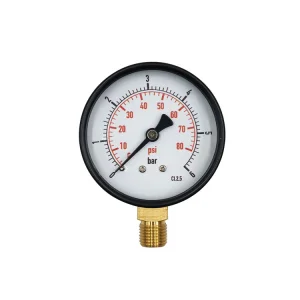
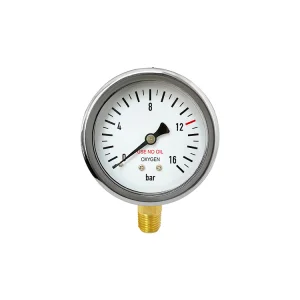
Mechanical gauge pressure relies primarily on elliptical cross-section metallic tubes. As internal media pressure increases, the tube seeks to regain its circular cross-section, causing elastic uncoiling movement. Stainless steel 316L and phosphor bronze elements ensure repeatable hysteresis under severe pressure cycling up to 1,000 bar.
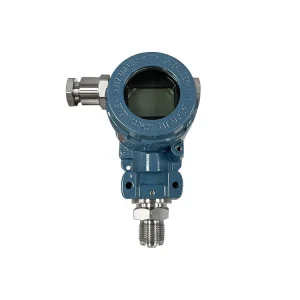
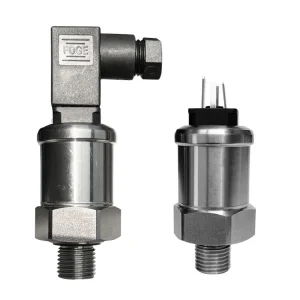
For smart plant control, electronic gauge sensors utilize piezoresistive silicon strain gauges micro-diffused onto a diaphragm chip. Under media deflection, electrical resistance changes proportionally, providing analog outputs (4-20mA, 0-10V) or RS485 Modbus digital data for real-time SCADA integration.
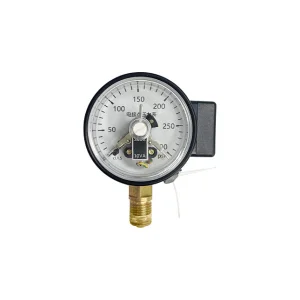
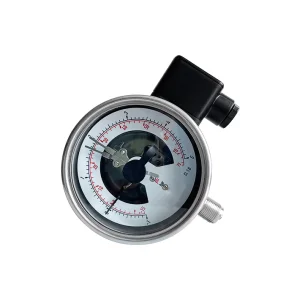
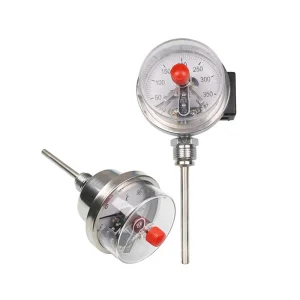
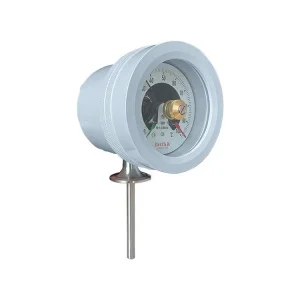
Combining mechanical local indication with automated limit switches, magnetic-assisted or inductive electric contacts trigger alarm relays or auto shutoff pumps when pressure exceeds preset upper or lower threshold safety limits.
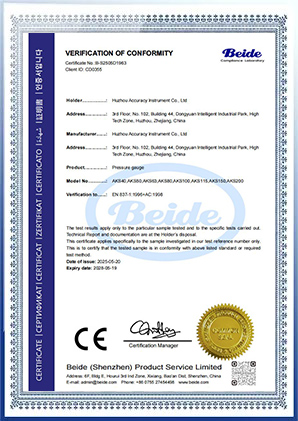
Why CE certification is an imperative entry requirement for importing gauge pressure equipment into the European Economic Area (EEA) and global Tier-1 industrial networks.
The PED governs pressure equipment with maximum allowable pressure (PS) greater than 0.5 bar. Gauge pressure instruments imported into Europe must comply with essential safety requirements (ESR), covering material selection, burst-pressure testing, safety relief, and trace resistance.
Compliant gauge pressure suppliers design dial instruments under strict adherence to European norms:
For electronic pressure transmitters (e.g., Model 2088 or AKS series), CE marking verifies electromagnetic compatibility (immunity against RF interference) and hazardous substance restriction (RoHS 2.0 heavy metal compliance).
How gauge pressure instruments are engineered to withstand extreme environmental parameters across key localized global industries.
In commercial cooling, refrigerant gauge pressure monitoring (R410a, R32, R290) requires leak-tight IP65 brass or stainless steel gauges fitted with capillary lines to isolate dial indicators from extreme compressor vibration.
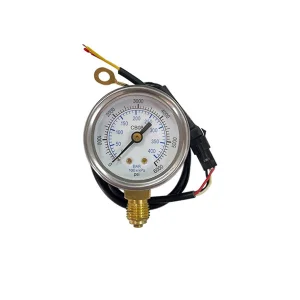
CNG vehicles require ultra-compact, high-pressure gauges operating up to 200 bar (3,000 psi). Gauges incorporate shock-resistant semi-steel black casings, optical limiters, and specialized NPT threads to guarantee zero-gas-leakage operation.
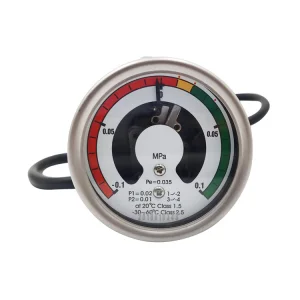
Sulfur Hexafluoride (SF6) gas density monitors utilize temperature-compensated gauge pressure mechanisms to continuously monitor gas pressure in high-voltage switchgear substations, preventing electrical arcing disasters.
The convergence of mechanical reliability with digital smart sensing, AI diagnostic telemetry, and green energy hydrogen media compatibility.
Transition from traditional mechanical linkages to MEMS piezoresistive silicon elements with laser-annealed diaphragms. Achieves ultra-low thermal drift (<0.01% F.S./°C) across temperature ranges from -40°C to +125°C.
Integration of LoRaWAN, NB-IoT, and WirelessHART modules directly into 63mm/100mm gauge enclosures. Self-powered energy harvesting (piezoelectric and thermal gradient) eliminates manual calibration route checks.
Smart pressure transmitters featuring edge-AI logic analyze microscopic pressure pulsation signatures to predict pump cavitations, valve seal decay, and line clogging up to 30 days prior to physical plant failure.
Why leading global OEMs partner with specialized Chinese gauge pressure manufacturers to combine cost efficiency with precision tolerances.
Located in Huzhou, Zhejiang, China's premiere precision instrument manufacturing corridor, raw material supply chains—ranging from SS316 movement gears to specialized dial glass—are streamlined within a 50km radius. This localization cuts component lead times by up to 60% compared to Western counterparts.
Modern Chinese factories utilize fully automated laser welding for diaphragm sealing and robotic camera calibration systems. Automated optical recognition eliminates human parallax error during dial printing and needle alignment.
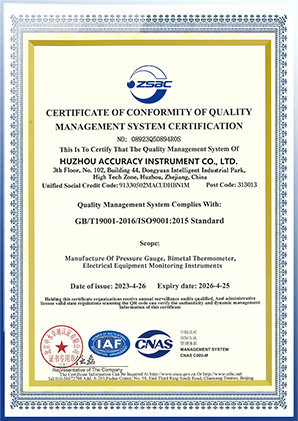
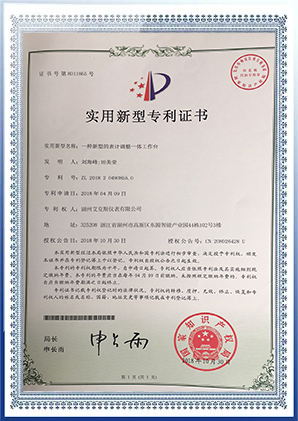
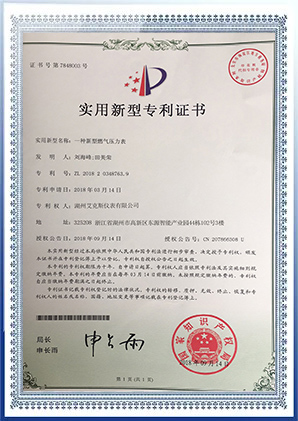
Huzhou Accuracy Instrument CO LTD is professionally engaged in the development, sales and service of industrial mechanical pressure gauges, bi-metal thermometers, SF6 manometer, pressure sensor. Products are widely used in various applications such as Mechanical Engineering, Chemical Engineering, Food Industry, Pharmaceutical, and high technology electric appliances.
Established over two decades ago, our pressure gauge manufacturing facility spans 3,000 square meters, equipped with advanced production lines and rigorous quality control systems. As an industry leader, we integrate innovation with precision engineering to deliver reliable measurement solutions for global clients.
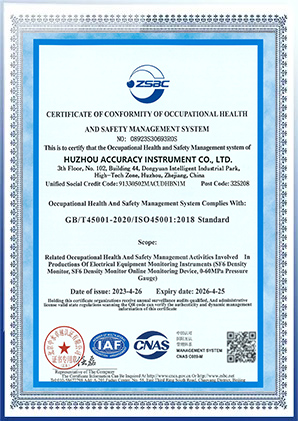
Our laboratory conducts 100% pressure cycle tests and environmental simulations, adhering to ISO 9001 and ISO 17025 standards. Continuous improvement drives our reputation for "zero-leak" performance in extreme conditions, supported by a one-year warranty.
We have long followed the concept of "reasonable price, accurate delivery, good quality" and several business management models to keep our production quality above the required benchmark under ISO9001:2008 certified.
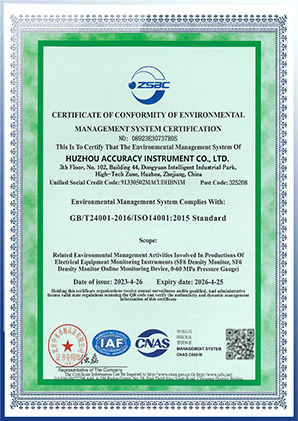
Key technical criteria procurement officers must verify when selecting Chinese gauge pressure factories for large-scale industrial contract manufacturing.
Demand material test reports (MTR) according to EN 10204 3.1 standards to ensure wetted parts utilize true AISI 316L or 304 stainless steel rather than substandard alloy substitutes prone to rapid pitting corrosion in sulfurous environments.
Verify that the factory performs dynamic overload testing (minimum 1.3x nominal range) and endurance pressure pulsing cycles (up to 1,000,000 cycles) to ensure zero needle zero-point drift over time.
Inspect housing seal designs. For outdoor or liquid-filled shock-proof gauges (glycerin or silicone oil filled), dual O-ring casing seals prevent fluid leakage under ambient vibration and moisture ingress.
Expert responses to critical questions regarding gauge pressure calibration, CE marking, media compatibility, and OEM ordering.
Complete your sourcing selection with our specialized mechanical air manometers, high-pressure oxygen gauges, explosion-proof switches, and piezoresistive silicon transducers.
 Accuracy Instrument