OEM Where Should Oil Pressure Be On Gauge Manufacturer & Suppliers

Precision Industrial Pressure Instrumentation, Custom B2B Manufacturing Engineering Solutions, and Technical Guidance on Normal Operating Ranges Across Hydraulic & Combustion Systems

Precision Instrument Solutions

Explore OEM-certified pressure gauges, transmitters, and density monitors designed for extreme durability and pinpoint accuracy.
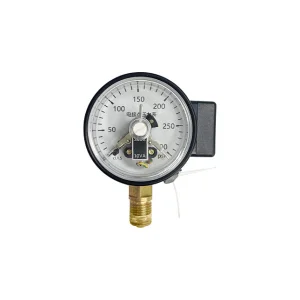
CE Certification 100 PSI Stainless Steel Bourdon Pressure Gauge
CE Certification 100 PSI Stainless Steel Bourdon Pressure Gauge – Explosion-Proof, Radial Mount
View Product Details
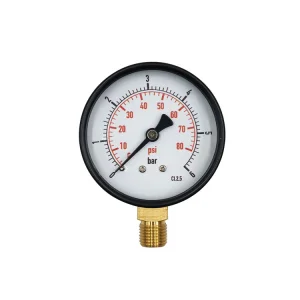
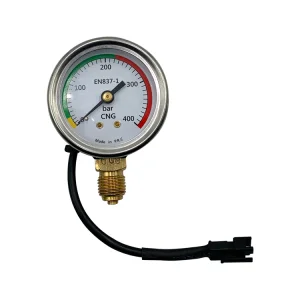
CE Certification CNG Gas Pressure Gauge
CE Certification CNG Resistive Gas Pressure Gauge for Auto Gas Systems - Accurate Pressure Monitoring
View Product Details
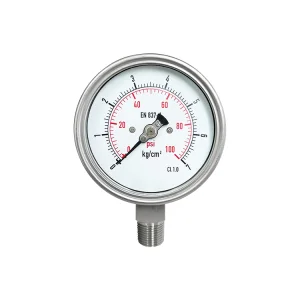
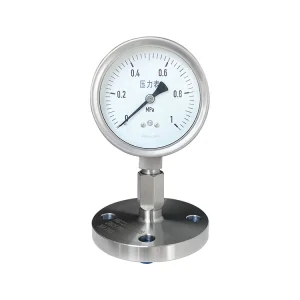
OEM Diaphragm-Sealed Pressure Gauge
OEM Diaphragm-Sealed Pressure Gauge – Stainless Steel, 0-1 MPa Range from Reliable Factory Supplier
View Product Details
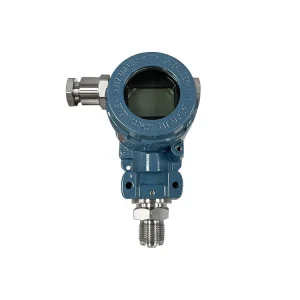
Model 2088 Pressure Transmitter
CE Certification High-Performance Model 2088 Pressure Transmitter - Durable Reliable Industrial Sensor
View Product Details
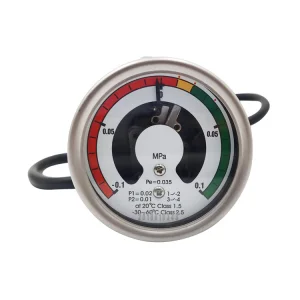
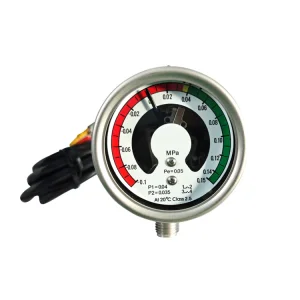
SF6 Gas Density Monitor
CE Certification China SF6 Gas Density Monitor | 2.5 Inch Precision Instrument for Leak Detection
View Product Details
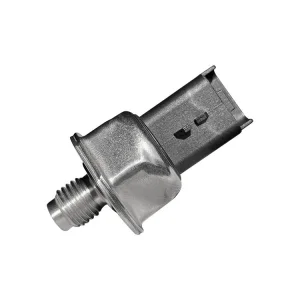
Glass Micro-fused Silicon Pressure Sensors
China Glass Micro-fused Silicon Technology Pressure Sensors & Transmitters | High Reliability
View Product Details
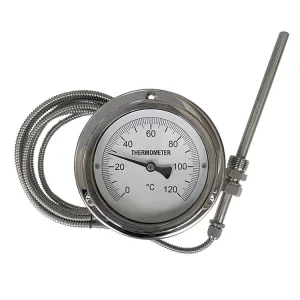
Remote Reading Capillary Thermometer
China Remote Reading Capillary Thermometer Lower Back Mounted With Front Flange Factory Direct
View Product Details
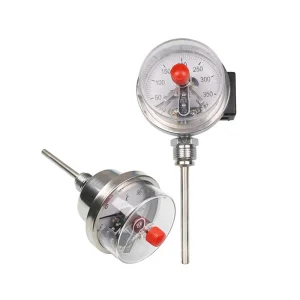
Bi-metal Thermometer Electric Switch Contacts
OEM Bi-metal Thermometer 100mm with Electric Switch Contacts - Industrial Automation Device
View Product Details

Technical Benchmark: Where Should Oil Pressure Be On a Gauge?

An Engineering Analysis of Hydraulic Pressure Thresholds, Fluid Viscosity Dynamics, and Mechanical Gauging Standards

Cold Start vs Operating Temp

During initial engine or hydraulic commissioning (cold start), oil viscosity is significantly higher. Gauges typically register high pressures between 50 PSI and 85 PSI (3.4 to 5.8 Bar). As the fluid reaches operating thermal equilibrium (190°F–220°F / 88°C–104°C), readings naturally settle to standard operating limits.

Idle RPM Baseline Standards

At idle speed (approx. 650–900 RPM), safe oil pressure for standard internal combustion engines and industrial power units typically ranges from 10 PSI to 25 PSI (0.7 to 1.7 Bar). A rule of thumb in heavy machinery design dictates a minimum of 10 PSI per 1,000 RPM of operating speed.

Operational RPM Peak Pressures

Under normal operational loads (2,000 to 4,000 RPM), the oil pressure gauge dial should rest comfortably in the center third of the gauge face, reflecting 25 PSI to 65 PSI (1.7 to 4.5 Bar). High-performance or heavy-duty diesel platforms may run higher, reaching peak operating windows up to 80 PSI.

Comprehensive Oil Pressure Reference Matrix across Applications

For OEM procurement buyers, equipment engineers, and field technicians, maintaining precise pressure tolerances is critical to avoiding mechanical fatigue, oil film rupture, or pump cavitation. Below is an engineering benchmark table:

Equipment / Application Type Cold Idle Range Warm Idle Target Cruising / Operational Peak Gauge Type Recommended
Heavy-Duty Automotive & Light Truck 45 – 75 PSI 15 – 25 PSI 35 – 60 PSI Bourdon Tube Stainless Steel (0-100 PSI)
Industrial Marine Diesel Engines 50 – 85 PSI 20 – 35 PSI 45 – 70 PSI Glycerin-Filled Liquid Gauges (Vibration Resistant)
Hydraulic Power Units (HPUs) 100 – 150 PSI 80 – 120 PSI 150 – 300+ PSI Diaphragm-Sealed Pressure Transducers
CNG Auto Gas Conversion Systems N/A (Gas Fluid) Standard Bar Control 0.1 – 1.0 MPa Differential Resistive Electronic Sensor Gauges (CE Approved)
High-Voltage Transformer Systems (SF6) Static Density 0.25 MPa Target Precision Density Range SF6 Gas Density Monitor (2.5 Inch Micro-Switch)
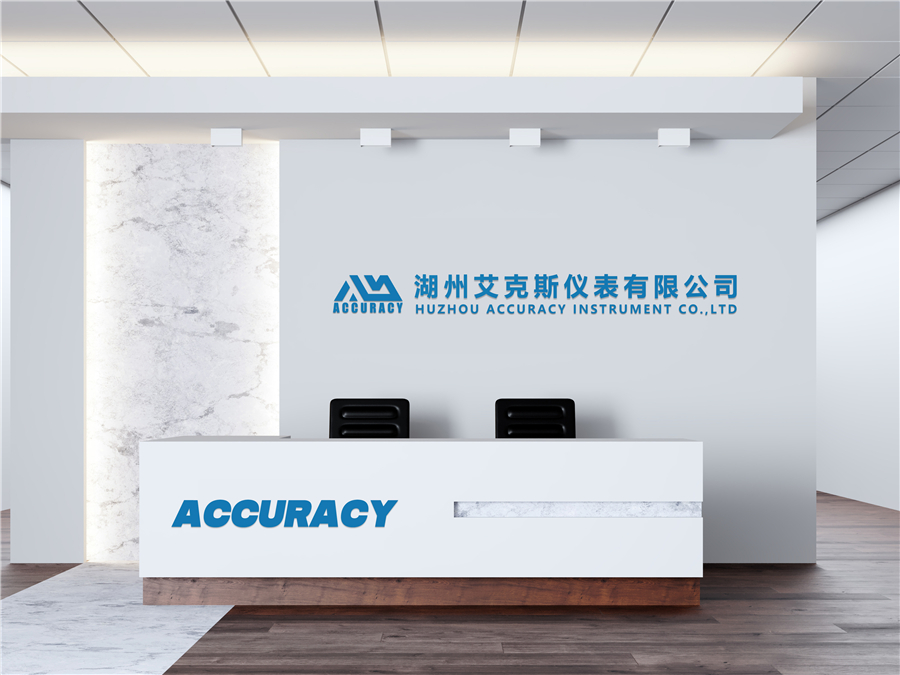
Huzhou Accuracy Instrument Manufacturing Facility

About Huzhou Accuracy Instrument Co., Ltd.

Two Decades of OEM & ODM Engineering Precision in Pressure & Temperature Measurement

Established over 20 years ago, Huzhou Accuracy Instrument Co., Ltd. operates a modern 3,000 square meter specialized manufacturing facility. We are professionally engaged in the development, OEM customization, production, sales, and lifecycle servicing of high-grade industrial mechanical pressure gauges, bi-metal thermometers, SF6 gas density monitors, and micro-fused silicon pressure sensors.

Our solutions serve demanding industrial ecosystems including Mechanical Engineering, Petrochemical Processing, Food & Beverage, Pharmaceuticals, and Smart High-Voltage Electrical Distribution. Equipped with modern automated laser welding lines, thermal testing chambers, and micro-calibration rigs, we consistently achieve a baseline mechanical precision of ±0.5% Full Scale (FS).

20+
Years Experience
3,000㎡
Production Facility
2M+
Annual Unit Output
30+
Global OEM Markets

Expert R&D Department

Comprising 20 specialists focusing on metallurgical innovation, smart IIoT micro-transducers, and international standard compliance (ISO, CE, API, RoHS).

Technician Workforce

120 skilled manufacturing technicians utilizing automated laser welding, dynamic fatigue cycling, and micro-pressure calibration systems ensuring zero zero-point drift.

Global Logistics & Service

15 technical sales professionals delivering 24/7 OEM contract support, custom dial face printing, local threading adaptations, and rapid export fulfillment worldwide.

International Quality Certification & Compliance

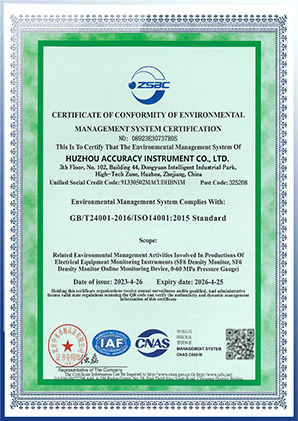
We strictly adhere to ISO 9001:2008 and ISO 17025 certified laboratory standards, upholding zero-leak guarantees across our line.
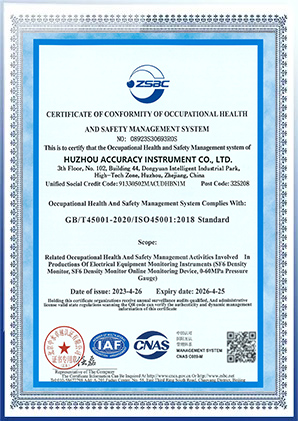
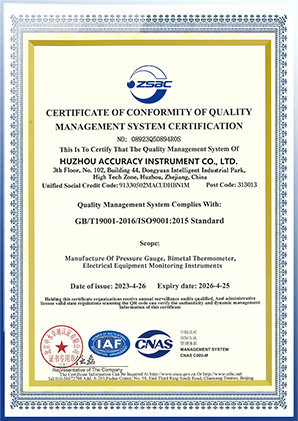
ISO 9001 Qualification Certificate
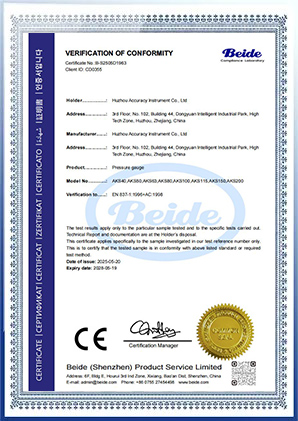
CE Standard Compliance Certificate
SGS Quality Verification Document
Explosion Proof Testing Certification
Calibration Laboratory ISO Cert
Factory Audit Compliance Certificate

Global OEM Sourcing Dynamics & Sourcing Market Trends

How Automotive Tier-1 Suppliers and Industrial System Integrators Select Pressure & Temperature Measuring Instrumentation

1. Shift toward Micro-fused Silicon Technology

Traditional mechanical Bourdon tube gauges remain essential for direct visual readout. However, modern OEM procurement managers increasingly demand hybrid solutions incorporating glass micro-fused silicon pressure sensors. By fusing strain gauges with high-temperature glass onto stainless steel substrates, OEMs eliminate organic adhesive degradation under intense oil pressure pulsations.

2. Harsh Environment & Vibration Resistance

In heavy machinery, off-highway vehicles, and marine engine bays, rapid needle flutter renders un-filled gauges unreadable while destroying internal gears. B2B buyers now prioritize silicone or glycerin-filled liquid casings combined with IP65 to IP67 ingress protection, ensuring stable pointer readouts even under constant 5G operational resonance.

3. Electrical Switch Contact Integration

Visual verification alone is insufficient for automated process lines. Modern OEM specs call for bi-metal thermometers and pressure gauges equipped with electrical contact switches. These allow automatic trigger shut-offs, triggering warning sirens or emergency bypass valves whenever pressure or temperature strays outside specified operating parameters.

4. Customized Local Threading & Brand Identity

Procurement teams require seamless drop-in placement for diverse geographical markets. Key requirements include customizable process connection threads—ranging from NPT (North America), G/BSP (Europe), to PT/JIS (Asia)—along with custom logo silk-screening, specialized pressure range scales (PSI, Bar, KPa, MPa), and bespoke dial colors.

Macro Industry Engineering Solutions

Bespoke Pressure Monitoring Strategies Engineered for Corrosive, High-Vibration, and High-Voltage Environments

Corrosive Viscous Media Protection

Challenge: Standard pressure inlets clog when measuring heavy crude oil, sludge, or crystallization-prone chemical reagents.

Solution: OEM Diaphragm-Sealed Stainless Steel Gauges (0-1 MPa). Isolates the measuring element behind a flexible SS316L or Hastelloy diaphragm, transferring hydraulic force via chemically inert synthetic oil fill.

High-Voltage Substation Gas Integrity

Challenge: Sulfur Hexafluoride (SF6) gas leaks in insulated electrical breakers lead to catastrophic arc flashes and equipment destruction.

Solution: Precision 2.5-Inch SF6 Gas Density Monitors. Featuring micro-switch alarm contacts and temperature compensation mechanisms to maintain true gas density monitoring independent of ambient climate shifts.

Alternative Fuel Safety Systems

Challenge: Auto gas (CNG/LPG) conversion rigs experience intense thermal cycling and pressure spikes, requiring leak-free continuous output.

Solution: CE Certified Resistive CNG Pressure Gauges. Integrates resistive electrical sensor tracks inside compact black-steel or brass housings for real-time dashboard instrumentation readouts.

Localization Support & Strict Quality Assurance Protocols

Guaranteeing Operational Reliability and Compliance with Regional Standards Across 30+ Countries

Full-Scale 100% Pressure Cycle Testing

Prior to warehouse dispatch, every single gauge manufactured at Huzhou Accuracy Instrument undergoes rigorous pressure cycling testing. Using automated helium mass spectrometer leak detectors and digital deadweight testers, our QC team verifies zero internal fluid leakage and enforces calibration variance within strict class tolerances (±1.0%, ±1.6%, or ±0.5% FS).

Global Regional Standard Compliance

Our OEM manufacturing frameworks comply with European Pressure Equipment Directive (PED 2014/68/EU), CE Marking, EN 837-1 safety standards, ATEX explosion-proof guidelines, and RoHS environment material restrictions. Whether delivering to North American oilfields or European pharmaceutical cleanrooms, full documentation traceability is standard.

Technological Roadmap & Industrial Outlook (2025–2035)

Pioneering Next-Generation IIoT Pressure Measurement Solutions for Industry 4.0

Smart Wireless Mesh Gauges

Integrating ultra-low-power LoRaWAN, NB-IoT, and WirelessHART modules directly into traditional 63mm dial gauge backings. Allows legacy factories to retrofit existing equipment for cloud-based predictive maintenance without running signal cabling.

AI Analytics & Health Diagnostic Algorithms

Emerging pressure transmitters featuring embedded edge computing microcontrollers that analyze fluid vibration frequency signatures in real-time. System algorithmically flags pump wear, aeration cavitation, or impending oil filter blockage days before mechanical failure occurs.

Eco-Friendly Lead-Free & SF6 Alternatives

Developing eco-compatible pressure monitoring instruments designed for zero-GWP alternative insulating gases (e.g., Novec 4710 / g3 mixtures) along with 100% lead-free brass alloys for drinking water and food processing compliance.

Engineering Field Troubleshooting & Diagnostic Matrix

Resolving Abnormal Oil Pressure Gauge Indications on Industrial Machinery and Automotive Diesels
Gauge Symptom Probable Hydraulic / Mechanical Cause System Risk Level Recommended Corrective Engineering Action
Gauge Needle Drops to Zero at Hot Idle Extreme oil viscosity breakdown, worn main bearings, stuck pressure relief valve, or failed electronic sensor wire. CRITICAL Shutdown engine/machine immediately. Perform manual mechanical baseline pressure test using calibrated master gauge. Check oil sump levels and oil pump relief spring.
Unusually High Pressure (Exceeding 85 PSI Warm) Blocked internal gallery, oil filter bypass valve stuck closed, incorrect high-viscosity oil grade used. HIGH Inspect and replace oil filter element. Flush hydraulic lines. Verify fluid viscosity against OEM specification manual.
Severe Pointer Vibration / Rapid Flutter Hydraulic pressure pulsations from positive displacement pumps; lack of snubber/dampener; aeration/cavitation. MEDIUM Install a liquid-filled (glycerin/silicone) gauge or add a micro-porous gauge snubber valve to damp line spikes.
Slow Pointer Return / Sticky Movement Congealed oil sludge inside Bourdon tube inlet; mechanical wear of movement pinion gears due to overpressure. LOW Replace instrument with a diaphragm-sealed model designed for high-viscosity media. Clean system oil lines.

Advanced Industrial Instrumentation Catalog

Select from our certified range of thin-film transducers, bimetal switches, and electric contact pressure meters.
CE Certification Bi-Metal Thermometer Electric Switch Contacts
CE Certification Bi-Metal Thermometer 100mm with Electric Switch Contacts - Factory Direct Solution
View Product Details
AKS Thin Film Pressure Transducer IP65
AKS Thin Film Pressure Transducer 1/2 NPT, IP65 Waterproof for Heavy Hydraulic Systems
View Product Details
OEM Bimetal Thermometer Bottom Direct Mounting
OEM Bimetal Thermometer - Bottom Direct Mounting Stainless Steel Temperature Gauge Manufacturer
View Product Details
Glass Microfused Pressure Sensor 0.5% FS
OEM High Accuracy Glass Microfused Pressure Sensor 0.5% FS for Oil & Gas, Hydraulic Systems
View Product Details
50mm Electric Contact Pressure Gauge
OEM 50mm Electric Contact Pressure Gauge 0-300 PSI with Black Iron Semi-Steel Casing
View Product Details
High Accuracy Microfused Sensor
OEM High Accuracy Glass Microfused Pressure Sensor for Oil, Gas & Hydraulic Systems Supplier
View Product Details
63mm SF6 Gas Density Monitor
China 63mm 2.5 SF6 Gas Density Monitor for High-Voltage Equipment Safety Instrumentation
View Product Details
Black Steel Mechanical Pressure Gauge
China 2.5″ Black Steel Mechanical Pressure Gauge – Air Manometer for Precise Measurements
View Product Details

Frequently Asked Procurement & Engineering Questions (FAQ)

Expert Guidance for Technical Buyers, OEM System Designers, and Sourcing Managers
What is considered normal engine oil pressure on a standard gauge dial?
Under normal operating temperatures (approx. 200°F / 93°C), standard internal combustion engines typically operate between 25 to 65 PSI (1.7 to 4.5 Bar) at operational speeds (2,000+ RPM). At warm idle, safe oil pressure drops to between 10 to 25 PSI. A general rule of thumb for safe mechanical operation is a minimum of 10 PSI per 1,000 engine RPMs.
Why does oil pressure read extremely high during a cold engine startup?
Cold engine oil has high kinematic viscosity and resists flow through narrow engine journal bearings and galleries. Because pressure measures resistance to flow, cold starts force the oil pump to generate higher pressure (often between 60 to 85 PSI) until the lubricant warms up, thins out, and circulates freely.
Should I select a mechanical Bourdon tube gauge or a digital micro-fused pressure sensor for OEM machinery?
Mechanical Bourdon tube gauges provide reliable, zero-power visual readouts for field technicians. However, for modern automated machinery requiring PLC integration, IoT telemetry, or high-vibration stability, micro-fused silicon pressure sensors or transmitters (such as Model 2088 or AKS series) offer superior reliability, zero moving parts wear, and precise analog (4-20mA / 0-10V) output signals.
What OEM customization options does Huzhou Accuracy Instrument Co., Ltd. provide?
As a direct factory manufacturer with over 20 years experience, we offer comprehensive OEM/ODM customization: custom dual dial scale printing (PSI/Bar/KPa/MPa), customized logo branding, process connection thread matching (1/4 NPT, 1/2 NPT, G1/4, BSP, PT), custom housing material selection (304/316 Stainless Steel, Black Steel, Brass), internal liquid filling (Glycerin/Silicone oil), and electric switch contact limit settings.
How does liquid filling benefit an oil pressure gauge in heavy industrial applications?
Liquid filling (typically standard pure glycerin or extreme-temp silicone) dampens mechanical vibration, fluid pressure surges, and needle flutter. It lubricates internal pinion gear mechanisms, prevents internal moisture condensation, and significantly extends the operational lifespan of the instrument in high-vibration engine bays and hydraulic rooms.
What quality control standards and certifications govern your production facility?
Our facility operates strictly under ISO 9001:2008 quality management frameworks and ISO 17025 laboratory guidelines. Our products hold CE certifications, SGS compliance approvals, and ATEX explosion-proof validations. Every production batch undergoes 100% calibration testing, thermal cycling, and leak detection before international shipment.
When is a diaphragm-sealed pressure gauge required over a standard direct-mount gauge?
A diaphragm seal is required when measuring highly corrosive fluids, viscous crude oil, slurries, or high-temperature media that would otherwise clog, corrode, or solidify inside the narrow internal Bourdon tube channel. The flush flexible diaphragm transfers system pressure through an isolated fluid chamber while protecting internal mechanical components.
What is the standard production lead time and Minimum Order Quantity (MOQ) for bulk OEM orders?
Standard OEM production lead times range between 2 to 4 weeks depending on customized specifications and order volume. We accommodate scalable MOQs starting from small-batch pilot samples for engineering prototyping up to full container shipments matching annual output capacities exceeding 2,000,000 units.