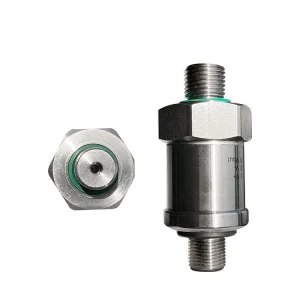
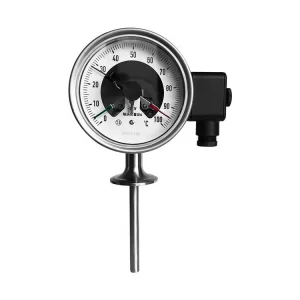
Explore our CE-certified industrial bimetal thermometers, pressure transmitters, and heavy-duty gauges engineered for maximum accuracy.
Unlocking information gain through precise thermal measurement physics, standard compliance, and industrial plant workflow integration.
In high-capacity commercial baking, pharmaceutical drying, powder coating curing, and metallurgical heat-treatment facilities, temperature monitoring is not merely a operational parameter—it is a critical control point (CCP) determining product integrity, safety compliance, and energy utilization efficiency. A core technical question frequently encountered by plant managers and procurement personnel is: How do you use an oven thermometer effectively within heavy industrial environments and high-throughput production lines?
This whitepaper synthesizes two decades of manufacturing expertise from Huzhou Accuracy Instrument Co., Ltd., delivering an exhaustive engineering manual on how industrial oven thermometers operate, how they are calibrated, how China-based OEM factories manufacture them to withstand harsh conditions, and how global enterprises integrate these devices into automated Smart Factory frameworks.
Engineered under European Norm EN 13190 standards. Rigorously tested for electromagnetic compatibility, mechanical shock immunity, and material non-toxicity under food contact guidelines.
Utilizing high-sensitivity helical bimetallic strips and thermal transfer fluids, achieving T90 response times in under 8 seconds within forced-convection thermal air streams.
Calibrated using laser-assisted optical alignment and multi-point oil baths, ensuring consistent Class 1 accuracy across extreme thermal ranges (-50°C to +600°C).
Standard Operating Procedure (SOP) for factory installation, calibration verification, and operational monitoring.
Never place the thermometer stem directly adjacent to heating elements or conductive metal walls, as radiation bias distorts gas temperature readings. Position the sensing element (bimetal stem or capillary probe) in the geometric center of the working baking/curing chamber or within airflow vortex nodes. For large industrial tunnel ovens, establish multi-point probe arrays across pre-heating, baking, and cooling zones.
Prior to mounting or initiating batch operations, verify gauge accuracy against standard laboratory reference blocks or traceable ice-bath/boiling-water calibration vessels. If deviation exceeds ±1% of full scale value, utilize the external adjustment screw (available on Huzhou Accuracy bimetal models) to re-zero the dial pointer under steady-state ambient conditions.
Allow the oven to complete its pre-heating cycle and maintain steady thermal equilibrium for at least 15 minutes. Read the dial scale directly perpendicular to the glass face to eliminate parallax viewing errors. Observe real-time thermal fluctuations when fresh workloads are loaded to calculate the exact recovery time required by the heating system.
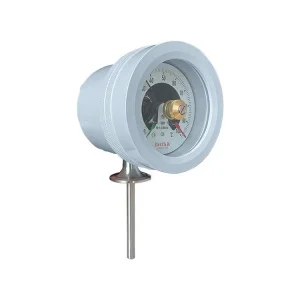
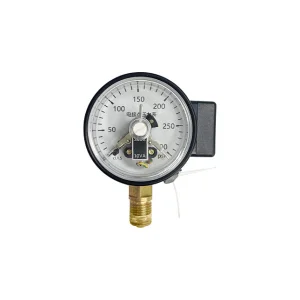
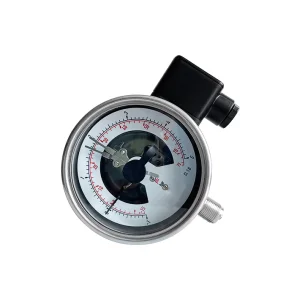
In automated factories, utilize Electric Contact Bimetal Thermometers. Wire the high/low contact limit switches to the plant's Central PLC panel. When thermal thresholds drift beyond programmed limits, the integrated contacts instantly trigger solenoid valves, exhaust fans, or acoustic warning alarms, maintaining tight process control.
| Parameter / Type | Direct Stem Bimetallic Thermometer | Capillary Remote-Reading Thermometer | Electric Contact Bimetal Gauge |
|---|---|---|---|
| Primary Mechanism | Helical Bimetallic Strip Thermal Expansion | Liquid/Vapor Filled Expansion Capillary Tube | Bimetallic Coil with Magnetic-Assisted Contact Points |
| Temperature Range | -50°C to +600°C (-60°F to 1100°F) | -40°C to +400°C | 0°C to +500°C |
| Accuracy Class | Class 1.0 / Class 1.5 (EN 13190) | Class 1.5 | Class 1.5 (±1.5% FS) |
| CE Certification Standard | EN 13190, RoHS Compliant | EN 13190, CE PED 2014/68/EU | LVD 2014/35/EU, EMC 2014/30/EU, CE |
| Optimal Factory Application | Batch ovens, commercial bakery equipment, smoker pits | Remote control panels, high-temp drying cabinets | Automated PLC process loops, safety shut-off systems |
Why global original equipment manufacturers rely on Chinese specialized manufacturing clusters for precision oven thermometers.
The international supply chain for industrial measurement devices has undergone a significant transformation. China's instrument manufacturing sector, centered around high-tech industrial hubs like Huzhou, offers unparalleled systemic advantages in terms of material engineering, supply chain density, automated quality verification, and scalable manufacturing speed.
Factories utilize premium AISI 304 and 316L stainless steel for stem housings and bezels. Automated TIG and laser welding technology ensures hermetic IP67/IP68 sealing, protecting internal mechanism from grease vapor, steam, and corrosive chemical fumes.
Unlike traditional manual dialing, leading Chinese factories employ automated computer vision system calibration rigs. Every dial face is printed or adjusted via dynamic optical feedback, maintaining zero-defect consistency across mass production runs.
From custom stem lengths (50mm to 1500mm), thread connections (NPT, BSP, G, Tri-Clamp), personalized dial face branding, dual scale markings (°C/°F), to high-vibration silicone filling—factories deliver tailored solutions for global OEMs.
Delivering reliable thermal telemetry across diverse industrial and commercial sectors.
In large-scale continuous deck ovens and rotary rack bakeries, thermal stability dictates crust color, crumb expansion, and moisture retention. CE certified, NSF-compliant food-grade stainless steel bimetal thermometers deliver non-contaminating, shatterproof temperature monitoring, withstanding continuous thermal cycling from 150°C to 300°C.
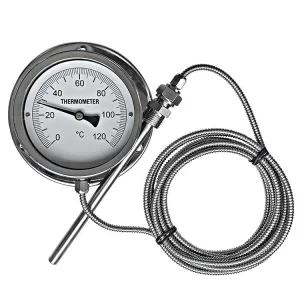
Powder coating curing requires precise thermal maintenance (typically 180°C to 200°C for exactly 10-20 minutes). Fluctuation leads to orange-peeling or coating adhesion failure. Capillary remote reading thermometers mounted outside curing tunnels allow operators to observe core ambient temperatures without opening thermal doors.
Depyrogenation ovens and hot-air sterilizers demand rigorous thermal validation (up to 250°C+). Utilizing hermetically sealed stainless steel thermometers with electric contacts ensures that sterilization cycles maintain peak temperatures without dynamic overshoot, meeting GMP and FDA compliance standards.
Merging mechanical reliability with digital connectivity in the era of Industry 4.0.
The industrial thermometer industry is undergoing a convergence between mechanical robustness and digital telemetry. While pure mechanical bimetallic dial thermometers remain the baseline due to their zero-power operation and extreme reliability, modern smart factories demand digital data streams for predictive maintenance and automated quality logging.
Future-ready factories are adopting hybrid bimetal thermometers equipped with integrated PT100 RTD elements or 4-20mA transmitters. This provides local direct-dial visual reading for technicians while concurrently outputting precise digital telemetry to cloud-based SCADA systems.
With global industrial energy prices fluctuating, precise oven temperature regulation directly impacts energy consumption. Reducing oven thermal drift by even 1.5°C using calibrated CE thermometers yields up to 4.2% annual gas or electrical energy savings for heavy thermal processors.
Two decades of engineering excellence, research innovation, and global instrument supply.
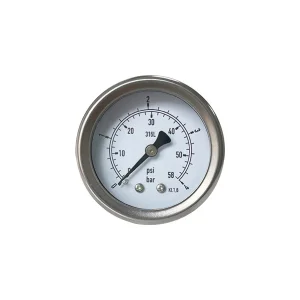
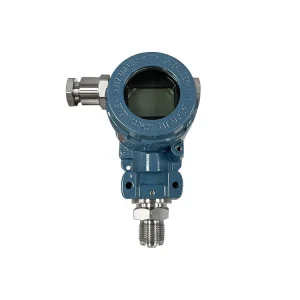
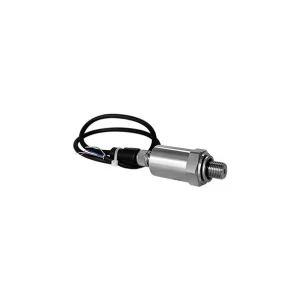
Huzhou Accuracy Instrument CO LTD is professionally engaged in the development, sales and service of industrial mechanical pressure gauges, bi-metal thermometers, SF6 manometer, and pressure sensors. Products are widely used across Mechanical Engineering, Chemical Engineering, Food Industry, Pharmaceutical, and high-technology electric appliances.
Established over two decades ago, our pressure gauge and thermometer manufacturing facility spans 3,000 square meters, equipped with advanced production lines and rigorous quality control systems. As an industry leader, we integrate innovation with precision engineering to deliver zero-leakage, reliable measurement solutions for global enterprise clients.
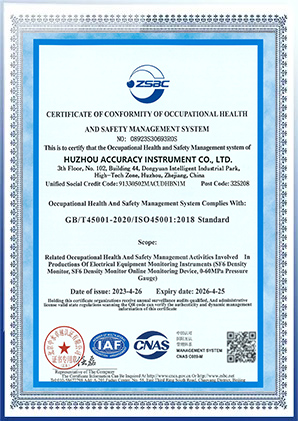
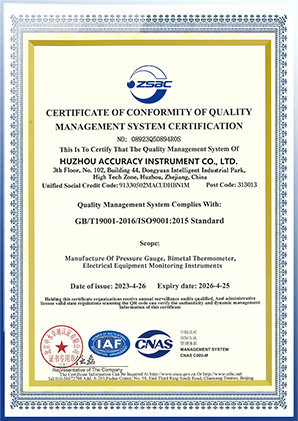
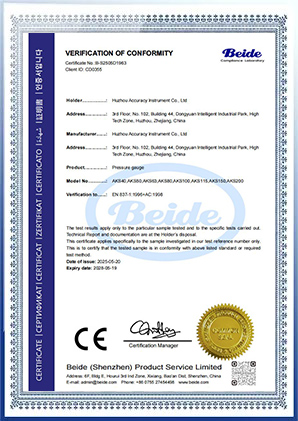
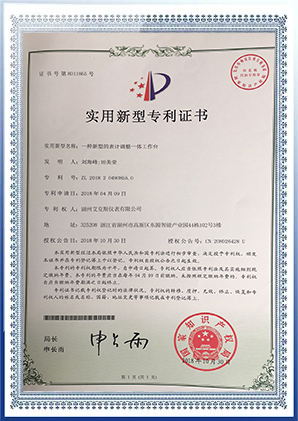
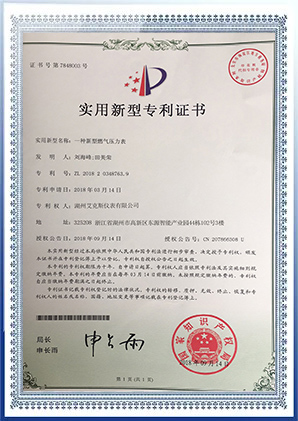
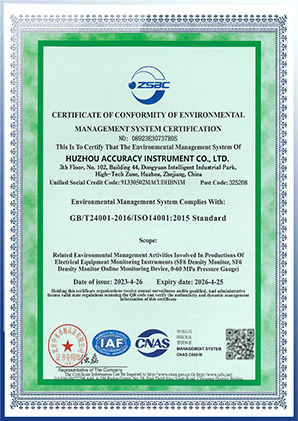
Adhering to strict benchmark quality under ISO9001:2008 and CE Certification compliance.
A structured sourcing framework for procurement directors, OEM buyers, and supply chain managers.
Procuring industrial temperature measurement devices at scale requires rigorous evaluation beyond initial piece-unit cost. Enterprise buyers must conduct holistic total cost of ownership (TCO) analysis, verifying factory auditing, raw material traceability, and regulatory compliance.
Verify authentic CE documentation under Directive 2014/68/EU (Pressure Equipment Directive) and EN 13190 standard compliance. Ensure the factory provides EN 10204 3.1 material test certificates for all wetted stainless steel parts.
Establish strict AQL sampling standards (typically AQL 0.65 for critical mechanical seal parameters and AQL 1.0 for thermal accuracy verification). Demand 100% pressure cycle testing reports prior to container dispatch.
Clearly define mechanical specifications: dial size (50mm, 63mm, 100mm, 150mm), stem diameter (6mm, 8mm, 10mm), process connection threads (1/4" NPT, 1/2" BSP), dial face art files, and specialized thermal response oil fillings.
Expert answers addressing common technical queries on oven thermometry, factory calibration, and usage.
Place the thermometer probe or dial stem into the center of the oven chamber away from direct heating elements. Allow the oven to reach its target setpoint temperature and stabilize for at least 15-20 minutes. Compare the thermometer's physical dial reading against the digital control display of the oven. Any variance represents the calibration offset required for accurate cooking, baking, or industrial processing.
CE Certification confirms that the thermometer meets essential safety, health, and environmental protection requirements established by European Directives (such as EN 13190 for dial thermometers). For industrial factories and equipment manufacturers exporting to European or global markets, CE marking is a legal prerequisite guaranteeing structural safety and measurement reliability under high operating temperatures.
Bimetallic thermometers rely on the mechanical expansion of two bonded metals, functioning without electrical power and providing direct visual readings with zero digital failure risk. Thermocouples generate micro-voltage signals requiring digital controllers. Factories often combine both: bimetal gauges for localized visual safety checks and thermocouples/RTDs for automated PLC digital control loops.
For high-throughput continuous manufacturing (such as food processing or powder coating), annual calibration checks certified to ISO/IEC 17025 standards are recommended. In critical aerospace or pharmaceutical applications, semi-annual or quarterly calibration logs may be mandated by quality assurance protocols.
Yes. Chinese instrument manufacturers like Huzhou Accuracy Instrument Co., Ltd. specialize in full OEM/ODM customization. Stems can be custom-manufactured from 50mm up to 1500mm, with various process threads (NPT, BSP, G, Metric) or sanitary Tri-Clamp fittings designed specifically for custom furnace geometry.
High-quality capillary thermometers incorporate ambient temperature compensation springs within the movement casing. This ensures that ambient room temperature changes along the length of the capillary tube do not skew the reading taken at the sensing bulb inside the oven.
Select from our high-precision pressure, vacuum, and bimetallic temperature measurement series.
 Accuracy Instrument