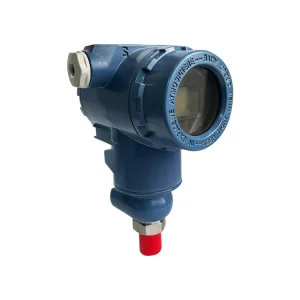
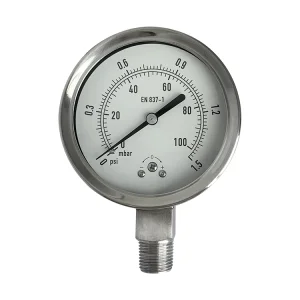
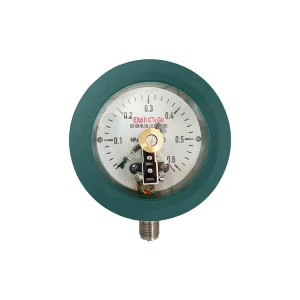
Explore our CE-certified, factory-direct industrial instruments engineered for extreme chemical, HVAC, and mechanical environments.
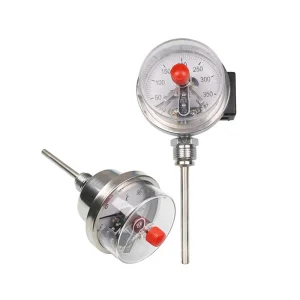
Understanding why fluid expansion copper capillary tube thermometers remain irreplaceable in modern automated industrial applications.
In hazardous ATEX zones, chemical processing units, and high-vibration marine engine rooms, capillary tube thermometers operate completely mechanically without external power, eliminating spark hazards and electromagnetic interference (EMI) vulnerabilities.
High-purity deoxidized copper capillary tubes (C12200) deliver rapid thermal conductivity. The physical coefficient of expansion within micro-bore capillary lines ensures instantaneous readings over remote distances up to 10 meters or more.
Under strict European Union Directives (PED 2014/68/EU & EN 13190), CE-certified copper capillary thermometers guarantee bursting pressure safety margins, thermal cycle longevity, and calibrated operational accuracy within class 1.0 to 1.5 error bands.
A step-by-step mechanical energy conversion model from bulb thermal excitation to dial pointer deflection.
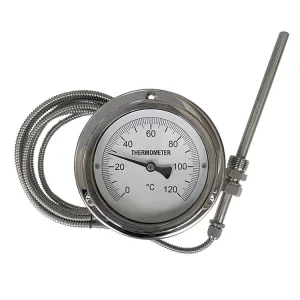
The operational mechanism of a capillary tube thermometer relies on fundamental thermodynamic expansion laws—specifically volumetric thermal expansion of liquids (Class 1) or vapor pressure dynamics of volatile organic liquids (Class 2). A system consists of three interconnected, sealed metallic components: the sensing bulb, the capillary extension tube, and the Bourdon tube element.
| Mechanical Subsystem | Material Composition | Operational Role & Thermodynamic Principle |
|---|---|---|
| 1. Sensing Bulb | C12200 Copper / 316 Stainless Steel | Submerged directly in the process fluid. Absorbs heat energy causing internal liquid expansion: $\Delta V = V_0 \cdot \beta \cdot \Delta T$. |
| 2. Copper Capillary Tube | High-Purity Micro-bore Copper ($ID: 0.15 - 0.35mm$) | Transmits volume change or hydrostatic fluid pressure with minimal thermal volumetric lag across extended distances (up to 15 meters). |
| 3. Bourdon Tube / Diaphragm | Beryllium Bronze / Phosphor Bronze | Converts incoming hydraulic fluid pressure increase into linear mechanical displacement via elastic tube uncoiling. |
| 4. Linkage & Movement | Precision Brass Gears & Pinions | Amplifies linear Bourdon motion into smooth, rotational movement to drive the pointer across a calibrated temperature scale dial. |
When the sensing bulb experiences a temperature shift ($\Delta T$), the internal medium (organic liquid such as xylene, silicone fluid, or gas) undergoes precise volumetric expansion proportional to its thermal expansion coefficient ($\beta$).
Due to the extremely small internal diameter of the copper capillary, the fluid displacement generates hydraulic pressure that propagates rapidly down the capillary path, completely isolated from ambient environmental interference.
The internal pressure reaches the Bourdon tube inside the instrument dial housing. The pressure forces the curved tube to straighten out slightly. A bimetallic compensation strip inside compensates for temperature variations along the capillary wire itself.
Huzhou Accuracy Instrument CO LTD is professionally engaged in the development, sales and service of industrial mechanical pressure gauges, bi-metal thermometers, SF6 manometer, pressure sensor. Products are widely used in various applications such as Mechanical Engineering, Chemical Engineering, Food Industry, Pharmaceutical, and high technology electric appliances.
Established over two decades ago, our pressure gauge manufacturing facility spans 3,000 square meters, equipped with advanced production lines and rigorous quality control systems. As an industry leader, we integrate innovation with precision engineering to deliver reliable measurement solutions for global clients.
R&D Department (20 specialists): Focuses on material innovation, smart sensor integration, and compliance with international standards (e.g., ISO, API).
Production Workforce (120 technicians): Utilizes automated assembly and laser calibration technologies to ensure product durability and accuracy.
Sales & Service Unit (15 professionals): Provides 24/7 technical support and customized solutions across 30+ countries.
Annual output exceeds 2 million units, covering industrial-grade gauges (e.g., stainless steel gauge, black steel gauge, shock-proof gauge, sf6 gauge, thermometer, pressure sensor) for oil/gas, HVAC, and pharmaceutical sectors.
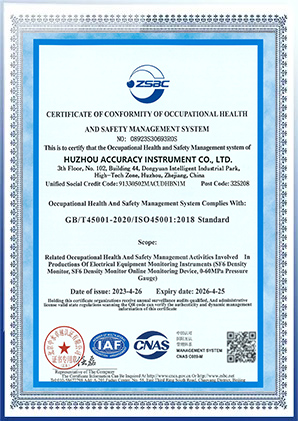
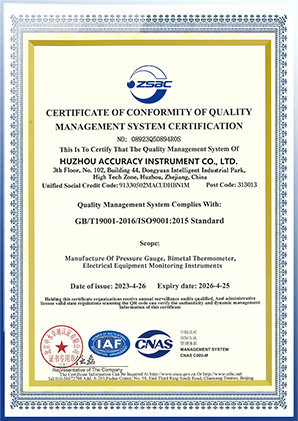
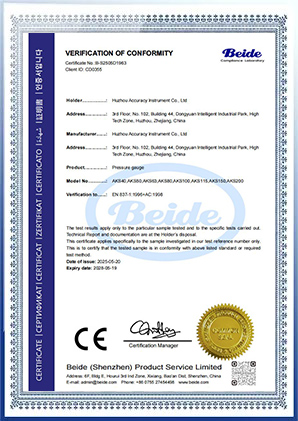
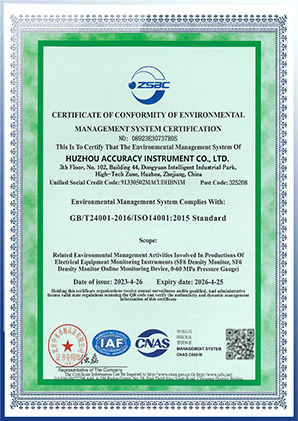
Products exported worldwide, with certifications including ISO, SGS, and CE, earning recognition for corrosion resistance and ±0.5% precision.
Our laboratory conducts 100% pressure cycle tests and environmental simulations, adhering to ISO 9001 and ISO 17025 standards. Continuous improvement drives our reputation for "zero-leak" performance in extreme conditions, supported by a one-year warranty.
We have long followed the concept of "reasonable price, accurate delivery, good quality" and several business management models to keep our production quality above the required benchmark under ISO9001:2008 certified.
Custom engineering setups for temperature reading across demanding industrial landscapes.
Copper capillary thermometers provide remote monitoring of evaporator coil temperatures, chilled water loops, and cold storage rooms. Their flexibility allows the indicator dial to be placed conveniently on external control panels outside insulated rooms.
Heavy-duty marine diesel engines produce extreme vibrations that destroy electronic digital displays. Silicon oil-filled liquid-damped copper capillary gauges absorb engine shocks while transmitting cylinder exhaust gas temperatures up to +600°C accurately.
Certified under CE PED Directive 2014/68/EU and ATEX non-electrical standards, these mechanical sensors require zero intrinsic safety barriers, reducing installation capital costs in hazardous Zone 1 and Zone 2 refinery environments.
Blending traditional fluid dynamics reliability with modern IIoT and micro-electronic telemetry.
Integration of piezoresistive ceramic pressure transducers into the Bourdon chamber. This provides localized dial indication along with a 4-20mA or RS-485 Modbus output signal to DCS/PLC control systems simultaneously.
Transitioning from traditional mercury-filled systems to biodegradable organic liquid expansion mediums and high-purity inert gas fills (N₂) that comply with REACH and RoHS European regulations.
Enhancing standard copper capillaries with flexible SS316 double-interlocking armor and outer PVC/PTFE sleeves to prevent mechanical crushing, chemical abrasion, and rodent damage in subsea or outdoor chemical plants.
In-depth answers addressing design, selection, installation, and CE compliance standards.
While copper capillaries can be drawn up to 15 meters (50 feet), standard industrial practices recommend lengths between 1.5 to 5 meters. Beyond 10 meters, ambient thermal fluctuations along the capillary line can introduce minor thermal error variables, requiring micro-bore tubing with bi-metallic ambient temperature compensation components inside the case.
Copper (C12200) offers significantly higher thermal conductivity ($k \approx 390 \text{ W/m}\cdot\text{K}$) compared to stainless steel ($k \approx 16 \text{ W/m}\cdot\text{K}$), facilitating faster thermal response times. Additionally, copper is more ductile, making it easier to bend and route through tight conduit runs during installation without kinking.
CE Certification ensures the instrument complies with essential European Health, Safety, and Environmental directives. Specifically, for capillary thermometers, it validates pressure envelope safety under the Pressure Equipment Directive (PED 2014/68/EU) and guarantees mechanical reliability per EN 13190 standard guidelines.
When measuring aggressive acids, alkalis, or high-velocity fluids, a thermowell (machined solid bar-stock stainless steel 316L, Hastelloy, or Titanium) must be installed into the process pipe. The sensing bulb is then inserted into the thermowell, isolating the sensor from direct chemical attack and high fluid pressures.
Yes. Huzhou Accuracy Instrument thermometers feature an external zero-adjustment screw located on the back or side of the instrument case, allowing technicians to perform single-point field zeroing against a certified reference thermal bath.
Severe crimping reduces or blocks the inner micro-bore diameter, preventing the expansion fluid from transmitting hydraulic pressure to the Bourdon tube. This causes pointer freezing or severe calibration error. Damaged capillaries must be returned to the manufacturer for capillary replacement and re-calibration.
Comprehensive gauge lineup from Huzhou Accuracy Instrument Co., Ltd.
 Accuracy Instrument