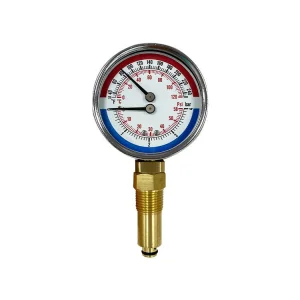
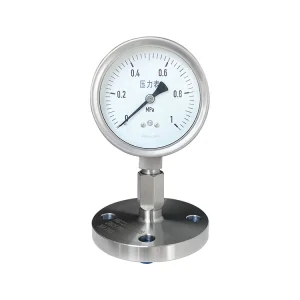
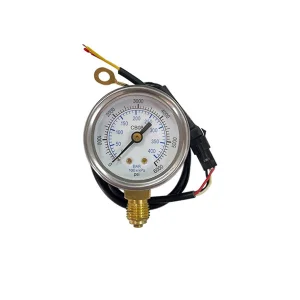
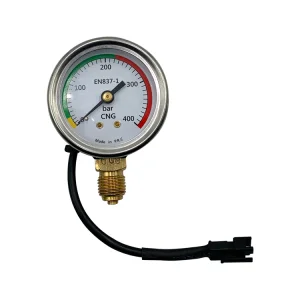
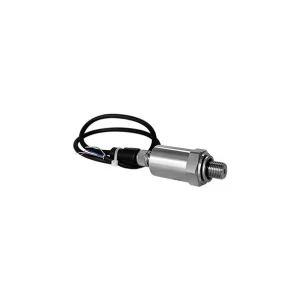
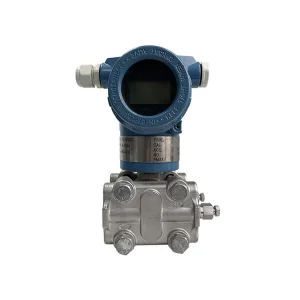
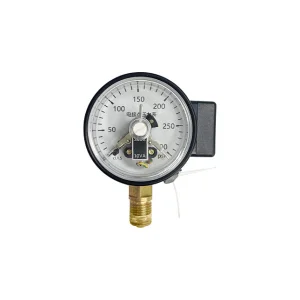
Explore our premium range of precision-engineered pressure gauges, compound sensors, and bimetallic thermometers certified for demanding industrial applications worldwide.
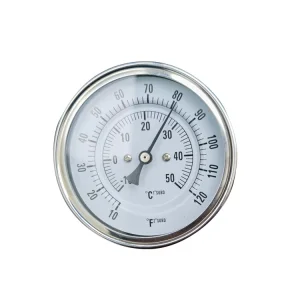
An authoritative analysis of internal combustion, hydraulic powertrain, and industrial fluid loop diagnostics under CE compliance standards.
In heavy industrial machinery, marine propulsion, high-performance automotive platforms, and power generation infrastructure, real-time fluid health monitoring is fundamental to preventing catastrophic mechanical failure. System designers and procurement specialists frequently weigh the operational necessity of an Oil Pressure Gauge versus an Oil Temperature Gauge. While both metrics evaluate the state of the hydrodynamic lubrication boundary, they operate on completely distinct physical principles, offer different diagnostic response times, and communicate unique structural signals.
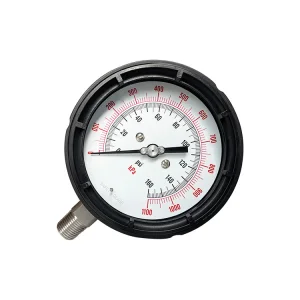
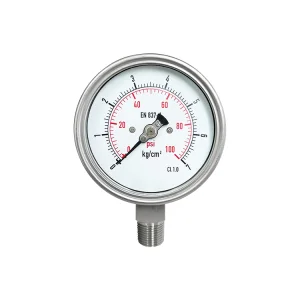
An Oil Pressure Gauge measures the instantaneous mechanical force exerted by continuous fluid flow against internal galleries, delivered by a positive displacement pump. Utilizing elastic sensing elements—such as C-shaped Bourdon tubes, helical springs, or piezo-resistive ceramic diaphragms—it registers physical pressure drops in real time. A sudden drop in oil pressure indicates immediate, high-urgency mechanical vulnerabilities: catastrophic pump gear shearing, severe oil line rupture, pick-up tube cavitation, or total fluid starvation. The pressure reading is the primary "first responder" metric of engine health, reacting within milliseconds to operational changes.
Conversely, an Oil Temperature Gauge monitors thermal energy absorption across the lubrication circuit using bimetallic helical elements or RTD (Resistance Temperature Detector) thermistors. Engine oil serves a dual purpose: lubricating friction points and carrying heat away from critical internal components such as piston crowns, crankshaft journals, and turbocharger bearing housings. Unlike pressure, fluid temperature exhibits high thermal inertia; it changes gradually as friction work converts into heat. Monitoring oil temperature provides vital insight into overall thermal efficiency, fluid shear degradation, heat exchanger fouling, and pre-ignition combustion anomalies. A rise in oil temperature directly reduces the fluid's kinematic viscosity index, which in turn leads to lower system pressure.
| Evaluation Parameter | Oil Pressure Gauge | Oil Temperature Gauge | Dual Compound Sensor / Combo Gauge |
|---|---|---|---|
| Primary Measurement Variable | Hydraulic force / fluid thrust (PSI, Bar, kPa) | Thermal energy / heat dissipation (°C, °F) | Simultaneous mechanical force & thermal gradient |
| Sensing Core Technology | Bourdon Tube (SS316L), Piezoresistive Ceramic | Bimetallic strip, NTC Thermistor, Pt100 RTD | Dual-channel transmitter / coaxial mechanical linkage |
| Diagnostic Response Time | Instantaneous (< 50 milliseconds) | Gradual / High Inertia (5 – 30 seconds) | Real-time pressure drop + trended thermal tracking |
| Primary Failure Modes Detected | Pump failure, oil starvation, bearing clearance loss | Cooling system breakdown, thermal shear, engine strain | Holistic tribological loop degradation |
| CE Compliance Standard | EN 837-1 / PED 2014/68/EU Module A2/B+D | EN 13190 / DIN EN 14597 Thermal Standard | Unified Directive Compliance (EMC + PED) |
From an advanced tribological perspective, oil pressure and oil temperature are inextricably linked through fluid dynamic equations (such as the Hagen-Poiseuille law governing laminar flow through circular pipes). As oil temperature increases, its kinematic viscosity ($\nu$) decreases exponentially according to the Walther equation. Lower viscosity reduces resistance to flow within bearing clearances, causing a measurable drop in backpressure throughout the lubrication system.
Understanding this cross-correlation is vital for global B2B procurement managers and OEM engine builders:
Because these metrics are complementary, modern industrial specifications increasingly require dual-input compound instruments or matched sensor pairs. OEM buyers must verify that manufacturers provide calibrated scales matched to the specific viscosity grades (e.g., SAE 15W-40, ISO VG 68, synthetic ester fluids) utilized in end-use equipment.
For European and international B2B buyers, purchasing non-certified instrumentation introduces immense operational, safety, and legal risks. Modern heavy industry operating under the European Economic Area (EEA) mandates compliance with strict safety directives. A genuine CE Certification on an oil pressure or temperature gauge signifies rigorous compliance with European Union harmonized standards:
Applies to pressure gauges operating above 0.5 bar. Requires pressure boundary integrity testing, burst-pressure safety factors (minimum 4x working pressure limit), and trace material heat number verification for pressure-containing housings.
Mandatory for digital gauges, CAN-bus integrated units, and 4-20mA pressure transmitters. Ensures instruments operate without interference in high EMI environments (near alternators, high-voltage equipment, radar systems).
Defines accuracy classes (e.g., Class 1.0, Class 1.6, Class 0.5), dial scale increments, corrosion resistance, explosion-proof blow-out back safety discs, and bimetallic thermal element response tolerances.
Huzhou Accuracy Instrument Co., Ltd. integrates decades of precision engineering with advanced automated assembly, establishing new global standards for pressure and temperature instrument sourcing.
Huzhou Accuracy Instrument CO LTD is professionally engaged in the research, engineering development, manufacturing, and global distribution of industrial mechanical pressure gauges, bi-metal thermometers, SF6 gas density monitors, and intelligent digital pressure transmitters.
Our modern manufacturing facility spans over 3,000 square meters in Huzhou, Zhejiang, China. Equipped with fully automated robotic laser welding cells, automatic fluid-filling damping lines, computer-controlled helium mass spectrometer leak detection, and automated temperature calibration baths, we guarantee zero-defect manufacturing for extreme industrial environments.
By enforcing continuous improvement across our supply chain, we achieve seamless scale, high cost-competitiveness, and rapid batch-customization capabilities for global OEMs in over 30 countries.
Focuses on advanced alloy metallurgy, smart sensor integration (4-20mA, HART, Modbus RS485), laser-welded diaphragm seals, and compliance with international standards including ISO, API, and CE guidelines.
Utilizes automated micro-assembly lines, dual-glycerin/silicone oil filling systems, and automated laser calibration technologies to ensure mechanical durability, zero fluid leakage, and long-term vibration resistance.
Provides 24/7 technical support, direct engineering consultation, custom dial-face graphics printing, and complete supply chain transparency across North America, Europe, Asia, and the Middle East.
Targeted instrument designs engineered for extreme operational environments across key global sectors.
Challenge: Continuous high-frequency vibration, mechanical shock, and dust exposure in hydraulic excavators and dump trucks.
Solution: CE-certified vibration-resistant stainless steel gauges filled with high-viscosity liquid glycerin or silicone damping fluid. Solid-front phenolic cases prevent dial glass shattering while safeguarding internal Bourdon mechanisms.
Challenge: Saltwater spray corrosion, high humidity, and extreme ambient temperature fluctuations in heavy fuel oil (HFO) loops.
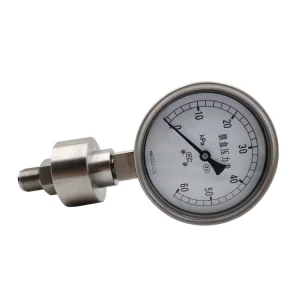
Solution: SS316L full stainless steel bimetallic thermometers and laser-welded flanged diaphragm seal pressure gauges delivering IP67 ingress protection and zero-leak reliability under aggressive marine atmospheric conditions.
Challenge: Highly corrosive media, volatile gas pressures, and explosive ambient atmospheres demanding strict safety protocols.
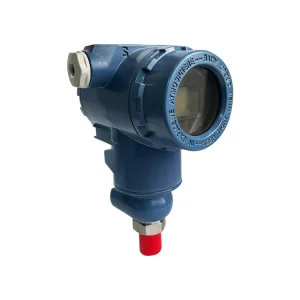
Solution: Explosion-proof CE-certified 3051 pressure transmitters and CNG automotive gas gauges equipped with dual 5V/12V electrical contacts, high-purity alumina ceramic sensors, and NACE MR0175 compliant metallurgy.
Challenge: Monitoring toxic gas density in high-voltage switchgear without gas leakage under severe electrical arc conditions.
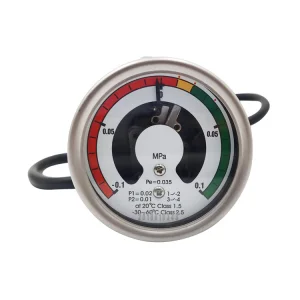
Solution: Specialized 63mm SF6 Gas Density Monitors featuring temperature-compensated pressure mechanisms and hermetically sealed stainless steel enclosures operating from -0.1 to 0.1 MPa.
The industrial instrumentation sector is experiencing a rapid technological evolution driven by Industry 4.0, predictive maintenance protocols, and smart factory automation. Traditional purely mechanical pressure and temperature gauges are increasingly migrating toward integrated hybrid architectures:
Our quality system strictly adheres to "Reasonable Price, Accurate Delivery, and Superior Quality", meeting ISO 9001:2008 standards and international CE mandates.
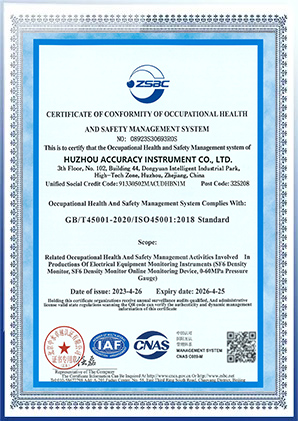
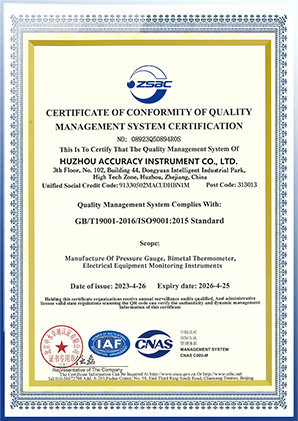
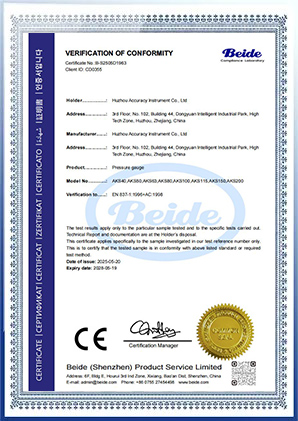
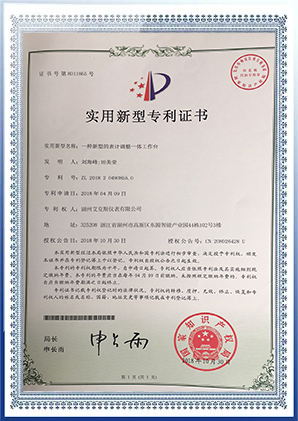
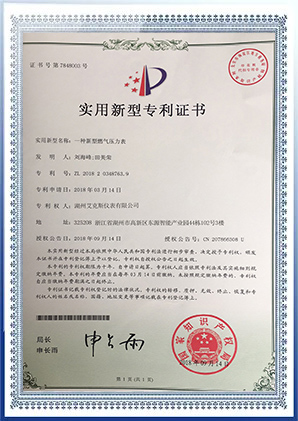
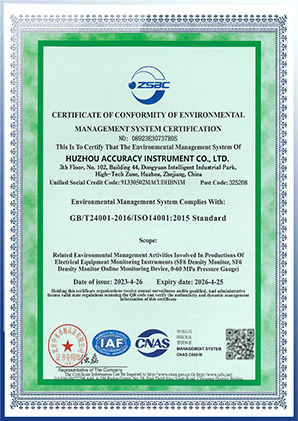
Our testing laboratory conducts 100% full-scale pressure cycling, temperature shock testing, and helium leak testing on all production batches under ISO 9001 and ISO 17025 protocols, backed by our comprehensive 1-year product warranty.
Direct answers to technical queries regarding oil pressure vs temperature instrumentation, CE compliance, and B2B sourcing.
Select from our extended line of high-precision gas density monitors, digital transmitters, and heavy-duty hydraulic pressure gauges.
 Accuracy Instrument