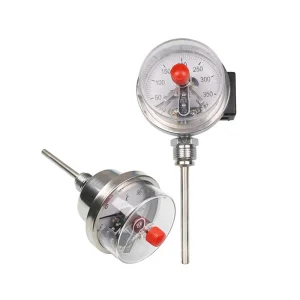
Explore our CE-certified bimetallic thermometers, industrial glass thermometers, and heavy-duty pressure measurement systems manufactured for global critical applications.
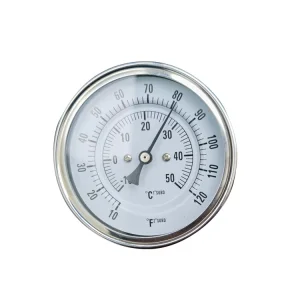
Analyzing global demand, mechanical vs. digital reliability, and China's strategic manufacturing role in high-precision thermal monitoring.
In an era increasingly dominated by electronic sensors and IoT transmitters, mechanical temperature measurement devices—specifically Industrial Bimetal Thermometers and V-Shape Industrial Glass Thermometers—remain irreplaceable components of industrial safety infrastructure. Unlike electronic transmitters that rely on external power sources, signals processing, and digital bus networks, mechanical instruments operate continuously without external power, providing fail-safe, real-time localized visual verification in hazardous environments.
From petro-chemical refineries handling volatile hydrocarbons to marine engine rooms subjected to continuous vibration, mechanical instruments serve as the final visual line of defense against catastrophic thermal runaway events. Leading international standards such as ASME B40.200 and EN 13190 strictly mandate local dial visual indication alongside redundant electronic sensor loops to guarantee process safety integrity level (SIL) compliance.
China's specialized precision instrument manufacturing ecosystem, centered in industrial powerhouses such as Zhejiang Province, has evolved from low-cost assembly to advanced metallurgical and automated optical calibration engineering. Modern Chinese OEM/ODM factories combine rigorous materials science (e.g., vacuum-annealed bimetallic coils, borosilicate 3.3 capillary glass) with high-capacity automated production lines.
By leveraging integrated supply chains for raw materials like AISI 316L stainless steel, high-purity mercury-free organic glass liquids, and high-precision CNC thermowell machining, Chinese manufacturers deliver international-grade instruments achieving ±1.0% to ±0.5% full-scale accuracy at a fractional total cost of ownership compared to traditional Western suppliers.
| Technical Characteristic | Industrial Bimetal Thermometers | V-Shape Glass Thermometers |
|---|---|---|
| Operating Principle | Differential thermal expansion of two helically wound welded metal strips | Thermal expansion of liquid (red/blue organic fill or mercury) in a glass capillary |
| Temperature Range | -70°C to +600°C (-94°F to +1100°F) | -50°C to +600°C (-58°F to +1100°F) |
| Vibration Resistance | High (Enhanced with silicone gel dial fill or anti-vibration dampeners) | Moderate (Protected within solid brass, aluminum, or stainless steel casings) |
| Visual Readability | Circular dial face (63mm, 100mm, 150mm) with 270° scale arc | Prismatic V-shaped glass tube casing for wide-angle vertical visibility |
| Process Connection | Direct back, bottom, or 180° every-angle adjustable mounting; threaded/flanged stem | Straight, 90° angle, or 135° angle brass/SS thermowell thread connections |
| Primary Applications | Chemical processing, oil & gas pipelines, power plants, HVAC systems | Marine diesel engines, boiler feedwater, refrigeration, municipal piping |
A technical buyer's guide to specifying bimetallic and glass thermal sensors for harsh industrial environments.
Procurement teams must specify case materials based on atmospheric corrosion. For offshore and chemical plants, AISI 316/316L stainless steel housing with IP65/IP67 hermetic sealing is imperative to prevent moisture ingress, internal lens fogging, and corrosive salt-spray degradation of internal mechanical linkages.
Direct stem immersion into high-velocity fluid pipelines risks vortex-induced vibration (VIV) fatigue failure. OEM sourcing guidelines mandate paired thermowells (tapered, stepped, or straight) compliant with ASME PTC 19.3 TW-2016 calculations to guarantee structural integrity under extreme fluid dynamics.
Ensure manufacturers provide factory calibration certificates compliant with ISO/IEC 17025 laboratory standards. Standard industrial applications require Class 1.0 (acc. EN 13190) or Grade A (acc. ASME B40.200), ensuring maximum full-scale error does not exceed ±1.0% across the operational range.
20 Years of Precision Mechanical Engineering & Global Sourcing Excellence
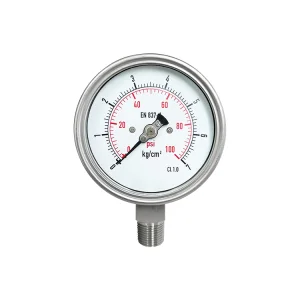
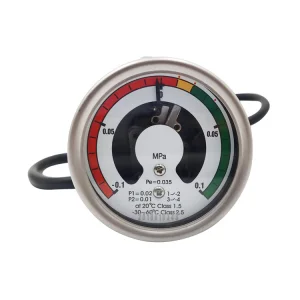
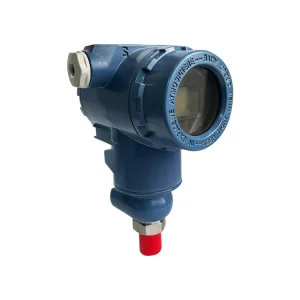
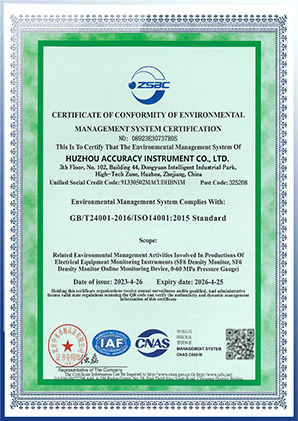
Established over two decades ago, Huzhou Accuracy Instrument Co., Ltd. operates a modernized 3,000 square meter facility equipped with automated assembly lines, high-precision laser welding stations, and specialized temperature calibration baths. We specialize in the end-to-end development, manufacturing, and global service of industrial mechanical pressure gauges, bi-metal thermometers, SF6 gas density monitors, and intelligent pressure sensors.
Our commitment to continuous innovation is backed by a robust organizational infrastructure engineered for absolute quality control, high annual yield, and custom enterprise support:
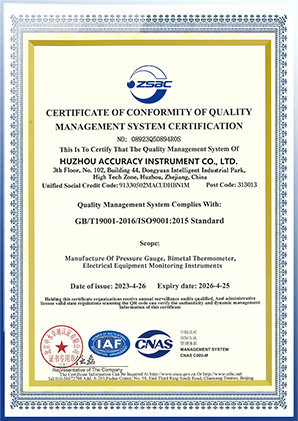
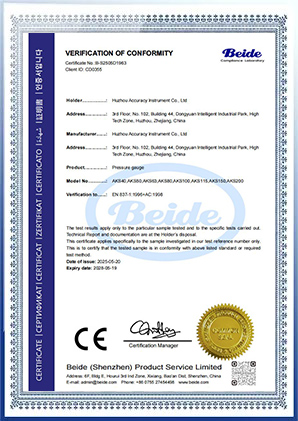
Our laboratory conducts 100% thermal cycle testing, pressure impulse validation, and leak-detection simulations adhering strictly to ISO 9001:2008 and ISO 17025 benchmarks. Every industrial thermometer and pressure gauge is backed by our proven zero-leak guarantee and 1-year operational warranty.
Customized mechanical thermal indication architectures engineered for severe process environments worldwide.
Refining environments require explosion-proof bimetal thermometers equipped with integrated electric switch contacts (SPDT/DPDT). These units enable local continuous dial display while acting as redundant mechanical safety switches to trigger automated alarm or shutdown sequences if temperature thresholds are breached.
Exhaust gas temperature monitoring in heavy marine diesel engines subjects instrumentation to continuous multi-axis vibration. V-Shape glass thermometers with shock-absorbing rubber mounting buffers and liquid-dampened bimetallic gauges prevent pointer flutter, ensuring crystal-clear readability and long component service life.
Sanitary temperature indication demands crevice-free surface finishing (Ra ≤ 0.4 μm) and direct Tri-Clamp process connections. Our sanitary bimetal thermometers eliminate thread-contamination traps, supporting CIP (Clean-in-Place) and SIP (Sterilization-in-Place) protocols without decalibration.
Pioneering hybrid thermal sensing technologies, eco-friendly liquid fills, and advanced metallurgy.
The next operational evolution combines zero-power bimetallic mechanical indicators with ultra-low-power wireless transmitters (HART, WirelessHART, LoRaWAN) housed within a unified dual-chamber enclosure. This provides plant operators with local analog visibility alongside continuous telemetry for predictive maintenance software systems.
In alignment with EU RoHS and REACH regulations restricting heavy metal usage, modern industrial glass thermometers have transitioned exclusively to high-contrast blue or red organic non-toxic fluid fills (such as biodegradable organic spirit compounds), offering equivalent thermal expansion accuracy (±1 scale division) without environmental hazard risks during disposal.
Expert technical answers regarding design selection, installation practices, and global procurement procedures.
The difference lies in stem orientation relative to the dial face. Back mount thermometers feature a stem extending perpendicularly from the rear of the dial (ideal for direct panel or front-facing tank mounting). Bottom mount thermometers feature a stem extending from the lower vertical edge (ideal for overhead pipelines). Every-angle thermometers feature a 180° swivel hermetic joint allowing the housing to be rotated and tilted for optimal visual positioning in complex pipe arrangements.
While direct insertion stem models exist, using a thermowell is highly recommended for pressurized media, corrosive fluids, or high-velocity pipelines. A thermowell serves as a pressure barrier, allowing instruments to be removed, calibrated, or replaced without shutting down process operations or depressurizing the piping system.
Every instrument manufactured in our facility undergoes 100% automated pressure impulse and leak-detection tests. We utilize TIG and laser welding procedures for all stainless steel joint seams, followed by helium mass spectrometer leak testing to guarantee zero-leak reliability under extreme operational cycles.
We offer extensive OEM/ODM customization options including custom dial face logos, specialized temperature ranges (°C, °F, or dual scale), custom stem lengths (from 50mm up to 2000mm), special wetted materials (SS316L, Hastelloy, Monel, PTFE coating), and tailored process connection threads (NPT, BSP, BSPT, Metric).
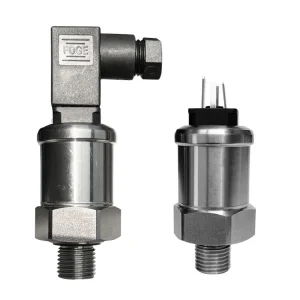
Discover additional industrial pressure transmitters, bimetallic contact switches, and thin-film transducers.
 Accuracy Instrument