Explore high-precision bimetal thermometers, pressure gauges, and transmitters engineered for rigorous industrial applications worldwide.
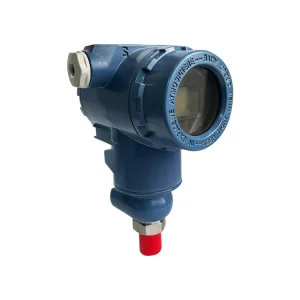
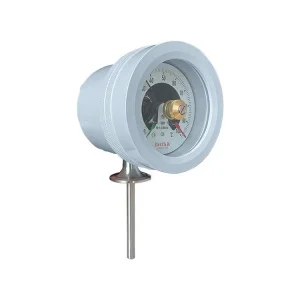
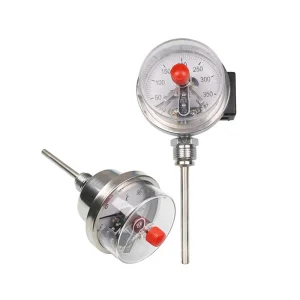
Understanding the physics of mechanical bimetallic thermal expansion and why scheduled calibration preserves system efficiency, safety, and regulatory compliance.
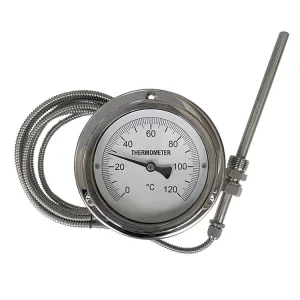
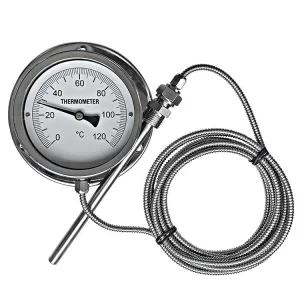
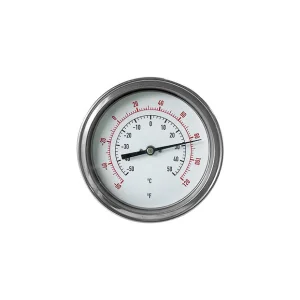
Bimetal stemmed thermometers rely on two bonded metals with differing thermal expansion coefficients ($\alpha_1 \neq \alpha_2$). Over time, structural stress, mechanical vibration, and extreme thermal cycling induce micro-structural drift in the bimetallic helix. Determining "When Should A Bimetal Stemmed Thermometer Be Calibrated" requires analyzing operational parameters, regulatory frameworks (HACCP, ISO 9001, ASME B40.200), and physical risk indicators.
A Comprehensive Decision Matrix for Maintenance Engineers, Quality Assurance Managers, and Global Sourcing Teams
Under standard operating conditions, industrial bimetal thermometers should undergo recalibration annually (every 12 months). In critical process environments such as pharmaceutical manufacturing or dairy pasteurization, a mandatory 6-month calibration interval is recommended to ensure zero-defect compliance with ISO 17025 standards.
Mechanical impacts can shift the internal friction-fit pointer gear mechanism or alter the zero-reset adjustment nut. If a stemmed thermometer is dropped or subjected to heavy physical impacts during installation or maintenance, an immediate recalibration check is essential before re-entering service.
Exceeding the dial's maximum temperature rating causes permanent plastic deformation of the helical bi-metal element. If process fluid temperatures spike beyond the gauge’s upper limit (typically >125% of Full Scale), the thermometer must be isolated, verified, and recalibrated.
High-vibration equipment such as heavy-duty compressors, marine diesel engines, and hydraulic pumps can induce mechanical fatigue in un-damped bimetal stems. In these environments, visual verification of zero-point drift must be conducted monthly, with formal laboratory calibration scheduled every 3 to 6 months.
Industries subject to FDA, HACCP, API, or CE governance demand fully traceable calibration documentation. Calibration is mandatory whenever equipment undergoes scheduled preventative maintenance (PM) shutdowns, system recommissioning, or quality audit preparation.
Step-by-step technical procedures for field calibration and high-precision laboratory verification.
Application: Fast field verification for food service, HVAC, and commercial cold storage.
Procedure: Fill an insulated vessel with crushed ice and add clean distilled water until slushy. Immersion depth of stem must be at least 50mm (2 inches). Wait 3–5 minutes until reading stabilizes. If dial does not read 0°C, turn the external hex adjustment calibration nut located at the rear of the case using a wrench until the pointer aligns perfectly.
Application: High-temperature range validation.
Procedure: Bring distilled water to a continuous rolling boil at sea level. Immerse stem to minimum immersion line without touching container walls or bottom. Allow 3 minutes for stabilization. Compensate for atmospheric barometric pressure shifts at higher altitudes (subtract approximately 0.5°C per 150m elevation). Adjust calibration reset screw as necessary.
Application: High-precision industrial processes, pharmaceutical, and chemical reactors.
Procedure: Thermometers are placed in a high-stability dry-well calibrator or stirred liquid calibration bath alongside a calibrated Standard Platinum Resistance Thermometer (SPRT). Multi-point calibration is recorded across 0%, 50%, and 100% of the temperature scale to calculate hysteresis and non-linearity errors.
| Calibration Standard Parameter | Field Ice-Point Method | Boiling Point Method | Accredited ISO/IEC 17025 Lab Test |
|---|---|---|---|
| Achievable Precision | ±0.5°C to ±1.0°C | ±0.5°C (Elevation Dependent) | ±0.1°C to ±0.2°C |
| Primary Target Applications | HACCP Food Safety, HVAC, Refrigeration | General Industrial Boiler Systems | Petrochemical, Pharma, Aerospace, Quality Audits |
| Equipment Required | Crushed Ice, Distilled Water, Wrench | Boiling Vessel, Heat Source, Wrench | Dry-Well Calibrator / SPRT Reference Master Gauge |
| Traceability Level | Basic Operational Check | Basic Operational Check | NIST / CNAS Traceable Certificate |
Customizing calibration protocols based on sector-specific operating environments and critical safety parameters.
Environment: CIP (Clean-in-place) washing, pasteurization lines.
Recommended Interval: 3 to 6 Months.
Key Compliance: HACCP, FDA 21 CFR Part 113, Sanitary 3-A standards.
Requirement: Sealed IP67 stainless steel stem design, zero-toxicity fill.
Environment: Corrosive media, high ambient temperatures, vibration.
Recommended Interval: 6 to 12 Months.
Key Compliance: ASME B40.200, ATEX explosion-proof, SIL ratings.
Requirement: Heavy-duty thermowells (SS316L or Hastelloy), hermetically sealed dials.
Environment: Air ducting, chilled water lines, engine exhausts.
Recommended Interval: 12 to 24 Months.
Key Compliance: EN 13190 Standard.
Requirement: Every-angle adjustable stems for easy viewing in tight engine rooms.
Environment: Ultra-clean sterilization chambers, autoclaves.
Recommended Interval: 6 Months.
Key Compliance: GMP Standards, ISO 9001.
Requirement: High accuracy (Grade 1A), fully documented calibration certificates.
Why leading global EPC contractors, distributors, and OEMs source bimetal stemmed thermometers from specialized Chinese manufacturers like Huzhou Accuracy Instrument Co., Ltd.
Chinese manufacturing hubs integrate raw material processing, high-precision bimetallic spring coiling, laser welding, automatic dial printing, and helium leak detection under one roof. This minimizes lead times while guaranteeing rigid batch-to-batch quality control.
From custom stem lengths (50mm to 1000mm+), thread specifications (1/4" NPT, 1/2" NPT, G1/2, Tri-clamp), dual scale ranges (-50°C to 600°C / °F), to custom dial logos and liquid-filled dampening cases, Chinese factories offer unparalleled engineering flexibilities.
With automated continuous laser calibration machines and high-volume raw material procurement, specialized suppliers deliver Class 1 (±1.0% accuracy) industrial instruments at highly competitive price points, maximizing procurement ROI for overseas buyers.
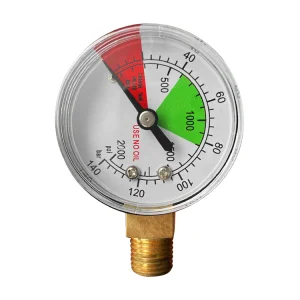
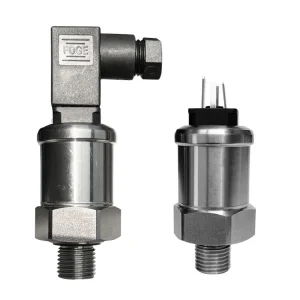
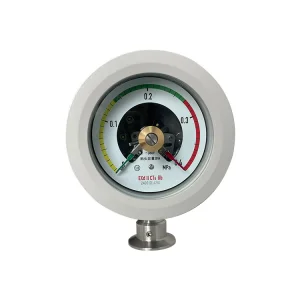
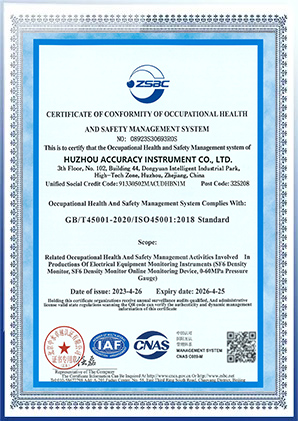
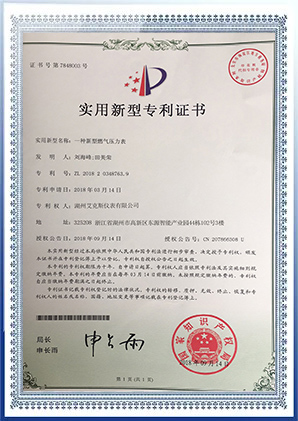
Huzhou Accuracy Instrument CO LTD is professionally engaged in the development, sales and service of industrial mechanical pressure gauges, bi-metal thermometers, SF6 manometer, pressure sensor. Products are widely used in various applications such as Mechanical Engineering, Chemical Engineering, Food Industry, Pharmaceutical, and high technology electric appliances.
Established over two decades ago, our pressure gauge manufacturing facility spans 3,000 square meters, equipped with advanced production lines and rigorous quality control systems. As an industry leader, we integrate innovation with precision engineering to deliver reliable measurement solutions for global clients.
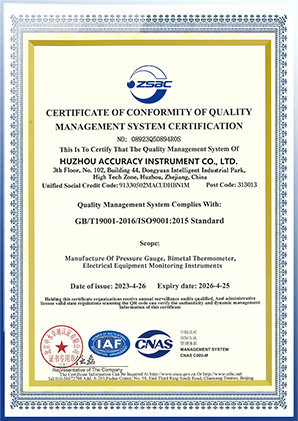
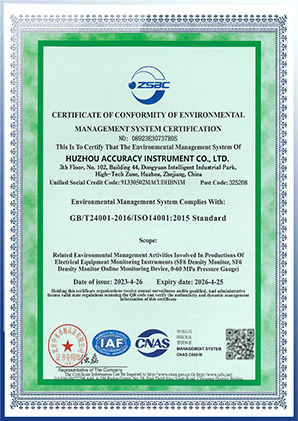
Our laboratory conducts 100% pressure cycle tests and environmental simulations, adhering to ISO 9001 and ISO 17025 standards. Continuous improvement drives our reputation for "zero-leak" performance in extreme conditions, supported by a one-year warranty.
We have long followed the concept of "reasonable price, accurate delivery, good quality" and several business management models to keep our production quality above the required benchmark under ISO9001:2008 certified.
How Industry 4.0, IoT Integration, and Advanced Metallurgy Are Shaping the Next Generation of Mechanical Thermometers
Modern processing plants are adopting hybrid bimetal thermometers equipped with dual output options: direct local analog dial display combined with 4-20mA HART or Modbus RS485 transmitters. This delivers instant visual field checks while sending continuous real-time data to SCADA control systems.
Integration of laser-etched QR codes and RFID tags on thermometer cases allows maintenance technicians to scan the instrument in the field using handheld tablets. This instantly retrieves historical calibration data, next calibration due dates, and digital ISO 17025 test certificates.
Traditional liquid fill (glycerin or silicone) is being upgraded with high-viscosity synthetic polymers and gel-dampened helical springs. This prevents pointer flutter in severe marine and engine applications while extending structural recalibration lifespans up to 300%.
Expert technical answers regarding bimetal thermometer calibration, installation, and procurement.
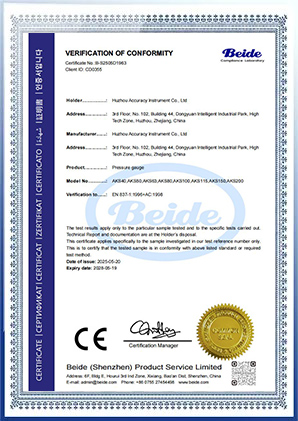
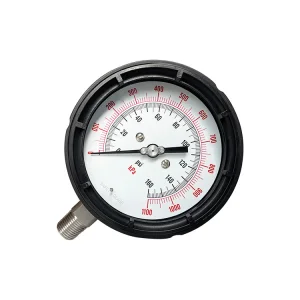
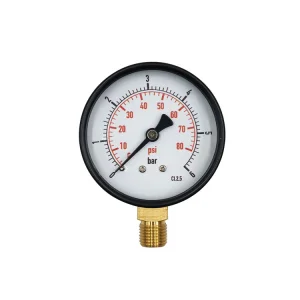
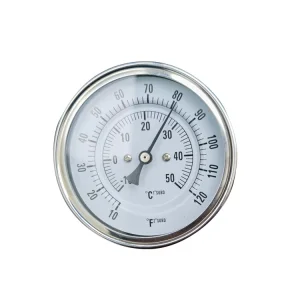
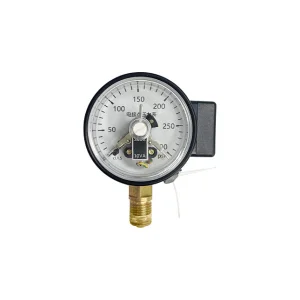
Discover our extended product series manufactured to ISO & CE quality standards.
 Accuracy Instrument