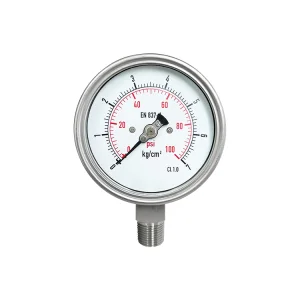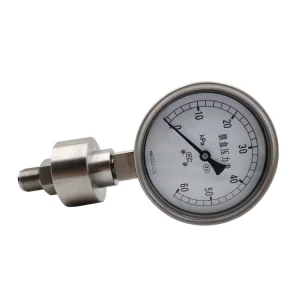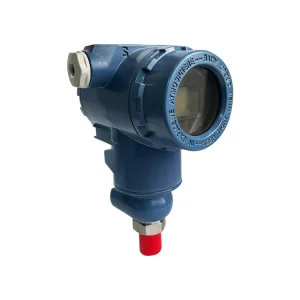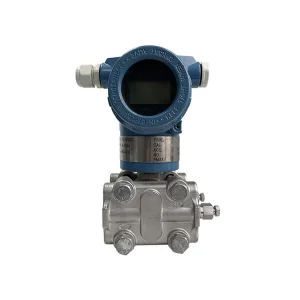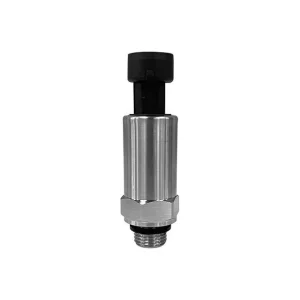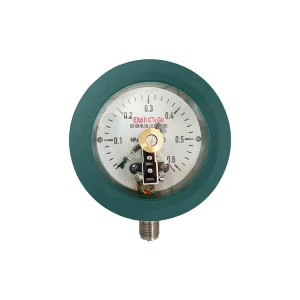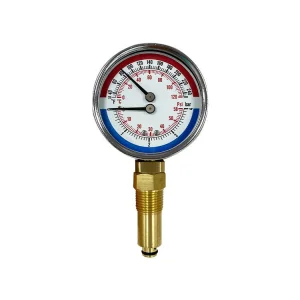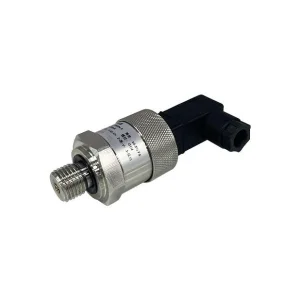
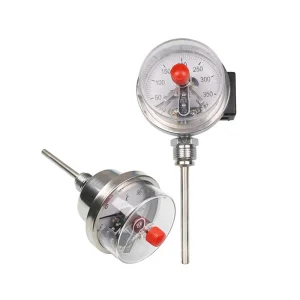
In modern process automation, oil and gas extraction, power generation, and pharmaceutical manufacturing, pressure measurement instruments operate under demanding thermal regimes. The design temperature of a pressure gauge—encompassing both process fluid temperature and ambient working environment range—serves as a primary design vector that dictates material selection, joint assembly techniques, liquid filling stability, and overall sensor calibration integrity.
When specifying pressure gauges for original equipment manufacturing (OEM) applications, failure to evaluate thermal expansion coefficients, modulus of elasticity shifts, and fill-fluid degradation leads to severe gauge drift, premature fatigue failure, and catastrophic process downtime. Leading global OEM pressure gauge manufacturers engineered customized thermal barriers, cooling towers, specialized diaphragm seals, and laser-welded elastic elements to ensure accuracy compliance according to ASME B40.100 and EN 837-1 standards across wide operating spans (-40°C to +400°C).
Young’s Modulus of Bourdon tube alloys (316L SS, Phosphor Bronze, Monel) decreases as temperature increases, causing the gauge to read higher than the actual process pressure.
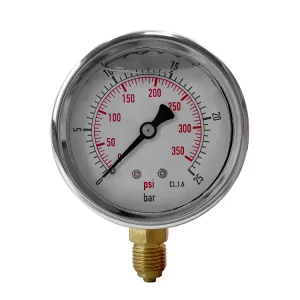
Liquid fill media (Glycerine, Silicone Oil) inside liquid-filled cases expands with ambient heating, altering case internal pressure and shifting pointer zero positions without proper venting.
High thermal loads require impulse line cooling or direct-mount heat dissipating fins to isolate sensitive piezoresistive, ceramic, or mechanical elements from media over-temperature.
To understand how design temperature influences pressure gauge engineering, OEM buyers and systems engineers must evaluate three distinct thermal domains: Process Temperature ($T_p$), Ambient Temperature ($T_a$), and Storage Temperature ($T_s$). Each zone presents unique physical dynamics that affect structural housing, elastomeric seals, internal movement gears, and sensing elements.
| Component Group | Standard Temp Range | High-Temp Extended Range | Material Engineering Solution | Thermal Impact / Risk |
|---|---|---|---|---|
| Bourdon Tube Assembly | -20°C to +60°C | -40°C to +200°C (Direct) Up to +400°C (with Seal) |
AISI 316L, Inconel 718, Silver Braze / TIG Laser Weld | Thermal drift ($\approx 0.04\% / 10\text{K}$ deviation), permanent deformation beyond yield point. |
| Case Fill Liquids | -20°C to +60°C (Glycerine) | -40°C to +200°C (Silicone Oil M50/M20) | High-purity Poly-dimethylsiloxane, Halocarbon oil for $O_2$ service | Liquid discoloration, viscosity degradation at low temps, internal casing over-pressurization. |
| Gaskets & O-Rings | -20°C to +80°C (NBR) | -40°C to +260°C (FKM / Viton / PTFE) | FFKM (Kalrez), Virgin PTFE, Metal-to-Metal metal seals | Elastomer embrittlement at sub-zero temps, thermal hardening, leakage of fill fluid. |
| Window / Dial Lens | -30°C to +70°C (Acrylic) | -50°C to +300°C (Laminated Safety Glass) | Tempered Glass, Polycarbonate, Sapphire Glass | Thermal shock cracking during hot CIP cycles, fogging due to humidity ingress. |
| Digital Transmitters & Electronics | -20°C to +70°C | -40°C to +125°C (Board Level) | ASIC temperature compensation circuitry, Ceramic thick-film sensors | Zero drift, span shift, semiconductor thermal runaway, LCD response slowdown. |
Standard mechanical pressure gauges are calibrated at an ambient benchmark of +20°C (+68°F). When operating outside this reference temperature, an additional indication error occurs due to the thermal coefficient of the elastic measuring element:
For extreme process media temperatures exceeding +200°C (e.g., superheated steam, thermal oil systems, chemical reactors), direct mounting of the pressure gauge causes immediate instrument destruction. OEM solutions utilize three key thermal barriers:
The worldwide demand for high-reliability pressure gauges designed for extreme temperatures is expanding rapidly across North America, Europe, Asia-Pacific, and the Middle East. Driven by strict environmental regulations, safety standards (ATEX, IECEx, SIL-2), and process optimization, global procurement teams are pivoting toward unified OEM suppliers capable of delivering custom engineering, rapid prototyping, and cost-effective volume manufacturing.
Refineries and offshore platforms demand explosion-proof stainless steel gauges with temperature design ranges capable of withstanding ambient thermal spikes and corrosive $H_2S$ media.
Cryogenic heat exchangers require pressure sensors operating at temperatures down to -40°C without elastomer degradation or internal window condensation.
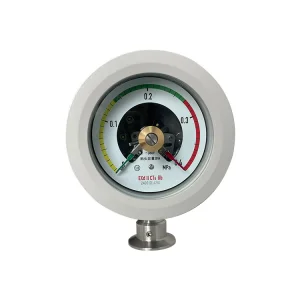
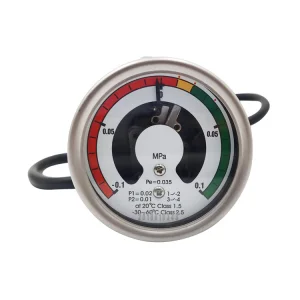
Substation gas density monitors use bimetallic temperature compensation mechanisms to continuously track SF6 gas pressure variations independent of ambient weather fluctuations.
China has evolved into the world's primary hub for industrial instrumentation manufacturing. Leveraging integrated raw material supply chains, advanced automated laser welding technology, and robotic calibration systems, Chinese OEM suppliers offer distinct competitive advantages to global equipment builders:
From raw 316L SS bar stock and seamless capillary tubing to precision hairsprings and electronic ASIC chips, localized industrial clusters drastically reduce lead times and production costs.
High-precision robotic laser welding guarantees hermetic sealing between Bourdon tubes, sockets, and diaphragm seal bases, eliminating leak paths across high-temperature stress cycles.
Every high-temperature OEM batch undergoes 100% automated pressure-temperature cycling inside environmental testing chambers to ensure zero drift before factory dispatch.
Custom dial artwork, personalized company branding, specialized process threads (NPT, BSP, Metric), and fill fluids are accommodated with low minimum order quantities (MOQs).
Huzhou Accuracy Instrument Co., Ltd. is professionally engaged in the development, production, sales, and technical service of industrial mechanical pressure gauges, bi-metal thermometers, SF6 gas density monitors, and intelligent pressure sensors. Our products are widely deployed across Mechanical Engineering, Chemical Processing, Food & Beverage, Pharmaceutical Manufacturing, and High-Voltage Electrical Appliances worldwide.
Established over two decades ago, our modern manufacturing facility spans 3,000 square meters, equipped with advanced automated production lines and rigorous testing systems. As an industry pioneer, we seamlessly combine material innovation with precision engineering to deliver zero-defect instrumentation solutions for global clients.
Focuses on metallurgical innovation, smart sensor integration, thermal compensation modeling, and strict compliance with international benchmarks including ISO 9001, API, and EN 837-1 standards.
Utilizes automated assembly, micro-TIG welding, and laser calibration technologies to ensure long-term mechanical durability, corrosion resistance, and ±0.5% precision accuracy.
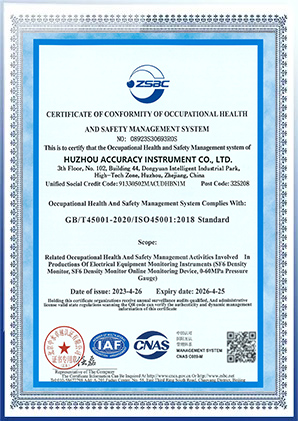
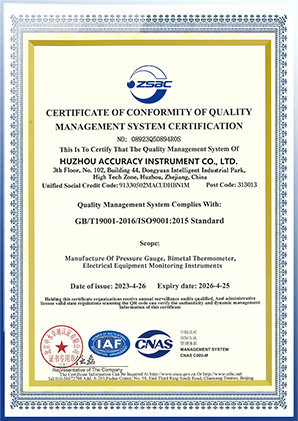
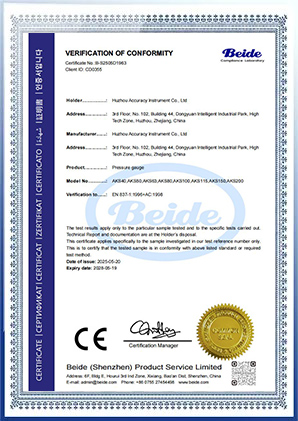
Annual production output exceeds 2 million units. Products are exported to over 30 countries with CE, SGS, and ISO certifications, backed by comprehensive 24/7 technical assistance.
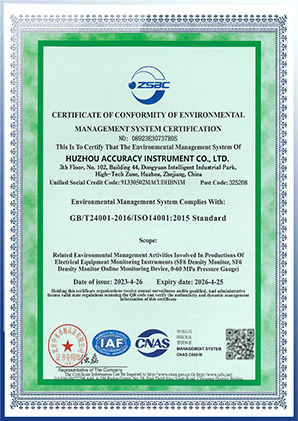
Following our core operating philosophy—"Reasonable Price, Accurate Delivery, Uncompromised Quality"—our management system maintains production standard excellence certified under ISO9001:2008 and ISO 17025 testing laboratory standards.
As Industry 4.0 digitizes process manufacturing, traditional mechanical pressure gauges are evolving into multi-variable digital nodes. Smart OEM pressure instruments integrate digital thermal compensation algorithms, HART / Modbus / WirelessHART communications, and predictive maintenance sensors.
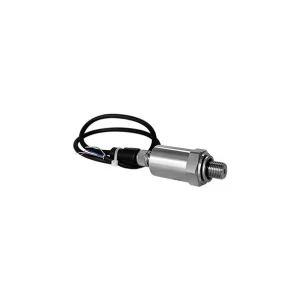
Integrated ceramic piezoresistive element chips simultaneously monitor process line thermal state and pressure, eliminating the need for separate thermowells and tap points.
Embedded microprocessors utilize digital look-up tables to automatically compensate for thermal expansion errors in real-time, delivering constant ±0.1% accuracy regardless of ambient swings.
Continuous tracking of fill fluid thermal expansion profiles allows smart diagnostic software to alert plant operators before a diaphragm seal ruptures or loses fill oil volume.
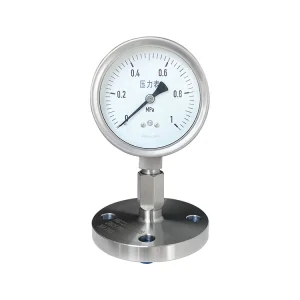
 Accuracy Instrument