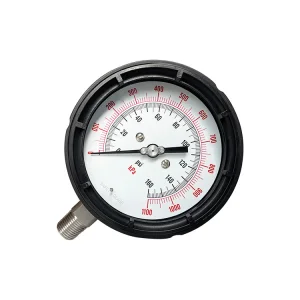
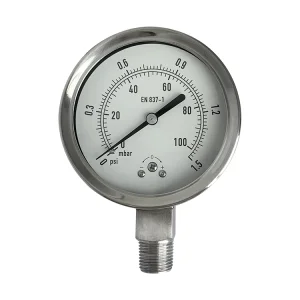
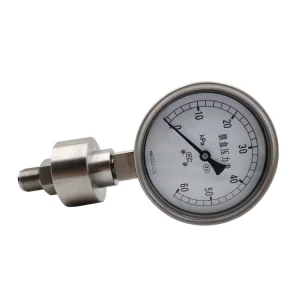
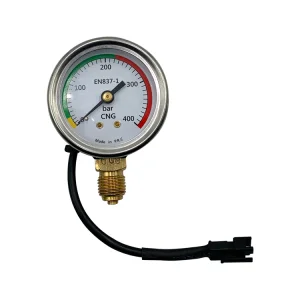
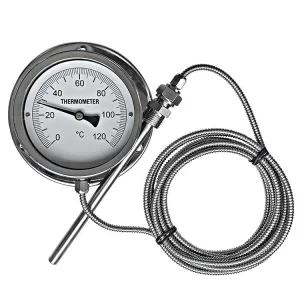
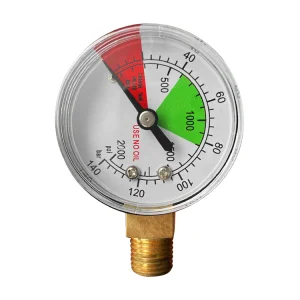
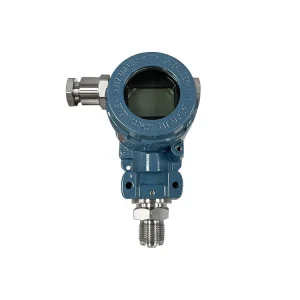
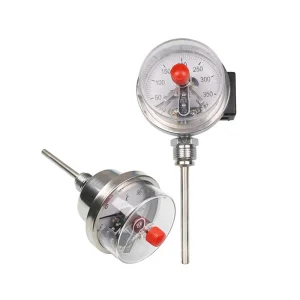
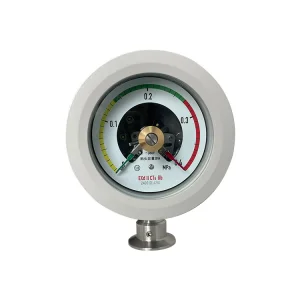
Engineered to exact OEM specifications, featuring high-precision remote-reading capillary systems, diaphragm isolation, and electronic pressure sensors.
An in-depth technical analysis of remote-reading capillary thermometers, thermal expansion mechanics, fluid fill dynamics, and ambient compensation algorithms.
In modern process automation, chemical manufacturing, and heavy mechanical engineering, remote temperature measurement requires non-electrical, intrinsic safety combined with extreme mechanical reliability. A Thermometer Capillary Sensor operates on the thermodynamic expansion principles defined by Charles’s and Gay-Lussac’s Gas Laws or liquid thermal expansion dynamics ($V_t = V_0(1 + \beta \Delta T)$). The system consists of three hermetically sealed sub-components: a temperature-sensitive bulb, a capillary conduit tube, and a measuring Bourdon tube element.
Utilizes organic thermal fluids (such as silicone oil, xylene, or toluene) operating under high hydraulic pressure. Provides a strictly linear volume expansion response across range limits from -80°C to +400°C with exceptional pointer stability and high torque output.
Employs volatile liquid-vapor equilibrium transitions. As temperature increases at the sensing bulb, vapor pressure rises exponentially, driving the Bourdon spring. Extremely responsive to subtle thermal changes, ideal for HVAC/R and commercial freezing loops.
Filled with ultra-pure inert Nitrogen ($N_2$) gas under initial bias pressure. Governed strictly by Perfect Gas Laws ($P_1/T_1 = P_2/T_2$). Operates reliably across wide thermal spans (-200°C to +700°C) without chemical degradation, zero toxicity, and full eco-compliance.
The primary operational challenge in remote capillary sensing is Ambient Temperature Error. Because the capillary tube passes through variable ambient zones between the measurement point and the display instrument, thermal expansion within the tubing can induce measurement drift. OEM factories resolve this via two engineering strategies:
Analyzing global demand, market vectors, and technical trade-offs across process industries, energy transition, and OEM machinery manufacturing.
The global market for industrial capillary temperature sensors and remote-reading thermometers is undergoing significant growth, driven by expanding chemical processing, liquefied natural gas (LNG) transport networks, sanitary biopharmaceuticals, and heavy marine engineering. The market is projected to grow at a CAGR of 5.8% through 2030, with increasing demand for robust non-electric field sensors that remain operational during total power outages or within explosive (ATEX Zone 0/1) atmospheres.
| Technology Type | Capillary Thermal Sensor (Gas/Liquid) | Resistance Temperature Detector (RTD PT100) | Thermocouple (Type K / J) |
|---|---|---|---|
| Intrinsic Safety | 100% Intrinsic (No electricity required) | Requires IS Barriers / Explosion-proof Enclosure | Requires IS Barriers / Explosion-proof Enclosure |
| Vibration Resistance | High (When silicone fluid-filled) | Moderate (Sensitive to ceramic fracture) | High (Solid state wire junction) |
| Signal Distance | Up to 50 meters (Mechanical capillary) | Up to 100 meters (Requires transmitter/wire) | Up to 300 meters (Extension wire drop considerations) |
| Operating Temperature | -200°C to +700°C | -200°C to +600°C | -40°C to +1250°C |
| Maintenance & Calibration | Zero drift over years; field recalibration screw | Resistance drift over time; re-calibration required | Thermal EMF degradation; periodic replacement |
Combining 20 years of research, automated laser manufacturing, and ISO-certified laboratory precision.
Established over two decades ago, Huzhou Accuracy Instrument Co., Ltd. has evolved into a world-class premier manufacturer of industrial mechanical pressure gauges, bi-metal thermometers, capillary thermal sensors, SF6 manometers, and electronic pressure transducers. Spanning a state-of-the-art 3,000 square meter modern facility, we integrate mechanical precision engineering with high-capacity automated production lines.
Our core mission centers on delivering zero-leak, high-precision instrument solutions capable of withstanding aggressive media, severe pulsation, and extreme environmental shock across 30+ industrial nations worldwide.
Focuses on advanced thermal fluid formulations, micro-capillary armored tube extrusion, high-vibration dampening movements, and compliance with international standards including ASME B40.200, EN 13190, and ISO 9001.
Leveraging automated orbital TIG laser welding, helium mass spectrometry leak detection ($1 \times 10^{-9} \text{ mbar}\cdot\text{l/s}$), and robotic laser dial calibration to guarantee absolute consistency across high-volume OEM runs.
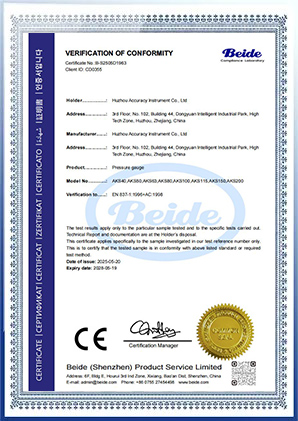
Every lot undergoes 100% full-span pressure cycling, thermal shock aging from -50°C to +300°C, salt-spray corrosion resistance tests (ISO 9227), and strict verification adhering to ISO/IEC 17025 laboratory standards.
Deploying tailored capillary sensing architectures across demanding industrial sectors.
Challenge: Corrosive ambient marine atmospheres ($H_2S$, salt spray) and severe pipe line vibration.
Solution: All-Stainless Steel (SS316L) capillary sensors encased in flexible SS armored interlock tubing with liquid-filled (glycerin/silicone) IP67 housings and explosion-proof electric contact switches.
Challenge: Strict zero-dead-leg requirements, CIP/SIP steam sterilization at 145°C.
Solution: Hygienic Tri-Clamp connection capillary thermal bulbs polished to $Ra < 0.4 \mu m$, filled with FDA-approved non-toxic food-grade thermal liquid (Class VI compliance).
Challenge: Continuous thermal cycles, sub-zero refrigeration lines, rapid temperature drops.
Solution: High-sensitivity vapor pressure capillary sensors featuring fine copper or stainless capillary lines with integrated micro-adjust pointer dials for exact freezing threshold control.
Bridging pure mechanical measurement with digital intelligence, hybrid telemetry, and advanced material metallurgy.
As factories shift toward Industry 4.0 and smart predictive maintenance, the capillary sensor field is evolving rapidly. Huzhou Accuracy Instrument Co., Ltd. is actively investing in three primary technology tracks:
Integrating non-contact magnetic Hall-effect or optical encoders directly onto the capillary Bourdon movement shaft. This yields continuous mechanical local dial display even during complete electrical blackouts while simultaneously transmitting 4-20mA / HART / Modbus RS485 digital signals to control rooms.
Formulating synthetic organic thermal liquids infused with surface-passivated metal-oxide nanoparticles. Increases thermal conductivity by 35%, drastically reducing the thermal time constant ($\tau_{90}$) from 15 seconds down to under 3.5 seconds.
Expanding drawn capillary tube manufacturing to include Hastelloy C-276, Monel 400, and Inconel 625 for ultra-aggressive media exposure involving hot concentrated sulfuric acid, wet chlorine gas, and geothermal fluids above +650°C.
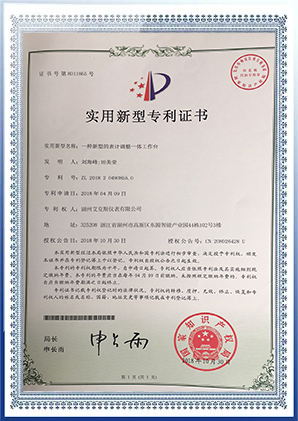
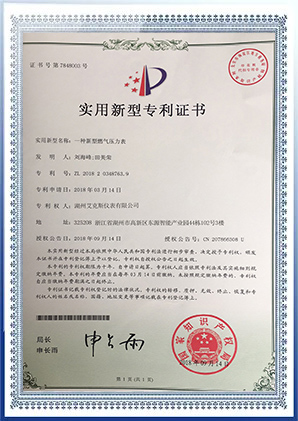
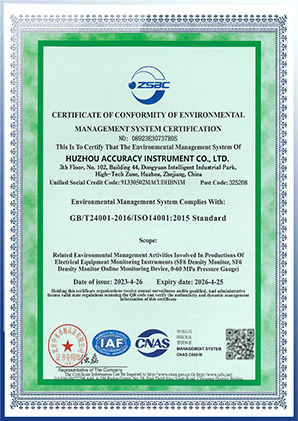
Our commitment to rigorous quality control under ISO9001:2008 standards guarantees our production remains far above industry benchmarks.
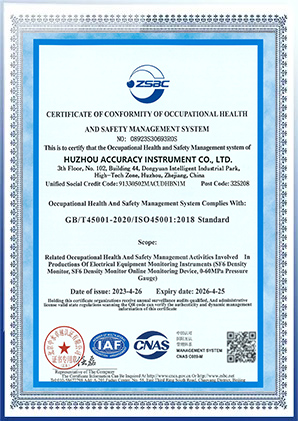
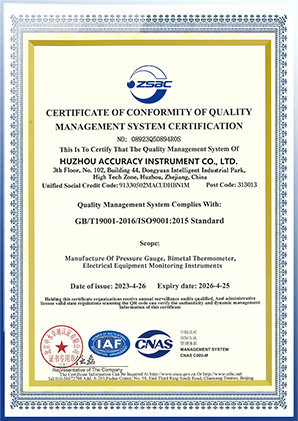
Technical answers to high-intent engineering, ordering, and installation queries.
Explore our complete range of remote reading capillary gauges, low-pressure mechanical monitors, and high-performance transmitters.
 Accuracy Instrument