Q
What pressure ranges is this gauge designed to measure?
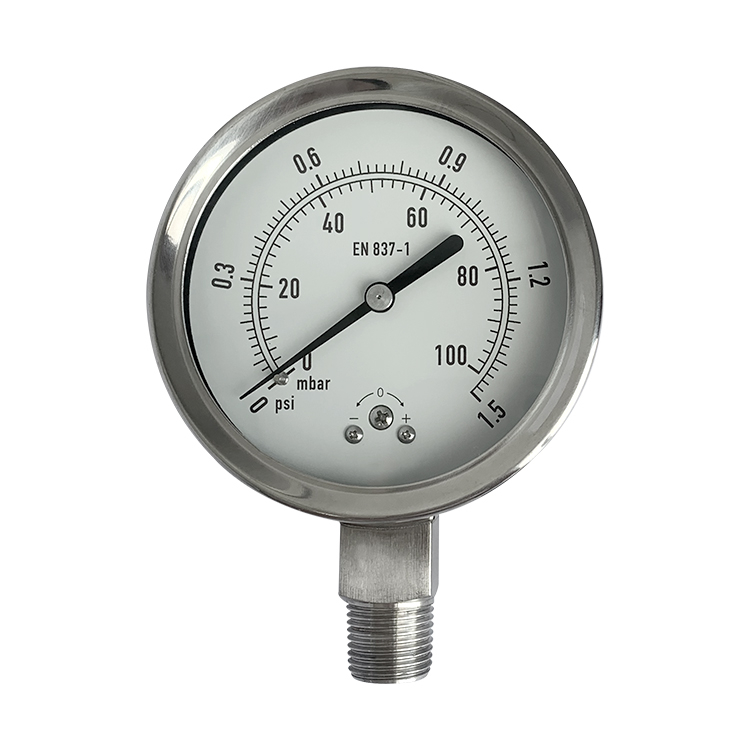
This gauge is specifically designed for low-pressure measurement, covering ranges from 0~40 kPa and even as low as 0~1 kPa. Its corrugated diaphragm element provides far greater sensitivity in low-pressure ranges compared to traditional Bourdon tube gauges, making it ideal for micro-pressure and micro-vacuum applications.
Q
What materials are used in this pressure gauge's construction?
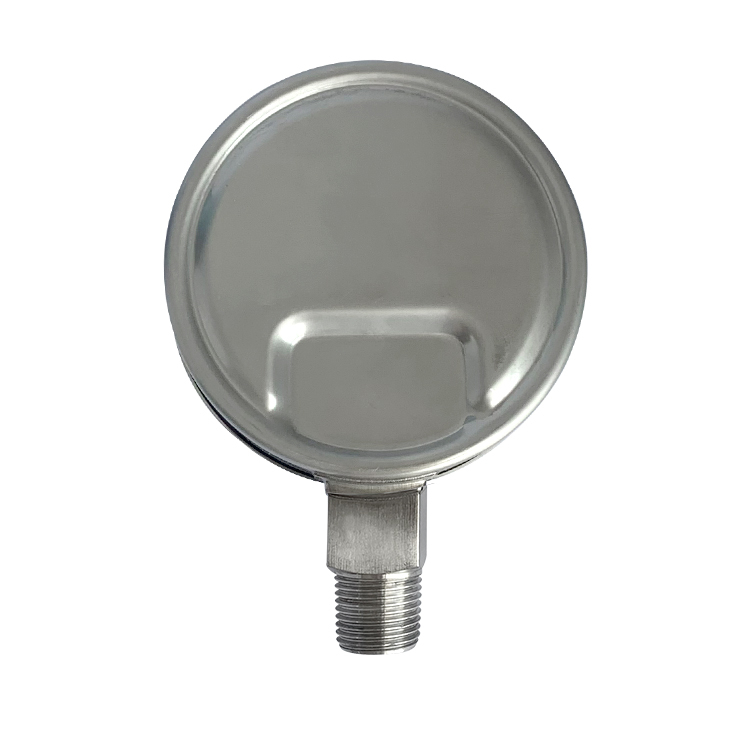
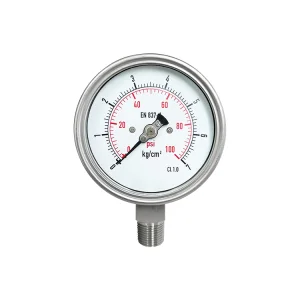
The case, ring (cover), connection, Bourdon tube element, and movement are all made of stainless steel for corrosion resistance and durability. The window is glass for clear visibility, the pointer is black-finished aluminum alloy, and the dial plate is white aluminum with black graduations for easy reading.
Q
What types of media is this gauge compatible with?
The gauge is compatible with most non-strong oxidizing, non-solidifying, and non-crystallizing corrosive media. For high-viscosity or easily crystallizing media, models with open flanges or diaphragm isolators are available to prevent clogging and ensure continued reliable performance.
Q
What connection types and thread standards does this gauge support?
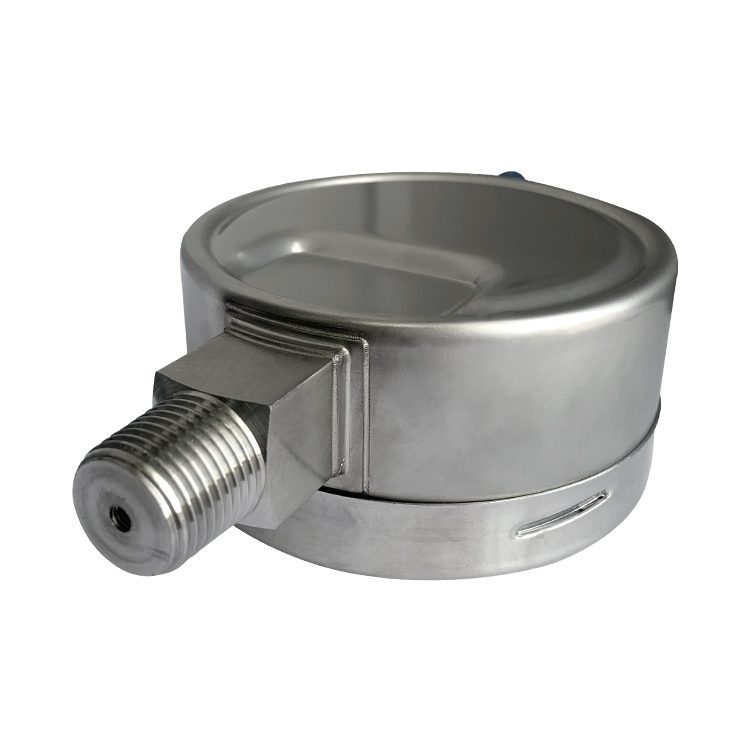
The gauge features a standard 1/2" NPT lower threaded connection. Beyond threaded connections, it also supports flange and clamp connection options, enabling flexible installation across a wide range of industrial piping systems and process equipment.
Q
Is this gauge suitable for HVAC and building automation systems?
Yes. This gauge is widely deployed in ventilation and air conditioning systems for measuring positive/negative duct pressures and filter differential pressures. It is equally suited for fire protection applications, including monitoring positive pressure ventilation and smoke exhaust systems in building automation environments.
Q
Can this gauge be used in chemical, pharmaceutical, or food processing industries?
Yes. The gauge is well-suited for industrial process control in the chemical, pharmaceutical, and food and beverage industries. Its stainless steel construction, excellent sealing performance, and high sensitivity make it reliable for monitoring micro-positive pressure or vacuum conditions in reaction vessels and fermenters.
 Accuracy Instrument