✓
Core Characteristics and Advantages
💰
High Cost-Performance Ratio
Compared to "all-steel" gauges (where all core components are stainless steel), it offers higher cost-performance while maintaining excellent corrosion resistance.
💧
Oil Filling Provides the Following Advantages
🛡
Vibration Reduction & Shock Resistance
Effectively buffers the impact of medium pressure pulsations and mechanical vibrations on the pointer and internal movement, preventing severe pointer jitter and ensuring clear, stable readings.
🔥
Lubrication & Rust Prevention
Lubricates transmission components, reduces wear, and isolates internal parts from air, preventing oxidation and corrosion.
🌧
Moisture & Dust Protection
Prevents condensation and dust from entering the gauge, suitable for humid and dusty environments.
⏰
Extended Service Life
Significantly extends the instrument's service life under vibration and shock conditions.
?
Frequently Asked Questions
Q
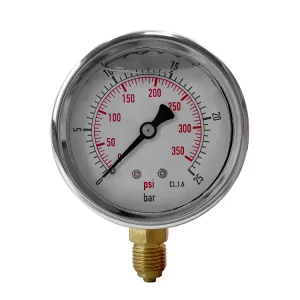
What is the advantage of using an oil-filled pressure gauge over a dry gauge?
Oil-filled pressure gauges provide superior vibration dampening, lubrication of internal components, and protection against moisture and dust. This significantly extends service life and ensures stable, accurate readings in harsh operating environments compared to standard dry gauges.
Q
What thread connection does this pressure gauge use?
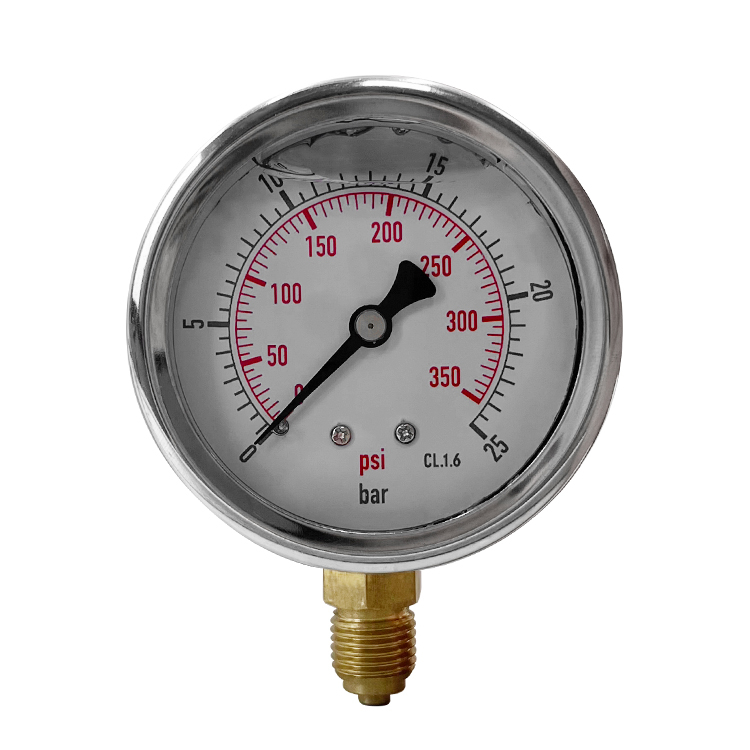
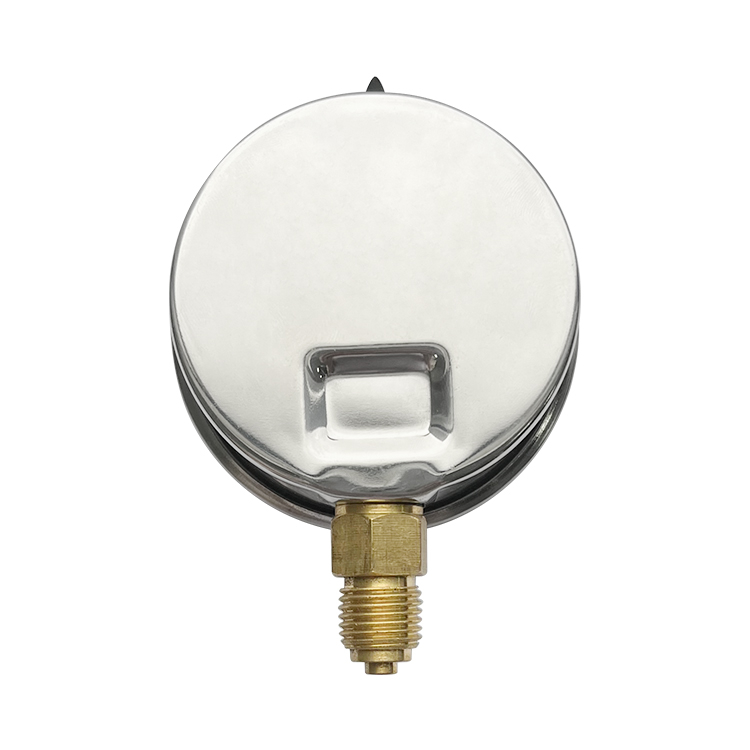
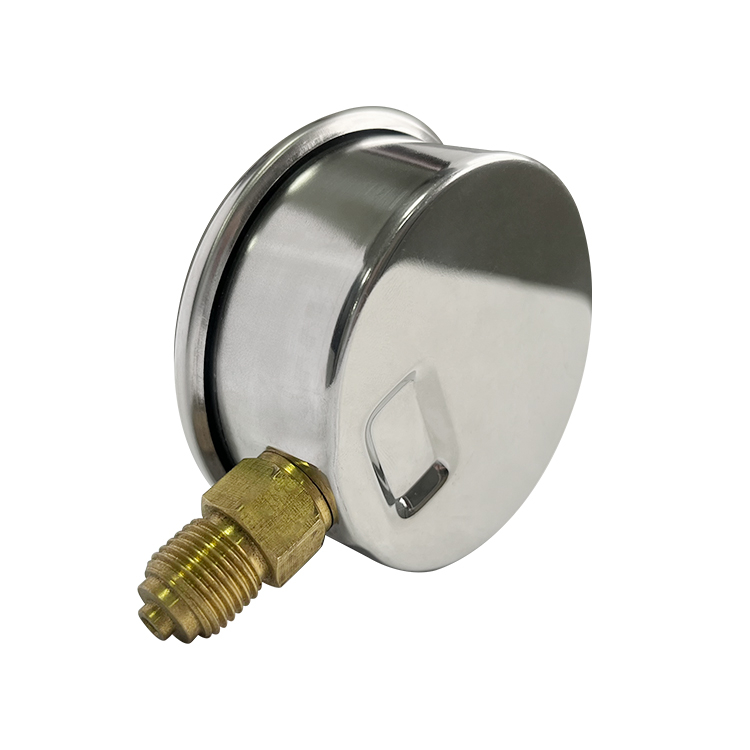
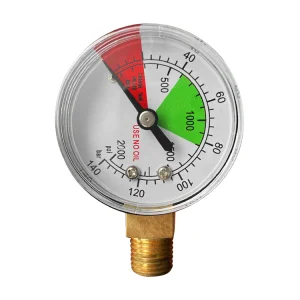
This pressure gauge uses a 1/4" BSP (British Standard Pipe) thread connection, located at the lower position of the gauge. This is a widely used standard in industrial and hydraulic applications worldwide.
Q
Is this gauge suitable for use in humid or dusty environments?
Yes. The oil-filling design effectively prevents condensation and dust from entering the gauge housing, making it well-suited for humid, dusty, or outdoor environments where standard gauges may fail prematurely.
Q
What materials are used in the key internal components of this gauge?
The Bourdon tube (sensing element) and movement are both made of brass, which offers good corrosion resistance and durability. The case and ring are stainless steel, while the pointer is made of black-finished aluminum alloy for clear visibility.
Q
Can this gauge be used on compressors and hydraulic machinery?
Absolutely. This gauge is specifically designed for hydraulic and pneumatic systems, including compressors, engineering machinery, and injection molding machines. Its oil-filled design handles pressure pulsations and mechanical vibrations effectively.
Q
How does the cost-performance of this gauge compare to all-stainless-steel models?
This gauge offers a higher cost-performance ratio than fully all-stainless-steel models. By using brass for key internal components while maintaining a stainless steel case and ring, it delivers excellent corrosion resistance and durability at a more competitive price point.
 Accuracy Instrument