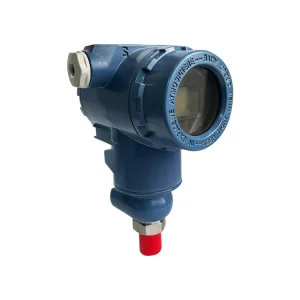
Q
What explosion-proof certifications does this pressure gauge comply with?
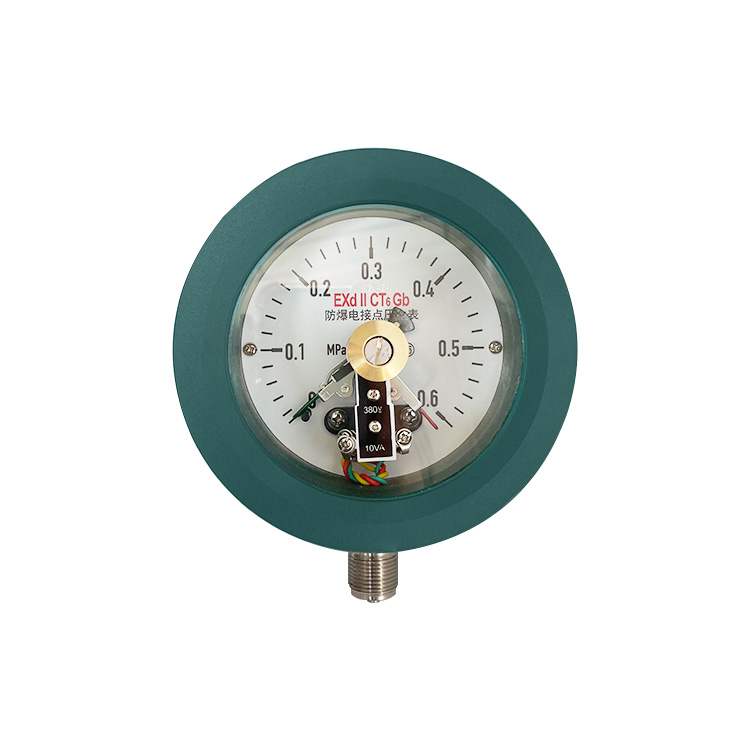
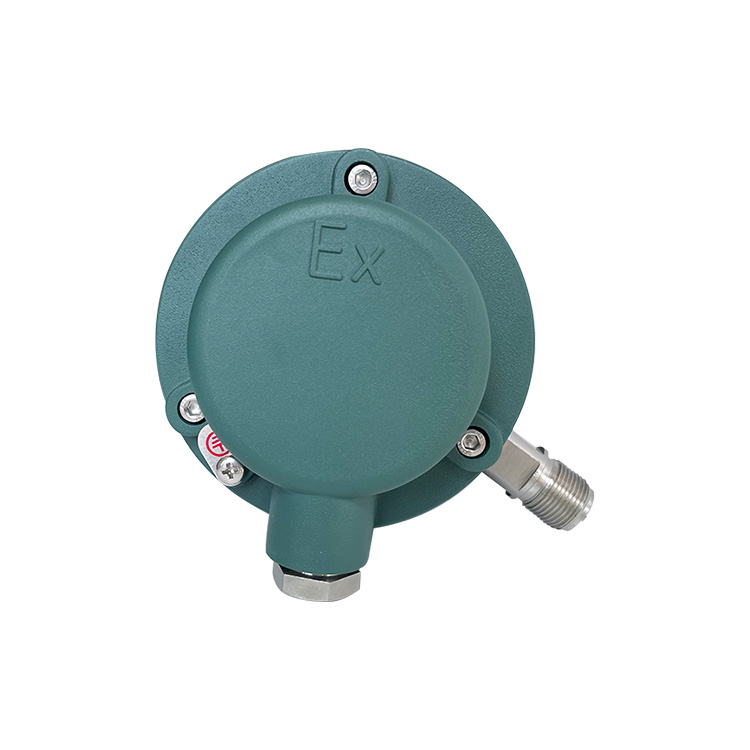
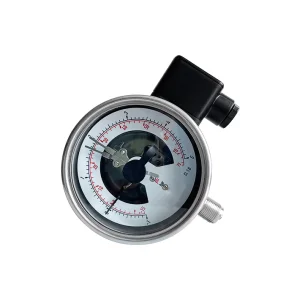
This pressure gauge complies with explosion-proof markings including Ex d ⅡBT6, Ex d ⅡCT4, and Ex ia ⅡCT6. It is suitable for Zone 1 and Zone 2 hazardous gas environments, covering gas groups IIB and IIC, and temperature classes T1 through T6, making it fully qualified for use in petroleum, gas, and other high-risk industrial settings.
Q
What thread connection types are available for this gauge?
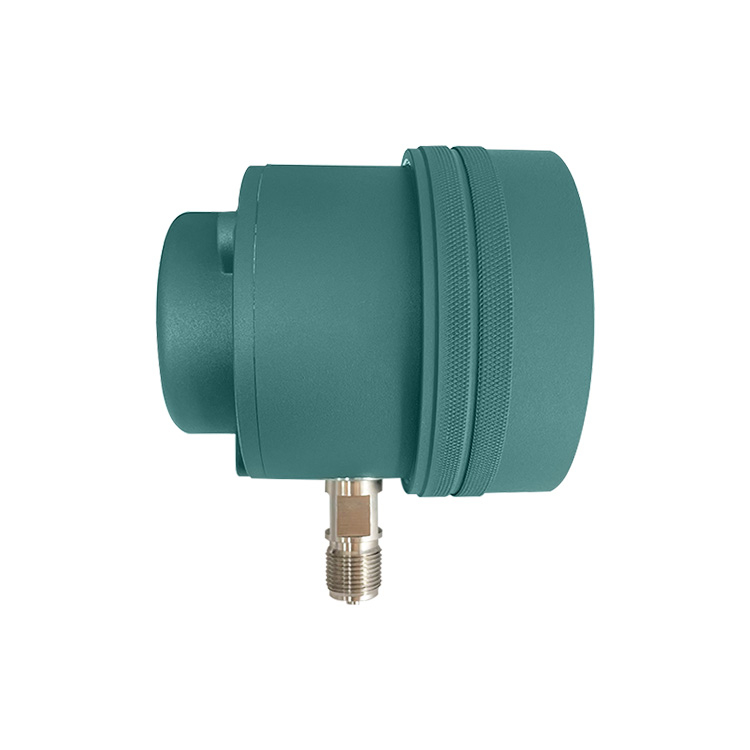
The gauge supports a wide range of thread specifications, including 1/8", 1/4", 3/8", and 1/2" sizes in PT (BSPT/ZG), BSP (G/PF), and NPT standards. Connection locations include lower, center back, and lower back, providing flexible installation options for various piping systems.
Q
Is this pressure gauge suitable for corrosive or outdoor environments?
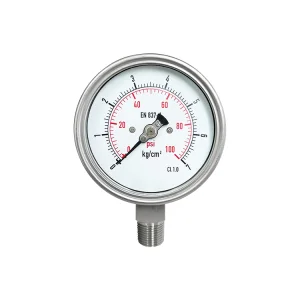
Yes. The entire gauge — from the outer casing to the Bourdon tube and movement — is constructed from stainless steel. This ensures excellent resistance to weak acids, weak alkalis, salt spray, moisture, and dust, making it ideal for coastal installations, chemical plants, and other harsh outdoor or industrial environments.
Q
What is the measurement accuracy and pressure range of this gauge?
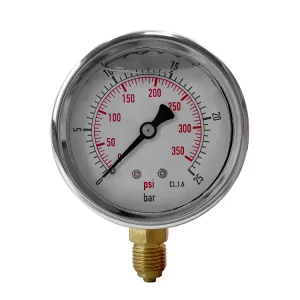
The accuracy class ranges from ±1.0% FS to ±1.6% FS, and the measurable pressure range spans from vacuum / -0.1 MPa up to 0~100 MPa. This wide range makes it adaptable to both low-pressure and high-pressure industrial measurement requirements.
Q
Can this gauge be integrated with automation control systems?
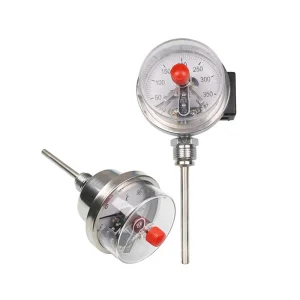
Yes. The gauge features silver alloy electrical contacts with strong anti-ablation performance and fast on/off response. It can be directly connected to relays, PLCs, solenoid valves, and other control equipment, enabling automated pressure-based start/stop control and alarm interlock functions.
Q
Can this gauge be used for viscous or particle-containing media?
Yes, for viscous, crystallizing, or particle-containing media, certain models can be customized with a diaphragm sealing structure. This prevents the process medium from directly entering the Bourdon tube, protecting the measuring element and extending the service life of the instrument in demanding process applications.
 Accuracy Instrument