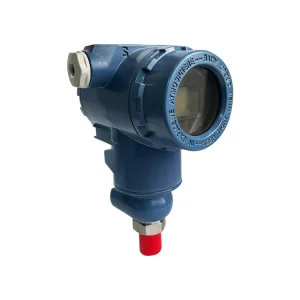
OEM 100mm Mechanical Pressure Gauge – Radial Bottom Connection Manufacturers, Factories

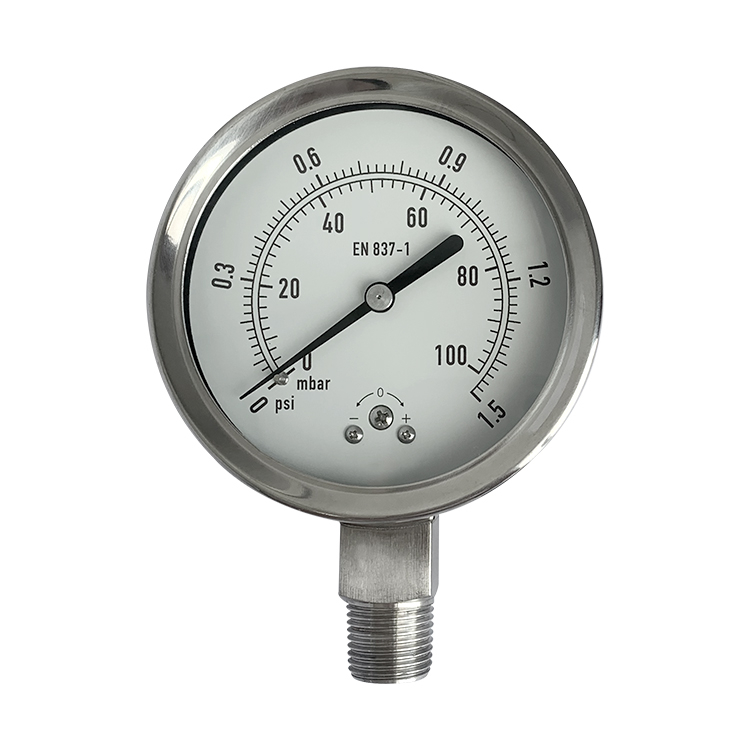
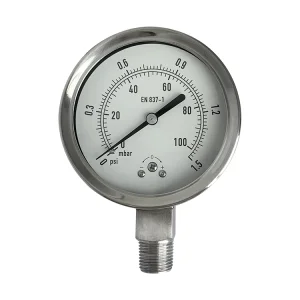
The low-pressure diaphragm all-stainless steel pressure gauge is a precision instrument specifically designed for measuring low-pressure, micro-pressure, or negative-pressure (vacuum) media.

This instrument uses a corrugated diaphragm as its core elastic sensing element. The entire casing and main contact parts are made of stainless steel. It is specifically designed for measuring the pressure/vacuum of low-pressure gases or liquids that are corrosive to copper alloys and ordinary carbon steel, and are non-solidifying and non-crystallizing.

The pressure of the measured medium acts on a stainless steel corrugated diaphragm, causing the diaphragm to undergo elastic deformation under pressure. This deformation is amplified and converted through an internal transmission mechanism (linkage and gear mechanism), ultimately driving a pointer to rotate on the dial, thus visually indicating the pressure value. For negative pressure, the diaphragm is compressed, and the pointer indicates the opposite direction.

Product Description

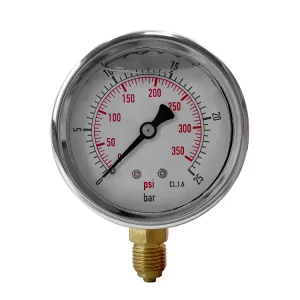
Product Specifications

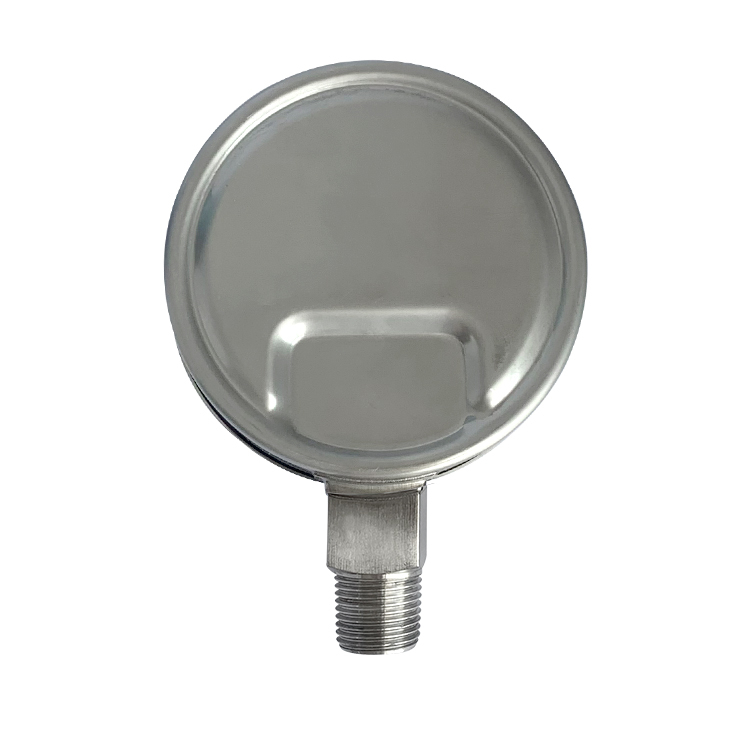
Case Stainless steel
Size 100mm (4")
Ring(Cover) Stainless steel
Window Glass
Pointer Aluminum Alloy, Black Finished
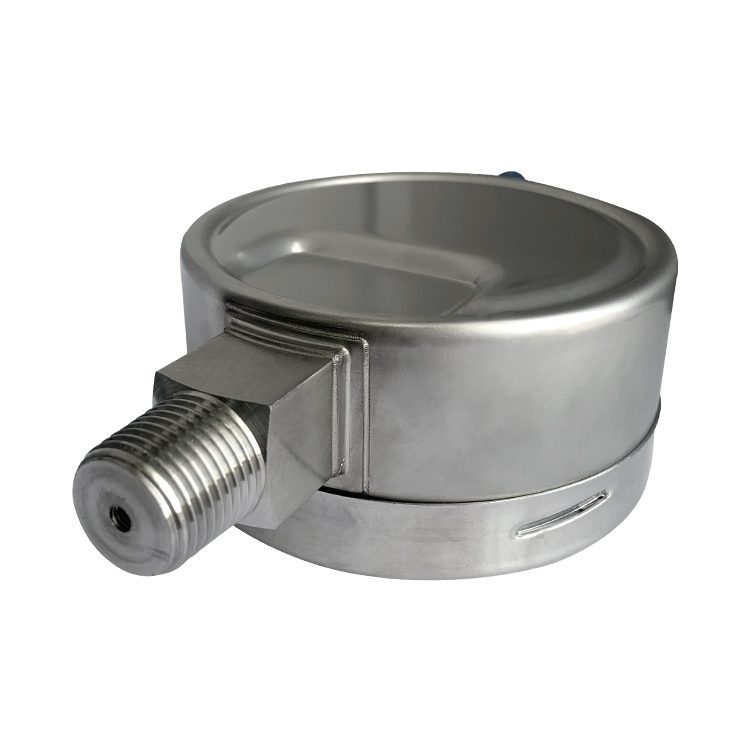
Connection Stainless steel
Connection Location Lower
Thread 1/2"NPT
Element(Bourdon Tube) Stainless steel
Movement Stainless steel
Dial Plate White Aluminum with Black Graduations

Core Characteristics and Advantages

High sensitivity and accurate measurement

Compared to Bourdon tubes, corrugated diaphragms exhibit greater deformation in low-pressure ranges, making them extremely sensitive to minute pressure changes. They are particularly suitable for measuring pressure ranges of 0~40 kPa, or even lower (e.g., 0~1 kPa).

Wide media compatibility

Suitable for most non-strong oxidizing, non-solidifying, and non-crystallizing corrosive media. For high-viscosity or easily crystallizing media, models with open flanges or diaphragm isolators can be selected to prevent clogging.

Excellent sealing performance and multiple connection options

It offers excellent sealing performance, suitable for applications requiring prevention of media leakage or external environmental intrusion. It provides various interface options including threaded connections, flange connections, and clamp connections, allowing for flexible installation.
Typical Application Fields

Ventilation and Air Conditioning Systems: Measuring positive and negative pressure in ductwork and differential pressure on filters.
Environmental Protection and Flue Gas Treatment: Monitoring micro-pressure or negative pressure in dust collectors, desulfurization towers, and combustion furnaces.
Gas Transportation and Piping: Monitoring low-pressure pipeline pressures for gases such as natural gas, biogas, and compressed air.
Medical and Laboratory Equipment: Pressure monitoring in sterilizers, biochemical incubators, and gas supply systems.
Industrial Process Control: Measuring micro-positive pressure or vacuum in reaction vessels and fermenters in the chemical, pharmaceutical, and food and beverage industries.
Fire Protection and Building Automation: Pressure monitoring of positive pressure ventilation and smoke exhaust systems.

Frequently Asked Questions

1. What pressure measurement ranges is this pressure gauge designed for?
This gauge features high sensitivity for low-pressure ranges, particularly suitable for measuring pressures of 0~40 kPa or even lower (such as 0~1 kPa).
2. What are the primary construction materials used?
Key components including the case, ring/cover, connection, Bourdon tube element, and movement are constructed from high-grade stainless steel. The dial plate is made of white aluminum with black graduations.
3. Can this pressure gauge handle corrosive or high-viscosity media?
Yes, it is suitable for non-strong oxidizing, non-solidifying, and non-crystallizing corrosive media. For high-viscosity media, configurations with open flanges or diaphragm isolators can be integrated to prevent clogging.
4. What connection options and thread sizes are provided?
The standard connection is a lower 1/2" NPT thread. Additionally, it supports customizable interface options including threaded, flange, and clamp connections for versatile installation.
5. What key industries commonly utilize this gauge?
It is widely applied in HVAC systems, environmental flue gas monitoring, gas transportation, medical incubators, chemical/pharmaceutical reaction vessels, and building smoke exhaust control.

Related Products