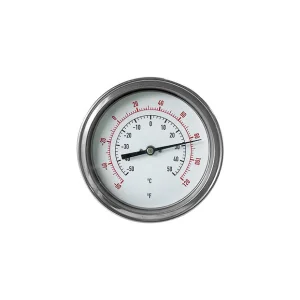
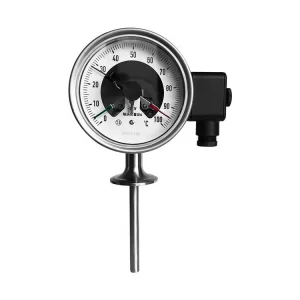
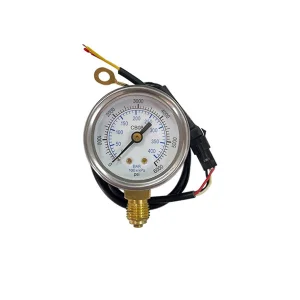
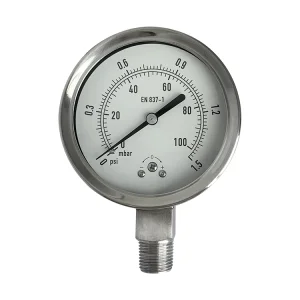
The global material handling equipment sector is undergoing a rapid decarbonization transformation. As warehouses, logistics hubs, and heavy manufacturing facilities transition away from traditional diesel and LPG (Liquefied Petroleum Gas) machinery, Compressed Natural Gas (CNG) forklifts have emerged as the primary alternative fuel solution. Offering up to 80% lower particulate emissions, reduced fuel operational expenditure, and compliance with stringent indoor air quality mandates (such as OSHA and EU Stage V regulations), CNG fleet deployment is expanding globally across North America, Europe, and the Asia-Pacific region.
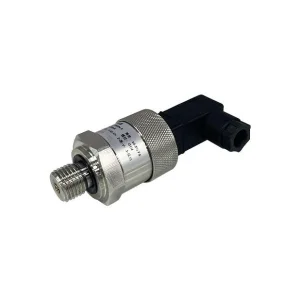
At the heart of every safe and efficient CNG forklift engine management system lies the Fuel Pressure Gauge & Transducer Assembly. Unlike low-pressure liquid fuel systems, CNG fuel lines operate under severe working pressures—ranging from 200 bar (2900 PSI) up to 250 bar (3600 PSI) at standard storage capacity. Maintaining continuous, highly precise pressure measurement is not merely a matter of fuel telemetry; it is a critical safety parameter to prevent explosive gas leaks, catastrophic regulator failure, and engine fuel-starvation misfires.
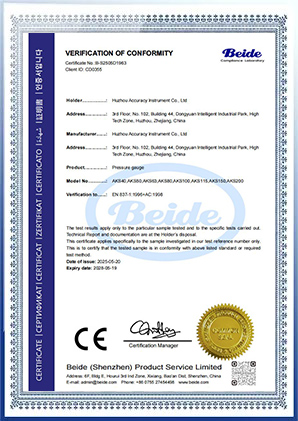
To meet international trade and safety standard thresholds, international original equipment manufacturers (OEMs) and aftermarket fleet managers mandate strict adherence to CE Certification (Pressure Equipment Directive PED 2014/68/EU and ATEX Directive 2014/34/EU). Finding audited, reliable, and high-capacity manufacturing partners—specifically direct-from-factory suppliers in specialized Chinese industrial hubs—has become a top strategic imperative for global procurement teams seeking to optimize Total Cost of Ownership (TCO) without sacrificing structural integrity or measurement precision.
CNG forklift fuel pressure gauges operate under unique mechanical and electrical stresses. Unlike stationary industrial gas gauges, vehicle-mounted gauges endure intense low-frequency chassis vibration, high-frequency engine harmonic resonance, thermal shock (-40°C in outdoor cold-storage logistics to +85°C near engine compartments), and rapid pressure cycling during refueling.
Standard brass components are susceptible to hydrogen embrittlement and stress corrosion cracking when exposed to trace hydrogen sulfide ($H_2S$) impurities in natural gas. Premium factory specifications utilize AISI 316L Stainless Steel or Monel seamless Bourdon tubes, tungsten-inert-gas (TIG) laser welded directly to the socket connection, eliminating leak paths up to burst pressures exceeding 600 bar.
Unfilled dry mechanical gauges suffer pointer flutter under forklift operation, leading to premature gear teeth wear and unreadable dials. CE-certified CNG gauges incorporate high-purity Glycerin or Silicone oil filling, providing fluid-kinetic damping that stabilizes indication, lubricates moving components, and seals the internal mechanism against moisture condensation.
Modern CNG forklifts utilize Electronic Control Units (ECUs) to optimize air-fuel ratios. Advanced gauges feature integrated magnetic Hall-effect sensors or potentiometric contact strips that output continuous voltage signals (e.g., 0.5V–4.5V, 5V, or 12V DC input) to digital dash displays and ECU safety shut-off relays alongside visual dial readings.
In the event of an internal Bourdon tube rupture caused by extreme overpressurization, standard glass windows can shatter outward, endangering forklift operators. CE-compliant safety gauges incorporate a solid front baffle wall with a rubber blow-out disk on the rear of the case, instantly venting high-pressure gas backward away from the technician.
| Engineering Parameter | Standard Commercial Grade | CE Certified Heavy-Duty OEM Grade (Huzhou Factory Standard) |
|---|---|---|
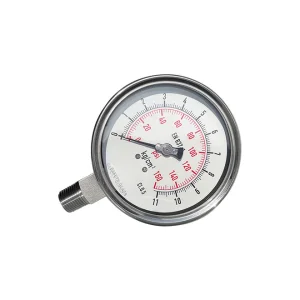
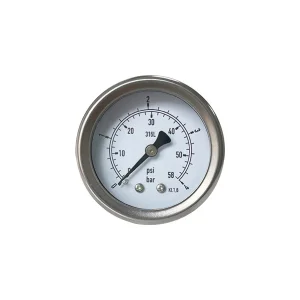
| Nominal Dial Size | 40mm / 50mm (1.5" / 2") | 50mm / 63mm / 100mm (2" / 2.5" / 4") Stainless Steel Case |
| Pressure Measuring Ranges | 0–200 bar / 0–3000 psi | 0–250 bar / 0–4000 psi (Overpressure Limit: 130% Full Scale) |
| Accuracy Class | Class 2.5 (±2.5%) | Class 1.6 or Class 1.0 (±1.6% or ±1.0% Full Scale ANSI B40.1) |
| Process Connection | Brass NPT 1/4" | 316L Stainless Steel 1/4" NPT, G1/4", M14x1.5 with restrictor screw |
| Electronic Output Signal | None (Pure Mechanical Dial) | Integrated Hall Sensor: 0.5 - 4.5V / Resistive 0-90 Ohm / 5V - 12V Input |
| Explosion Protection | Non-rated | ATEX Zone 1/21 Ex II 2G Ex pb IIC T6 Gb; CE PED Directive 2014/68/EU |
To legally import and sell CNG forklift components within the European Economic Area (EEA) and major international markets, fuel pressure gauges must satisfy rigorous compliance mandates. Simply placing a label on an instrument without documented testing under ISO 17025 accredited labs exposes OEMs and importers to severe legal liabilities and product recall risks.
Mandates that pressure housing components operating above 0.5 bar undergo proof pressure, cyclic endurance, and material traceability testing. Factory welding processes must hold ISO 15614 qualification.
The global economic commission standard regulating specific components used in vehicles utilizing compressed natural gas. Specifies vibration endurance, corrosion resistance, and gas tightness at extreme temperatures.
Because CNG forklifts often operate in potentially explosive atmospheres (e.g., chemical storage, grain handling), electronic switch contacts must be intrinsically safe (Ex ii 2G Ex ia IIC T4/T6).
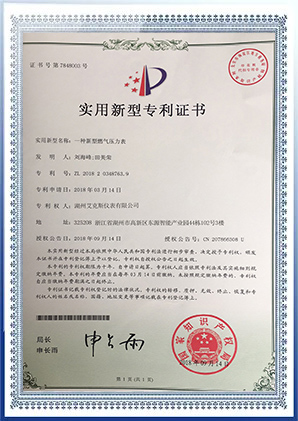
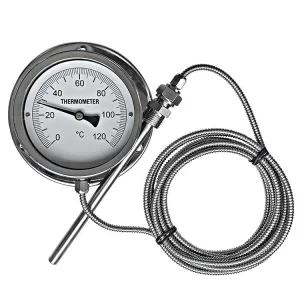
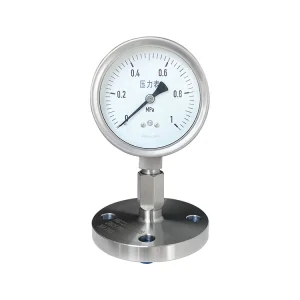
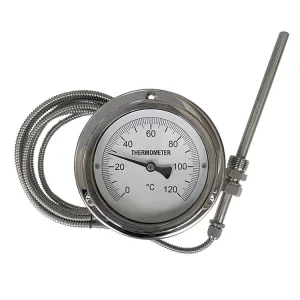
Huzhou Accuracy Instrument CO LTD is professionally engaged in the development, sales and service of industrial mechanical pressure gauges, bi-metal thermometers, SF6 manometer, pressure sensor. Products are widely used in various applications such as Mechanical Engineering, Chemical Engineering, Food Industry, Pharmaceutical, and high technology electric appliances.
Established over two decades ago, our pressure gauge manufacturing facility spans 3,000 square meters, equipped with advanced production lines and rigorous quality control systems. As an industry leader, we integrate innovation with precision engineering to deliver reliable measurement solutions for global clients.
R&D Department (20 specialists): Focuses on material innovation, smart sensor integration, and compliance with international standards (e.g., ISO, API).
Production Workforce (120 technicians): Utilizes automated assembly and laser calibration technologies to ensure product durability and accuracy.
Sales & Service Unit (15 professionals): Provides 24/7 technical support and customized solutions across 30+ countries.
Annual output exceeds 2 million units, covering industrial-grade gauges (e.g., stainless steel gauge, black steel gauge, shock-proof gauge, SF6 gauge, thermometer, pressure sensor) for oil/gas, HVAC, and pharmaceutical sectors.
Products exported worldwide, with certifications including ISO, SGS, and CE, earning recognition for corrosion resistance and ±0.5% precision.
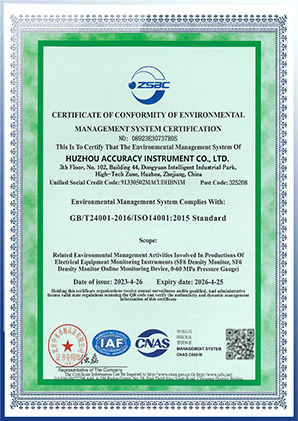
Our laboratory conducts 100% pressure cycle tests and environmental simulations, adhering to ISO 9001 and ISO 17025 standards.
Continuous improvement drives our reputation for "zero-leak" performance in extreme conditions, supported by a comprehensive one-year warranty.
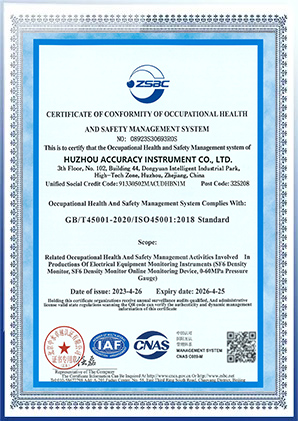
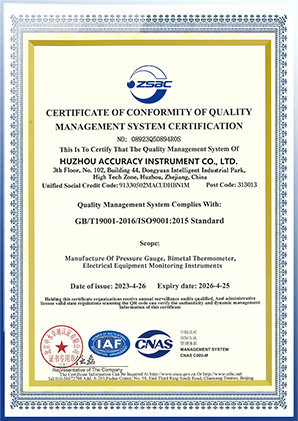
We have long followed the concept of "reasonable price, accurate delivery, good quality" and several business management models to keep our production quality above the required benchmark under ISO9001:2008 certified.
International B2B procurement buyers—ranging from forklift OEMs like Toyota, Linde, Hyster-Yale, and Heli to specialized aftermarket fuel conversion kit manufacturers—face persistent challenges in sourcing pressure instruments: rising raw material costs, supply chain bottlenecks, and varying quality thresholds. Direct sourcing from specialized Chinese factories provides distinct strategic advantages:
China’s integrated industrial clusters in Zhejiang allow factories like Huzhou Accuracy Instrument to source raw SS316L, movements, and dials with unprecedented speed and cost efficiencies. Buyers achieve 30% to 50% cost reductions compared to European or North American branded re-sellers.
Global fleets require bespoke configurations: custom dual-unit dials (Bar/PSI), customer logo screen printing, specialized electrical wiring harnesses (Deutsch, Superseal, Hessmann connectors), and specific thread geometries (NPT, BSPP, Metric). Direct factory R&D engineering ensures fast sample prototyping.
Leading factories utilize mass-spectrometer helium leak testing stations capable of detecting micro-leaks down to $1 \times 10^{-9} \text{ mbar}\cdot\text{l/s}$. This guarantees zero-defect shipments, protecting forklift operators from dangerous gas accumulation inside engine cowlings.
The operating environment of a CNG forklift dictates the exact engineering requirements for its fuel pressure gauge. Below are key field deployment scenarios:
Environment: Temperatures dropping to -30°C inside frozen food distribution facilities.
Requirement: Special low-temperature silicone fluid filling prevents pointer freezing and dial fogging, while special EPDM/FKM internal seals preserve elasticity.
Environment: Severe coastal marine corrosion, salt spray, and high atmospheric humidity.
Requirement: Electropolished AISI 316L full stainless steel housing with IP67 ingress protection to prevent internal salt crystallization and pointer jamming.
Environment: Chemical, pharmaceutical, and explosive grain storage facilities.
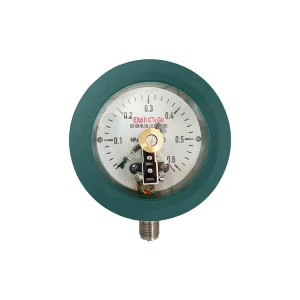
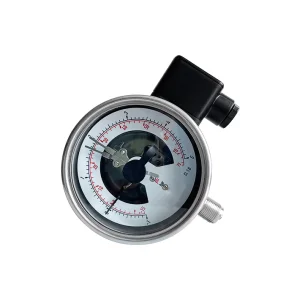
Requirement: ATEX certified explosion-proof electric contact pressure gauges (0.6 MPa / high-pressure lines) that safely cut ignition circuits if pressure exceeds set thresholds.
Environment: Continuous 24/7 multi-shift heavy lifting with extreme engine vibration.
Requirement: Heavy-duty movement mechanisms with hardened gear pinions and dual-welded Bourdon tubes to endure millions of mechanical pressure cycles.
As fleet management transforms through digital telemetry and IoT integration, the humble mechanical CNG fuel gauge is evolving into an intelligent sensing node. Key technological trends shaping future production include:
Combining a traditional mechanical dial (for manual maintenance checks) with a high-accuracy ceramic micro-piezoresistive sensor core outputting CAN-bus or Modbus signals directly to the forklift’s central vehicle computer.
Smart pressure transmitters integrated into the fuel manifold monitor pressure decay rates during forklift idle states, automatically alerting fleet supervisors to slow micro-leaks long before gas safety threshold alarms trigger.
With the global industrial move toward blending Hydrogen into CNG networks (HCNG), future pressure gauges are being engineered using specialized alloys and gold-plated diaphragms to prevent hydrogen permeation and embrittlement.
CE Certification verifies that the pressure gauge complies with the European Union's Pressure Equipment Directive (PED 2014/68/EU) and relevant safety standards (such as EN 837-1). Because CNG systems store natural gas at high pressures (up to 200–250 bar), uncertified gauges represent a catastrophic explosion and fire hazard. CE marking ensures the component has undergone rigorous burst pressure testing, laser-welded joint verification, and environmental compliance.
A standard mechanical pressure gauge relies entirely on a physical dial and Bourdon tube to display pressure visually. A 5V or 12V CNG pressure gauge incorporates an electronic sensor core or resistive potentiometer. Powered by the vehicle’s 5V or 12V DC power supply, it sends continuous electrical signals to the engine ECU or fuel level indicator on the dashboard while maintaining physical dial indication.
Forklifts generate intense mechanical vibrations during acceleration, braking, and rough surface travel. Liquid filling dampens the movement of the Bourdon tube and internal gears, eliminating pointer flutter for easy reading and preventing friction wear. Glycerin is ideal for standard operating temperatures (-20°C to +60°C), while Silicone oil is specified for extreme cold storage or high-heat environments (-40°C to +85°C).
We offer complete OEM/ODM customization: custom dial graphics and color zones, dual bar/psi scales, company logo printing, custom thread connections (NPT, BSP, Metric), specialized electrical output ranges (0-90 Ohm, 0.5-4.5V), electrical harness connectors, IP rating specifications (IP65 to IP67), and explosion-proof electric contact configurations.
By eliminating middle-tier distributors and buying direct from audited manufacturers like Huzhou Accuracy Instrument (with over 20 years of research and a 3,000 m² factory), global buyers secure direct factory pricing, 100% helium leak tested quality control, ISO 9001 certified consistency, flexible minimum order quantities (MOQs), and direct engineering assistance.
 Accuracy Instrument