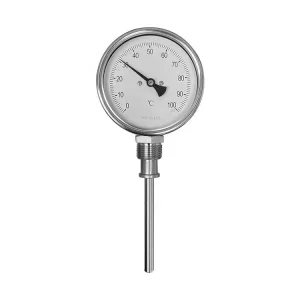
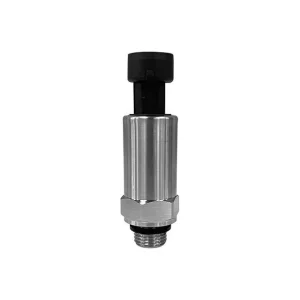
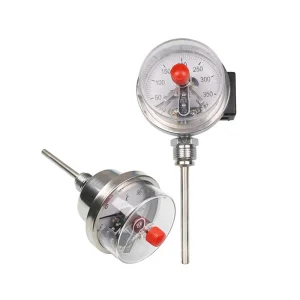
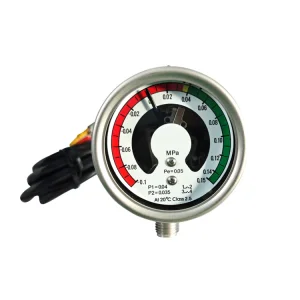
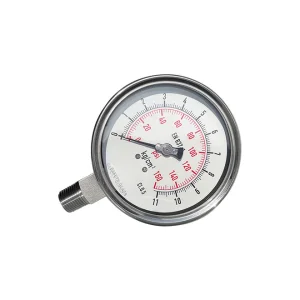
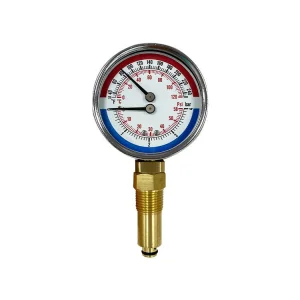
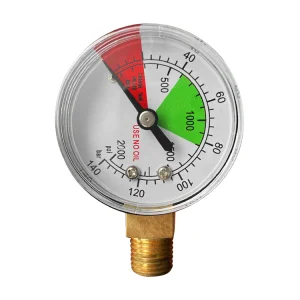
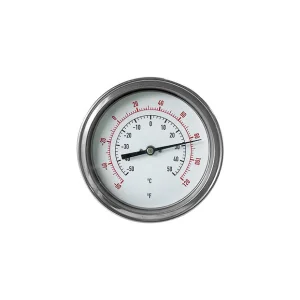
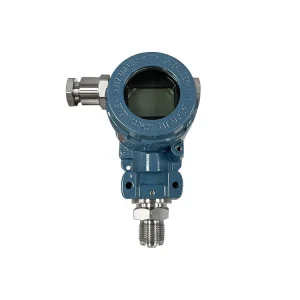
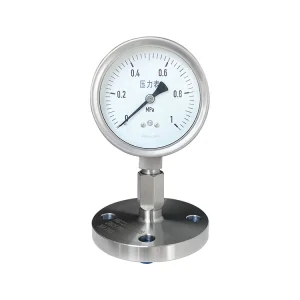
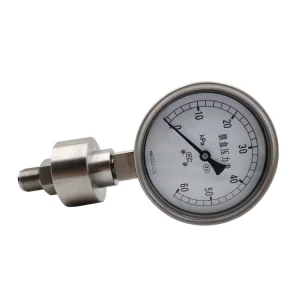
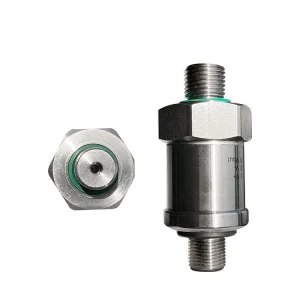
Explore our CE-certified mechanical thermometers, pressure sensors, and specialized gas monitors engineered for extreme industrial reliability.
Unraveling the mechanical thermodynamics, differential thermal expansion coefficients, and precision coil geometry that drive non-electric temperature measurement.
At the core of process instrumentation, the bimetal thermometer remains one of the most reliable, robust, and cost-effective tools for local temperature monitoring. Understanding how a bimetal thermometer works requires an exploration into classical solid-state physics, specifically the concept of differential thermal expansion.
Every metallic solid possesses a unique Linear Coefficient of Thermal Expansion ($\alpha$). A bimetallic element is constructed by mechanically bonding (via cold-welding, sintering, or clad-rolling) two distinct metal strips together—one with a high coefficient of expansion (such as brass, copper, or austenitic stainless steel) and another with a low coefficient (such as Invar, a 36% nickel-iron alloy).
When subject to temperature changes, the metal with the higher thermal expansion rate expands significantly more than the low-expansion metal. Because the two strips are permanently joined along their entire interface, this uneven elongation forces the composite strip to curve toward the side with the lower expansion coefficient. The resulting mechanical deflection is proportional to temperature variation.
To convert linear displacement into rotary motion suitable for a circular dial gauge, the bimetal strip is wound into a tight spiral (for flat back-connected designs) or a helical coil (for rigid stem designs). As thermal energy transfers through the stainless steel stem, the helix twists, transferring rotational torque directly to the pointer shaft without gear friction.
The radius of curvature ($R$) of a bimetallic strip subjected to a temperature shift ($\Delta T$) is governed by the relation:
$$R \approx \frac{2t}{3(\alpha_1 - \alpha_2)\Delta T}$$
Where $t$ represents total strip thickness, and $\alpha_1, \alpha_2$ represent the expansion coefficients. By shaping the strip into a multi-turn helix, high rotational displacement per degree Celsius is achieved inside a compact stem envelope.
Evaluating mechanical bimetal gauges against alternative industrial temperature sensing technologies.
| Parameter / Feature | Bimetal Thermometer | Liquid-in-Glass | RTD (Pt100) | Thermocouple (Type K) |
|---|---|---|---|---|
| Operating Principle | Differential Thermal Elongation | Volumetric Fluid Expansion | Electrical Resistance Shift | Thermoelectric Seebeck Voltage |
| Power Source Required | None (Self-Powered Mechanical) | None (Visual Fluid) | External DC Power / Transmitter | Self-generating mV Signal |
| Temperature Range | -70°C to +600°C (-94°F to 1100°F) | -30°C to +200°C | -200°C to +850°C | -200°C to +1260°C |
| Environmental Durability | High (Hermetic SS Case, Silicone Damped) | Fragile (Glass Breakage Risk) | Moderate (Requires Cable Shielding) | High (Vibration Resistant Wire) |
| Maintenance & Calibration | Zero-point external recalibration screw | Disposable / Manual visual inspection | Electronic calibration via HART/4-20mA | Cold-junction compensation needed |
| CE & Safety Compliance | PED 2014/68/EU, EN 13190, ATEX safe | Mercury restrictions (RoHS strict) | EMC Directive 2014/30/EU | EMC Directive 2014/30/EU |
Ensuring absolute compliance with European Directives, pressure equipment safety, and international metrology benchmarks.
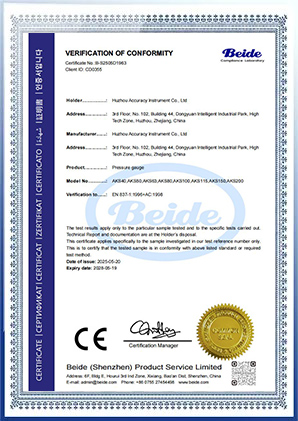
For international industrial buyers, CE Certification is not merely a label—it is a guarantee of structural integrity, health safety, and environmental conformity. Huzhou Accuracy Instrument Co., Ltd. builds every bimetal thermometer in compliance with rigorous European standards:
Defines European manufacturing requirements for dial bimetallic thermometers, detailing scale intervals, pointer deflection ratios, thermal hysteresis limits, and stem insertion depth criteria.
When thermometers are installed directly into pressurized pipelines via thermowells, stem materials (SS304/SS316L) must withstand system design pressures without structural yield or zero-leak failure.
Featuring silicone-gasket hermetic sealing, laser-welded stem-to-case junctions, and heavy-duty glass windows that prevent moisture condensation and internal oxidation in harsh outdoor environments.
Navigating B2B sourcing challenges, OEM customization, and long-term lifecycle savings for EPC project managers.
Procurement directors and system integrators face increasing pressure to source industrial instrumentation that balances upfront capital expenditure (CAPEX) with long-term operational resilience (OPEX). Selecting high-grade bimetal thermometers directly impacts process safety and maintenance frequency.
In high-vibration power generation or marine engines, standard mechanical gauges suffer indicator flutter and internal wear. Filling the dial case with high-purity silicone oil dampens movement, extends mechanical lifespan, and maintains crystal-clear readability.
Global plants require flexible installation: Bottom Direct Mount, Back Center Mount, and Every-Angle Adjustable Mount designs. Flexible stem swivels permit full 360-degree rotation and 90-degree tilt for optimal operator viewing angle.
For automated alarm triggering or safety shutoff, bimetal gauges can be integrated with magnetic snap-action or inductive electric contacts (NO/NC), combining local analog indication with process automation signals.
How Huzhou Accuracy Instrument leverages automated production, lean manufacturing, and scale to serve global industrial markets.
China's industrial infrastructure has evolved into a powerhouse of high-precision manufacturing. Modern automated calibration techniques, automated laser welding, and rigorous quality management allow us to deliver high-precision instrumentation with unrivaled lead times and commercial competitiveness.
Every single bimetal thermometer manufactured in our facility undergoes 100% thermal cycle testing across automated fluid bath calibration rigs, verifying pointer accuracy at freezing, ambient, and high-temperature operating limits adhering to ISO 9001 and ISO 17025 testing protocols.
The convergence of mechanical local indication with IoT connectivity and digital sensor integration.
Modern process plants demand local redundancy. Modern bimetal thermometers embed Pt100 RTD sensors inside the same stem, allowing independent mechanical dial display for field technicians alongside 4-20mA signals sent to the central Distributed Control System (DCS).
Global environmental mandates (RoHS & REACH) have accelerated the phase-out of traditional liquid-filled glass thermometers. Advanced bimetallic elements offer complete environmental compliance without toxic metal hazards.
Pairing heavy-duty thermowells (bar-stock machined SS316L, Hastelloy, or Titanium) allows bimetal thermometers to operate safely in aggressive corrosive media and extreme pressure regimes exceeding 250 bar.
Tailored temperature measurement solutions across diverse commercial, industrial, and high-tech sectors.
Engineered with corrosion-resistant SS316L stems and explosion-proof housings, monitoring crude distillation columns, heat exchangers, and refining lines.
Integrated density monitoring instruments for electrical substations, ensuring zero SF6 gas leakage and maintaining transformer insulation integrity.
Reliable bi-metal gauges monitoring supply/return water temperatures, chiller lines, and exhaust stacks with high accuracy and minimal maintenance.
Sanitary tri-clamp bimetal thermometers featuring high-polish mirror finishes (Ra < 0.4 µm) designed for CIP/SIP sterilization routines.
Two decades of engineering innovation, advanced manufacturing capability, and continuous quality commitment.
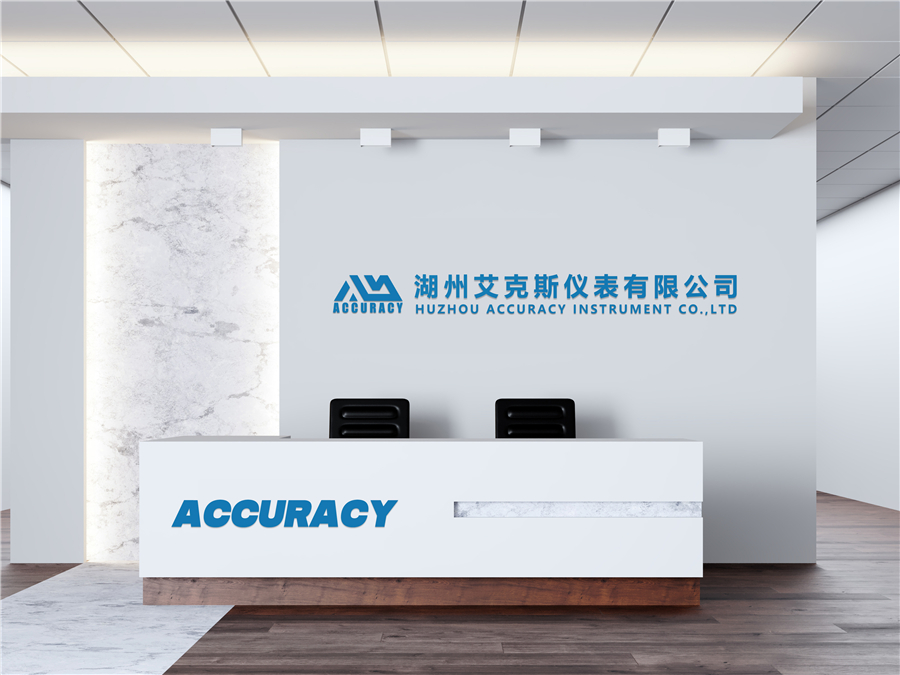
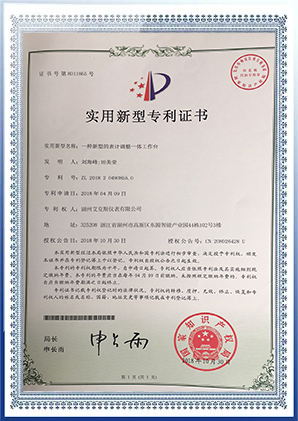
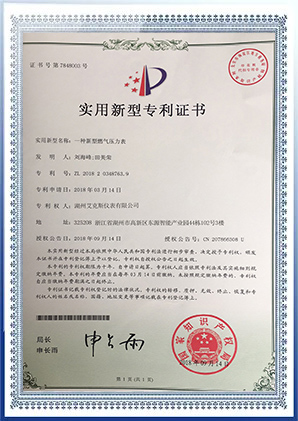
Huzhou Accuracy Instrument CO LTD is professionally engaged in the development, sales, and service of industrial mechanical pressure gauges, bi-metal thermometers, SF6 manometers, and precision pressure sensors. Products are widely used in various applications such as Mechanical Engineering, Chemical Engineering, Food Industry, Pharmaceutical, and high-technology electric appliances.
Established over two decades ago, our pressure gauge manufacturing facility spans 3,000 square meters, equipped with advanced production lines and rigorous quality control systems. As an industry leader, we integrate innovation with precision engineering to deliver reliable measurement solutions for global clients.
Focuses on material innovation, smart sensor integration, and strict compliance with international standards (e.g., ISO, API, EN, ASME).
Utilizes automated assembly and laser calibration technologies to ensure product durability, repeatability, and long-term accuracy.
Provides 24/7 technical support, rapid RFQ response, and customized OEM solutions across 30+ countries worldwide.
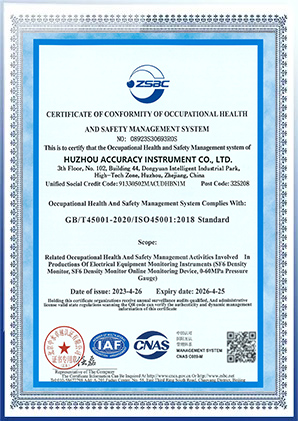
Our annual output exceeds 2 million units, covering industrial-grade gauges (stainless steel gauge, black steel gauge, shock-proof gauge, SF6 gauge, bimetal thermometer, pressure sensor) for oil/gas, HVAC, and pharmaceutical sectors. Exported worldwide with certifications including ISO, SGS, and CE, our products earn global recognition for corrosion resistance and ±0.5% precision. Our laboratory conducts 100% pressure cycle tests and environmental simulations under ISO 9001 and ISO 17025 standards, backed by a robust one-year warranty.
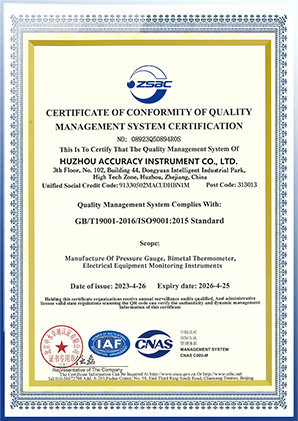
We have long followed the concept of "reasonable price, accurate delivery, good quality" and business management models to keep production quality certified under ISO9001:2008 and CE benchmarks.
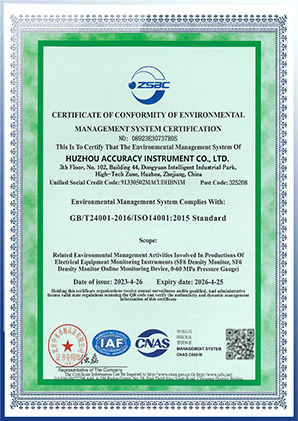
Expert engineering answers to technical queries regarding bimetal thermometer operation, selection, and maintenance.
A bimetal thermometer works by bonding two metals with unequal coefficients of thermal expansion into a helical coil inside a stainless steel stem. As heat increases, differential thermal elongation forces the coil to twist. This rotary torque moves a pointer shaft linked directly to the dial indicator. For extreme temperatures (-70°C to +600°C), specialized alloys like Invar and high-grade stainless steel are used to ensure linear, repeatable movement without permanent thermal deformation.
CE certification confirms that the thermometer satisfies European health, safety, and environmental protection directives. Specifically, compliance with the Pressure Equipment Directive (PED 2014/68/EU) and EN 13190 guarantees that the stem and process connection can safely withstand pipeline operating pressures and aggressive industrial environments without catastrophic failure or leakage.
The response time of a bimetal gauge depends on stem diameter, wall thickness, thermal conductivity of internal fill materials, and whether a thermowell is used. Typical response time in moving liquid ranges between 5 to 15 seconds. Response time can be optimized by using heat-conductive paste inside thermowells and selecting smaller stem diameters where physical strength requirements permit.
Yes. Premium industrial bimetal thermometers manufactured by Huzhou Accuracy Instrument feature an external reset screw located on the back of the case or inside the bezel. Field technicians can immerse the stem in an ice bath (0°C/32°F) or dry-block calibrator and adjust the reset screw to recalibrate the pointer zero-point easily.
Liquid filling is recommended when thermometers are installed on equipment with high ambient vibration, such as diesel generators, compressors, pumps, or marine engines. Silicone filling dampens internal coil vibration, prevents pointer flutter, lubricates moving contact points, and eliminates window condensation in humid ambient conditions.
Direct mounting features a fixed stem position (either bottom vertical entry or back rear entry). Every-Angle mounting incorporates a flexible swiveling mechanical joint between the case and stem, allowing field operators to adjust the dial face to any viewing angle (360° horizontal rotation, 90° vertical tilt) after thread installation.
Discover our complete portfolio of CE-certified pressure transmitters, diaphragm seal gauges, and adjustable bi-metal indicators.
 Accuracy Instrument