China 4″ Flanged Diaphragm Pressure Gauge – Stainless Steel, 0–1 MPa Range Supplier, Factories

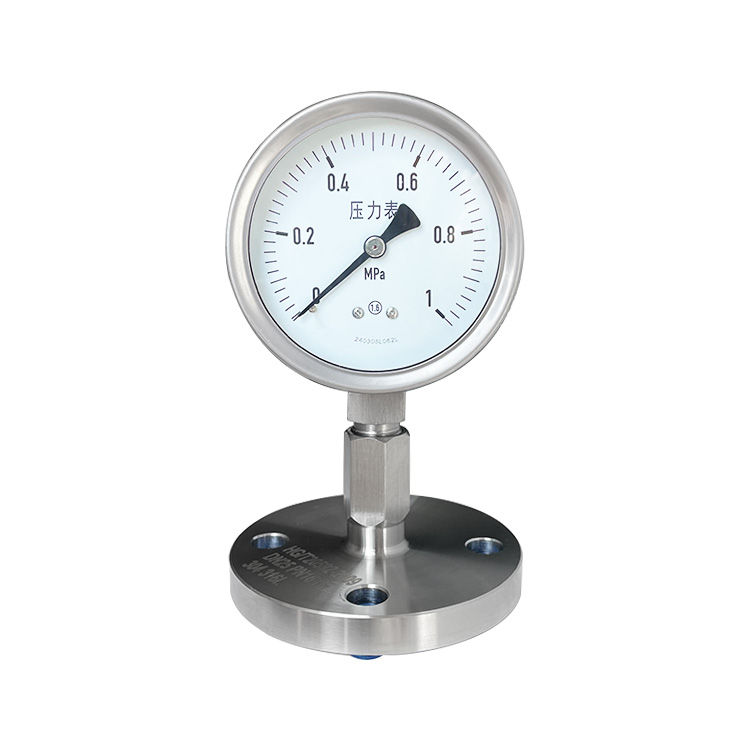
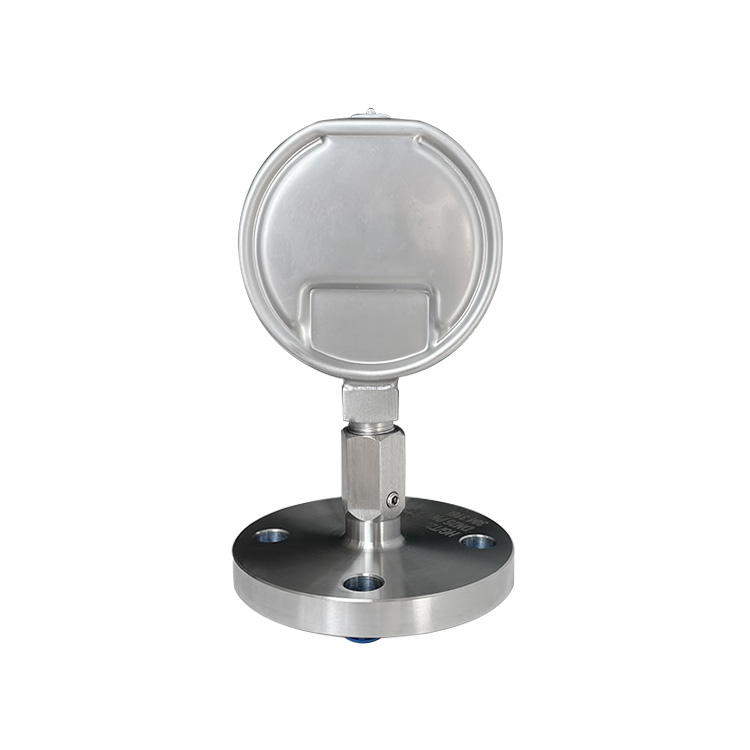
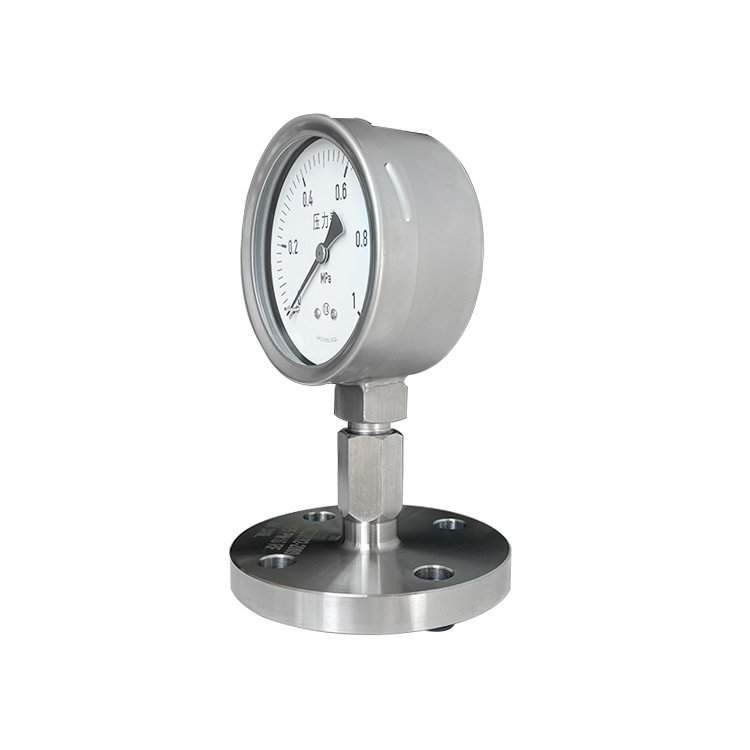
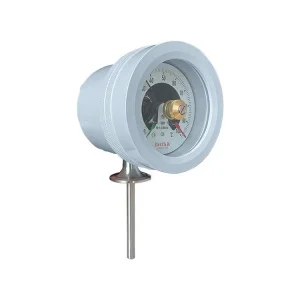
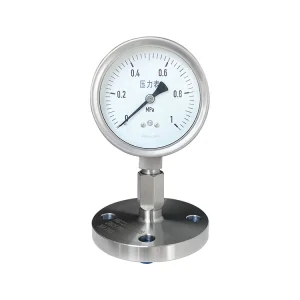
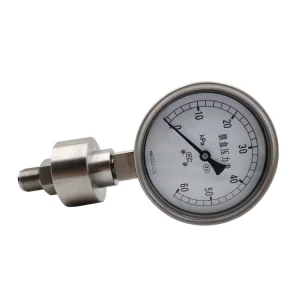
Diaphragm-sealed pressure gauge is a specialized pressure measuring instrument suitable for measuring the pressure of corrosive, high-viscosity, easily crystallizing, easily solidifying media containing solid particles, while preventing the media from directly entering the gauge and causing blockage or corrosion. It consists of two core components: a general-purpose pressure gauge and a diaphragm sealing device (including the diaphragm body, diaphragm sheet, and sealing fluid). It is widely used in industries such as petrochemicals, metallurgy, pharmaceuticals, food and beverage, and papermaking.

The core of diaphragm-sealed pressure gauge is the pressure transmission through the deformation of the diaphragm. When the medium being measured comes into contact with the diaphragm, the pressure of the medium causes the diaphragm to undergo elastic deformation. The sealing fluid (usually silicone oil, glycerin, etc.) filling the diaphragm transmits the deformation pressure of the diaphragm to the elastic sensing element (such as a Bourdon tube) of the pressure gauge. The elastic sensing element generates a corresponding displacement according to the pressure magnitude, which drives the pointer to deflect through the transmission mechanism inside the pressure gauge, ultimately displaying the pressure value of the medium being measured.

Product Description

Product Specifications

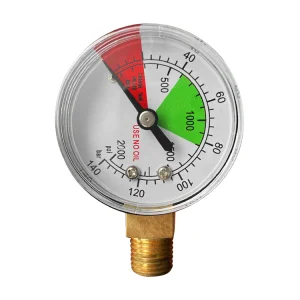
Case Stainless steel
Size 100mm (4")
Ring(Cover) Stainless steel
Window Glass
Pointer Aluminum Alloy, Black Finished
Connection Stainless steel
Connection Location Lower
Thread 1/8", 1/4", 3/8", 1/2"; PT(BSPT, ZG), BSP(G, PF), NPT etc.
Element(Bourdon Tube) Stainless steel
Movement Stainless steel
Dial Plate White Aluminum with Black Graduations

Core Features and Advantages

Corrosion and Clogging Prevention

The diaphragm completely isolates the measured medium from the internal components of the pressure gauge, preventing corrosive media from damaging the instrument and preventing viscous or particulate media from clogging the instrument channels.

Reliable Measurement Accuracy

Low pressure transmission loss of the sealing fluid, combined with a high-precision gauge head, enables accurate pressure measurement, typically achieving accuracy classes of 1.0 or 1.6.

Adaptable to Complex Conditions

Can operate in high and low temperature environments (compatible with different types of sealing fluids and diaphragm materials); some models can also be used for vacuum pressure measurement.

Flexible and Diverse Installation

Supports multiple installation methods including threaded connections, flange connections, and sanitary clamp connections (suitable for the food and pharmaceutical industries), adapting to different process pipelines.

Typical Application Fields

Chemical Industry: Measuring the pressure of corrosive media such as strong acids, strong alkalis, and salt solutions.
Food and Pharmaceutical Industry: Measuring the pressure of viscous media or media with high hygiene requirements such as sauces, pharmaceutical solutions, and dairy products.
Metallurgical Industry: Measuring the pressure of high-temperature melts and slurries containing particles.
Water Treatment Industry: Measuring the pressure of media containing impurities such as sewage and sludge.

Frequently Asked Questions (FAQ)

What materials are used for key gauge components?

The gauge case, ring, connection, Bourdon tube element, and movement are all constructed from durable stainless steel. The pointer is made of black-finished aluminum alloy, and the window uses high-clarity glass.

How does the diaphragm prevent clogging and corrosion?

The diaphragm creates a physical barrier that isolates the measured medium from the inner mechanism, preventing corrosive chemicals or particulate-heavy liquids from reaching and clogging internal channels.

What thread standards are compatible with this instrument?

The gauge supports multiple thread options including 1/8", 1/4", 3/8", and 1/2" sizes in standard thread profiles such as PT (BSPT, ZG), BSP (G, PF), and NPT.

What measurement accuracy level can be expected?

Thanks to minimal pressure transmission loss through the sealing fluid and precise gauge components, measurement accuracy class typically reaches 1.0 or 1.6.

Is this gauge suitable for sanitary or high-hygiene applications?

Yes, it supports sanitary clamp connections, making it well-suited for high-hygiene application environments like food processing, dairy, and pharmaceuticals.
Related Products