Explore our CE-certified industrial pressure transmitters, bimetal thermometers, and specialized manometers manufactured to ISO 9001 standards.
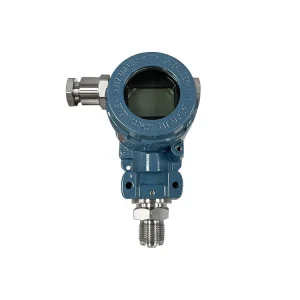
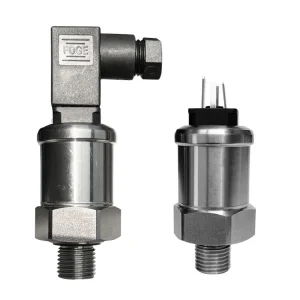
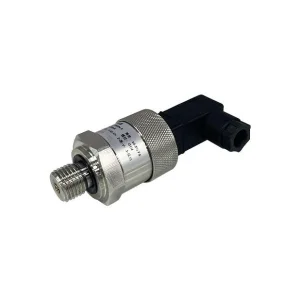
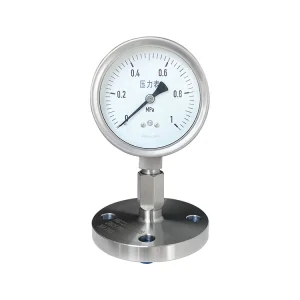
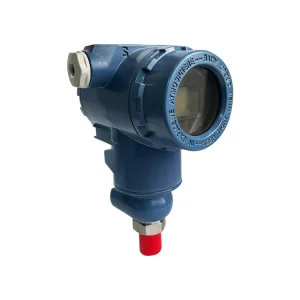
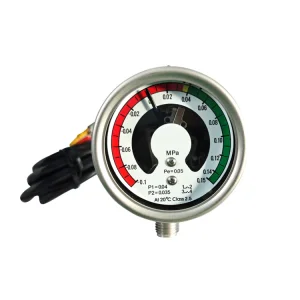
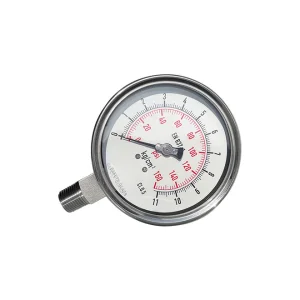
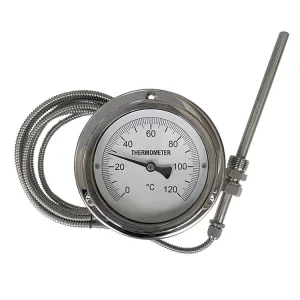
Understanding baseline metrics, temperature-dependent viscosity shifts, and safety thresholds across internal combustion engines, marine propulsion, and heavy industrial machinery.
Determining what an oil pressure gauge should read depends directly on operational phase, fluid temperature, engine RPM, and application design. As a rule of thumb for automotive and heavy-duty industrial diesel engines, normal operating oil pressure ranges between 25 to 65 PSI (1.7 to 4.5 Bar) under standard operating temperatures.
A widely accepted OEM rule of thumb across mechanical engineering is the 10 PSI per 1,000 RPM baseline. Under this heuristic, an engine operating at 3,000 RPM should register at least 30 PSI to ensure hydrodynamic lubrication of journal bearings, camshafts, and hydraulic lifters.
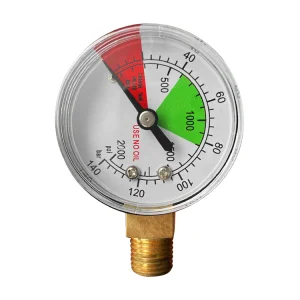
When reading a mechanical Bourdon tube gauge or a modern piezoresistive digital transmitter, variations outside nominal bounds signal underlying mechanical or hydraulic anomalies:
Low readings risk catastrophic metal-to-metal contact. Root causes include excessive main bearing clearances, thermal breakdown of motor oil, oil pump relief valve stuck open, clogged pickup screen, or low oil sump level.
Sustained high pressure can blow out oil filter gaskets, seal rings, and cause cooler line failures. Causes include relief valve stuck closed, restricted oil passages, or incorrect oil viscosity grade (e.g., using SAE 50 instead of 10W-30 in cold ambient climates).
| Machinery Classification | Cold Start Target (PSI / Bar) | Warm Idle Target (PSI / Bar) | Peak Load Target (PSI / Bar) | Recommended Sensor Type |
|---|---|---|---|---|
| Heavy Duty Diesel Engines | 60 - 85 PSI / 4.1 - 5.8 Bar | 25 - 40 PSI / 1.7 - 2.7 Bar | 50 - 70 PSI / 3.4 - 4.8 Bar | Stainless Steel Vibration-Resistant Gauge / 4-20mA Transmitter |
| Industrial Hydraulic Systems | 1500 - 3000 PSI / 100 - 200 Bar | N/A (Constant System Pressure) | Up to 5000 PSI / 350 Bar | AKS Thin Film Pressure Transducer (IP65/IP67) |
| Marine Propulsion Units | 55 - 75 PSI / 3.8 - 5.1 Bar | 30 - 45 PSI / 2.0 - 3.1 Bar | 60 - 80 PSI / 4.1 - 5.5 Bar | CE Certified Explosion-Proof Diaphragm Gauge |
| Gas & Power Plant Turbines | 40 - 60 PSI / 2.7 - 4.1 Bar | 35 - 50 PSI / 2.4 - 3.4 Bar | 45 - 65 PSI / 3.1 - 4.5 Bar | Intelligent Digital 3051 Model Sensor |
Navigating European directives, safety protocols, and precision calibration requirements for industrial procurement.
The Pressure Equipment Directive (PED) mandates strict engineering and testing for pressure measuring equipment operating above 0.5 bar. Our certified gauges undergo burst pressure testing up to 400% of maximum scale to prevent structural failure under hydraulic spikes.
European standard EN 837-1 governs dial pressure gauges, specifying design accuracy classes (e.g., Class 1.0, Class 1.6, Class 0.5), thread profiles (G1/2", G1/4"), and safety blow-out back plates to protect operators against internal Bourdon tube rupture.
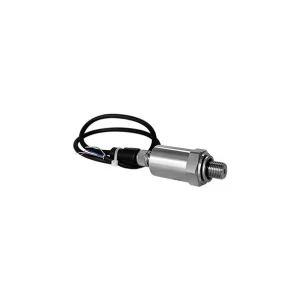
For electronic transducers (such as 2088 and 3051 transmitters), CE compliance ensures Electromagnetic Compatibility (EMC 2014/30/EU) against industrial noise, as well as ATEX directive compliance for explosive gas and chemical vapor environments.
For over two decades, Huzhou Accuracy Instrument Co., Ltd. has established itself as an international benchmark in the engineering, design, and high-volume production of industrial pressure gauges, bimetal thermometers, SF6 gas manometers, and advanced pressure transmitters.
Operating a state-of-the-art 3,000 square meter manufacturing plant, our facility leverages automated laser calibration, high-precision robotic soldering, and rigorous ISO 9001:2008 quality control protocols. We serve OEM engineering firms, oil refineries, and equipment distributors across 30+ countries.
Tailored engineering, OEM private labeling, and material selection for international equipment manufacturers.
Choose from 304 Stainless Steel, 316L SS, Hastelloy C-276, and High-Purity Alumina Ceramic sensing elements to withstand corrosive media, saltwater environments, and high-viscosity crude oil.
Complete flexibility across standard NPT (1/4", 1/2"), Metric (M20x1.5), BSPP, and BSPT threads. Custom flanged connections available for sanitary food-grade and pharmaceutical applications.
Liquid-filled options (Glycerin or Silicone oil) damp shock and ambient vibration in heavy machinery engines. Integrated IP65/IP67 seals guarantee zero leak during high-cycle impulse testing.
From classical mechanical analog dials to IoT-integrated smart digital transmitters and remote gas density monitoring.
While mechanical dial gauges remain essential for direct visual checks, modern plant automation demands digital signal transmission. Piezoresistive pressure sensors output 4-20mA analog loops or digital HART/Modbus protocols directly to SCADA systems, enabling predictive maintenance algorithms before mechanical failure occurs.
Beyond hydraulic oil, specialized gas density monitors play a critical role in electrical substations. SF6 gas density gauges incorporate temperature compensation mechanisms to detect micro-leaks in high-voltage switchgear, protecting grid infrastructure from cataclysmic insulation loss.
Every pressure gauge leaves our laboratory after undergoing 100% full-scale pressure cycle testing, thermal aging, and optical calibration check.
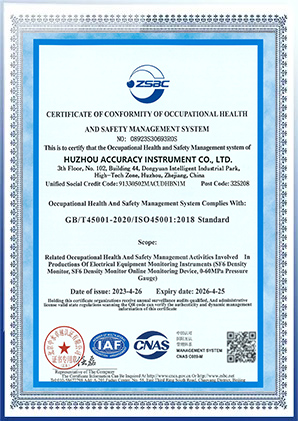
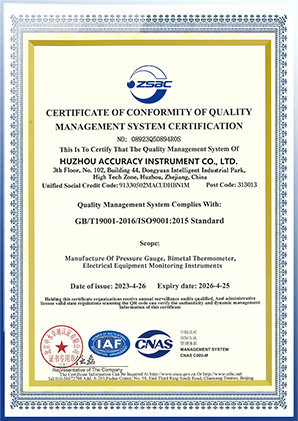
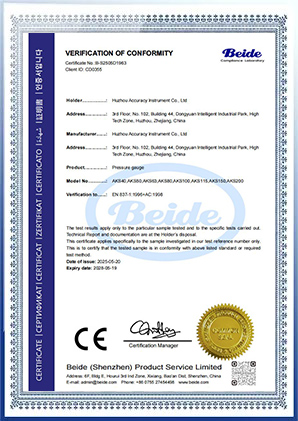
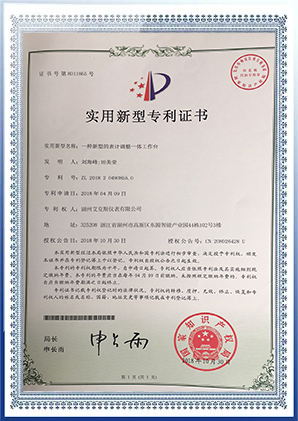
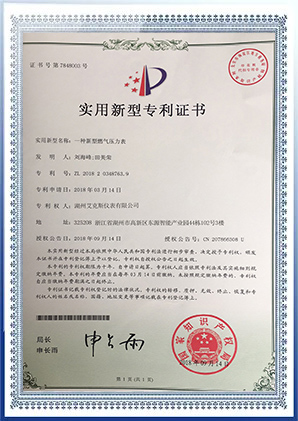
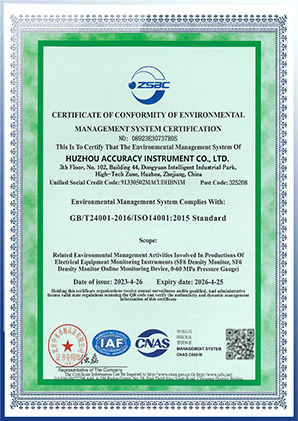
Expert answers to common engineering questions regarding oil pressure measurement, installation, and troubleshooting.
Discover our broad selection of factory-direct bimetal thermometers, ceramic sensors, and specialized pressure gauges.
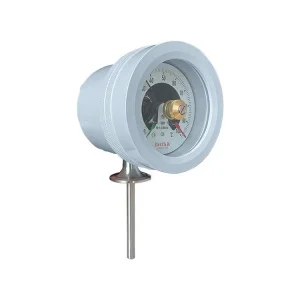
 Accuracy Instrument