Industrial-Grade Pressure Gauges, Sensors, and Density Monitors Engineered for Extreme Reliability
Deconstructing Pressure Reference Baselines, Thermodynamics, and Mechanical Deflection Sensing
In process automation, fluid dynamics, and mechanical system design, Gauge Pressure ($P_g$) represents the measured pressure relative to local ambient atmospheric pressure ($P_{atm}$). Unlike Absolute Pressure ($P_a$), which uses a perfect vacuum ($0 \text{ PSI}$ absolute or $0 \text{ bar}$ absolute) as its absolute baseline, gauge pressure calibrates its zero point against the surrounding barometric atmosphere. Mathematically, the thermodynamic relationship is defined by the primary formula:
Pgauge = Pabsolute - Pambient (atmospheric)
Where standard atmospheric pressure at sea level is baseline calibrated to 101.325 kPa (14.696 psi or 1.01325 bar).
When an industrial vessel or pipe reads positive gauge pressure (e.g., $10 \text{ bar gauge}$ or $10 \text{ barg}$), it indicates that the media within the enclosed system exerts a force $10 \text{ bar}$ higher than the surrounding ambient air. Conversely, negative gauge pressure—commonly referenced as vacuum pressure—occurs when the internal system pressure falls below barometric pressure, drawing media inward.
Selecting the incorrect pressure reference scale introduces critical operational errors, safety hazards, and calibration drift. Understanding the technical boundaries of each measurement topology is fundamental to plant engineering:
| Pressure Metric Type | Reference Datum (Zero Point) | Primary Industrial Applications | Sensitivity to Weather/Altitude |
|---|---|---|---|
| Gauge Pressure (barg, psig) | Ambient Barometric Atmosphere | Hydraulic circuits, steam boilers, pneumatic tools, CNG tanks, process pipelines | Affected by extreme barometric shifts or high-altitude installations if unvented. |
| Absolute Pressure (bara, psia) | Perfect Vacuum (Zero Molecules) | Altimeters, vacuum distillation columns, weather barometers, hermetic gas sealing | Completely independent of ambient atmospheric fluctuations. |
| Differential Pressure (DP, psid) | Arbitrary Reference Point A vs. Point B | Filter blockage monitoring, orifice plate flowmetering, cleanroom pressure control | Measures relative difference; immune to equalized line pressure changes. |
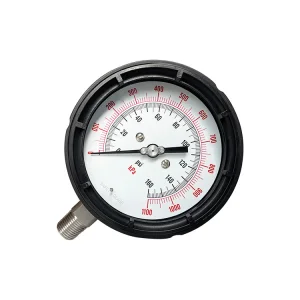
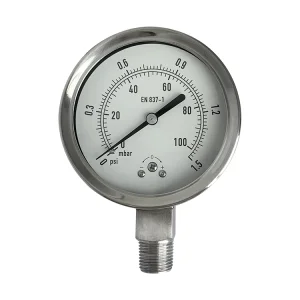
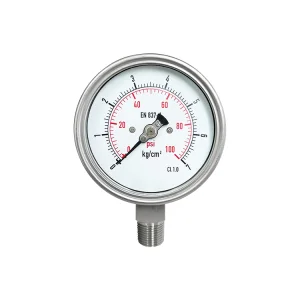
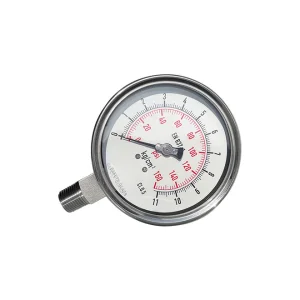
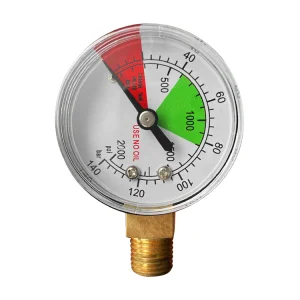
The vast majority of mechanical gauge pressure indicators utilize the elastic deformation principle discovered by Eugène Bourdon. A C-shaped, helical, or spiral metallic tube (manufactured from 316L Stainless Steel, Phosphor Bronze, or Monel) is fixed at one end to the process connection, while the opposite end remains sealed and connected to a precision movement gear.
As pressurized media enters the hollow tube, the elliptical cross-section attempts to re-attain a circular shape. This mechanical stress forces the C-tube to uncoil slightly. The minute displacement at the free tip is transmitted through a high-precision sector-and-pinion movement, driving the pointer across a calibrated dial. Because the exterior of the Bourdon tube is continuously exposed to atmospheric pressure inside the vented case, the resulting movement intrinsically subtracts ambient atmospheric force, yielding a direct, highly accurate reading of Gauge Pressure.
Navigating European Directives: Pressure Equipment Directive (PED), ATEX, and EMC Standards
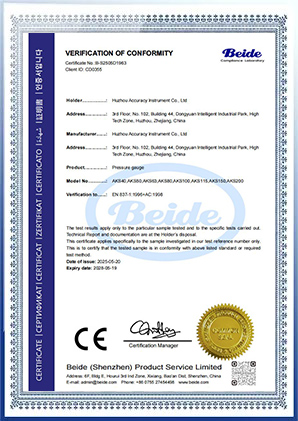
For B2B procurement managers, original equipment manufacturers (OEMs), and EPC contractors, sourcing pressure instrumentation demands strict compliance with international safety framework mandates. The CE Mark (Conformité Européenne) is not merely a trading badge; it serves as a legally enforceable declaration that the gauge pressure supplier meets all applicable European Union safety, health, and environmental protection requirements.
Applies to pressure equipment and assemblies subject to a maximum allowable pressure (PS) greater than 0.5 bar. CE-certified gauge pressure suppliers must execute rigorous sound engineering practice (SEP) or formal conformity modules (Category I to IV), including burst pressure safety factor testing (typically 4x full scale), trace metal analysis, and hydrostatic proofing.
Essential for pressure instrumentation deployed in explosive atmospheric conditions, such as off-shore oil rigs, chemical refineries, and grain silos. CE-compliant explosion-proof gauges (e.g., solid-front phenolic case designs with blow-out backs) prevent spark ignition and contain internal over-pressure failures safely.
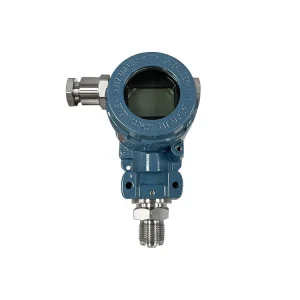
For electronic gauge pressure transmitters (such as 2088 and AKS thin-film pressure transducers), CE certification ensures high immunity against electromagnetic radiation, voltage surges, and radio-frequency interference (RFI), maintaining signal integrity in harsh industrial switchyards.
A true CE-certified gauge pressure factory enforces complete metallurgical traceability. Raw materials for pressure-wetted parts—such as 316L stainless steel tubes, socket connections, and welded diaphragms—are validated via chemical composition and mechanical stress test certificates under EN 10204 3.1 standards. This prevents catastrophic stress-corrosion cracking (SCC) when operating with aggressive media like acid gas, ammonia, or high-pressure steam.
Industrial Internet of Things (IIoT), Energy Transition, and Advanced Materials
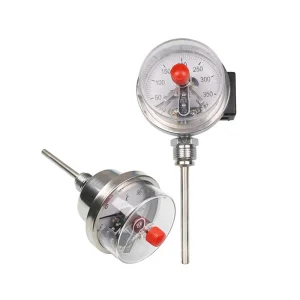
Traditional mechanical dial gauges are rapidly evolving into hybrid devices. Modern plants demand mechanical pressure gauges equipped with integrated electronic contact switches or resistance transmitters (e.g., 5V CNG resistive gauges and bi-metal contact switches). This allows local visual readout while simultaneously transmitting real-time 4-20mA or RS485 Modbus telemetry to SCADA systems.
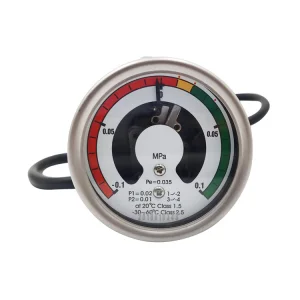
In high-voltage electrical substations, Sulfur Hexafluoride (SF6) serves as an indispensable insulating gas. However, due to its global warming potential (GWP), strict environmental regulations require zero-leak density monitoring. Modern SF6 gas density gauges incorporate thermal compensation mechanisms, ensuring accurate pressure-density normalization regardless of ambient temperature swings.
In high-vibration applications such as automotive common-rail fuel injection and mobile hydraulic machinery, conventional strain gauges experience mechanical fatigue. Sputtered thin-film pressure transducers utilize molecular-level metallic bonding directly onto stainless steel diaphragms, yielding zero hysteresis, exceptional over-pressure limits, and operating lifespans exceeding 10 million pressure cycles.
Key Procurement Metrics for International Buyers, Plant Engineers, and Distributors
When procuring industrial instrumentation at enterprise scale, looking solely at unit price leads to premature field failures, unexpected plant downtime, and inflated maintenance expenditures. Sophisticated procurement teams evaluate gauge pressure suppliers through a Total Cost of Ownership (TCO) lens, focusing on five critical engineering factors:
Instrument accuracy classes (defined by EN 837-1) range from Grade 4A (±0.1% FS) to Grade B (±3-2-3% FS). Premium suppliers guarantee drift rates under ±0.2% FS per year, reducing the frequency of costly laboratory re-calibrations.
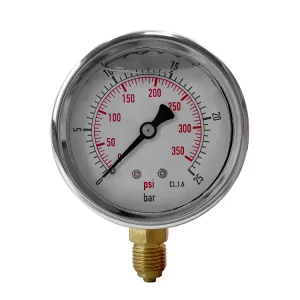
Severe line pulsation and mechanical vibration cause pointer flutter and rapid gear wear. High-performance gauges utilize liquid filling (99.5% pure glycerine for general duty, or high-viscosity silicone oil for extreme temperature bounds of -40°C to +100°C) to lubricate internal movement and stabilize visual indication.
Matching process fluid chemistry to wetted parts is vital. While brass internal components suit inert air and water applications, corrosive media (chlorides, hydrogen sulfide, solvents) necessitate full 316L stainless steel, Hastelloy C-276, or PTFE diaphragm isolation seals.
Outdoor power installations and washdown environments demand minimum IP65 or IP67 ingress protection. Weatherproof case sealing with NBR or FKM gaskets prevents dust accumulation and moisture condensation behind the lens glass.
Integrating Advanced Automation, Automated Calibration, and Rigorous Quality Control
The global industrial instrumentation supply chain has transitioned toward high-tech manufacturing hubs capable of delivering ultra-high precision at scale. China’s Industry 4.0 ecosystem combines fully integrated supply chains, automated component machining, and AI-driven quality assurance.
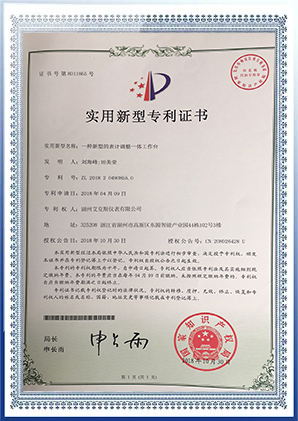
At the forefront of this manufacturing transformation is Huzhou Accuracy Instrument Co., Ltd., bringing over two decades of technical expertise and specialized manufacturing infrastructure to international clients.
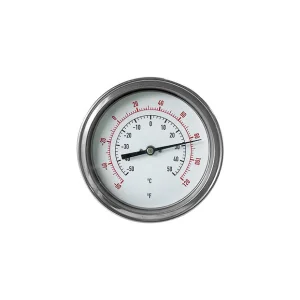
Huzhou Accuracy Instrument CO LTD is professionally engaged in the development, sales and service of industrial mechanical pressure gauges, bi-metal thermometers, SF6 manometer, pressure sensor. Products are widely used in various applications such as Mechanical Engineering, Chemical Engineering, Food Industry, Pharmaceutical, and high technology electric appliances.
Established over two decades ago, our pressure gauge manufacturing facility spans 3,000 square meters, equipped with advanced production lines and rigorous quality control systems. As an industry leader, we integrate innovation with precision engineering to deliver reliable measurement solutions for global clients.
20 Specialists: Focuses on material innovation, smart sensor integration, and compliance with international standards (e.g., ISO, API, EN 837).
120 Technicians: Utilizes automated assembly, robotic laser calibration, and mass spectrometer leak testing to ensure maximum durability.
15 Professionals: Provides 24/7 technical support, OEM/ODM custom engineering, and rapid logistics execution across 30+ countries.
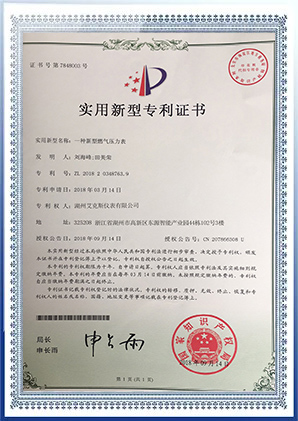
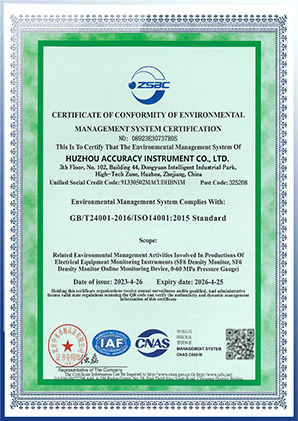
Annual Capacity: Annual output exceeds 2 million units, covering industrial-grade gauges (e.g., stainless steel gauge, black steel gauge, shock-proof gauge, SF6 gauge, thermometer, pressure sensor) for oil/gas, HVAC, and pharmaceutical sectors. Products are exported worldwide, with certifications including ISO, SGS, and CE, earning global recognition for corrosion resistance and ±0.5% precision.
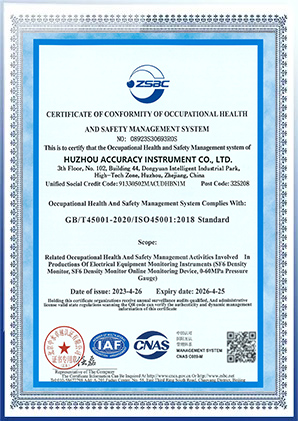
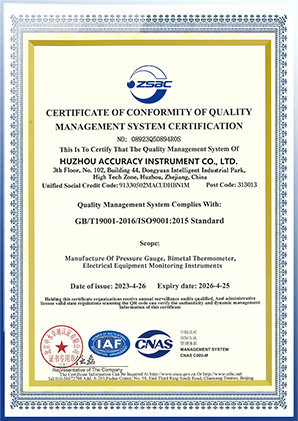
Quality Assurance: Our laboratory conducts 100% pressure cycle tests and environmental simulations, adhering to ISO 9001 and ISO 17025 standards. Continuous improvement drives our reputation for "zero-leak" performance in extreme conditions, supported by a comprehensive one-year warranty.
We long follow the concept of "Reasonable Price, Accurate Delivery, Good Quality" under ISO9001:2008 Quality Management
Tailored Pressure and Temperature Instrumentation for Critical Industry Sector Workloads
Deployment: 100mm Explosion-Proof Stainless Steel Bourdon Gauges with NPT radial connections.
Engineering Challenge: Highly corrosive hydrocarbon gases and aggressive ambient marine salt-air.
Solution: Full 316L SS housing and movement, liquid glycerin filling, certified to CE PED Category II for safety against pressure surges up to 1000 bar.
Deployment: 63mm Temperature-Compensated SF6 Gas Density Monitors (-0.1 to 0.1 MPa).
Engineering Challenge: Preventing electrical flashover by continuously detecting minute gas leaks regardless of ambient weather.
Solution: Integrated bimetallic thermal compensator that normalizes pressure readings to 20°C standard reference, with micro-switch alert contacts.
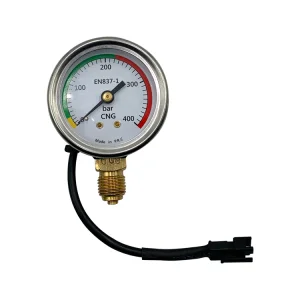
Deployment: 5V OEM Resistive CNG Gas Pressure Gauges.
Engineering Challenge: Severe road vibration, rapid pressure cycles during fuel fills, tight engine compartment space constraints.
Solution: Compact brass-alloy housing with integrated ceramic resistive element sending accurate fuel-level telemetry directly to vehicle ECUs.
Expert Answers on Gauge Calibration, CE Directives, and Custom Manufacturing Capabilities
High-Performance Transmitters, Bi-Metal Thermometers, and Precision Mechanical Instruments
 Accuracy Instrument