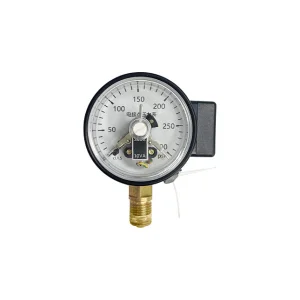
Explore precision-engineered OEM solutions from Huzhou Accuracy Instrument Co., Ltd.
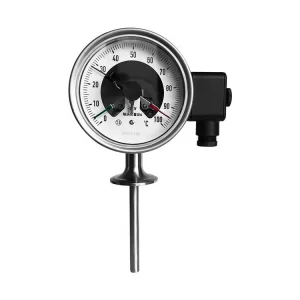
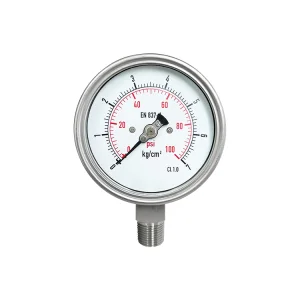
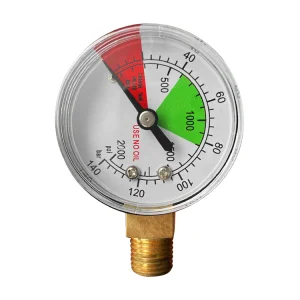
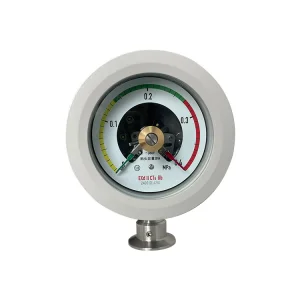
In heavy industrial machinery, hydraulic power units, marine propulsion systems, and automotive engines, oil pressure gauge stability is a primary indicator of system health. A fluctuating oil pressure gauge pointer—whether exhibiting rapid high-frequency flutter, erratic needle jumping, or wide cyclic swings—signals underlying thermal, mechanical, or hydraulic instability. Left unaddressed, pointer oscillation compromises measurement integrity, accelerates mechanical wear of Bourdon tube linkages, and risks catastrophic equipment failure.
Positive displacement pumps (such as gear, vane, or axial piston pumps) deliver fluid in discrete displacement volumes. This inherent mechanism creates fluid ripple effect—periodic pressure pulses. When pump frequency matches the natural frequency of the Bourdon tube, resonance amplifies needle displacement, producing rapid gauge fluttering.
Over tens of thousands of operating hours, internal mechanical movement components—specifically the sector gear, pinion, and hairspring within the movement assembly—suffer abrasive wear. Excessive backlash between gear teeth manifests as erratic pointer movement, even under constant hydraulic pressure.
Pressure regulating bypass valves can enter a state of mechanical instability known as valve chattering. Rapid opening and closing cycles of the relief valve create dynamic line pressure surges that transmit straight to the gauge port, causing wide amplitude low-frequency needle oscillations.
As lubricating oil heats from ambient start-up temperature to steady-state operational operating temperature (e.g., from 20°C to 100°C), kinematic viscosity drops exponentially. Lower fluid dampening combined with thermal expansion inside non-compensated sensing chambers induces erratic pressure readings.
In modern electronic pressure sensors (such as piezoresistive ceramic or thin-film transducers), voltage fluctuations can stem from EMI (electromagnetic interference), poor chassis grounding loops, or power supply ripple affecting output current (4-20mA or 0-10V signals).
Air drawn into the oil line through loose suction fittings or degraded shaft seals creates a two-phase gas-liquid mixture. Because air is highly compressible compared to hydraulic oil, trapped air pockets act as un-damped springs, causing severe pressure spikes and erratic gauge jumps.
Mitigating oil pressure gauge fluctuations requires systemic hardware selection and fluid dynamic dampening strategies. Below is a comparative technical matrix evaluating engineering solutions designed to eliminate gauge flutter and extend operational lifespan.
| Diagnostic Root Cause | Engineering Mitigation Strategy | Recommended Hardware Component | Operational Efficiency Gain |
|---|---|---|---|
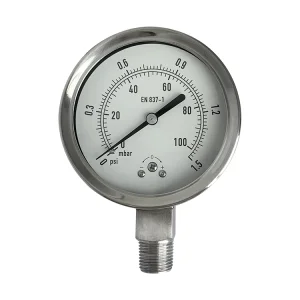
| High-Frequency Pump Ripple | Liquid Enclosure Damping (Glycerin / Silicone Filling) | Glycerin-Filled Stainless Steel Bourdon Gauge | Eliminates pointer flutter; lubricates internal gear train. |
| Severe Pressure Surges & Spikes | Flow Restriction & Porous Snubber Integration | Sintered Stainless Steel Pressure Snubber (¼ NPT) | Dampens shock waves by up to 90% before reaching sensing tube. |
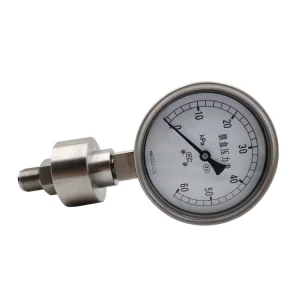
| Corrosive & Viscous Contamination | Diaphragm Isolation Systems | Laser-Welded Diaphragm Seal Pressure Gauge | Isolates mechanical internals from particulate accumulation. |
| High Thermal Volatility | Silicon Oil Filling & Bimetallic Compensation | High-Temp Silicone Fluid Filled Transducer | Stabilizes accuracy across broad operating range (-40°C to +200°C). |
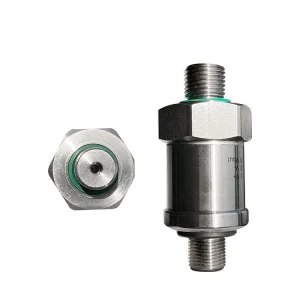
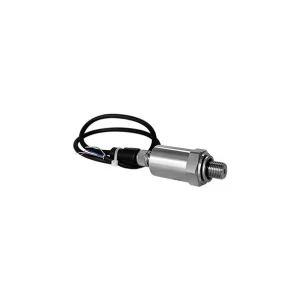
| Signal Telemetry Interference | Shielded Cables & Ceramic Thin-Film Sensors | 316L SS Thin-Film Pressure Transducer with 4-20mA | Provides noise-free digital telemetry compatible with PLC / IIoT. |
Liquid filling is the primary defense against mechanical vibration. Glycerin (99.5% purity) is optimal for standard ambient temperature ranges (0°C to +65°C), providing high viscous resistance to steady needle movement. For extreme outdoor or high-heat environments (-40°C to +100°C), Silicone Oil Filling is specified due to its flat viscosity-temperature curve, preventing fluid thermal clouding or high drag at low temperatures.
Installing an adjustable or sintered metal pressure snubber upstream of the gauge inlet forces incoming fluid through a porous element or restricted orifice. This creates a mechanical low-pass filter: high-frequency pressure ripples are attenuated before reaching the Bourdon tube, protecting the gauge without altering static pressure measurement accuracy.
For heavy lube oil applications carrying carbon particulates or metallic slurry, direct fluid entry into a narrow Bourdon tube leads to clogging and irregular readings. A laser-welded diaphragm seal utilizes a flexible membrane and internal transmission fluid to convey system pressure cleanly, guaranteeing zero-clog accuracy.
As global industries transition toward automated monitoring, smart manufacturing, and strict safety compliance, procurement leaders in chemical processing, oil & gas, OEM machinery, and natural gas transportation face evolving technical procurement criteria.
Modern plant designs no longer rely solely on analog dials. Supply chain buyers increasingly request dual-output instruments: direct visual pointer displays backed by integrated electric contacts (e.g., magnetic snap-action or inductive switches) or 4-20mA smart transmitters to feed centralized SCADA systems.
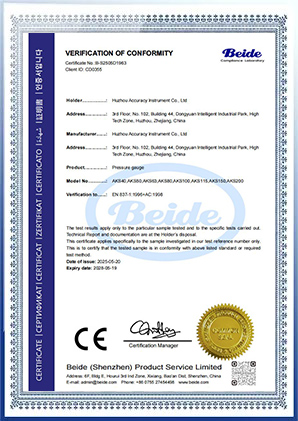
Global enterprises demand strict adherence to European Union Directives. Products must carry verified CE Marking, complying with Pressure Equipment Directive (PED 2014/68/EU), ATEX Directive for explosive atmospheres, and EN 837-1 safety standards (including overpressure blow-out back protection).
High-volume B2B buyers prioritize longevity over initial unit price. Gauges built with 316/316L stainless steel wetted parts, laser-welded joints, and IP65/IP67 ingress protection significantly lower replacement frequency, reduce unscheduled downtime, and minimize maintenance overhead.
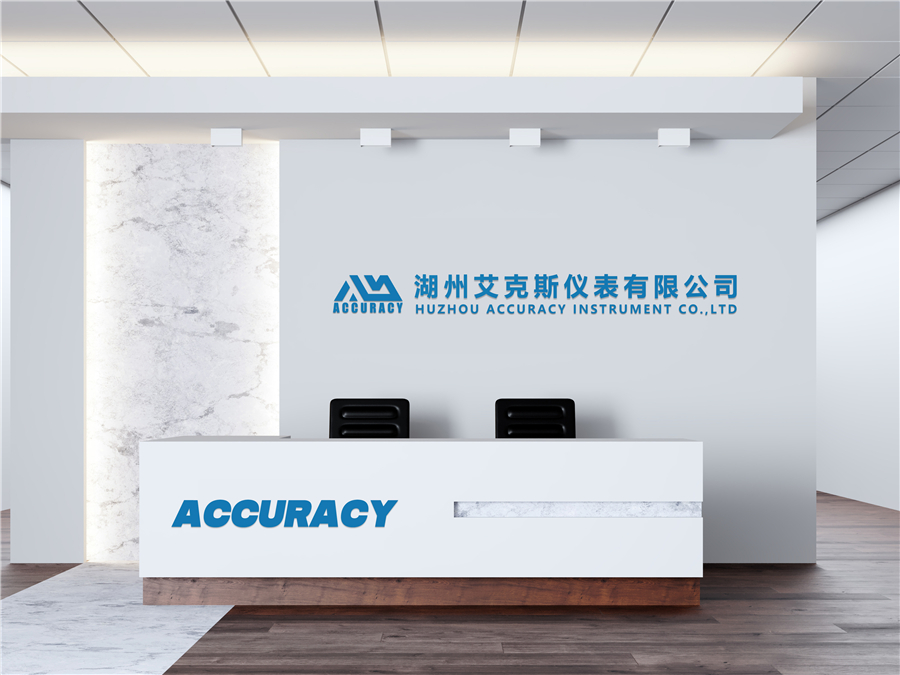
20 Years of Manufacturing Excellence & Engineering Research
Huzhou Accuracy Instrument Co., Ltd. is a premier manufacturer professionally engaged in the development, custom OEM production, and international service of industrial mechanical pressure gauges, bimetal thermometers, SF6 gas manometers, and advanced pressure sensors. Our industrial footprint covers 3,000 square meters, housing automated production lines, laser welding cells, and high-precision calibration benches.
Serving world-class clients across Mechanical Engineering, Chemical Processing, Marine, Automotive, and Power Generation sectors, we deliver instrumentation designed to withstand extreme vibration, aggressive media, and severe ambient conditions.
Focuses on advanced alloy metallurgical research, smart piezoresistive sensor integration, thermal drift compensation, and strict compliance with international engineering standards (ISO, API, EN 837).
Utilizes fully automated dial calibration software, robotic laser welding machines, and mass helium leak detection systems to maintain batch-to-batch quality consistency.
Provides 24/7 technical advisory, custom engineering draw-ups, application-matched material selection, and rapid global supply chain fulfillment across 30+ countries.
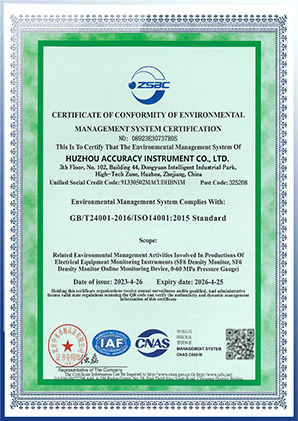
Our commitment to zero-defect manufacturing is backed by ISO 9001:2008 and CE certification standards.
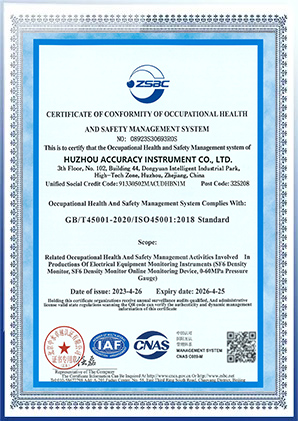
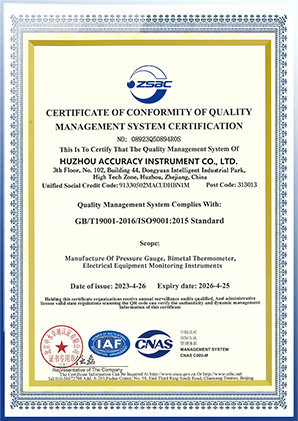
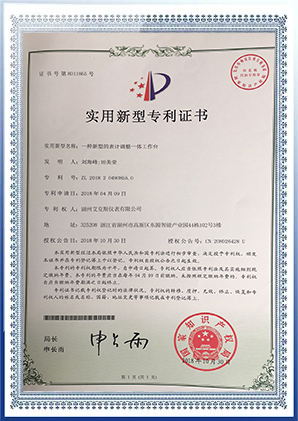
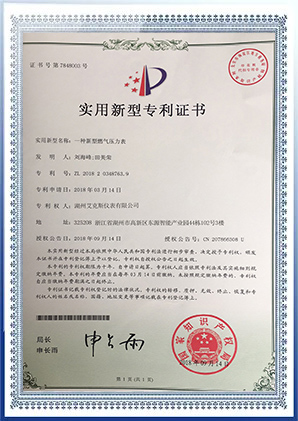
To stay ahead of global automation trends, Huzhou Accuracy Instrument Co., Ltd. continuously invests in next-generation instrumentation tech. Our engineering roadmap focuses on three key technological pillars:
Transitioning from traditional glued strain gauges to atomic-level micro-sputtered thin-film sensors on 316L and 17-4PH stainless steel diaphragms. This process eliminates adhesive creep, resulting in exceptional long-term stability (<0.1% FS/year drift) under heavy cyclic pressure spikes.
Integrating ultra-low-power microprocessors with LoRaWAN, NB-IoT, and Bluetooth Low Energy (BLE) connectivity directly inside CE-certified explosion-proof enclosures. Field operators can monitor pressure fluctuation dynamics in real-time on mobile devices without manual site inspections.
Embedding high-frequency accelerometer sensors inside pressure gauge housings to detect structural pipeline vibration early. The system alerts maintenance personnel before mechanical vibration destroys gauge gear trains or causes pressure pipe fatigue fractures.
Reliable measurement solutions backed by 20 years of factory expertise and global supply support.
 Accuracy Instrument