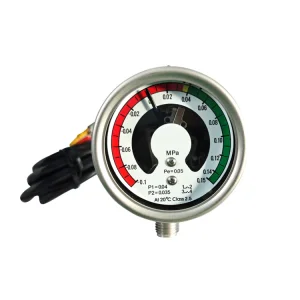
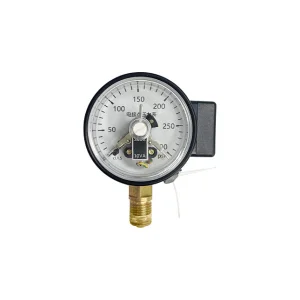
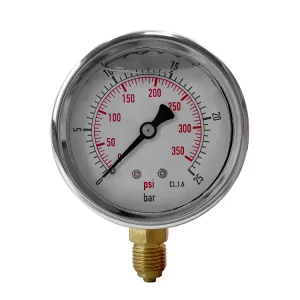
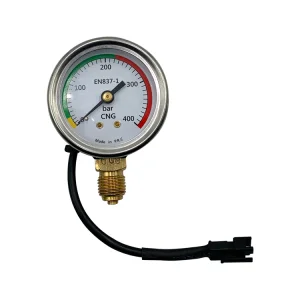
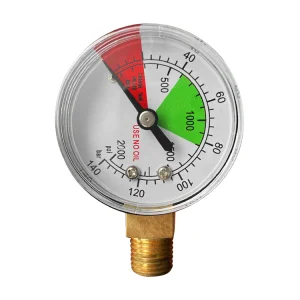
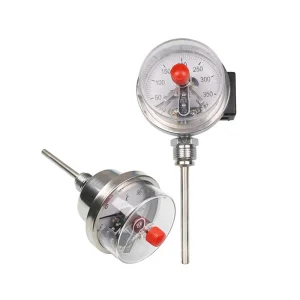
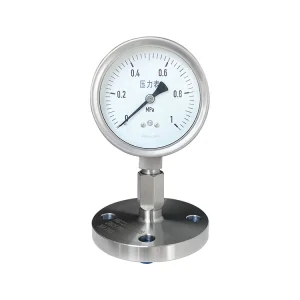
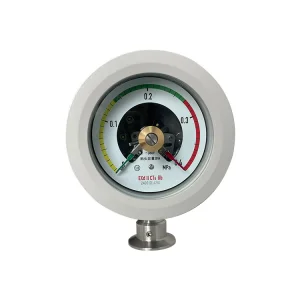
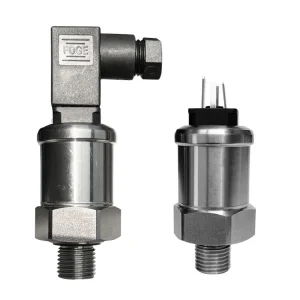
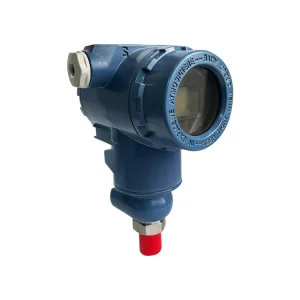
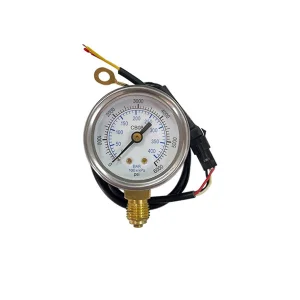
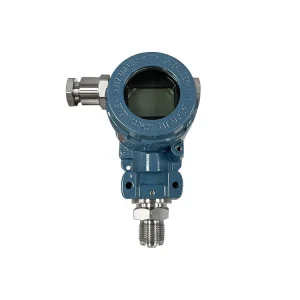
Explore our core catalog of heavy-duty industrial bimetal thermometers, SF6 gas density monitors, and electric contact pressure instruments crafted for continuous operation under severe industrial conditions.
In the landscape of modern industrial process monitoring, temperature measurement remains a primary variable influencing product safety, fluid dynamics, system efficiency, and structural integrity. Among mechanical temperature-sensing instruments, the Bimetal Thermometer stands out as the standard for direct-reading temperature indication without external power requirements. As leading China bimetal thermometer suppliers and factory experts, Huzhou Accuracy Instrument Co., Ltd. provides this thorough engineering breakdown detailing mechanical principles, internal thermodynamic dynamics, materials engineering, and structural configuration.
The core operation of a bimetal thermometer relies upon the physical law of differential thermal expansion. Every solid metal exhibits a specific Coefficient of Thermal Expansion ($\alpha$), defined as the fractional change in length per degree change in temperature. A bimetallic strip is created by cold-welding or bonding two distinct metallic alloys with significantly different coefficients of expansion along their flat contact surfaces.
When exposed to a temperature shift ($\Delta T$), the high-expansion alloy expands or contracts at a faster rate than the low-expansion alloy. Because the two metals are permanently bonded, this differential growth forces the straight ribbon into a uniform curved arc. The angular deflection ($\theta$) of a helical bimetallic coil can be expressed via the differential expansion formula:
Where: $K$ is the flexivity constant of the bonded metallic pair, $L$ is the active strip length, $(\alpha_2 - \alpha_1)$ represents the differential thermal expansion coefficients, $\Delta T$ is the temperature change, and $t$ is the total thickness of the bimetallic ribbon.
In industrial temperature gauges manufactured at our Huzhou factory, the low-expansion material typically consists of Invar alloy (64% Fe, 36% Ni), which exhibits an extremely low thermal expansion coefficient ($\approx 1.2 \times 10^{-6}/\text{K}$). The high-expansion material is usually a specialized high-nickel alloy, brass, or stainless steel ($\approx 18 \times 10^{-6}/\text{K}$). This optimal metallurgical pair ensures maximum angular sensitivity, minimal hysteresis, and linear response across broad operating ranges (-70°C to +600°C).
To package a long bimetallic strip into a compact stainless steel stem probe, factory engineers wind the bonded strip into a tight geometric spiral or helix:
Wound into a cylindrical spring-like shape inside stem probes with diameters ranging from 6mm to 10mm. One end is anchored at the probe tip, while the inner axial shaft connects directly to the pointer mechanism. As temperature fluctuates, the coil twists axially, rotating the pointer smoothly across a 270-degree calibrated dial face.
Wound flat into concentric rings. Ideal for compact surface-mount or direct-clamping surface bimetal thermometers. Spiral configurations provide direct planar displacement, minimizing depth requirements in narrow spatial enclosures.
High-vibration industrial plant environments can cause mechanical pointer flutter and wear. Huzhou Accuracy Instrument applies high-viscosity silicone fluid encapsulation around the internal helical coil to cushion mechanical resonance and extend operating lifespan.
Every industrial facility presents distinct mechanical stress, chemical exposure, vibration profiles, and thermal transfer requirements. China bimetal thermometers from Huzhou Accuracy Instrument Co., Ltd. are engineered across several standardized mechanical configurations:
| Industrial Sector | Typical Process Media | Recommended Configuration | Engineering Focus & Materials |
|---|---|---|---|
| Petrochemical & Refining | Hydrocarbons, Crude Oil, Steam Lines | Bottom Mount / Every-Angle Adjustable with Heavy-Duty Thermowell | SS316L Wetted Parts, NACE MR0175 compliance, high-pressure thermowell integration. |
| Food, Beverage & Pharma | Wort, Dairy, CIP Liquids, Purified Water | Sanitary Tri-Clamp Bimetal Thermometer | Electropolished SS316L, Ra < 0.4 µm surface finish, zero-dead-leg design. |
| High-Voltage SF6 Power Switchgear | SF6 Gas Insulation Systems | Electric Switch Contact Bimetal / Density Monitors | Hermetically sealed contacts, magnetic snap-action switches for automated alarm trip circuits. |
| HVAC & District Energy Systems | Hot/Chilled Water, Air Ducts | Back Mount / Brass Immersion Pocket Sleeves | Economy SS304 casing, dual-scale (°C/°F), external recalibration reset screw. |
| Marine & Off-Shore Engineering | Seawater, Engine Exhaust, Lubricating Oils | Silicone-Filled Shock-Proof Stainless Steel Thermometer | IP67 weather-proof housing, heavy dampening for high-frequency diesel engine vibration. |
In high-pressure or fluid-velocity applications (e.g., steam header lines exceeding 30 m/s), direct insertion of a bimetal probe exposes the stem to catastrophic vortex shedding resonances. To prevent mechanical shear failure, our engineering department designs custom solid-drilled thermowells (Tapered, Straight, Stepped) following ASME PTC 19.3 TW wake frequency calculations. This allows the bimetal thermometer stem to be removed, calibrated, or replaced without shutting down process line pressure.
As global processing industries transition toward Industry 4.0 digitisation, energy efficiency, and predictive maintenance, traditional mechanical bimetal temperature gauges are undergoing rapid technological evolution.
Integration of non-contact optical encoders or capacitive sensors directly onto the bimetal pointer movement. This provides local mechanical visual verification alongside digital 4-20mA HART or Modbus RS485 telemetry for PLC integration.
R&D efforts focus on nanostructured metallurgical bonding techniques to decrease heat transport latency. Advanced thermal conductivity coatings cut $T_{90}$ thermal response times from >15 seconds down to <3 seconds.
Development of specialized laser-treated bimetal coils capable of continuous operations up to +700°C without thermal stress creep or zero-point calibration drift, targeting green hydrogen and nuclear power plant applications.
China’s industrial manufacturing ecosystem offers unrivaled advantages in raw material sourcing, precision machining tooling, metallurgical processing, and logistics speed. Huzhou Accuracy Instrument Co., Ltd. leverages these structural strengths to deliver international-standard instrumentation at optimized cost thresholds.
20 YEARS OF EXPERIENCE AND RESEARCH
Huzhou Accuracy Instrument CO LTD is professionally engaged in the development, sales and service of industrial mechanical pressure gauges, bi-metal thermometers, SF6 manometer, pressure sensor. Products are widely used in various applications such as Mechanical Engineering, Chemical Engineering, Food Industry, Pharmaceutical, and high technology electric appliances.
Established over two decades ago, our pressure gauge manufacturing facility spans 3,000 square meters, equipped with advanced production lines and rigorous quality control systems. As an industry leader, we integrate innovation with precision engineering to deliver reliable measurement solutions for global clients.
Focuses on material innovation, smart sensor integration, and total compliance with international standards (e.g., ISO, API, ASME, EN). Custom stem length, dial artwork, and pressure switch integration designed on demand.
Utilizes automated CNC machining, automatic bimetal coil winding, laser welding, and automated continuous calibration baths to ensure product durability and tight accuracy tolerances.
Provides 24/7 technical support, rapid quotation turnarounds, and customized logistics management across 30+ countries worldwide with complete export documentation.
Our dedicated testing laboratory conducts 100% calibration verification, pressure cycle tests, thermal shock exposure, and environmental chamber simulations adhering to ISO 9001 and ISO 17025 standards. Continuous quality improvement drives our global reputation for "zero-leak" performance in extreme industrial environments, supported by a standard 1-year operational warranty.
We have long followed the concept of "reasonable price, accurate delivery, good quality" and several business management models to keep our production quality above the required benchmark under ISO9001:2008 certification.
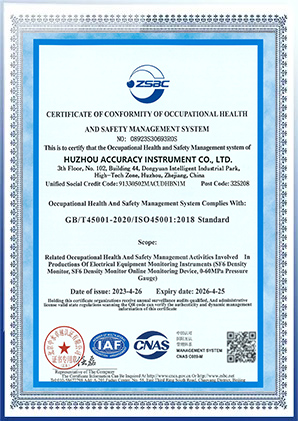
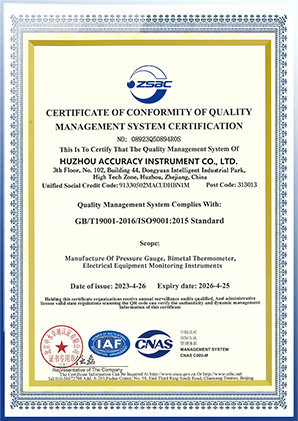
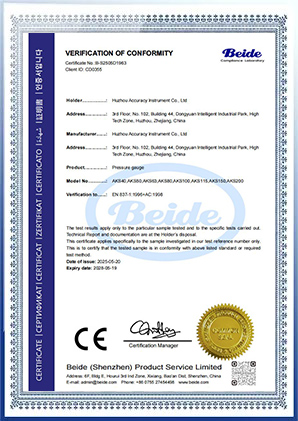
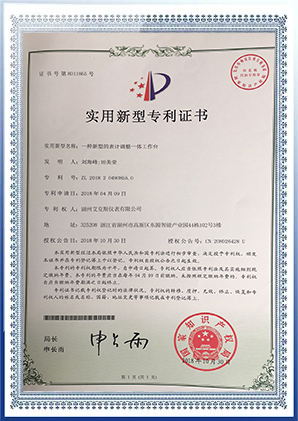
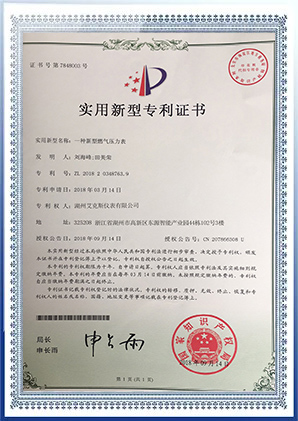
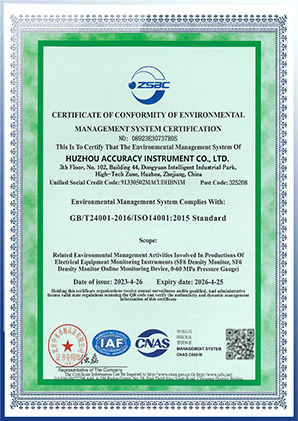
Procuring industrial instrumentation for global EPC projects requires total alignment with regional standards, thread specifications, and safety certifications. Huzhou Accuracy Instrument Co., Ltd. ensures full traceability across all OEM and ODM production runs.
| Region / Standard | Governing Specification | Key Standard Requirements | Huzhou Factory Compliance |
|---|---|---|---|
| European Union (EN) | EN 13190 / CE Mark | Class 1.0 / Class 1.6 accuracy, safety glass window, IP65 protection. | Fully Certified (CE, ISO9001) |
| North America (ASME) | ASME B40.200 | Grade A / Grade B accuracy, NPT threading, hermetic seal tests. | Full Standard Alignment |
| International (ISO) | ISO 9001 / ISO 17025 | Quality management system & calibrated testing laboratory. | Certified Facility |
| Hazardous Environments | ATEX / IECEx / Explosion-Proof | Spark-free contacts, explosion-proof electric contact housings. | Available on Select Models |
Sourcing bimetal thermometers directly from our Huzhou factory eliminates 30% to 50% in middleman markups while opening direct technical consultation with our engineering design teams. We offer custom stem lengths (50mm up to 2000mm), tailored process connection threads (NPT, BSPP, BSPT, M20x1.5, Tri-clamp), and dial face customization featuring client logos and multi-unit scales.
A bimetal thermometer works based on the differential expansion of two bonded metals with different coefficients of thermal expansion (e.g., Invar and brass/stainless steel). When temperature changes, the helical or spiral coil expands or contracts at uneven rates, causing the strip to bend. This physical movement rotates a center shaft connected directly to the dial pointer.
Most industrial bimetal thermometers from Huzhou Accuracy Instrument feature an external reset screw located on the back of the case or dial housing. To recalibrate, immerse the stem into a known reference ice bath (0°C / 32°F) or dry-block calibrator. Use a wrench or screwdriver to adjust the reset screw until the pointer aligns precisely with the reference temperature.
Thermowells protect the bimetal sensing probe from high process pressures, aggressive media corrosion, and mechanical stress caused by fluid flow. Thermowells also allow instrument removal for inspection or calibration without shutting down process pipelines or draining tanks.
We manufacture standard stem lengths of 2.5" (63mm), 4" (100mm), 6" (150mm), 9" (225mm), 12" (300mm), and custom lengths up to 2000mm. Standard connection threads include 1/4" NPT, 1/2" NPT, 1/4" BSP, 1/2" BSP, M20x1.5, and sanitary Tri-clamp fittings.
Our standard industrial bimetal thermometers conform to ASME B40.200 / EN 13190 Class 1.0 (±1.0% full-scale accuracy) and Class 1.6. High-precision calibration options achieving ±0.5% FS are available upon request for lab testing and specialized OEM integration.
Silicone oil case filling lubricates internal mechanical linkages, dampens system vibration and pointer flutter, prevents internal condensation behind the lens, and protects the bimetallic spring coil against fatigue caused by continuous mechanical stress.
Explore our full line of pressure transmitters, diaphragm gauges, and specialized natural gas monitoring devices crafted for rigorous global projects.
 Accuracy Instrument