Engineered by Huzhou Accuracy Instrument Co., Ltd. for extreme thermal resilience and high-accuracy fluid & gas monitoring.
Understanding the fundamental physical principles, mechanical thermodynamics, and sensor metallurgy driving accurate thermal measurement in industrial and commercial baking ecosystems.
To evaluate how oven thermometers maintain strict thermal accuracy in hostile high-heat environments, procurement managers and instrumentation engineers must look beneath the dial. Oven thermometers operate primarily on three distinct physical mechanisms: Bimetallic Thermal Expansion, Fluid/Capillary Pressure Dynamics, and Electronic Resistance Modulation (Thermistors/Thermocouples). Leading OEM/ODM manufacturers in China, such as Huzhou Accuracy Instrument Co., Ltd., leverage precision metallurgical bonding and zero-drift manufacturing technologies to ensure compliance with stringent international thermal tolerance metrics.
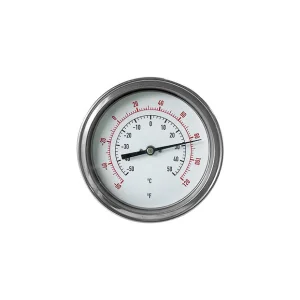
The vast majority of commercial mechanical oven thermometers rely on a bimetallic strip—a strip composed of two distinct metals fused together under immense pressure. The fundamental physics relies on the difference in the Coefficient of Thermal Expansion ($\alpha$) between the two metals:
When the ambient thermal kinetic energy inside the oven cavity rises, both metals expand. Because the high-expansion metal expands significantly faster than the low-expansion Invar, the bonded strip is forced to curve or uncoil. In modern industrial oven thermometers, this strip is wound into a tightly calibrated helical or spiral coil. The mechanical force generated by this uncoiling drives the pointer gear assembly directly across the temperature dial. Precision manufacturing requires micro-calibration of the coil tension to prevent hysteresis error (lag between temperature increase and dial response).
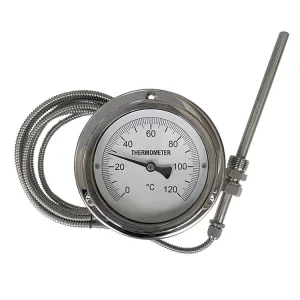
For industrial heat-treatment processing, commercial conveyor ovens, and hazardous thermal applications, direct-mount bimetallic thermometers may be impractical. In these scenarios, Remote Reading Capillary Thermometers are deployed. These units utilize a hermetically sealed bulb filled with an inert gas (e.g., Nitrogen) or a organic liquid medium connected to a flexible stainless steel capillary tube and a internal Bourdon Tube mechanism.
As temperature at the sensing probe increases, thermal expansion causes a linear pressure spike within the closed hydraulic/pneumatic system. This pressure change transmits through the micro-bore capillary line to expand the Bourdon tube housed within the remote gauge casing. The mechanical expansion of the Bourdon tube translates into proportional rotational movement of the dial needle, allowing real-time monitoring outside the thermal chamber without exposing operators or control panels to extreme ambient temperatures.
In automated smart kitchen appliances and high-precision laboratory curing ovens, digital thermal measurement dominates. These devices leverage either Thermocouples (utilizing the Seebeck effect, where temperature differences between two dissimilar electrical conductors generate a measurable voltage drop) or Resistance Temperature Detectors (RTDs / Thermistors). NTC (Negative Temperature Coefficient) thermistors experience a predictable drop in electrical resistance as ambient temperatures rise, enabling microcontrollers to calculate readings down to $\pm 0.1^\circ\text{C}$ resolution.
| Technology Type | Operating Principle | Typical Temperature Range | Measurement Accuracy | Primary Industrial Application |
|---|---|---|---|---|
| Mechanical Bimetallic Coil | Differential solid expansion of dual-metal helical spring | 0°C to +500°C (32°F - 932°F) | ±1.5% to ±2.0% Full Scale | Domestic, Commercial Deck Ovens, Foodservice |
| Gas-Actuated Capillary | Volumetric gas expansion acting on internal Bourdon tube | -40°C to +600°C | ±1.0% Full Scale | Industrial Processing, Bakery Conveyors, Remote Panels |
| Type K Thermocouple | Thermoelectric voltage generation (Chromel-Alumel) | -200°C to +1260°C | ±0.75% or ±2.2°C | Industrial Kilns, Powder Coating Ovens, Automation |
| RTD Sensor (Pt100/Pt1000) | Linear electrical resistance change of pure Platinum | -200°C to +850°C | Class A: ±(0.15 + 0.002 |t|)°C | Pharma Ovens, Laboratory Sterilization, Calibration |
Analysis of international procurement criteria, smart factory integration, and safety compliance standards driving the market for Chinese thermal instrumentation manufacturers.
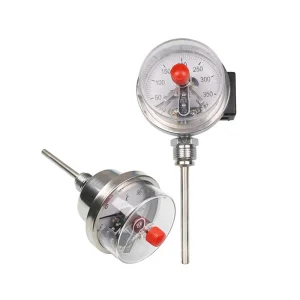
Global commercial food chains and pharmaceutical processing plants are shifting from standalone visual dials to hybrid remote-sensing systems. Modern bimetallic and capillary thermometers are increasingly specified with integrated electrical switch contacts (microswitches) or 4-20mA signal transmitters to stream real-time thermal profiles into SCADA and IoT monitoring networks.
International procurement specs demand rigorous compliance with NSF, FDA, CE, and RoHS standards. Materials must feature 304 or 316L stainless steel casings, toughened shatterproof glass or high-temp polycarbonate lenses, and zero-lead construction to prevent toxic off-gassing at thermal extremes above 300°C.
Industrial curing and thermal baking ovens expose hardware to rapid thermal cycling, aggressive humidity, and corrosive chemical vapors. Tier-1 buyers require hermetically sealed IP65/IP67 enclosures, oil-filled dampening (for vibration-heavy environments), and zero-leak laser-welded stem joints.
Global OEMs, instrument distributors, and commercial appliance manufacturers are re-engineering their procurement supply chains. Sourcing from experienced Chinese manufacturers like Huzhou Accuracy Instrument Co., Ltd. yields distinct competitive advantages:
Delivering high-reliability thermal measurement across complex commercial, industrial, and specialized processing environments worldwide.
In commercial baking operations, precise heat management directly affects product yield, crumb structure, and food hygiene. Bimetallic dial thermometers mounted directly to oven doors or capillary remote sensors allow bakers to verify continuous ambient air temps, overcoming internal hotspots caused by uneven heating element wear.
Powder coating curing requires strict compliance with Temperature Uniformity Surveys (TUS). Thermocouples, remote capillary gauges, and bi-metal thermometers equipped with electrical switch contacts monitor curing tunnels to ensure polymers melt and crosslink at exact target temperatures (typically 180°C–220°C).
Hot air sterilizing ovens in medical and pharmaceutical plants require uncompromising precision (ISO 17025 certified calibration). High-precision stainless steel bimetallic and capillary thermometers monitor thermal chambers during depyrogenation cycles to eradicate endotoxins reliably.
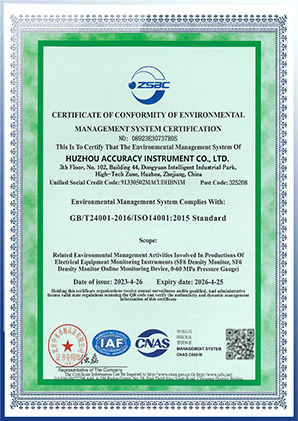
Empowering global industry with 20+ years of dedicated thermal and pressure instrumentation research, automated production line efficiency, and ISO certified quality systems.
20 YEARS OF EXPERIENCE AND RESEARCH
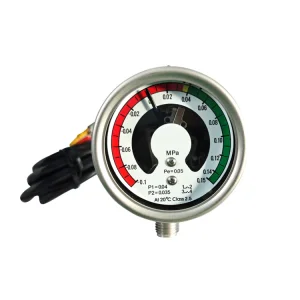
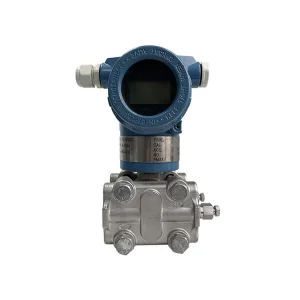
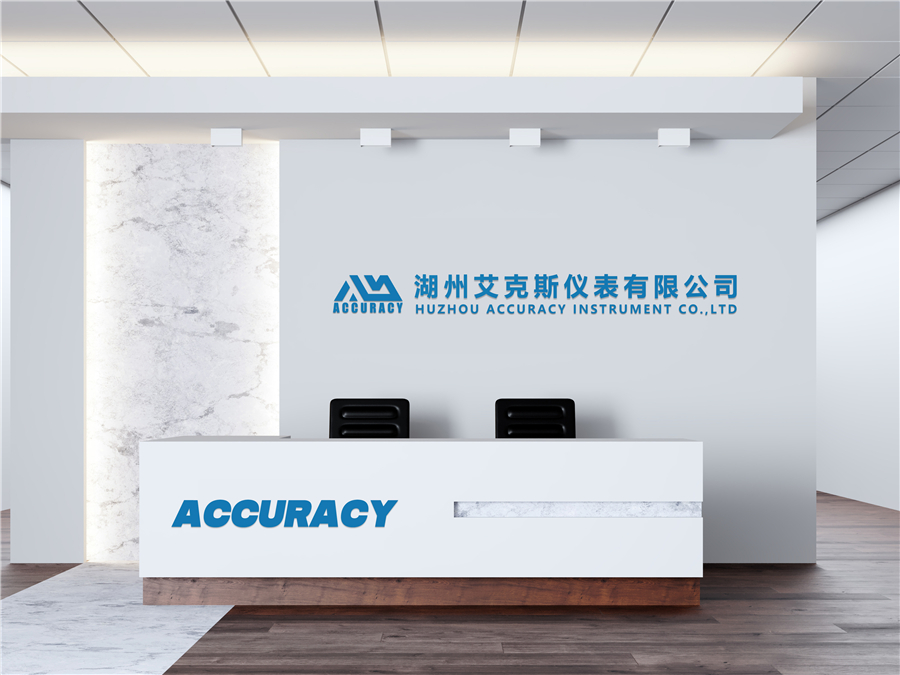
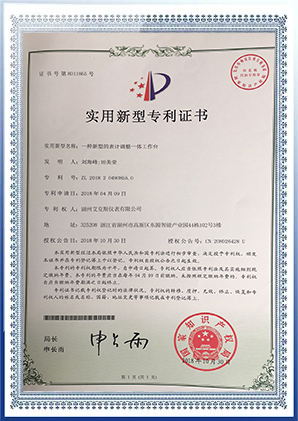
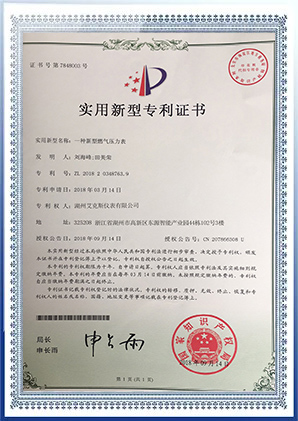
Huzhou Accuracy Instrument Co., Ltd. is professionally engaged in the development, sales, and service of industrial mechanical pressure gauges, bi-metal thermometers, SF6 manometers, and pressure sensors. Products are widely used across global mechanical engineering, chemical engineering, food processing, pharmaceuticals, and high-technology electric appliances.
Established over two decades ago, our modern pressure gauge and thermometer manufacturing facility spans 3,000 square meters, fully equipped with advanced production lines, laser calibration tools, and rigorous quality control systems. As an industry leader in China, we integrate continuous innovation with mechanical precision engineering to deliver zero-defect measurement solutions for global enterprise clients.
We adhere to the core business philosophy of "reasonable price, accurate delivery, and uncompromising quality," operating under strict ISO9001:2008 standards.
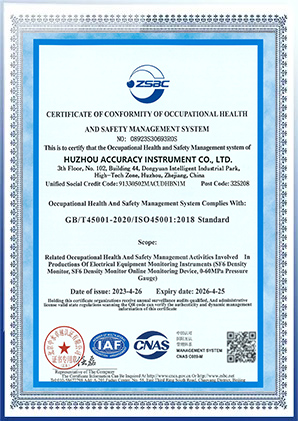
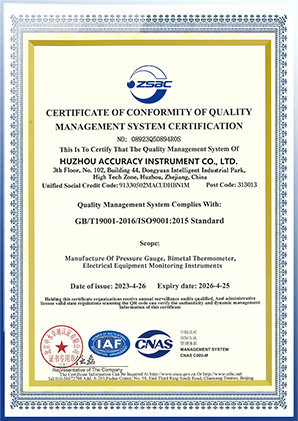
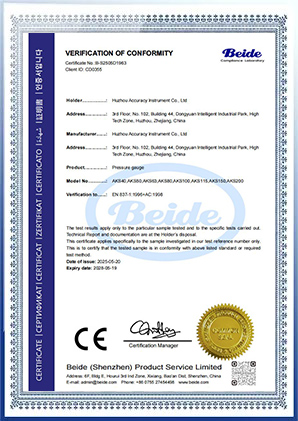
Expert insights regarding oven thermometer selection, calibration maintenance, and Chinese manufacturing capabilities.
Built-in oven thermostats are typically located near the wall or element of the oven enclosure, measuring localized temperature rather than true center-cavity heat. Over time, appliance sensors drift or suffer from thermal hysteresis. A standalone bimetallic or capillary thermometer placed directly alongside food or substrates provides an unbiased reading of the actual micro-climate within the cavity.
Many industrial bimetallic thermometers manufactured by Huzhou Accuracy Instrument feature a calibration adjustment nut located behind the dial casing. Calibration can be performed by immersing the sensing stem into an ice bath (0°C / 32°F) or a boiling water bath at standard atmospheric pressure (100°C / 212°F), then using a wrench to gently rotate the calibration nut until the pointer aligns precisely with the reference temperature mark.
High-grade oven thermometers are constructed using AISI 304 or 316 stainless steel for the housing and stem. The dial window is made from high-temperature tempered glass or lab-grade borosilicate glass capable of enduring rapid thermal shocks without fracturing. Bimetallic elements undergo specialized heat treatment (stress relieving) during manufacturing to preserve elastic memory across millions of thermal expansion cycles.
As a direct manufacturer, we offer full OEM/ODM customization including custom dial graphics and logo printing, customized temperature ranges (Fahrenheit, Celsius, or dual units), varied capillary tube lengths, adjustable mounting flanges, electric switch contact integration, and custom connection thread specifications (NPT, BSP, Metric, or flange adapters).
Standard catalog items typically ship within 15–20 days. Custom OEM/ODM orders requiring specialized tooling, custom scales, or specialized mounting flanges typically ship within 25–30 calendar days. Samples can be expedited for testing and quality evaluation upon request.
Direct supply from China's leading instrument manufacturing facility, delivering ISO-certified accuracy worldwide.
 Accuracy Instrument