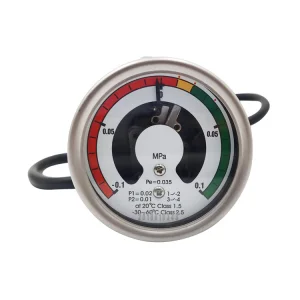
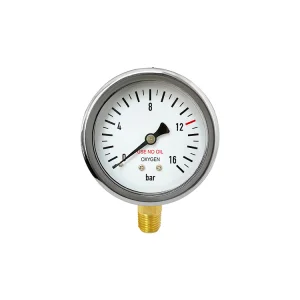
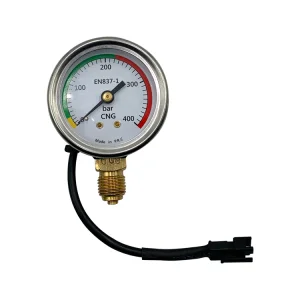
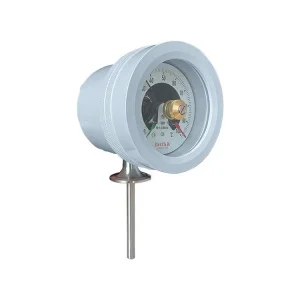
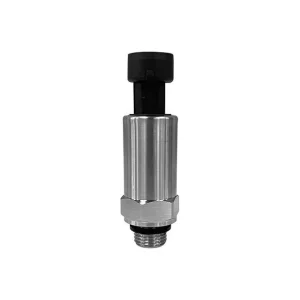
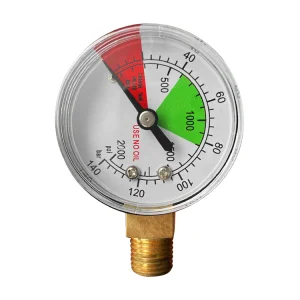
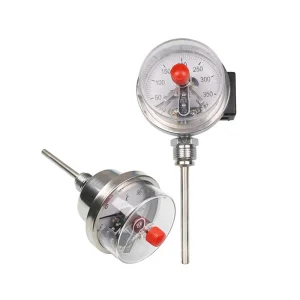
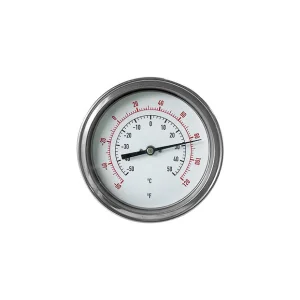
Explore our core industrial instrumentation product lines engineered for extreme durability, OEM integration, and NIST-traceable calibration accuracy.
When evaluating how do you calibrate an oven thermometer in an industrial, commercial, or laboratory environment, understanding the thermal mechanical physics of the sensor element is vital. Most mechanical oven thermometers—specifically B2B heavy-duty dial indicators—rely on a bimetallic helical coil system. This mechanism exploits the differential coefficient of thermal expansion between two distinct metals welded together (typically brass or copper alloy bonded to stainless steel or Invar).
The fundamental equation governing mechanical displacement ($\Delta L$) in bimetal coils relative to temperature shifts ($\Delta T$) is expressed as:
Where $L_0$ is initial strip length, and $\alpha_1, \alpha_2$ represent thermal expansion coefficients of the constituent metals.
Over extended operational duty cycles in extreme thermal zones (150°C to 500°C), mechanical stress, material creep, and micro-crystallization lead to dial drift. Professional calibration resets the mechanical zero point and verifies scale linearity across the target thermal envelope.
Thermal hysteresis occurs when an instrument yields divergent readings during ascending versus descending temperature ramps. In industrial oven applications—such as composite curing ovens or commercial bakery tunnels—a drift of just ±5°C can compromise polymer cross-linking or violate food safety regulations (HACCP / FSMA).
Rigorous OEM factory calibration ensures that the friction loss within the pointer spindle and calibration screw assembly is minimized, maintaining Class 1.0 or Class 1.6 accuracy standard compliance under EN 13190 guidelines.
For industrial plant engineers, metrology laboratory technicians, and commercial kitchen operators, implementing a repeatable, standardized calibration methodology is essential. Below are the three primary calibration procedures recommended by China top-tier instrument manufacturers.
Primary Application: Low-range thermal verification & zero-point baseline reset.
Primary Application: Mid-scale span verification with atmospheric correction.
Primary Application: High-temperature industrial oven calibration & multi-point validation.
For mechanical dial bimetal thermometers, always adjust the calibration nut located at the rear of the casing while holding the stem immobile with a flat wrench. For digital remote-reading oven thermocouples or RTD sensors, calibration is achieved via 2-point electronic offset programming within the digital controller interface.
| Calibration Method | Temperature Range | Accuracy Potential | Equipment Required | Best For Industry |
|---|---|---|---|---|
| Ice-Point Bath | 0°C (32°F) | ±0.1°C to ±0.5°C | Crushed Ice, Deionized Water, Insulated Flask | Food Processing, HVAC Zeroing |
| Boiling Point Bath | 95°C – 100°C | ±0.3°C to ±0.8°C | Distilled Boiling Vessel, Barometer | Commercial Bakeries, Commercial Kitchens |
| Dry-Block Calibrator | 50°C – 650°C | ±0.05°C to ±0.2°C | Microprocessor Dry-Well, Reference PT100 | Aerospace Curing, Automotive OEM, Pharma |
Precision calibration of oven thermometers directly influences product quality, regulatory compliance, and operational safety across diverse global industry sectors. Here is how specialized thermal calibration protocols are applied locally across key sectors:
In automated bakery tunnels operating continuously at 220°C–280°C, precise temperature distribution guarantees consistent crust caramelization and dough expansion. Uncalibrated thermometers cause underbaking (food pathogen risks) or excessive thermal waste. Regular ice-point and boiling-point calibration routines ensure HACCP audit compliance.
Surface coating curing requires strict adherence to thermal dwell times (e.g., 180°C for 20 minutes). If oven thermometers drift positive, paint fails to cross-link correctly, leading to premature flaking and corrosion. Plant technicians use multi-point dry-block calibration to certify industrial oven zones.
Pharmaceutical active pharmaceutical ingredient (API) drying chambers demand ultra-precise thermal monitoring under reduced pressures. Thermometers integrated with electric contact switches must undergo rigorous ISO 17025 accredited calibration to satisfy FDA CFR Title 21 GMP requirements.
20 YEARS OF MANUFACTURING EXPERIENCE AND RESEARCH EXCELLENCE
Huzhou Accuracy Instrument Co., Ltd. is professionally engaged in the development, OEM sales, engineering calibration, and field service of industrial mechanical pressure gauges, bi-metal thermometers, SF6 manometers, and advanced pressure sensors. Our products are widely deployed in critical applications across Mechanical Engineering, Chemical Processing, Food Industry, Pharmaceutical Manufacturing, and High-Technology Electric Appliances.
Established over two decades ago, our pressure gauge and thermometer manufacturing facility spans over 3,000 square meters, fully equipped with automated production lines, laser dial calibration, micro-soldering, and rigorous quality control systems. As an industry-leading China supplier and factory, we integrate continuous product innovation with precision engineering to deliver zero-defect measurement solutions for global clients.
R&D Department (20 Specialists): Focuses on bimetallic material metallurgy, smart wireless sensor integration, and strict compliance with international standards (ISO, ASME, API).
Production Workforce (120 Technicians): Utilizes automated coil assembly, laser welding, and laser calibration technologies to ensure extreme product durability and precision.
Sales & Service Unit (15 Professionals): Provides 24/7 technical support, recalibration guides, and customized OEM solutions across 30+ countries.
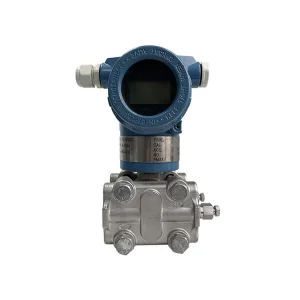
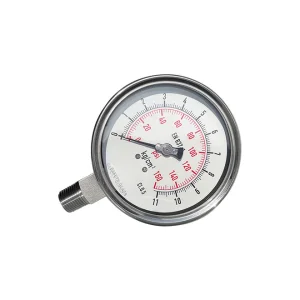
Our annual output exceeds 2 million units, encompassing industrial-grade gauges (e.g., stainless steel gauge, black steel gauge, shock-proof glycerine gauge, SF6 manometer, bimetal thermometer, differential transmitter) for oil/gas, HVAC, automotive, and pharmaceutical sectors.
Products are exported worldwide, holding global certifications including ISO9001, SGS, and CE, earning recognition for superior corrosion resistance and ±0.5% to ±1.0% precision standards.
Our internal metrology laboratory performs 100% pressure cycle stress tests, thermal shock simulations, and calibration accuracy checks in compliance with ISO 9001 and ISO 17025 benchmarks.
Continuous engineering optimization underpins our industry reputation for "zero-leak" sealing performance in extreme industrial environments, supported by a 1-year replacement warranty.
We consistently adhere to the operational concept of "Reasonable Price, Accurate Delivery, Superior Quality" under ISO9001:2008 certified management systems.
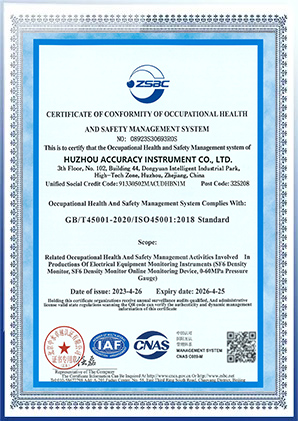
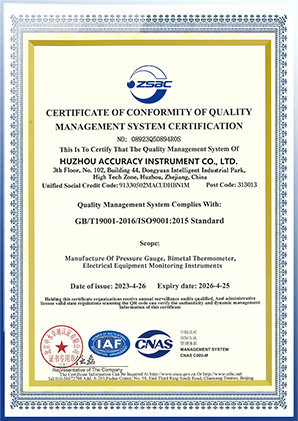
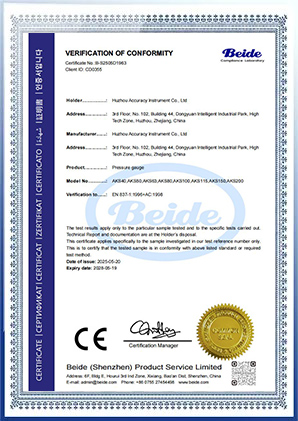
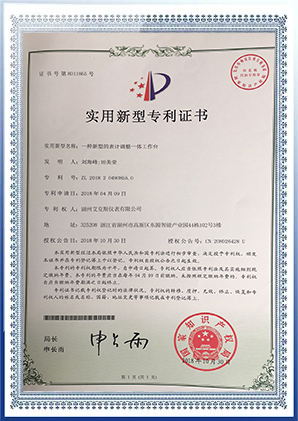
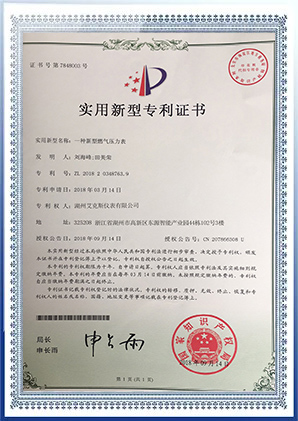
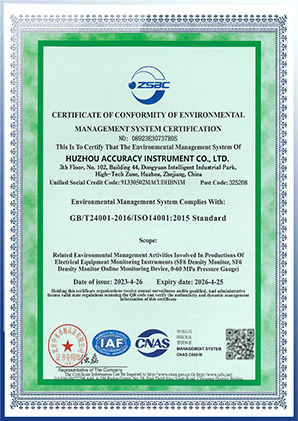
Global original equipment manufacturers (OEMs) and industrial distributors choose China-based manufacturers like Huzhou Accuracy Instrument due to unparalleled supply chain integration, cost-to-performance efficiency, and rapid customization turnaround.
Unlike assembly-only vendors, our Huzhou factory controls the entire manufacturing chain—from precision stamping of stainless steel cases and drawing bimetallic springs to automated dial etching, glass sealing, silicone damping oil filling, and multi-station temperature testing baths. This eliminates component bottlenecks.
We support fully customized stem lengths (50mm to 1000mm), connection threads (NPT, BSP, BSPT, M20x1.5), dual temperature scale markings (°C/°F), logo branding, and electric switch contact integration. Samples are fabricated and dispatched within 7–14 working days.
Strategically situated near Ningbo and Shanghai maritime super-ports, our factory leverages expedited export clearance channels, ensuring cost-efficient sea, air, and express freight delivery to North America, Europe, Southeast Asia, and the Middle East.
As Industry 4.0 transforms process automation, traditional mechanical oven thermometers are evolving to integrate smart digital capabilities alongside robust mechanical reliability.
Combining zero-power visual bimetal dials with ultra-low-power LoRaWAN or NB-IoT wireless telemetry transmitters. Allows local operators to read temperatures instantly while feeding real-time thermal trend data to central SCADA systems.
Integration of dual micro-RTD sensors that cross-check drift in real-time. Edge-AI microcontrollers automatically calculate mathematical compensation offsets, alerting technicians only when true physical recalibration is required.
Development of specialized Hastelloy C-276 and Inconel 625 thermowell sleeves and bimetallic coils designed to resist thermal shock, severe vibration, and corrosive chemical vapors in refinery cracking ovens.
Exporting industrial measuring instruments requires rigorous alignment with country-specific regulatory frameworks. Huzhou Accuracy Instrument provides comprehensive certification packages for global B2B procurement:
Our bimetal thermometers and pressure gauges comply strictly with CE Mark Directive 2014/68/EU (Pressure Equipment Directive - PED) and EN 13190 standard for dial thermometers. ATEX explosion-proof certification options are available for hazardous chemical zones.
Products exported to the USA and Canada adhere to ASME B40.200 standards for bimetallic thermometers. Every batch can be supplied with factory test reports traceable to NIST (National Institute of Standards and Technology) standards.
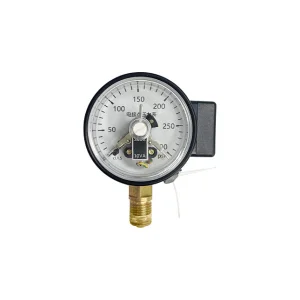
Browse additional high-precision measuring instruments, differential transmitters, and electric contact thermometers supplied direct from our China factory.
 Accuracy Instrument