Engineered for extreme reliability, compliance with global ISO/CE standards, and zero-drift operational stability.
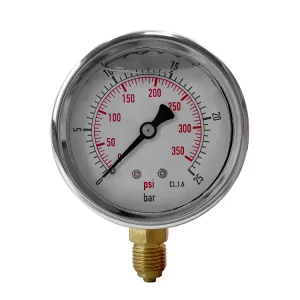
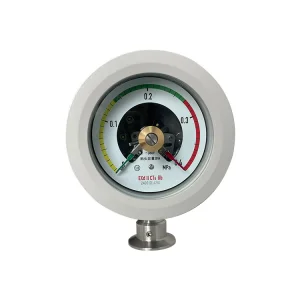
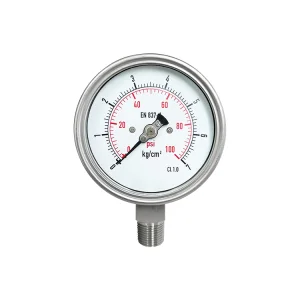
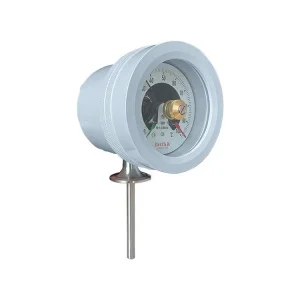
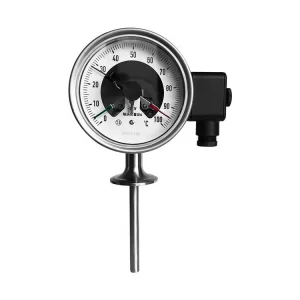
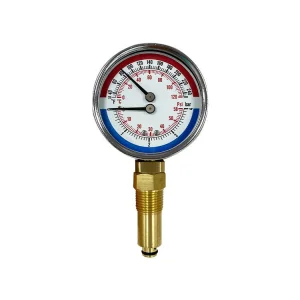
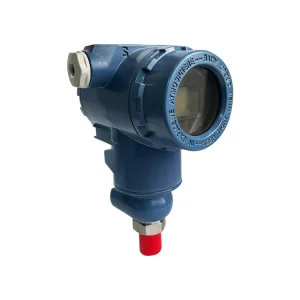
Selecting between mechanical thermal expansion sensors and solid-state digital microcontrollers is a critical engineering decision impacting process safety, maintenance lifecycles, and operational expenditure.
In modern industrial plant design, process heating control, HVAC/R engineering, and sanitary processing, precise thermal telemetry is indispensable. Procurement directors and instrumentation engineers often confront a fundamental decision: When should you specify a Bimetal Stemmed Thermometer versus a Digital Stemmed Thermometer? Furthermore, why are Tier-1 global EPC contractors increasingly partnering with specialized China manufacturers and factories to source these critical sensing instruments?
This technical whitepaper provides an exhaustive comparative evaluation of mechanical bimetallic thermal sensors and digital RTD/thermistor-based stem thermometers. Grounded in thermodynamics, material science, and real-world failure mode analysis, this document establishes clear engineering decision matrices to optimize instrument deployment across hazardous, high-vibration, remote, and cleanroom environments.
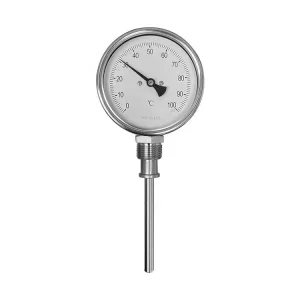
Operates via differential thermal expansion of two bonded metals (typically brass/invar or stainless steel alloys) formed into a helical coil. As temperature fluctuates, mechanical displacement directly drives the dial pointer without external power.
Utilizes electronic sensing elements (Pt100/Pt1000 RTDs, Thermistors, or Semiconductor ICs) integrated with an analog-to-digital converter (ADC) and LCD/LED display, powered by internal lithium battery or loop power.
Rigorous baseline evaluation metrics comparing mechanical stem bimetal devices against digital microprocessor-driven stem sensors.
| Evaluation Parameter | Bimetal Stemmed Thermometer | Digital Stemmed Thermometer | Optimal Application Winner |
|---|---|---|---|
| Operating Range | -80°C to +600°C (-110°F to 1100°F) | -200°C to +850°C (with external RTD stem) | Digital (Wider Spectrum) |
| Measurement Precision | Class 1.0 / Class 1.5 (±1.0% to ±1.5% FS) | ±0.1°C to ±0.5% of reading | Digital (High Precision) |
| Power Source Requirements | None (100% Passive Mechanical Direct-Drive) | 3.6V Battery, 24VDC Loop, or Solar Unit | Bimetal (Zero Downtime / Off-Grid) |
| Explosion-Proof & ATEX | Inherently Safe (No Sparks, Spark-Free) | Requires Ex d or Ex ia Enclosures & Barriers | Bimetal (Hazardous Area Simplicity) |
| Vibration & Shock Tolerance | Exceptional (When Glycerin/Silicone-filled) | Moderate (Sensitive to Solder Joint Strain) | Bimetal (Heavy Machinery) |
| Thermal Response Time ($T_{90}$) | 15 to 45 seconds (Stem diameter dependent) | 3 to 12 seconds (Fast micro-RTD chip) | Digital (Dynamic Control) |
| Calibration Stability & Drift | Mechanical fatigue over 3-5 years (<0.5%) | Sensor aging & circuit drift (Annual recalibration) | Bimetal (Long-term Mechanical Drift) |
| CAPEX & OPEX Cost Factor | Low Initial CAPEX / Zero OPEX Maintenance | Medium-High CAPEX / Periodic Battery Swaps | Bimetal (Budget Efficiency) |
While digital stemmed thermometers exhibit significantly faster $T_{90}$ response times due to reduced thermal mass in micro-RTD capsules, bimetal thermometers excel in processes requiring natural thermal damping. In fluctuating heat exchange loops, the mechanical thermal mass of a bimetal helical coil prevents needle jitter, offering operators an intuitively averaged reading without digital noise filters.
Clear criteria based on operational environments, regulatory mandates, and infrastructure limitations.
20 YEARS OF EXPERIENCE AND RESEARCH
Huzhou Accuracy Instrument CO LTD is professionally engaged in the development, sales and service of industrial mechanical pressure gauges, bi-metal thermometers, SF6 manometer, pressure sensor. Products are widely used in various applications such as Mechanical Engineering, Chemical Engineering, Food Industry, Pharmaceutical, and high technology electric appliances.
Established over two decades ago, our pressure gauge manufacturing facility spans 3,000 square meters, equipped with advanced production lines and rigorous quality control systems. As an industry leader, we integrate innovation with precision engineering to deliver reliable measurement solutions for global clients.
R&D Department (20 specialists): Focuses on material innovation, smart sensor integration, and compliance with international standards (e.g., ISO, API).
Production Workforce (120 technicians): Utilizes automated assembly and laser calibration technologies to ensure product durability and accuracy.
Sales & Service Unit (15 professionals): Provides 24/7 technical support and customized solutions across 30+ countries.
Annual output exceeds 2 million units, covering industrial-grade gauges (e.g., stainless steel gauge, black steel gauge, shock-proof gauge, sf6 gauge, thermometer, pressure sensor) for oil/gas, HVAC, and pharmaceutical sectors.
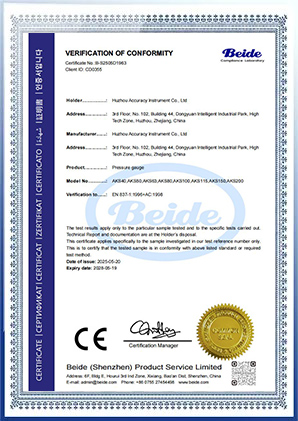
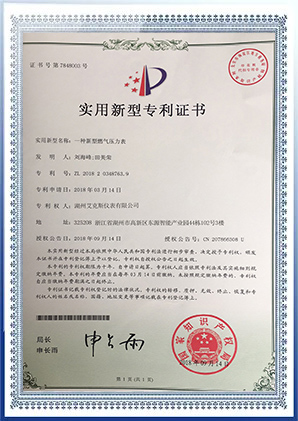
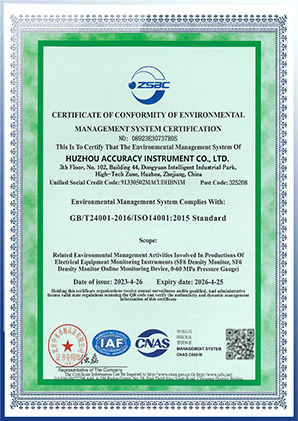
Products exported worldwide, with certifications including ISO, SGS, and CE, earning recognition for corrosion resistance and ±0.5% precision.
Our laboratory conducts 100% pressure cycle tests and environmental simulations, adhering to ISO 9001 and ISO 17025 standards. Continuous improvement drives our reputation for "zero-leak" performance in extreme conditions, supported by a one-year warranty.
Combining advanced automated manufacturing clusters, mature material supply chains, and stringent international quality assurance.
Factories located in Zhejiang industrial hubs (such as Huzhou Accuracy Instrument) leverage centralized raw material networks (316L stainless steel tubing, high-purity bimetallic strips, custom IC micro-processors), drastically shortening production lead times.
Chinese OEM factories offer tailor-made stem lengths (50mm to 2000mm), dial diameters (2.5", 3", 4", 5", 6"), NPT/G/BSP stem connections, and customized brand dials, helping overseas brands maximize gross margins.
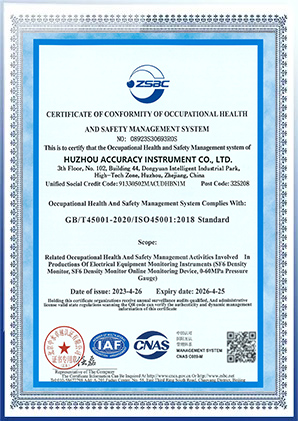
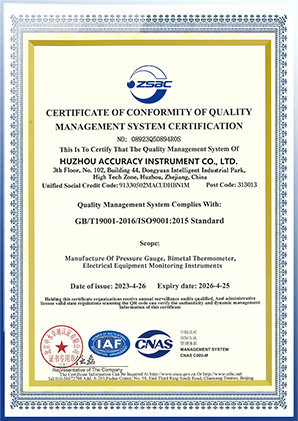
Modern Chinese manufacturing facilities operate under ISO 9001:2015 frameworks with CE certification, REACH/RoHS environmental compliance, and ATEX explosion-proof validations, ensuring frictionless global export into North America and Europe.
We have long followed the concept of "reasonable price, accurate delivery, good quality" and several business management models to keep our production quality above the required benchmark under ISO9001:2008 certified.
How Industry 4.0, smart factories, and green energy applications are reshaping bimetal and digital stem sensor architecture.
Integration of low-power wireless protocols (LoRaWAN, WirelessHART, NB-IoT) into digital stem heads, allowing batteries to last up to 5 years while transmitting real-time thermal telemetry to cloud asset-management platforms.
Combines a mechanical bimetal dial with an embedded digital micro-transponder. Plant operators get direct zero-power visual inspection, while control rooms receive continuous digital signal data.
Development of specialized bimetallic alloys and digital RTD probes qualified for green liquid hydrogen transport (-253°C) and extreme cryogenic LNG regasification infrastructure.
Answers to common technical queries regarding stem thermometer specification, calibration, and procurement from Chinese factories.
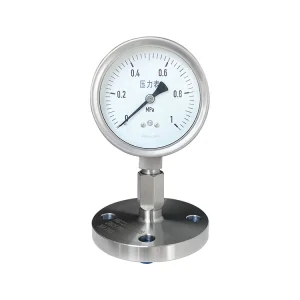
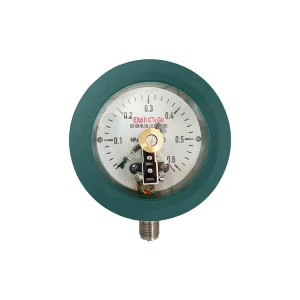
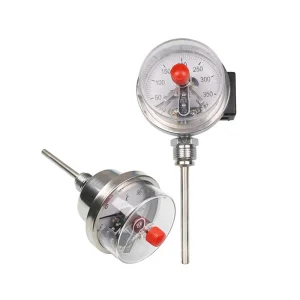
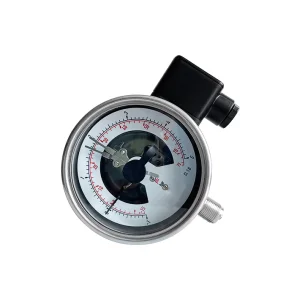
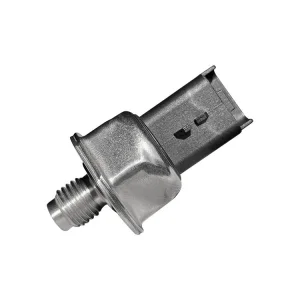
From explosion-proof electric switch contacts to ultra-precise diaphragm seal pressure sensors.
 Accuracy Instrument