High-precision industrial capillary thermometers, differential transmitters, microfused sensors, and SF6 density monitors engineered for critical global applications.
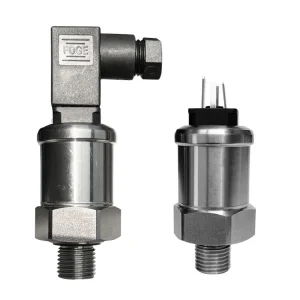
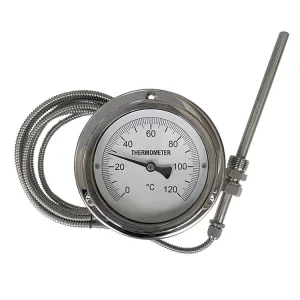
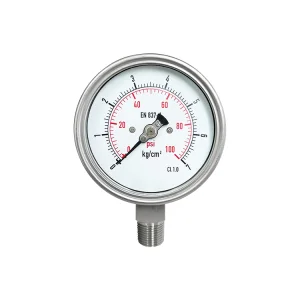
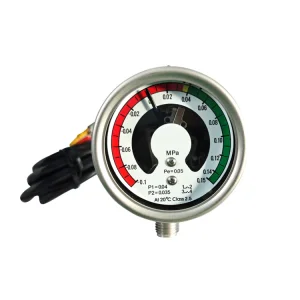
In temperature measurement science (thermometry), liquid-in-glass thermometers, capillary-tube remote reading dial indicators, and capillary thermal systems rely on precise volumetric expansion. The fundamental query—"Why does a thermometer have a narrow capillary tube?"—touches upon core principles of classical thermodynamics, fluid dynamics, and optical magnification engineering.
A narrow capillary bore is essential to convert minute volumetric changes of a thermometric working fluid (such as mercury, organic spirit, or synthetic hydrocarbon solvents) into large, visually perceptible linear displacements. Without a micro-fine capillary bore, thermal expansion would produce unnoticeable fluid movement, rendering the device incapable of high-resolution temperature differentiation.
The bore diameter of a capillary tube directly determines thermal sensitivity, response latency, and scale resolution. In industrial capillary thermometers, maintaining uniformity within ±0.002 mm along the bore length is critical to avoid calibration non-linearity across the entire temperature spectrum (-50°C to +600°C).
The operation of liquid expansion thermometry governed by volumetric coefficient of thermal expansion ($\beta$). When temperature changes by $\Delta T$, the fluid volume stored in the primary reservoir (bulb) expands by $\Delta V$:
The fluid expansion forces liquid out of the bulb into the cylindrical capillary bore. The vertical height displacement ($\Delta h$) of the liquid column inside a bore with internal radius $r$ (or diameter $d$) is governed by:
From this dynamic equation, linear displacement ($\Delta h$) is inversely proportional to the square of the capillary diameter ($d^2$):
| Capillary Bore Type | Bore Diameter (d) Range | Linear Sensitivity (Δh / °C) | Thermal Response Lag | Primary Industrial Application |
|---|---|---|---|---|
| Micro-Bore Precision Capillary | 0.05 mm - 0.15 mm | Ultra High (10 mm to 25 mm/°C) | Low (< 1.5 seconds) | Laboratory Reference & Medical Standards |
| Standard Industrial Capillary | 0.20 mm - 0.40 mm | Balanced (2.0 mm to 5.0 mm/°C) | Moderate (2 - 5 seconds) | HVAC, Chemical Reactors, Process Piping |
| Wide Bore Non-Capillary Tube | > 1.50 mm | Negligible (< 0.1 mm/°C) | High (> 15 seconds due to bulb size) | Unsuitable for Industrial Temperature Gauging |
While basic glass thermometers use visible fluid columns, industrial process environments (such as marine engine rooms, oil refineries, and power generation plants) rely heavily on Remote-Reading Capillary Thermometers with metal armor tubes and dial displays.
In these systems, a sealed bulb is positioned in the hot fluid process line, connected via a flexible metallic capillary tube (up to 5 to 25 meters long) to a remote Bourdon tube indicator dial. Here, the narrow internal bore of the capillary serves a vital dual engineering role:
The physics of capillary action involves a delicate balance between cohesive forces (fluid-to-fluid attraction) and adhesive forces (fluid-to-glass/metal wall attraction), governed by the Young-Laplace equation for capillary pressure:
Engineers designing high-accuracy capillary thermometers must optimize the capillary geometry to control key physical phenomena:
Across global industrial sectors—ranging from HVAC equipment manufacturing and chemical processing to high-voltage gas-insulated switchgear (SF6 monitoring)—procurement managers require highly durable, precisely calibrated thermal and pressure instrumentation.
China leading instrumentation factories provide bespoke capillary lengths (0.5m to 30m), customized armor sleeving (stainless steel 304/316, PVC coating), and custom dial scales dual-calibrated in Celsius and Fahrenheit.
Every capillary tube undergoes 100% laser bore eccentricity checking, automated helium leak testing for sealed systems, and thermal bath calibration against NIST & ISO/IEC 17025 standards.
By leveraging integrated industrial supply chains in Huzhou, Zhejiang, factories achieve exceptional cost-to-performance ratios while maintaining full compliance with CE, RoHS, and explosion-proof certifications.

Huzhou Accuracy Instrument Co., Ltd. is a specialized leader with over 20 years of expertise in the R&D, design, and manufacturing of industrial mechanical pressure gauges, capillary bimetal thermometers, SF6 gas density manometers, and advanced pressure transmitters.
Spanning a modern 3,000 square meter production complex in Huzhou, China, our factory operates automated assembly lines, high-precision micro-capillary drawing equipment, laser welding cells, and digital calibration systems. With an annual capacity exceeding 2 million units, we serve global buyers across mechanical engineering, chemical processing, pharmaceutical, marine, and electrical switchgear sectors.
Our operational management strictly adheres to ISO9001:2008 standards. Products are certified for global market entry with CE, SGS, and explosion-proof accreditations, delivering zero-leak performance and ±0.5% reading precision under harsh operating environments.


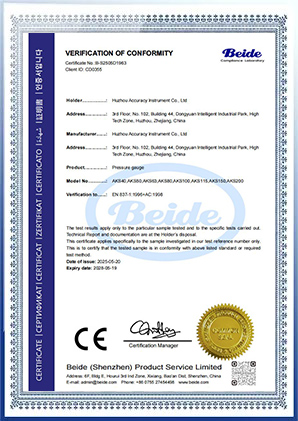
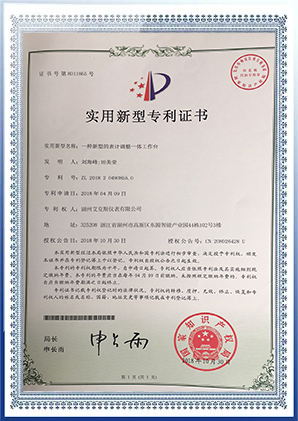
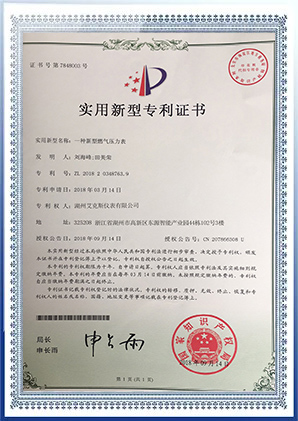

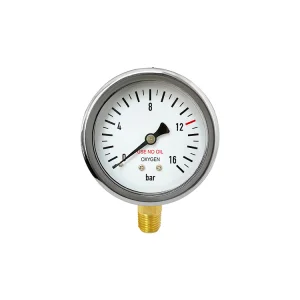
Explore our full line of industrial pressure sensors, oxygen gauges, diffused silicon transducers, and capillary remote monitoring systems.
 Accuracy Instrument