Explore our factory-direct OEM solutions customized for high-temperature, cryogenic, and aggressive medium industrial applications.
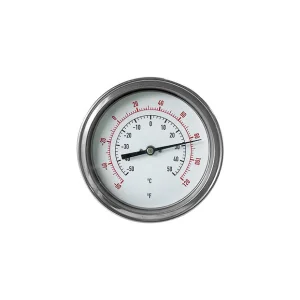
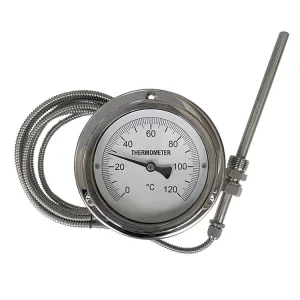
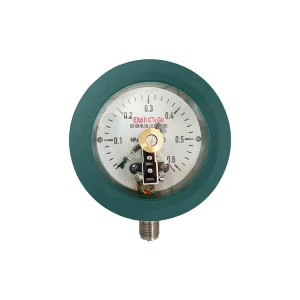
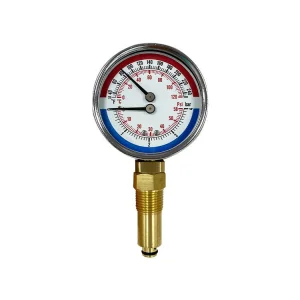
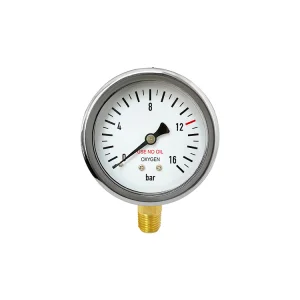
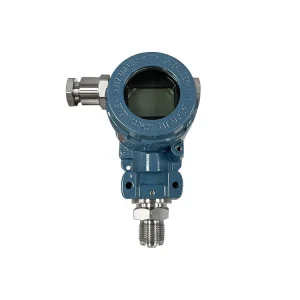
In modern industrial process engineering, mechanical pressure gauges and transmitters are frequently subjected to extreme thermal environments. Misunderstanding the critical threshold between ambient operating temperatures and media process temperatures is one of the leading causes of instrument drift, dial yellowing, diaphragm rupture, and premature Bourdon tube failure.
Ambient temperature refers to the environmental condition surrounding the external housing, acrylic/glass lens, and dial face of the gauge. Standard dry mechanical pressure gauges operate within an ambient range of -40°C to +60°C (-40°F to 140°F). Liquid-filled gauges (glycerin) are restricted to -20°C to +60°C due to viscosity changes, whereas silicone oil fill allows cold operation down to -40°C to +65°C.
Process temperature is the thermal state of the liquid, gas, or vapor making direct contact with the wetted parts (socket, Bourdon tube, or diaphragm). Standard brass wetted gauges tolerate maximum media temperatures up to 60°C (140°F). Stainless steel (316L) welded structures raise direct contact limits to 200°C (392°F) for dry gauges, provided soft seals are excluded.
According to ASME B40.100 standards, temperature variation introduces an additional measurement error coefficient of approximately ±0.4% per 10°C (18°F) deviation from the reference temperature of 20°C (68°F). High heat causes the elasticity module ($E$) of the Bourdon material (316L SS or Beryllium Copper) to shift, yielding false high-pressure readings if uncompensated.
| Gauge Type & Material Configuration | Filling Fluid | Max Ambient Temp | Max Direct Process Temp | Thermal Isolation Required? |
|---|---|---|---|---|
| Standard Brass Internal Gauge | Unfilled (Dry) | -40°C to +60°C | 60°C (140°F) | Not Suitable for Steam |
| Standard Stainless Steel (316L) | Glycerin (99.5%) | -20°C to +65°C | 100°C (212°F) | Required if Process > 100°C |
| High-Temp SS 316L Dry Gauge | Unfilled / Laser Welded | -40°C to +80°C | 200°C (392°F) | Siphon recommended above 150°C |
| Silicone Fill Extreme Temp Gauge | Low-Viscosity Silicone | -40°C to +70°C | 150°C (302°F) | Cooling Element Recommended |
| Diaphragm Seal + Capillary Extension | High-Temp Synthetic Fluid | -40°C to +60°C | Up to 400°C (752°F) | Fully Isolated Remote Reading |
When process media temperatures surpass standard material limits (e.g., superheated steam at 300°C or molten polymers at 400°C), thermal decoupling mechanisms must be integrated between the media source and the pressure sensing element.
Pigtail (coil) and U-type steam syphons serve as thermal dissipate traps. In steam applications, condensation settles within the coil loop, acting as a liquid barrier that drops steam temperatures from 250°C down to under 60°C before entering the gauge socket.
Constructed with stainless steel radiating fins, inline cooling towers utilize ambient air convection. A compact 4-fin cooling element reduces process media heat by approximately 50°C to 100°C per 100mm length, preserving delicate sensor electronics.
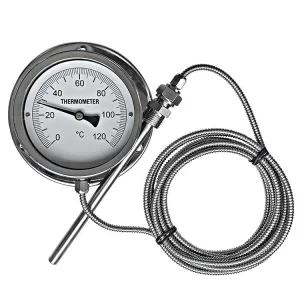
By connecting an isolated diaphragm seal with armor-armored capillary tubing (up to 10 meters), the pressure gauge can be mounted far away from furnace walls or high-temperature piping, allowing process temperatures up to 400°C to be safely monitored.
China has established itself as the global epicenter for industrial instrumentation manufacturing. Huzhou Accuracy Instrument Co., Ltd. leverages this integrated supply chain ecosystem to produce world-class pressure gauges and temperature sensors that meet stringent international standards.
Unlike regional assemblers, Chinese manufacturing hubs unite raw material refining, precision micro-machining, bimetal strip heat treatment, laser welding, and automated calibration under one localized industrial cluster. This proximity allows Huzhou Accuracy Instrument to maintain strict quality control over every component—from raw 316L SS capillary tubes to brass bottom connections.
Modern Chinese instrument factories utilize automated pressure-temperature simulation testing chambers. Every pressure gauge produced undergoes 100% full-scale cyclic pressure endurance testing and thermal soak evaluation under ISO 9001:2015 control protocols, ensuring zero fill-fluid leakage and minimum dial calibration drift across extreme operational temperature cycles.
Global OEMs require tailored dial scales, multi-unit prints (PSI, Bar, MPa, °C, °F), specialized wetted materials (Hastelloy, Monel, PTFE linings), and custom back/bottom mounting brackets. Chinese OEM manufacturing excellence offers short prototype turnaround times, flexible minimum order quantities (MOQs), and cost reduction advantages without sacrificing accuracy.
Delivering up to 35-45% procurement cost efficiency compared to European or North American counterparts, backed by full SGS, CE, and ISO compliance and a comprehensive 1-year product replacement warranty.
Navigating thermal limits requires selecting the exact instrument configuration tailored to specific macro-industrial sector environments.
High vibration, corrosive H2S sour gas, and extreme thermal fluid cycles require 316L SS movement, liquid silicone filling, and welded diaphragm seals rated for -40°C to +200°C continuous duty.
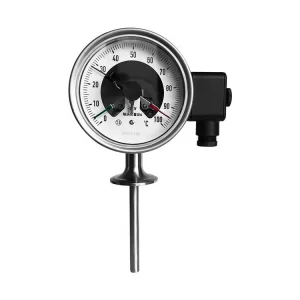
Boiler feed lines and high-pressure steam headers operating above 300°C mandate stainless steel pigtail syphons combined with high-precision bimetal compound temperature-pressure monitors.
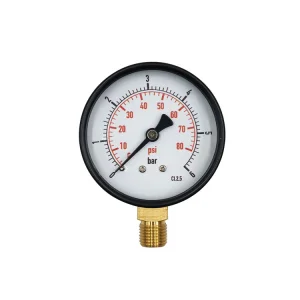
HVAC systems face outdoor weather exposure and rapid coolant temperature transitions. Brass or black steel pressure gauges with clear acrylic windows offer economic, reliable long-term service.
Sterilization-In-Place (SIP) and Clean-In-Place (CIP) procedures subject sanitary gauges to 135°C steam flushes. Tri-clamp sanitary diaphragm gauges ensure zero liquid traps and thermal endurance.
Liquid nitrogen, oxygen, and LNG storage systems operate down to -196°C. Specialized degreased oxygen gauges and remote-reading capillary thermometers are critical for operating safety.
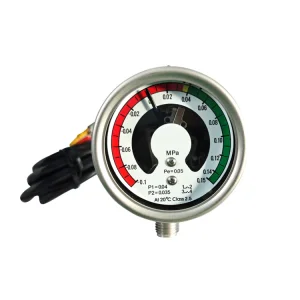
SF6 gas-insulated switchgears in power grids require temperature-compensated gas density monitors to preserve accurate pressure readings regardless of drastic outdoor temperature swings.
With over 20 years of continuous research, engineering development, and global manufacturing service, Huzhou Accuracy Instrument Co., Ltd. stands as a premier China factory supplier for mechanical pressure gauges, bimetal thermometers, SF6 gas monitors, and smart pressure sensors.
Spanning an expansive 3,000 square meter modern facility, our factory integrates automated assembly lines, high-precision micro-laser welding stations, and specialized pressure calibration laboratories. Products are deployed across Mechanical Engineering, Chemical Processing, Food & Beverage, Pharmaceuticals, and High-Technology Electrical Appliances worldwide.
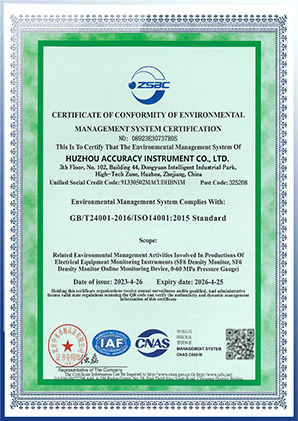
We adhere strictly to our core philosophy: "Reasonable price, accurate delivery, uncompromising quality." Operating under ISO 9001:2008 certified management models, our laboratory conducts 100% pressure cycle testing and environmental thermal simulations to maintain our industry-recognized "zero-leak" performance benchmark.
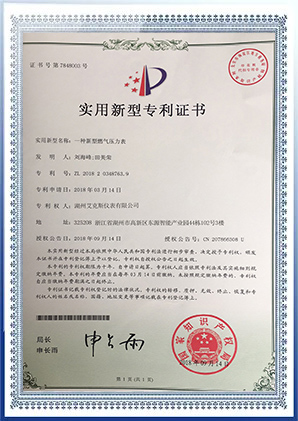
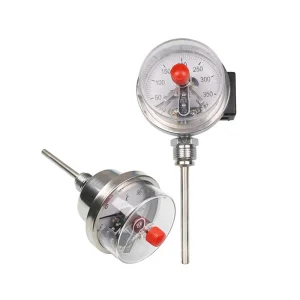
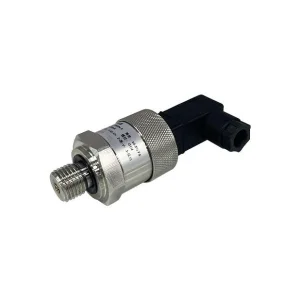
Select from our standard or specialized pressure and temperature monitoring series directly from our manufacturing facility.
Deep technical answers regarding temperature boundaries, fill fluid behavior, and custom OEM manufacturing.
Exceeding the maximum process temperature limit leads to multiple failure modes: First, internal soft seals (NBR, Viton, or PTFE) degrade and leak. Second, thermal expansion of liquid fill (glycerin) causes case pressure buildup, blowing out the top fill plug or warping the window. Third, high heat alters the elasticity modulus of the Bourdon tube, causing significant calibration drift and potential metal fatigue rupture.
Glycerin expands significantly at elevated temperatures and begins to discolor (yellowing) above 65°C. When process heat pushes internal case liquid past 100°C, the expanded glycerin generates internal housing pressure that forces pointer miscalibration. For temperatures above 100°C, a dry gauge with a cooling tower or a silicone-filled gauge (rated up to 150°C/200°C depending on model) should be specified.
A steam siphon (Pigtail or U-form loop) traps condensed water (condensate) inside its tube loop prior to reaching the gauge socket. When high-temperature live steam enters the pipe line, it forces the cooler, previously trapped condensate into the gauge rather than live steam. This liquid barrier drops media temperatures from 250°C+ down to a safe operating level below 60°C.
Yes. As a direct China manufacturer with over 20 years of expertise, we offer complete OEM customization. We engineer dual scale prints (Bar/PSI, °C/°F), integrated electrical switch contacts, high-temperature capillary extensions, custom logos, and specialized wetted alloys (316L SS, Monel, Hastelloy C-276) tailored to your exact technical specifications.
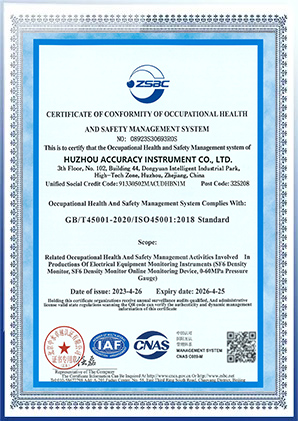
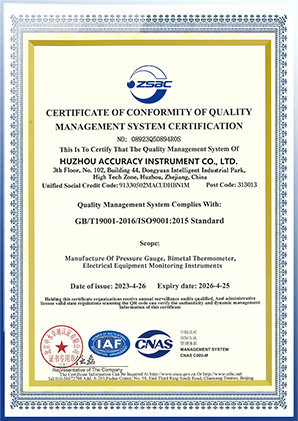
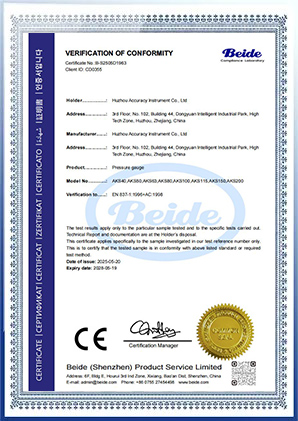
Our facility operates under certified ISO 9001:2008 quality management systems, with product lines holding CE and SGS compliance certificates. Standard production lead times for custom OEM pressure gauge orders range from 15 to 25 business days depending on volume, with expedited sample prototypes available within 7 business days.
 Accuracy Instrument