Explore our industrial-grade switchgear monitoring solutions, bi-metal sensors, and high-voltage density monitoring devices.
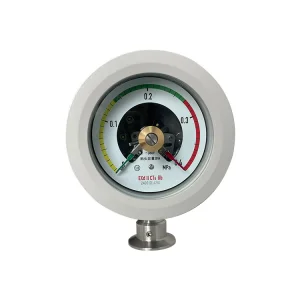
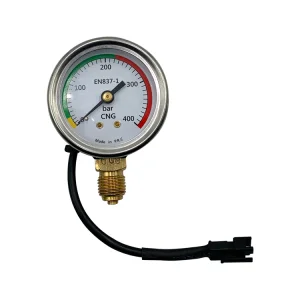
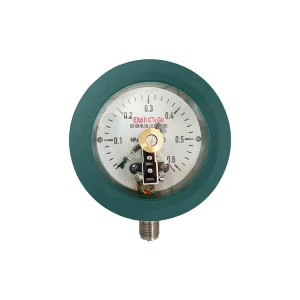
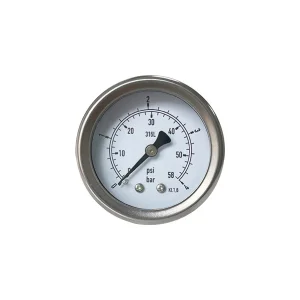
Analyzing critical insulating gas monitoring trends in medium-to-ultra-high-voltage power infrastructure worldwide.
Sulfur Hexafluoride ($\text{SF}_6$) remains the globally dominant dielectric insulating and arc-quenching medium utilized across high-voltage (HV) and extra-high-voltage (EHV) electrical apparatus, including Gas-Insulated Switchgear (GIS), Gas-Insulated Lines (GIL), dead-tank circuit breakers, and ring main units (RMUs). However, because $\text{SF}_6$ possesses a Global Warming Potential (GWP) approximately 23,500 times greater than carbon dioxide ($\text{CO}_2$), strict international regulatory frameworks—such as the EU F-gas Regulation (EU 517/2014 & 2024 revisions) and US EPA Greenhouse Gas Reporting Program—mandate rigorous, continuous density and leak monitoring of electrical assets.
For OEM engineers and grid procurement managers, monitoring gas pressure alone is insufficient. Because gas pressure varies dynamically according to ambient temperature according to the Ideal Gas Law and Van der Waals real gas equation, accurate insulation evaluation requires quantifying true gas density ($\text{kg/m}^3$ or normalized relative pressure compensated to +20°C). Leading OEM SF6 gas density meter manufacturers play a vital role in protecting grid reliability, preventing catastrophic dielectric breakdown, and satisfying zero-emission greenhouse gas compliance metrics.
Technical Distinction: Pressure vs. Density: Standard pressure gauges measure force per unit area, which swings drastically during temperature shifts (-40°C arctic winters to +60°C solar-heated switchgear enclosures). SF6 gas density meters incorporate internal bimetallic temperature compensation mechanisms or digital PTR (Pressure-Temperature-Ratio) algorithms to maintain a stable, temperature-normalized output at 20°C.
20 Years of Experience and Strategic R&D Research
Huzhou Accuracy Instrument Co., Ltd. is professionally engaged in the development, sales, and service of industrial mechanical pressure gauges, bi-metal thermometers, SF6 manometers, and digital pressure sensors. Our solutions are deployed across demanding environments including Mechanical Engineering, Chemical Processing, Offshore Wind Farms, HV Substations, and High-Technology Electric Appliances.
Established over two decades ago, our advanced manufacturing facility spans 3,000 square meters, equipped with high-precision automated production lines, laser welding cells, and zero-leak helium mass spectrometer testing systems. As a trusted OEM partner, we combine physical mechanical precision with smart sensor integration.
Our R&D department comprises 20 dedicated specialists concentrating on corrosion-resistant metallurgy (SS316L, Hastelloy), smart micro-acoustic and piezoresistive sensor integration, and compliance with international IEEE C37.122, IEC 62271-203, and ISO benchmarks.
Driven by a workforce of 120 skilled technicians, our 3,000 m² factory utilizes automated micro-tig welding, bimetal compensation link calibration, and laser dial marking to guarantee $\pm 1.0\%$ or $\pm 0.5\%$ precision accuracy across thermal spans.
With an annual output exceeding 2 million units, our ISO 9001:2008 and ISO 17025 accredited testing lab executes 100% pressure cycle stress-tests and environmental thermal simulations to ensure zero-leak durability.
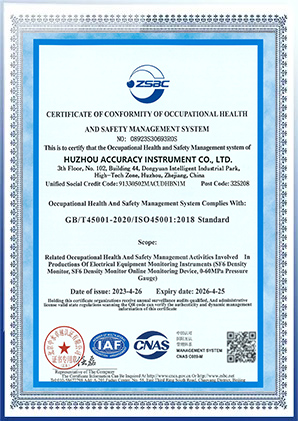
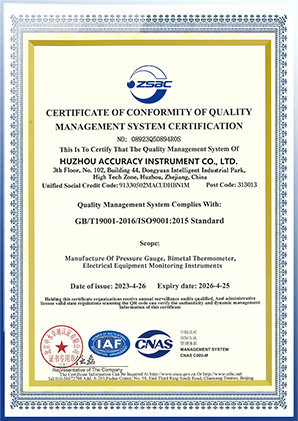
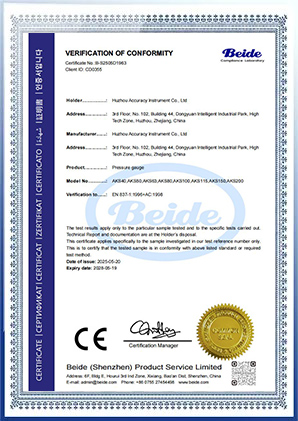
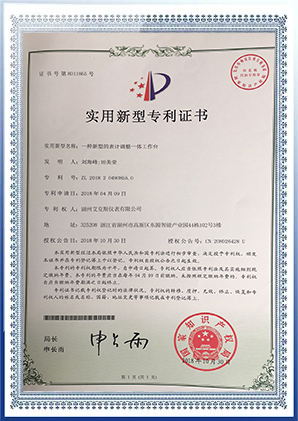
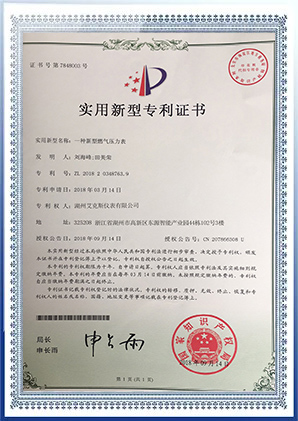
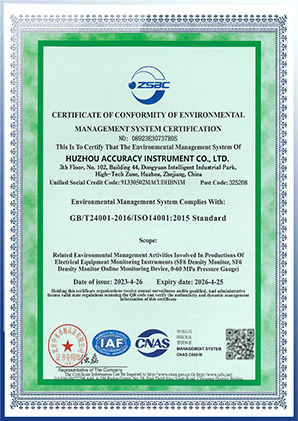
Understanding internal thermal-bimetal links, micro-switch contacts, and digital Modbus/IEC 61850 transducers.
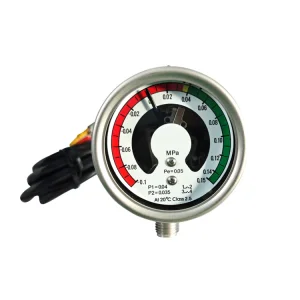
An SF6 gas density monitor operates on the principal of compensating for temperature-induced pressure changes. In mechanical density meters, a Bourdon tube sensor element is connected mechanically to a bimetallic compensation strip. As temperature shifts, the thermal movement of the bimetal cancels out the pressure change caused by expansion or contraction of the gas, moving the pointer only when actual gas mass/density changes (e.g., due to a physical gas leak).
| Monitoring Technology | Working Principle | Operating Temp Range | Accuracy Class (at 20°C) | Smart Grid Compatibility |
|---|---|---|---|---|
| Standard Mechanical SF6 Density Gauge | Bourdon Tube with Mechanical Bimetal Linkage | -40°C to +60°C | Class 1.0 / Class 1.6 | Local Visual Dial Pointer & Micro-switch Contacts |
| Hybrid Electro-Mechanical Density Monitor | Bimetal Compensation + Magnetic Snap Contacts + RS485 Transducer | -50°C to +65°C | Class 1.0 (Mechanical) / 0.5% FS (Digital) | Modbus RTU / 4-20mA Analog Signal Output |
| Fully Digital Smart Density Sensor | Piezoresistive Pressure Micro-chip + Quartz Temp Sensor + MCU Algorithm | -55°C to +85°C | Class 0.25 FS / Class 0.5 FS | IEC 61850 / Wireless LoRaWAN / Digital Twin Ready |
| Alternative Gas Mixture Monitor (C4-FN / N2) | Dual-Gas Isochoric Curves Math Transducer | -40°C to +70°C | Class 0.5 FS | Multi-Gas Parameter Switchable Firmware |
Custom OEM density meters engineered to withstand severe climatic extremes and severe electro-magnetic stress.
Offshore substations require ruggedized SS316L stainless steel density gauges with hermetic sealing and high salt-spray resistance. Our IP67/IP68 sealed units prevent salt ingress and withstand severe vibration caused by marine ocean swells and wind turbines.
Extreme cold climates cause standard internal fluids to freeze and bimetallic links to embrittle. OEM custom silicone-filled or dry-shock resistant instruments are rated down to -50°C and -60°C for reliable operation in Russia, Nordic regions, and Northern Canada.
In Middle Eastern desert installations, ambient temperatures inside unshaded GIS enclosures can reach +70°C. UV-stabilized safety glass dials, high-temperature seals, and compensated bimetal coils prevent calibration drift under extreme solar radiation.
Subsurface Ring Main Units in modern smart cities require ultra-compact back-connect or capillary-connected density switches. Integrated micro-contacts trigger automated alarm relays before density drops below safe arc-quenching thresholds.
Seismic movement and high-voltage circuit breaker tripping create strong mechanical shocks. Shock-proof oil filled (glycerin/silicone) or heavy-duty movement gears protect pointer stability during high-impact breaker operations.
Integrating hybrid Modbus density sensors with central SCADA/Asset Performance Management systems. Predictive leak rate analysis enables power utility companies to transition from reactive maintenance to scheduled zero-downtime repairs.
Next-generation OEM developments for SF6-alternative eco-insulation gases and optical density sensing.
As utilities transition to eco-friendly gases like Fluoronitriles ($\text{C}_4\text{F}_7\text{N}$), Fluoroketones ($\text{C}_5\text{F}_{10}\text{O}$), and Clean Air ($\text{N}_2/\text{O}_2$), density meters must adapt to unique gas-expansion curves and higher dew-point sensitivities.
Moving beyond pure pressure-temperature calculations, optical NDIR (Non-Dispersive Infrared) and micro-acoustic speed-of-sound sensors directly measure molecular concentration without moving mechanical parts.
Integrating cloud-connected IoT edge density monitors with AI algorithms. By analyzing micro-fluctuations over months, AI algorithms forecast precise dates when switchgear will hit low-gas alarm stages years in advance.
From CAD drawing engineering to specialized process connections and custom electrical contacts.
Tailored dial face artwork, dual/triple contact setting thresholds (Stage 1 Alarm, Stage 2 Lockout), gas valve sampling port integration, and custom connector threads (G1/2, M20x1.5, NPT, DN8/DN20 valve flanges).
Automated CNC turning of stainless steel cases (SS304/SS316L). Laser seam welding of Bourdon tubes and bimetallic compensation assemblies ensuring long-term hermetic integrity.
100% of manufactured units undergo high-sensitivity Helium Mass Spectrometer leak detection down to $\le 1 \times 10^{-9} \text{ mbar}\cdot\text{l/s}$, far exceeding international safety thresholds.
Multi-temperature environmental chamber calibration (-40°C, +20°C, +60°C) to verify pointer stability and electrical micro-switch actuation accuracy across full operational ranges.
In-depth answers to common engineering, procurement, and installation queries regarding SF6 density monitoring.
Explore additional bimetallic thermometers, explosion-proof pressure switches, and shock-resistant meters.
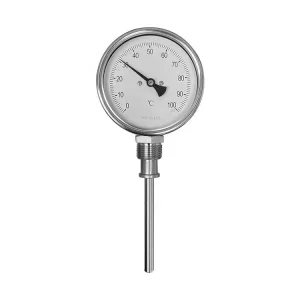
 Accuracy Instrument