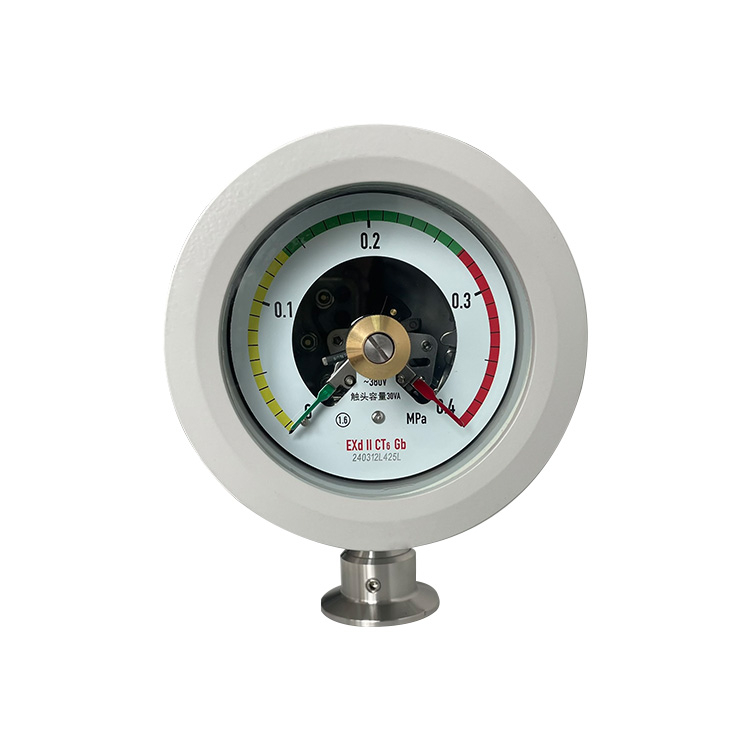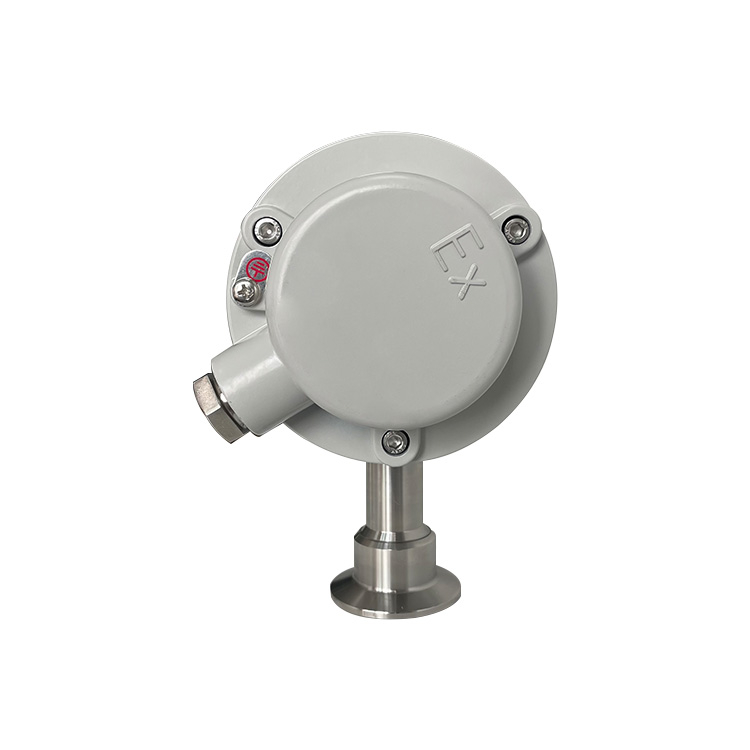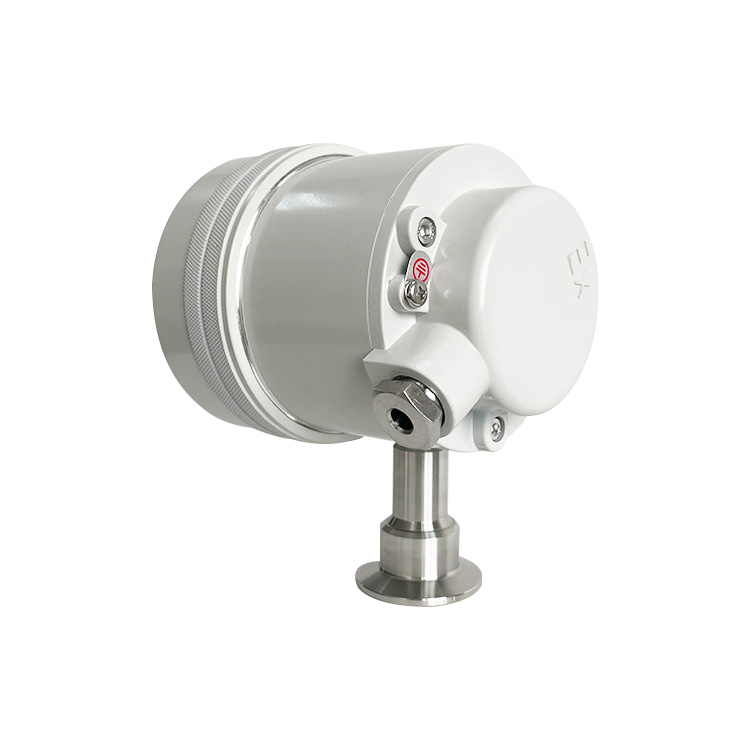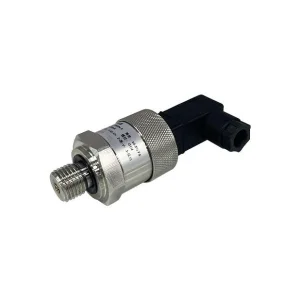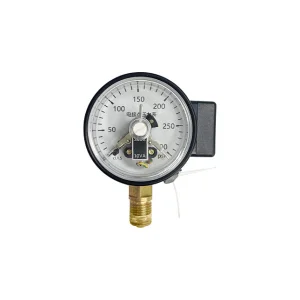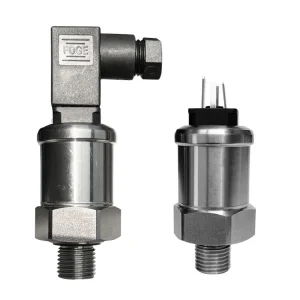
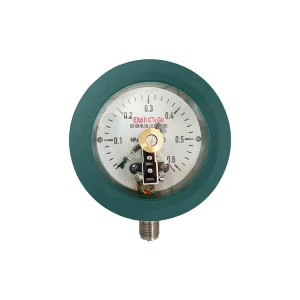
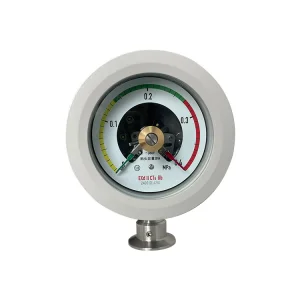
CE Certification 4″ Electric Contact Diaphragm Seal Pressure Gauge – 0.6 MPa, Explosion-Proof Design Factories, Factory

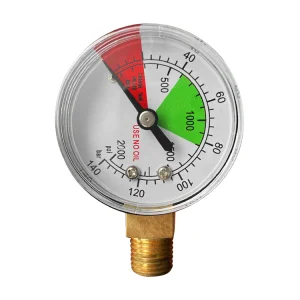
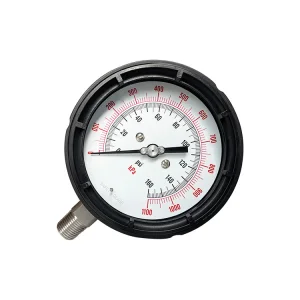
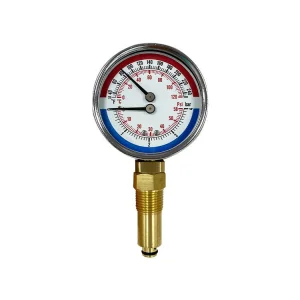
The pressure gauge is a precision mechanical instrument designed for the accurate measurement and local indication of fluid or gas pressure in industrial, commercial, and process applications. Constructed with robust materials such as stainless steel or brass, it ensures long-term reliability under demanding operating conditions, including high vibration, temperature fluctuations, and corrosive environments. Featuring a Bourdon tube sensing element, the gauge converts pressure into mechanical displacement, which is then displayed via a calibrated dial and pointer.

Available in various dial sizes, pressure ranges, and connection types, this pressure gauge supports customization to meet diverse system requirements. It is widely used in sectors such as oil & gas, chemical processing, water treatment, HVAC, power generation, and manufacturing. Optional features include glycerin or silicone fluid filling for damping, overpressure protection, adjustable zero mechanisms, and compliance with international standards (e.g., EN 837, ASME B40.100).

Designed for easy installation and maintenance, the pressure gauge provides stable performance, excellent readability, and extended service life, making it an essential component for safe and efficient system monitoring.

Product Description

Product Specifications

Case Aluminum
Size 100mm (4")
Ring (Cover) Aluminum
Window Glass
Pointer Aluminum Alloy, Black Finished
Connection Stainless steel
Connection Location Lower, Center Back, Lower Back
Thread 1/8", 1/4", 3/8", 1/2"; PT(BSPT, ZG), BSP(G, PF), NPT etc.
Element (Bourdon Tube) Stainless steel
Movement Stainless steel
Dial Plate White Aluminum with Black Graduations

Core Features and Advantages

Comprehensive Media Isolation and Protection

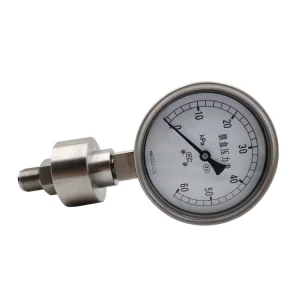
Through an isolation diaphragm and sealing fluid, the measured medium is completely isolated from the instrument's internal pressure-sensing elements and electrical contact mechanism. It can withstand corrosion and clogging from strong acids, strong alkalis, high-viscosity slurries, media containing solid particles, and easily crystallizing media, solving the pain points of ordinary electrical contact pressure gauges being easily damaged and having short lifespans in corrosive media.

Automated Monitoring

The built-in electrical contact control mechanism supports freely set upper and lower pressure limits. When the measured pressure reaches the set threshold, the electrical contacts automatically switch, outputting a switch signal. This signal can be directly linked with relays, PLCs, alarms, and other devices to achieve closed-loop control such as automatic alarm for pressure exceeding limits and pump/valve start/stop.

Stable and Interference-Resistant Measurement

The diaphragm seal structure combined with the filling fluid buffers the impact of pressure fluctuations and external vibrations on the pressure measuring element, while ensuring the accuracy and stability of pressure measurement.

Flexible Installation Adaptability

Supports multiple installation interfaces such as flange, threaded, and sanitary clamp types to match the connection requirements of different devices.
Typical Application Fields

Chemical Industry: Pressure monitoring and safety control of acids, alkalis, slurries, and high-temperature media.
Petroleum & Petrochemical Industry: Pressure interlocking of crude oil, sulfur-containing media, and oil and gas pipelines.
Pharmaceuticals & Food Industry: Pressure measurement and control of sterile media under sanitary conditions.
Metallurgy & Power Industry: Pressure monitoring of high-temperature melts, boiler feedwater, and desulfurization/denitrification systems.

Frequently Asked Questions (FAQ)

What materials are used in the construction of this pressure gauge?
The pressure gauge features an aluminum case and ring (cover), a glass window, an aluminum alloy pointer with a black finish, and stainless steel for the connection, movement, and Bourdon tube element.
What connection options and thread sizes are supported?
Connection locations include Lower, Center Back, and Lower Back. Standard available thread sizes are 1/8", 1/4", 3/8", and 1/2", with thread types including PT (BSPT, ZG), BSP (G, PF), and NPT.
How does the diaphragm seal protect the gauge internal mechanism?
The isolation diaphragm and sealing fluid completely isolate the measured medium from the internal sensing elements and electrical contacts, preventing damage or clogging caused by corrosive acids, alkalis, high-viscosity fluids, or solid particles.
Can this gauge be used for automated system control?
Yes. The built-in electrical contact mechanism enables freely configurable upper and lower pressure thresholds. When pressure limits are reached, switch signals are sent directly to relays, PLCs, or alarms for automatic pump/valve control.
Is this device suitable for high-vibration environments?
Yes, the combination of the diaphragm seal design and internal filling fluid effectively buffers external vibrations and pressure fluctuations, guaranteeing steady and accurate measurements.

Related Products