Explore our top-tier industrial mechanical gauges, digital transmitters, and specialized density monitors engineered for zero-leak performance and extreme environment compliance.
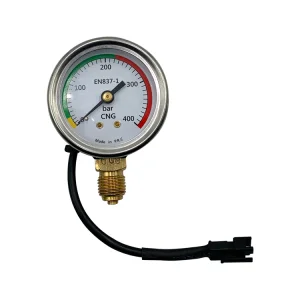
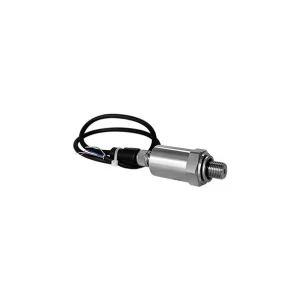
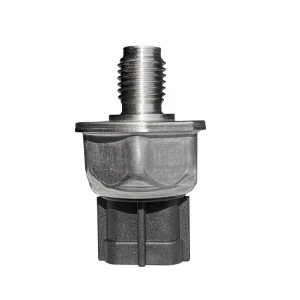
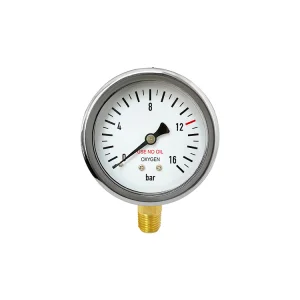
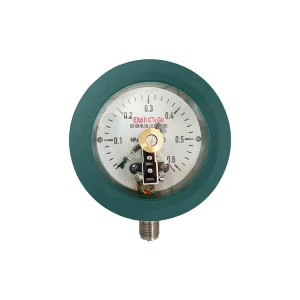
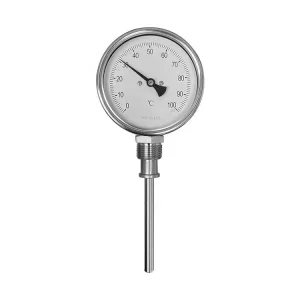
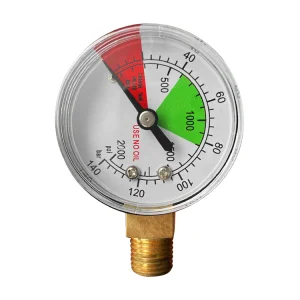
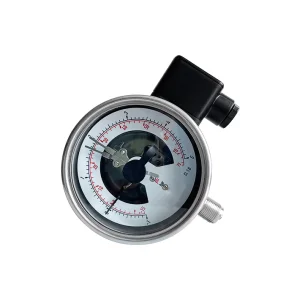
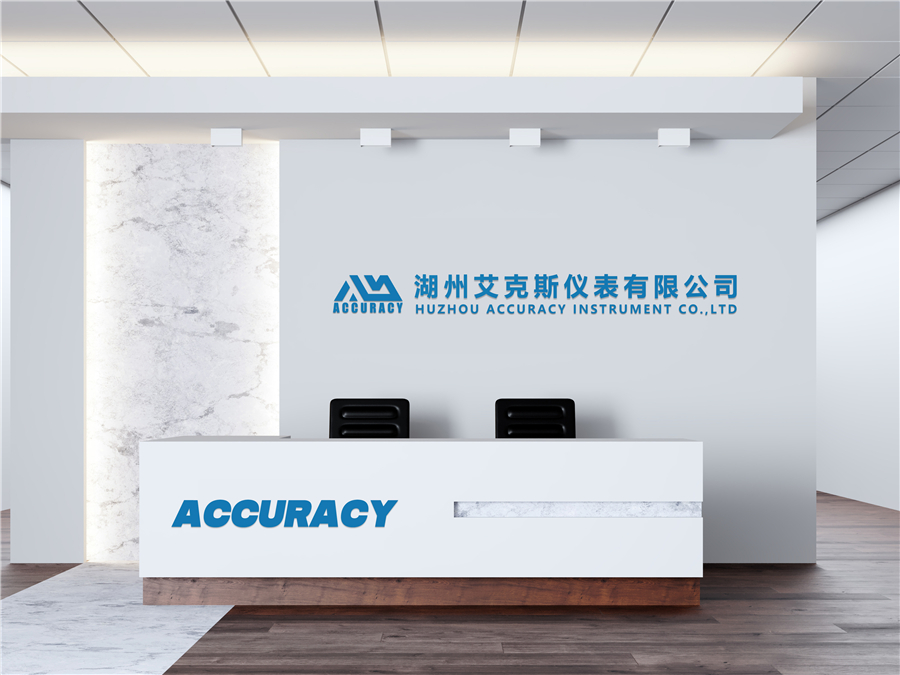
Huzhou Accuracy Instrument CO LTD is professionally engaged in the development, sales and service of industrial mechanical pressure gauges, bi-metal thermometers, SF6 manometer, and advanced pressure sensors. Products are widely used across global applications such as Mechanical Engineering, Chemical Engineering, Food & Beverage Processing, Pharmaceuticals, and high-technology electric power infrastructure.
Established over two decades ago, our pressure gauge manufacturing facility spans 3,000 square meters, equipped with automated production lines, laser calibration systems, and rigorous environmental stress-testing laboratories. As an OEM market leader, we integrate material science with precision mechanical engineering to deliver zero-leak measurement solutions tailored to stringent EPC specifications.
Our Infrastructure & Technical Workforce: Our R&D Department comprises 20 specialists dedicated to material innovation and smart sensor integration. Supported by 120 skilled technicians and 15 global technical sales engineers, we guarantee 24/7 technical support and rapid prototyping for worldwide clients.
Understanding the thermodynamic relationships between Gauge Pressure, Absolute Pressure, Differential Pressure, and Ambient Atmospheric Variations.
Gauge pressure is the measure of pressure relative to local ambient atmospheric pressure ($P_{ambient}$). Mathematically expressed as:
When a gauge reads zero, the process pressure inside the system equalizes exactly with the surrounding atmospheric pressure (approximately 101.325 kPa / 14.7 PSI at sea level).
Unlike Absolute Pressure ($P_{abs}$) which uses a perfect vacuum ($0 \text{ Bar absolute}$) as its reference baseline, gauge pressure dynamically vents its reference chamber to atmospheric ambient conditions.
This makes gauge instruments the standard choice for industrial piping, boilers, pneumatic tools, and pressure vessels where operational stress depends directly on differential force relative to the surrounding atmosphere.
High-precision sensing elements are categorized into two primary construction methods:
| Pressure Gauge Category | Sensing Element Design | Measuring Range Standard | Accuracy Class (EN 837-1 / ASME B40.100) | Target Fluid & Operating Media |
|---|---|---|---|---|
| Standard Mechanical Gauge | Bourdon Tube (SS316L / Phosphor Bronze) | 0 to 0.6 MPa / Up to 140 Bar (2000 PSI) | Class 1.0, 1.6, or 2.5 | Water, Compressed Air, Inert Gases, Light Oils |
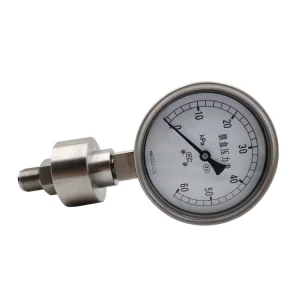
| Diaphragm Seal Gauge | Laser-Welded Flexible Diaphragm (Hastelloy/SS) | 0 to 100 mbar up to 40 Bar | Class 1.0 or 0.5% FS | Corrosive Chemicals, Viscous Fluids, Slurries |
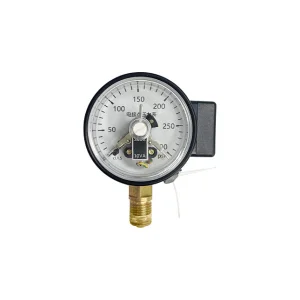
| Electric Contact Gauge | Bourdon Tube with Magnetic Switch Contacts | 0–0.6 MPa, 0–5 Bar, 0–300 PSI | Class 1.6 | Automated Pump Controls, Explosion-Proof Systems |
| Piezoresistive Transmitters | Ceramic / Glass Microfused Silicon Chip | -1 to 0 Bar Vacuum to 1000 Bar | ±0.5%, ±0.25%, ±0.1% FS | Hydraulics, High-Vibration Automotive CNG, Oil & Gas |
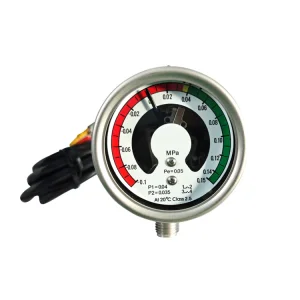
| SF6 Gas Density Monitor | Bimetallic Temperature-Compensated Reed Switch | 0 to 1.0 MPa (Normalized @ 20°C) | Class 1.0 / 1.5 | SF6 Insulated High-Voltage Electrical Switchgear |
From automotive alternative fuel tanks to high-voltage electrical substations, explore how custom OEM pressure instruments ensure operational safety and compliance.
Chemical processing units require corrosion-resistant ceramic pressure transmitters and laser-welded SS316L diaphragm seal gauges. Operating in harsh environments with aggressive acids and organic solvents, these instruments eliminate process fluid intrusion while delivering accurate readings under thermal cycling.
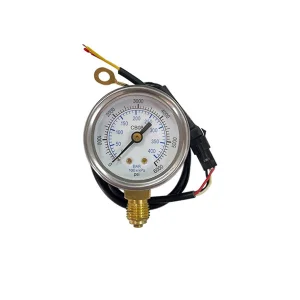
Modern Compressed Natural Gas (CNG) and hydrogen vehicle fuel lines demand CE Certified resistive gas pressure gauges. Built with vibration-resistant dampening mechanisms, high burst-pressure safety factors (up to 400%), and electrical output signals for real-time dashboard monitoring.
High-voltage gas-insulated switchgear (GIS) utilizes specialized SF6 gas density monitors. Featuring bimetallic temperature compensation mechanisms, these units prevent false leak alarms by decoupling pressure variations caused by ambient temperature changes from actual gas leakage.
Hydraulic systems undergo continuous high-frequency pressure spikes. Glass microfused pressure sensors and liquid-filled (glycerin/silicone) stainless steel gauges absorb extreme mechanical shock, preventing pointer flutter and internal gear wear.
How Huzhou Accuracy Instrument Co., Ltd. transforms client engineering specifications into mass-produced, high-reliability pressure gauges.
Our 20-specialist R&D department collaborates directly with client procurement teams. We customize dial face artwork, dual-unit scales (Bar/PSI, kPa/MPa), connection threads (NPT, BSP, Metric), electrical contact thresholds, and specialized enclosure IP ratings (IP65 to IP68).
Utilizing automated assembly cells, our 120 technicians perform precision TIG and laser welding on Bourdon tube joints, diaphragm housings, and pressure sensor capsules. This guarantees zero media leakage under high cyclic fatigue conditions.
Every single instrument undergoes multi-point automated pressure calibration against ISO 17025 certified primary pressure standards. We verify full-scale linearity, hysteresis, and repeatability across full operating temperature bands.
We have long followed the concept of "reasonable price, accurate delivery, good quality" and several business management models to keep our production quality above the required benchmark under ISO9001:2008 certified systems.
Our laboratory conducts 100% pressure cycle tests and environmental simulations, adhering to ISO 9001:2008 and ISO 17025 guidelines. Continuous engineering improvement drives our reputation for "zero-leak" performance in extreme conditions, backed by a comprehensive one-year factory warranty across all exported models.
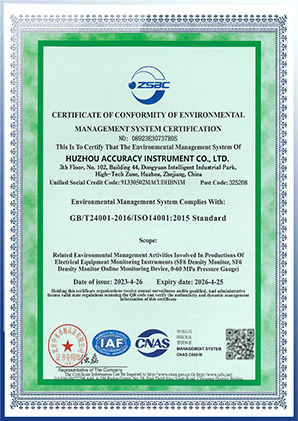
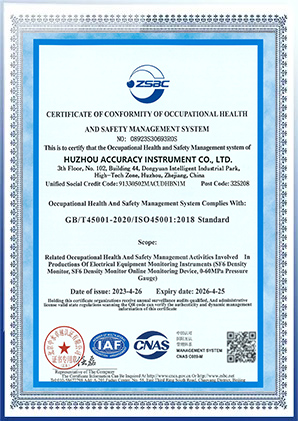
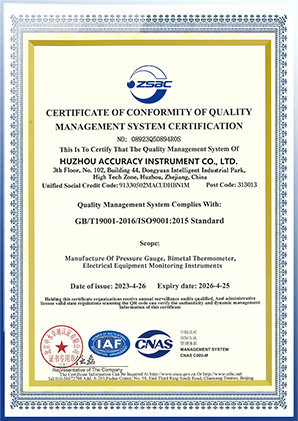
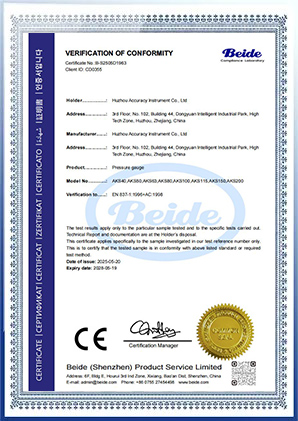
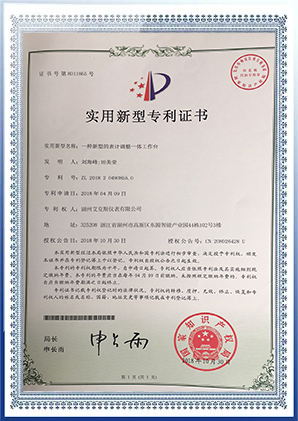
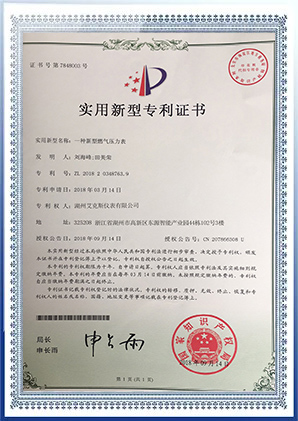
A strategic evaluation framework for international procurement directors, OEM project managers, and EPC engineering leads when qualifying gauge pressure manufacturers.
Verify that your gauge supplier provides full mill test reports (MTRs) compliant with EN 10204 3.1. Ensure wetted parts (SS316L, Monel, Hastelloy) match chemical resistance requirements for process gases and liquids to prevent premature corrosion failure.
Inquire about proof pressure limits (typically 130% to 150% FS) and burst pressure protection (up to 400% FS). High safety factors are critical for applications subject to rapid valve actuation or fluid hammer effects.
Leading factories like Huzhou Accuracy Instrument maintain a 2 million unit annual capacity with lean production lines, guaranteeing stable delivery lead times even during global supply chain disruptions.
The convergence of industrial mechanical manometers with digital IIoT telemetry, energy harvesting, and smart predictive maintenance.
Integration of high-precision piezoresistive silicon and ceramic sensor cells (3051 & 2088 architectures) with traditional analog dials, providing both visual field indication and dual 4-20mA / HART / Modbus digital outputs.
Deploying low-power NB-IoT, LoRaWAN, and WirelessHART modules within standard 100mm gauge enclosures, enabling real-time remote pressure monitoring in hazardous or inaccessible process plants.
Embedded microprocessors analyzing pressure pulsation spectrums and thermal cycles to predict Bourdon fatigue life or diaphragm seal rupture before catastrophic system downtime occurs.
Detailed technical answers to common questions encountered by instrument engineers and procurement specialists.
Gauge Pressure ($P_{gauge}$) measures system pressure relative to the local atmospheric pressure, reading 0 at ambient conditions. Absolute Pressure ($P_{abs}$) references a true zero vacuum. When sizing equipment operating open to the atmosphere (e.g., boilers, hydraulic lines), Gauge Pressure is used. When measuring sealed vacuum systems or gas stoichiometry where atmospheric fluctuations would introduce error, Absolute Pressure instruments are mandatory.
Liquid filling is specified for environments with high mechanical vibration or severe pressure pulsations. Glycerin filling is the cost-effective standard for operating temperatures between -20°C and +60°C. Silicone oil is required for extreme temperature applications (-40°C to +100°C) or where electrical contacts/transmitters are integrated to prevent dielectric breakdown.
We provide full OEM/ODM customization including custom dial branding/logos, dual/triple measurement scales, non-standard thread connections (NPT, BSP, BSPT, Metric), specialized casing materials (Black Steel, SS304, SS316, Cast Aluminum), internal micro-switch alarm contacts, and customized capillary length diaphragm seals.
SF6 gas density monitors utilize a bimetallic compensation element linked to the internal movement. As ambient temperature shifts, the gas inside the switchgear expands or contracts according to Charles's Law. The bimetallic element compensates for this thermal expansion/contraction, ensuring the gauge pointer only moves when an actual physical gas mass leak occurs.
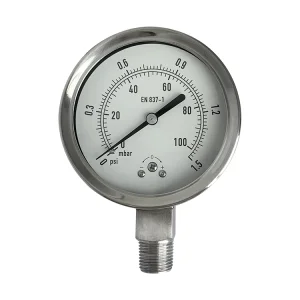
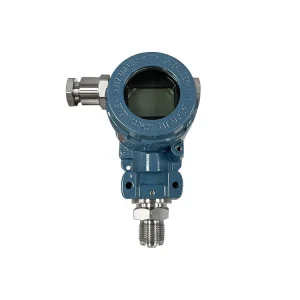
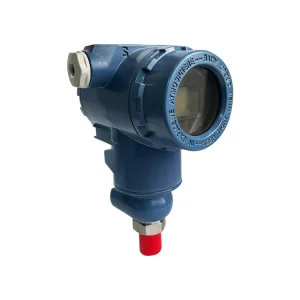
Select from our comprehensive product series below to inspect detailed CAD dimensions, material test reports, and ordering specs.
 Accuracy Instrument