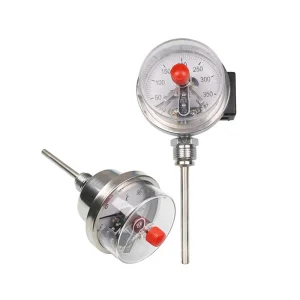
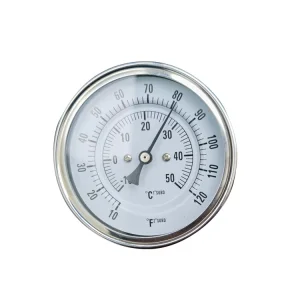
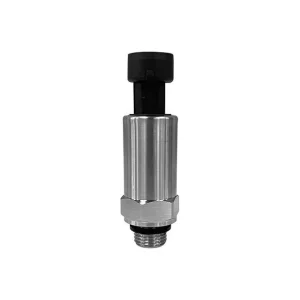
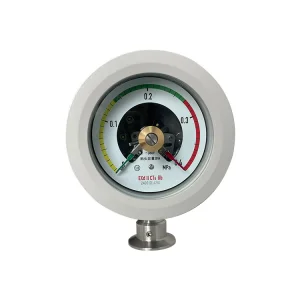
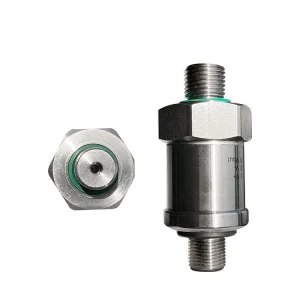
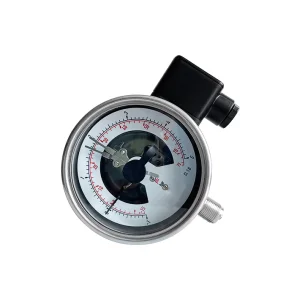
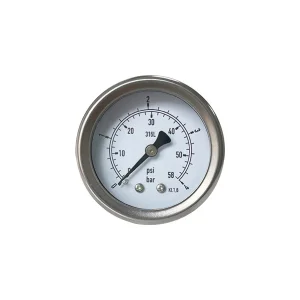
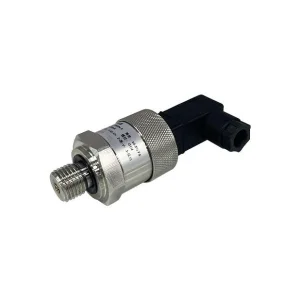
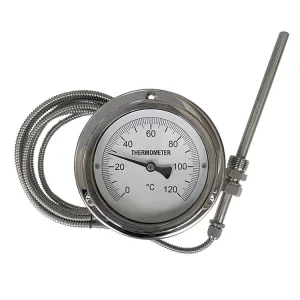
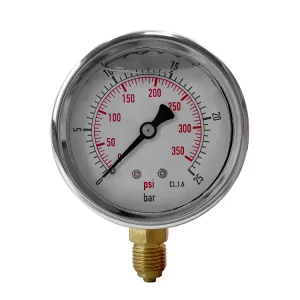
Explore our premium selection of CE-certified pressure gauges, density monitors, bi-metal thermometers, and transmitters designed for rigorous industrial environments worldwide.
In modern industrial process engineering, searching for a "CE certification pressure gauge nearby supplier & suppliers" reflects a dual operational imperative: strict regulatory compliance under European Economic Area (EEA) directives and immediate supply chain responsiveness. The demand for localized, high-precision pressure instrumentation has transitioned from a mere maintenance procurement query to a strategic infrastructure choice.
Compliance with the Pressure Equipment Directive (PED 2014/68/EU) and the ATEX Directive (2014/34/EU) requires instrument manufacturers to adhere to exact material traceability, burst-pressure safety factors, and metrological stability protocols (EN 837-1 to EN 837-3). Procuring from verified CE-certified suppliers ensures that installed mechanical manometers, diaphragm seals, SF6 density monitors, and electronic pressure transmitters provide full operational safety, minimal zero-point drift, and legal conformity across complex industrial ecosystems.
Ensures pressure equipment operates safely under defined maximum allowable pressure (PS) limits. CE certification guarantees overpressure safety margins up to 1.3 to 1.5 times nominal scale ratings.
Standardizes dial sizes (63mm, 100mm, 160mm) and accuracy classes (Class 0.5, 1.0, 1.6, 2.5). Bourdon tube and diaphragm assemblies undergo strict heat treatment to eliminate elastic hysteresis.
Mining buyer search intent demonstrates that plant managers require direct OEM customization (e.g., custom threads like NPT, BSPP, G1/2", flange standards, contacts) backed by local technical support.
Selecting the correct pressure measurement technology requires matching environmental severity with international safety standards. The table below outlines core engineering frameworks governing our global inventory:
| Gauge Type / Sensor Tech | Applicable European Standard | CE Directives | Typical Accuracy Class | Primary Industrial Application |
|---|---|---|---|---|
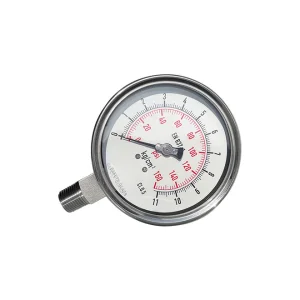
| Vibration-Resistant Bourdon Gauge | EN 837-1 / DIN 16005 | PED 2014/68/EU Module A2 | ±1.0%, ±1.6% Full Scale | Hydraulic pumps, heavy machinery, power generation. |
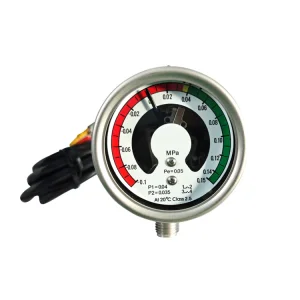
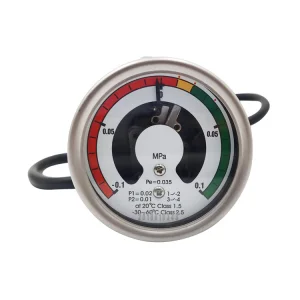
| SF6 Gas Density Monitor | IEC 62271-1 / EN 837-2 | EMC 2014/30/EU, PED | ±1.0% (at reference temp +20°C) | High-voltage gas-insulated switchgear (GIS), substations. |
| Electric Contact Diaphragm Gauge | EN 837-3 / DIN 16085 | ATEX 2014/34/EU, LVD 2014/35/EU | ±1.6% Full Scale | Chemical processing, automated safety shutdown circuits. |
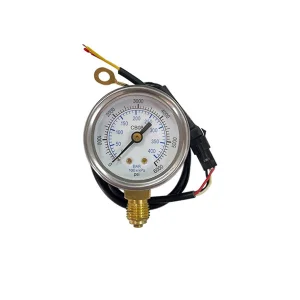
| Diffused Silicon / Thin Film Transducer | EN 61326-1 / EN 61326-2-3 | CE, RoHS, REACH | ±0.25%, ±0.5% Span | Automotive CNG/LNG, smart water networks, HVAC automation. |
| Bi-Metal Capillary Thermometer | EN 13190 | CE Compliance Framework | Class 1.0, Class 1.5 | Remote heat exchangers, boilers, food & beverage processing. |
The international pressure sensor and industrial manometer market is undergoing a seismic shift driven by continuous processing, green hydrogen production, automated manufacturing, and grid electrification. The global demand for reliable, shock-proof, and CE-marked pressure measuring devices is projected to grow substantially over the next decade.
When procurement agents search for localized suppliers ("nearby suppliers"), they are navigating key challenges in global sourcing logistics:
Regional differences dictate thread configurations: NPT (National Pipe Taper) dominates North America, BSPP/BSP (British Standard Pipe) prevails in Europe, and metric threads are standard across Asian machinery. Reliable suppliers offer rapid OEM adaptation to fit existing piping manifolds without adapter leaks.
Heavy industrial pumps and hydraulic systems cause mechanical fatigue in standard Bourdon movements. Glycerin or silicone oil liquid filling absorbs rapid pulsation, prevents pointer flutter, and lubricates internal gear movements for long service life.
In high-voltage power transmission, SF6 gas leaks contribute to greenhouse gas emissions and gear failure. Sealed stainless steel SF6 gas density monitors with micro-switches maintain strict hermetic integrity under harsh temperature swings (-40°C to +60°C).
Pressure measurement has evolved beyond purely mechanical dial indicators. Modern plant automation demands hybrid systems that combine local visual readout with remote electrical telemetry.
Transitioning from brass internals to full AISI 316L Stainless Steel, Hastelloy C-276, and Monel wetted parts. Laser-welded diaphragm seals prevent media contamination in chemical and hygienic applications.
Integrating magnetic snap-action switch contacts or inductive proximity sensors into 100mm/160mm gauges. Allows automatic high/low pressure alarms and equipment shutoff directly from the dial mechanism.
Diffused silicon and piezoresistive ceramic sensors with integrated ASIC signal conditioning. Output options span 4-20mA, 0-10V, RS485 Modbus RTU, and IO-Link for Industry 4.0 integration.
Our CE-certified pressure and temperature instrumentation portfolio addresses critical pain points across diverse engineering verticals:
5V/12V automotive-grade pressure sensors designed for compressed natural gas vehicles. Built with heavy-duty surge protection and temperature compensation to withstand under-hood thermal cycles.
Precision SF6 density monitors engineered with temperature compensation mechanisms. Ensures continuous density tracking in high-voltage circuit breakers and transformers.
Liquid-filled stainless steel gauges rated for continuous dynamic pressure loads up to 1000 bar. Internal restrictors dampen intense hydraulic pressure spikes.
Explosion-proof electric contact gauges with chemical diaphragm seals. Prevents corrosive, viscous, or crystallizing media from damaging the internal measuring element.
Huzhou Accuracy Instrument Co., Ltd. is a leading manufacturer professionally engaged in the development, custom manufacturing, and global export of industrial mechanical pressure gauges, bimetallic thermometers, SF6 manometers, and advanced pressure sensors.
Spanning a state-of-the-art 3,000 square meter manufacturing facility, our factory integrates automated laser welding, computerized calibration rigs, and specialized environmental testing chambers. With over two decades of engineering excellence, we deliver zero-defect instrumentation tailored to rigorous international standards.
Focuses on material innovation, smart sensor integration, and compliance with international standards (ISO, API, EN standards).
Utilizes automated assembly and laser calibration technologies to ensure high product durability, vibration resistance, and precision accuracy.
Provides 24/7 technical consultation, local OEM customization support, and responsive warranty fulfillment worldwide.
Our laboratory conducts 100% pressure cycle testing, overpressure rupture testing, and thermal chamber environmental simulations adhering to ISO 9001 and ISO 17025 testing frameworks. Continuous quality management drives our industry reputation for "zero-leak" performance in extreme operating environments.
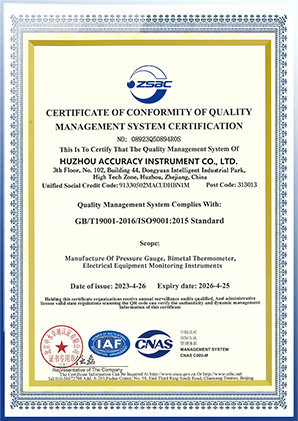
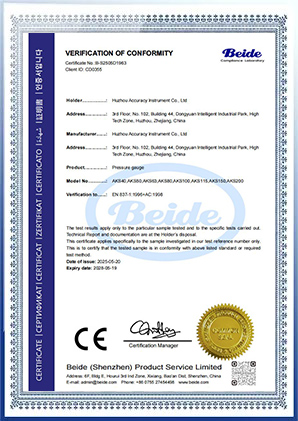
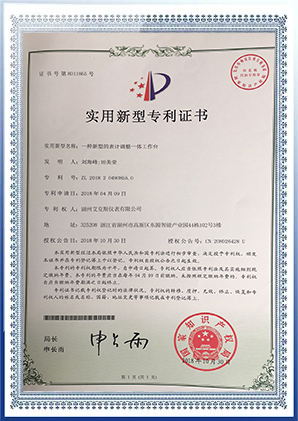
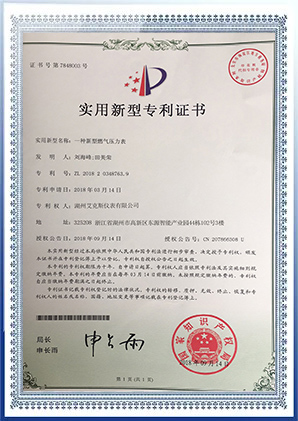
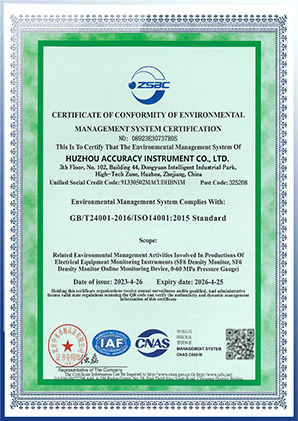
Engineers and procurement teams searching for nearby suppliers must balance quick local order fulfillment with direct manufacturer pricing and custom engineering capabilities. Use this technical checklist when evaluating your pressure gauge supply partner:
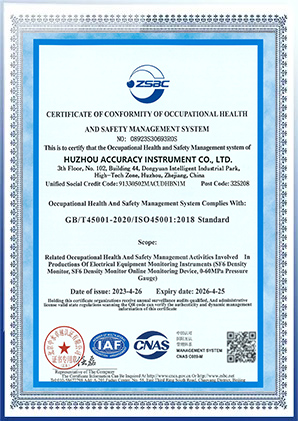
Confirm that the supplier provides legitimate Declaration of Conformity (DoC) paperwork detailing compliance with Pressure Equipment Directive 2014/68/EU, including burst testing safety documentation.
Require 3.1 material certificates according to EN 10204 for wetted parts (AISI 316L or special alloys) when gauges are deployed in aggressive chemical or offshore environments.
Evaluate whether the vendor holds inventory of standard ranges (-0.1 to 1000 bar) or can rapidly deliver custom dial logos, capillary lengths, and specific thread types within tight schedules.
Comprehensive answers to critical technical questions regarding CE certification, local supplier selection, and installation best practices.
CE certification indicates that a pressure gauge or electronic transmitter complies with fundamental health, safety, and environmental protection requirements established by the European Union. For pressure instruments, this includes compliance with the Pressure Equipment Directive (PED 2014/68/EU) for safety under pressure, the Electromagnetic Compatibility Directive (EMC 2014/30/EU) for electronic sensors, and ATEX (2014/34/EU) for hazardous dynamic environments.
Hydraulic systems generate high mechanical vibration and fast pressure pulsations. Unfilled dry gauges suffer rapid pointer flutter, accelerating gear teeth wear and damaging internal Bourdon tubes. Liquid filling (standard Glycerin for general use or Silicone oil for extreme ambient temperatures) dampens mechanical movement, lubricates internal wear points, and prevents internal condensation on the dial face.
Standard pressure gauges measure pressure relative to ambient changes and are influenced by gas expansion under temperature shifts. An SF6 gas density monitor is specifically temperature-compensated (utilizing a bimetallic link or reference chamber). It measures the actual gas density (mass per volume) inside high-voltage electrical equipment, ensuring reliable leak detection regardless of ambient weather conditions.
Yes. As a direct OEM factory manufacturer, Huzhou Accuracy Instrument supports complete customization including process connections (1/4" NPT, 1/2" NPT, BSPP, G1/4", G1/2", M20x1.5), customized dial faces with OEM logos, dual scales (PSI/Bar/KPa), and specialized electrical contacts or remote capillary lengths up to 10 meters.
While local distributors maintain limited off-the-shelf stock for standard models, sourcing directly from factory suppliers like Huzhou Accuracy Instrument offers customized engineering solutions at significant cost savings. Standard OEM production cycles range from 2 to 3 weeks, backed by flexible air or sea freight channels to ensure seamless delivery to your facility.
For general industrial applications (such as commercial HVAC, water pumps, and standard hydraulics), an accuracy of Class 1.6 or Class 2.5 (±1.6% or ±2.5% of full scale) is sufficient. For precise chemical process monitoring or high-voltage gas density checks, select Class 1.0 or Class 0.5 instruments. Calibration instruments require Class 0.25 or higher precision.
Discover our full catalog of high-performance pressure switches, capillary thermometers, piezoresistive pressure transmitters, and explosion-proof diaphragm gauges.
 Accuracy Instrument