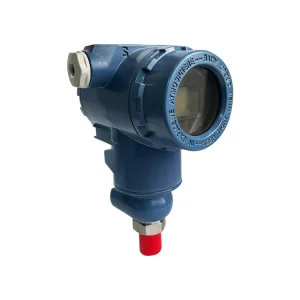
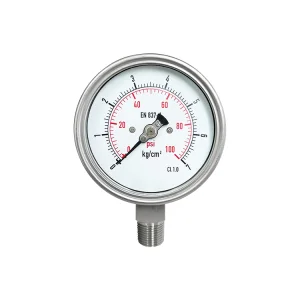
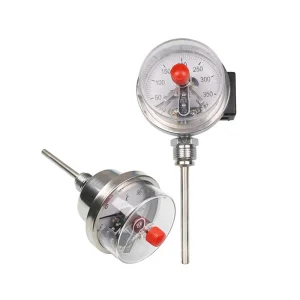
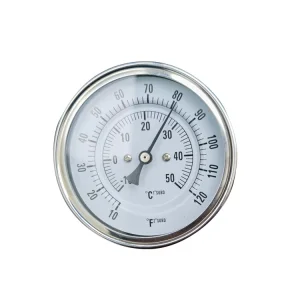
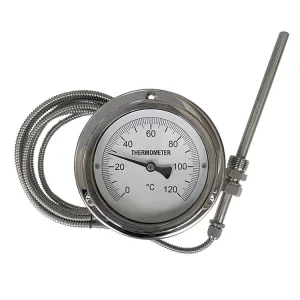
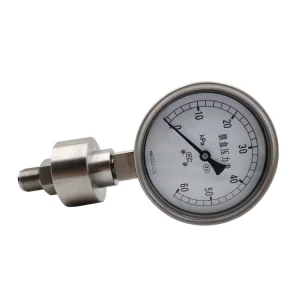
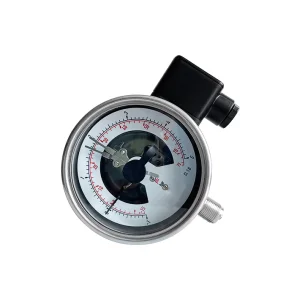
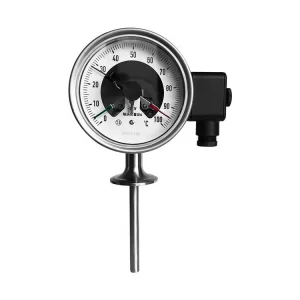
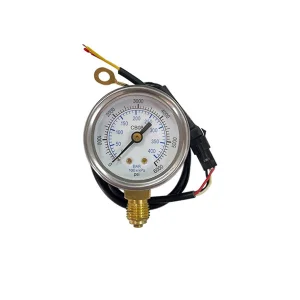
Explore our CE-certified line of high-precision industrial monitors, intelligent pressure transmitters, and bimetallic temperature control units engineered for critical electrical substation and hydraulic infrastructure.
In modern electrical power transmission and distribution infrastructure, Sulfur Hexafluoride (SF6) gas acts as an irreplaceable dielectric medium and arc-quenching fluid within High-Voltage (HV) and Medium-Voltage (MV) Gas-Insulated Switchgear (GIS), Gas-Insulated Lines (GIL), circuit breakers, and transformers. Maintaining the precise gas density is paramount: a decrease in SF6 density directly degrades the dielectric breakdown strength and arc interruption capability of the equipment, leading to catastrophic equipment failure, unscheduled power outages, and severe environmental penalties under global F-gas regulations.
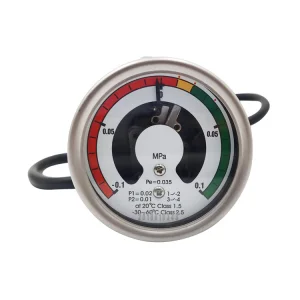
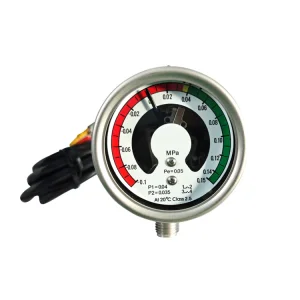
The CE Certification SF6 Gas Density Monitor Manual PDF (Q Series) serves as the definitive engineering document for field technicians, substation design engineers, and maintenance asset directors. Unlike standard pressure gauges, SF6 density monitors must continuously measure gas pressure while compensating for ambient temperature fluctuations in real time. Because SF6 gas expands and contracts in closed chambers following an isochoric thermodynamic process, simple pressure measurement is inadequate. The Q Series monitor utilizes internal bimetallic compensating elements or digital sensor arrays to convert absolute ambient pressure into normalized gas pressure at a standardized reference temperature of +20°C (P20).
Information Gain Key Takeaway: Standard pressure gauges fluctuate with ambient sun exposure and seasonal temperatures. An SF6 Gas Density Monitor compensates for ambient changes across -40°C to +60°C, providing a true indication of gas mass density ($kg/m^3$) to guarantee safe insulation gaps without false low-pressure alarms.
Utilizes precision-calibrated bimetallic strips matching the expansion coefficient of SF6 gas (or eco-gas alternatives) to automatically offset temperature-induced pressure changes without electrical power dependencies.
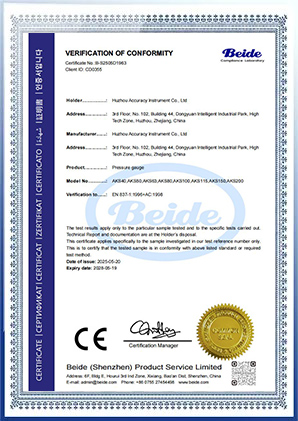
Fully compliant with EU Directive 2014/35/EU (LVD), 2014/30/EU (EMC), 2014/68/EU (PED), and IEC 62271-1 substation safety benchmarks, guaranteeing long-term operational integrity.
Features independent, magnetic snap-action electrical switch contacts for micro-second response to set thresholds: Stage 1 (Warning/Alarm) and Stage 2 (Lockout/Interlock).
For electrical apparatus manufacturers and global switchgear OEMs, installing CE-certified instruments is non-negotiable. The CE Mark on our SF6 Gas Density Monitors verifies that the device complies with stringent European health, safety, and environmental protection standards.
SF6 gas equipment operates under elevated pressure conditions ranging from 0.3 MPa to 0.9 MPa (3 bar to 9 bar gauge at 20°C). Our Q Series monitors undergo hydrostatic burst testing, cyclic pressure testing (exceeding 100,000 continuous operating cycles), and total enclosure integrity verification. Sealed hermetically with AISI 304/316L stainless steel cases, the monitors comply with sound engineering practice (SEP) and PED Category I/II safety thresholds.
Substations are hostile electromagnetic environments characterized by high-voltage switching transients, lightning surges, and radio-frequency interference (RFI). Digital and hybrid SF6 density monitors integrate optical isolation and shielded signal conditioning to pass IEC 61000-4 surge, fast transient (EFT), and electrostatic discharge (ESD) immunity protocols without signal degradation.
The following operational guide summarizes the full PDF installation manual provided with each SF6 Gas Density Monitor Q Series order. Field personnel must adhere to these procedural guidelines during mounting, wiring, and commissioning.
| Parameter / Feature | Mechanical Model (Q-M Series) | Hybrid Digital Model (Q-D Series) |
|---|---|---|
| Nominal Dial Diameter | 63 mm (2.5") / 100 mm (4.0") | 100 mm (4.0") with 4-Digit OLED Display |
| Accuracy Class | Class 1.0 or Class 1.6 (at 20°C); Class 2.5 (-40°C to +60°C) | Class 0.5 (Pressure), Class 0.5°C (Temperature) |
| Pressure Measuring Range | -0.1 to 0.9 MPa / -1 to 9 bar (Customizable) | -0.1 to 1.0 MPa Absolute / Gauge |
| Process Connection | G1/2", M20x1.5, Male/Female, Self-Sealing Valve Quick Connector | G1/2" Stainless Steel 316L, Custom Flange Mount |
| Electrical Contacts | Up to 3 Magnetic Snap-Action Contacts (250V AC/30W DC) | Solid State Relays + 4-20mA / RS485 Modbus RTU |
| Operating Temperature | Ambient: -40°C to +60°C; Storage: -50°C to +70°C | Ambient: -40°C to +70°C |
| Permissible Humidity | ≤ 95% RH non-condensing | ≤ 98% RH, IP67 Hermetically Sealed |
| Vibration Resistance | 2.0g (20-150 Hz) per IEC 60068-2-6 | 5.0g Shock Proof Industrial Design |
As global environmental frameworks press for reduced carbon footprints, the power utility sector is undergoing a dual transformation: digitizing substation asset management and transitioning from SF6 (GWP = 24,300) to green eco-gas alternatives such as Fluoronitriles (C4-FN / $g^4$), Fluoroketones (C5-FK), and Clean Air / $N_2$ mixtures.
Modern smart grid switchgears demand real-time telemetry over traditional visual inspection. Our next-generation Q Digital Series monitors combine mechanical bimetallic fail-safes with digital RS485 Modbus / IEC 61850 protocol outputs.
Alternative gases exhibit distinct compressibility factors ($Z$) and Virial thermal expansion equations compared to pure SF6 gas.
Reliable SF6 density monitoring underpins critical power infrastructure worldwide. From extreme Arctic temperatures in Northern Europe to humid tropical environments in Southeast Asia and offshore wind platforms, our monitors provide uncompromised performance.
Installed across 110kV to 1100kV Ultra-High Voltage (UHV) substations, protecting circuit breakers, disconnectors, and busbars against sudden loss of insulation medium.
Constructed with marine-grade 316L stainless steel and hermetic laser welding to resist salt spray corrosion, high humidity, and constant marine vibration.
Ensures uninterrupted power delivery to critical refining units, steel mills, and data centers where unscheduled trips trigger multimillion-dollar downtime losses.
Huzhou Accuracy Instrument Co., Ltd. is professionally engaged in the development, sales, and service of industrial mechanical pressure gauges, bi-metal thermometers, SF6 manometers, and intelligent pressure sensors. Products are widely utilized in Mechanical Engineering, Chemical Engineering, Food Industry, Pharmaceutical, and high-technology electric utilities.
Established over two decades ago, our pressure gauge manufacturing facility spans 3,000 square meters, equipped with state-of-the-art automated production lines, laser welding cells, and rigorous quality control test benches. As an industry leader, we integrate technological innovation with precision engineering to deliver zero-leak measurement solutions for global EPC contractors and switchgear OEMs.
We operate under the core business philosophy of "Reasonable Price, Accurate Delivery, Superior Quality." Our factory holds ISO 9001:2008 / ISO 9001:2015 certification, guaranteeing that every pressure gauge, SF6 density monitor, and bimetallic thermometer leaving our plant delivers ±0.5% precision and lifetime reliability under extreme operational environments. All products are supported by a standard one-year comprehensive warranty.
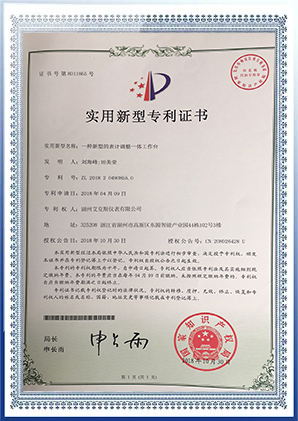
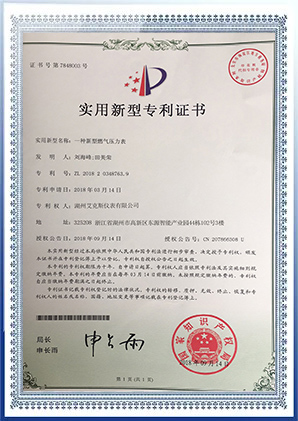
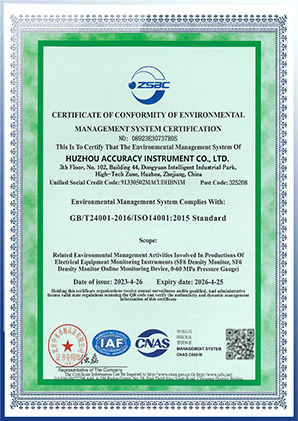
Our management systems and product designs are certified by accredited international bodies, ensuring smooth custom clearance and grid compliance globally.
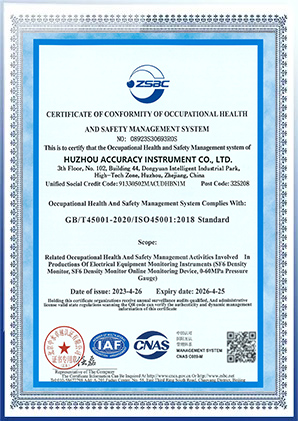
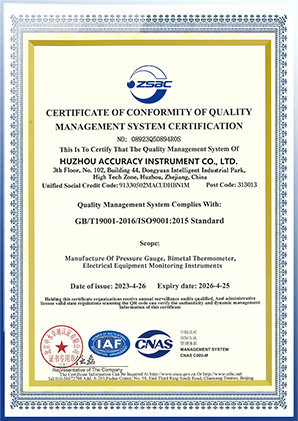
Answers to critical engineering queries regarding SF6 gas density monitoring, installation errors, calibration intervals, and CE compliance standards.
Standard pressure gauges measure absolute or gauge pressure without compensating for ambient temperature fluctuations. SF6 gas inside a closed compartment exhibits significant pressure changes according to Gay-Lussac’s Law when ambient temperatures shift between day and night (e.g., -10°C to +35°C), even though the actual gas volume/mass remains static. A standard pressure gauge would generate false low-pressure alarms in winter and false over-pressure signals in summer. An SF6 Gas Density Monitor incorporates a temperature compensation system (bimetallic or electronic) that standardizes readings to $P_{20}$ (+20°C reference), accurately reflecting real gas mass density.
The full engineering manual PDF contains detailed dimensional drawings, electrical contact wiring diagrams, torque specifications, and recalibration procedures. You can request direct access to the Q Series technical documentation by contacting our engineering sales department through the product inquiry links on this website or requesting an automated download link via our technical portal.
In accordance with IEC 62271-1 and standard substation maintenance guidelines, mechanical SF6 density monitors should undergo recalibration verification every 2 to 5 years, depending on local utility requirements. Hybrid digital density sensors with self-diagnostics continuously monitor sensor health and can extend physical calibration verification cycles up to 8 years.
High moisture content inside an SF6 gas chamber degrades dielectric strength and forms corrosive byproducts (such as hydrofluoric acid $HF$ and $SOF_2$) during arcing. While density monitors measure total gas pressure, elevated moisture partial pressure can distort density calculations at sub-zero temperatures due to condensation or icing on internal sensing components. Our Q Series monitors utilize micro-polished 316L internal surfaces and offer integrated dew-point / moisture compensation sensors in hybrid digital models.
Standard SF6 density monitors are factory-calibrated specifically for the thermodynamic properties of 100% SF6 gas. Eco-gases (such as $C_4-FN$ mixtures or Clean Air) have different thermal expansion coefficients ($dp/dT$). Huzhou Accuracy Instrument manufactures dedicated eco-gas density monitors with customized bimetallic compensation curves or updated firmware algorithms specifically calibrated for your chosen eco-gas mixture ratio.
Browse our complete OEM and factory-direct inventory of specialized density monitors, hydraulic transducers, CNG gauges, and capillary thermal instruments.
 Accuracy Instrument