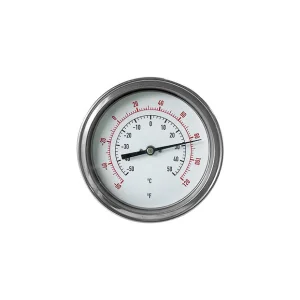
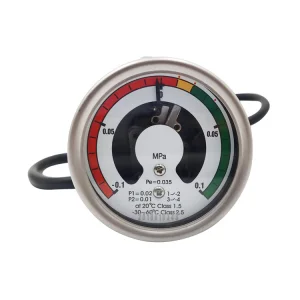
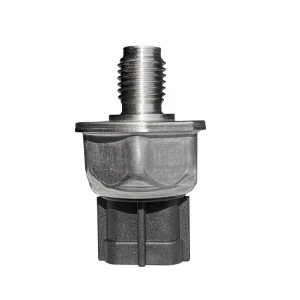
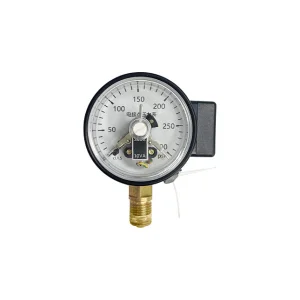
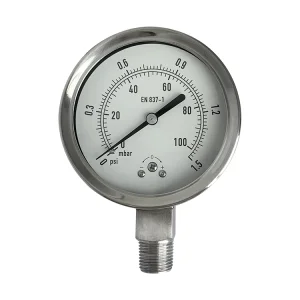
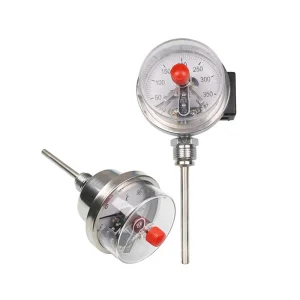
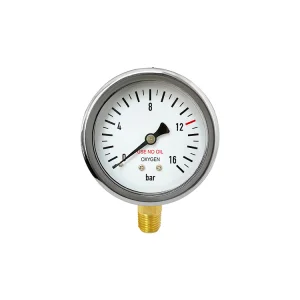
Explore our CE-certified pressure transmitters, bimetallic indicators, and precision temperature instruments engineered for high-integrity industrial environments.
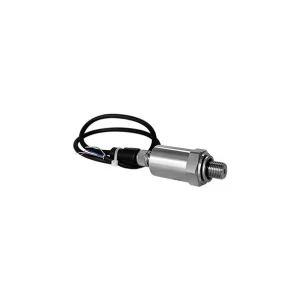
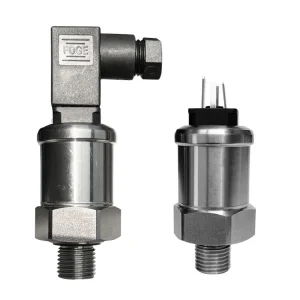
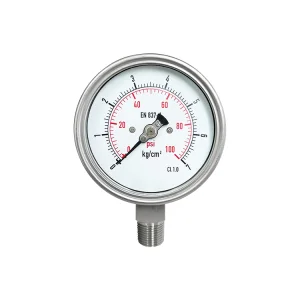
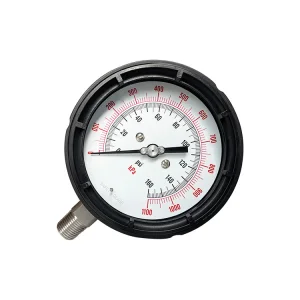
Understanding the exact mechanics behind how a mercury thermometer is constructed as shown through capillary tube engineering.
When examining how a mercury thermometer is constructed as shown in modern industrial blueprints, the central component is the micro-bore glass capillary tube. The primary mechanism relies on the consistent volumetric thermal expansion coefficient of metallic mercury (\(\beta \approx 1.82 \times 10^{-4} \, \text{K}^{-1}\)) confined within a vacuum-sealed borosilicate or flint glass capillary envelope. The construction integrates three distinct zones: the primary reservoir bulb, the precision capillary bore, and the upper safety expansion chamber.
The capillary tube acts as a physical hydraulic amplifier. Because glass exhibits a drastically lower coefficient of thermal expansion compared to liquid mercury, any temperature shift induces a volumetric expansion in the reservoir bulb, forcing a visible mercury column to rise vertically within the narrow capillary passage. The internal diameter of the capillary bore typically ranges from 0.05 mm to 0.20 mm depending on the required scale resolution and operating range.
Manufactured using ultra-precise glass-drawing techniques, ensuring consistent bore diameter along the entire length of the tube to prevent non-linear readout errors.
The space above the mercury column within the capillary is evacuated to ultra-high vacuum levels or backfilled with inert nitrogen gas to eliminate oxidation and column separation.
Industrial glass capillary tubes feature a specialized lens front (prismatic shape) that optically magnifies the thin mercury thread, enabling clear legibility from distance.
| Parameter | Standard Specification | Industrial High-Precision Grade | Extreme Application Grade |
|---|---|---|---|
| Capillary Bore Diameter Tolerance | ±0.005 mm | ±0.001 mm | ±0.0005 mm |
| Glass Composition | Soda-Lime Glass | Borosilicate Glass 3.3 | Aluminosilicate Glass |
| Temperature Measurement Range | -30°C to +300°C | -38°C to +500°C | -38°C to +650°C (N2 Pressurized) |
| Scale Calibration Standard | DIN EN 16195 / ISO 17025 | ASTM E2251 Standard | Custom Calibration Points |
| Thermal Shock Resistance | ΔT = 100°C | ΔT = 180°C | ΔT > 250°C |
Huzhou Accuracy Instrument Co., Ltd. leads global industrial measurement manufacturing through automated glass processing, automated calibration, and robust quality management.
As a key OEM/ODM manufacturing hub based in Huzhou, China, Huzhou Accuracy Instrument Co., Ltd. has spent over two decades optimizing the production ecosystem for liquid-in-glass, bi-metal, and digital industrial thermometry. Our 3,000-square-meter facility combines automated capillary drawing, precision laser etching, and multi-stage thermal stabilization baths to guarantee unyielding reliability.
Integrated automated glass fusing machinery and computerized capillary calibration benches ensure high throughput without sacrificing structural precision.
Our 20-specialist R&D team continuously innovates material formulations, smart sensor integration, and anti-vibration capillary sheath designs.
100% pressure cycle testing and environmental thermal shock simulations in compliance with ISO 9001:2008 and ISO 17025 laboratory standards.
With annual production exceeding 2 million units, our supply network delivers CE, SGS, and ISO compliant instruments to over 30 countries worldwide.
Delivering zero-leak performance and exceptional accuracy across world-class industrial facilities.
20 YEARS OF EXPERIENCE AND RESEARCH
Huzhou Accuracy Instrument Co., Ltd. is professionally engaged in the development, sales, and service of industrial mechanical pressure gauges, bi-metal thermometers, SF6 manometers, and pressure sensors. Products are widely used in applications such as Mechanical Engineering, Chemical Engineering, Food Industry, Pharmaceutical, and high-technology electric appliances.
Established over two decades ago, our pressure gauge and thermometer manufacturing facility spans 3,000 square meters, equipped with advanced production lines and rigorous quality control systems. As an industry leader, we integrate innovation with precision engineering to deliver reliable measurement solutions for global clients.
R&D Department (20 specialists): Focuses on material innovation, smart sensor integration, and compliance with international standards (e.g., ISO, API).
Production Workforce (120 technicians): Utilizes automated assembly and laser calibration technologies to ensure product durability and accuracy.
Sales & Service Unit (15 professionals): Provides 24/7 technical support and customized solutions across 30+ countries.
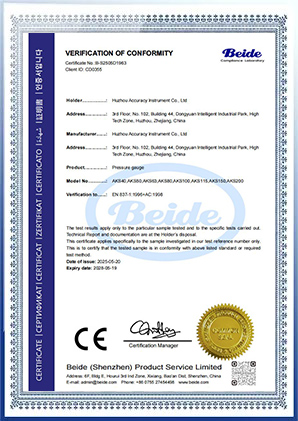
Annual Output: Exceeds 2 million units, covering industrial-grade instruments (e.g., stainless steel gauges, black steel gauges, shock-proof gauges, SF6 gauges, thermometers, pressure sensors) for oil/gas, HVAC, and pharmaceutical sectors. Products are exported worldwide with certifications including ISO, SGS, and CE, earning recognition for corrosion resistance and ±0.5% precision.
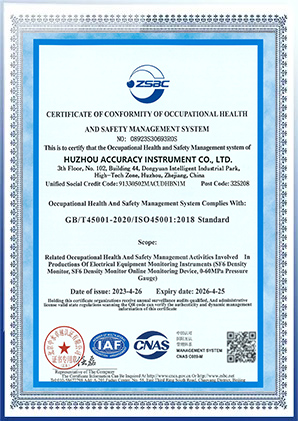
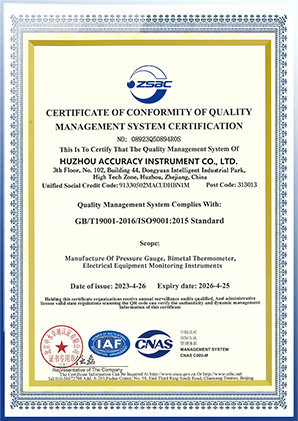
We have long followed the concept of "reasonable price, accurate delivery, good quality" and several business management models to keep our production quality above the required benchmark under ISO9001:2008 certification.
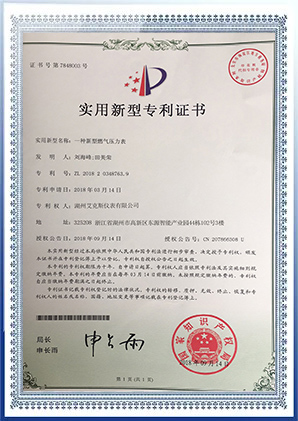
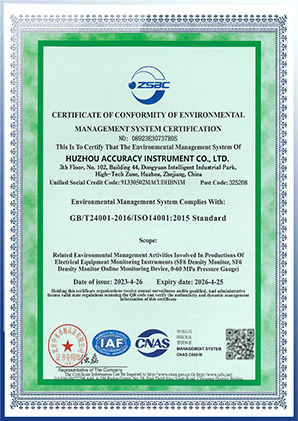
Deploying precision capillary thermometry and pressure instrumentation across critical global industries.
Heavy-duty, vibration-resistant capillary stem designs encased in 316L stainless steel thermowells resist aggressive thermal cycling and corrosive processing fluids in cracking towers.
Vessel engine exhaust lines and turbine bearing monitoring require armored capillary tubes engineered to endure constant mechanical vibration and rapid temperature spikes up to 600°C.
Ultra-precise scale calibration ensures exact thermal validation in steam autoclaves, meeting stringent GMP regulatory parameters with zero thermal hysteresis.
Remote-reading capillary systems allow temperature readings to be transmitted mechanically over several meters from inaccessible ductwork or hazardous refrigeration lines.
Bridging classic thermodynamic principles with Industry 4.0 digitalization and eco-friendly thermometric fluids.
In response to international environmental directives such as the Minamata Convention on Mercury, our R&D team has pioneered advanced capillary drawing tailored for Galinstan (a non-toxic liquid alloy of gallium, indium, and tin). Galinstan remains liquid down to -19°C and retains high thermal sensitivity, matching classical mercury performance while fulfilling EU RoHS/REACH compliance.
By pairing precision capillary tubes with modern machine-vision micro-cameras, industrial sites can digitize analog scale readings in real time. The high-contrast reflective thread inside our prismatic glass capillary allows automated algorithms to log temperature data continuously into SCADA architectures without retrofitting complete pipeline infrastructures.
Combining mechanical capillary fluid expansion with microfused silicon strain gauges enables dual thermal and pressure sensing from a single process tap. This reduces process entry points, minimizes leak risks, and enhances structural safety in high-pressure hydraulic circuits.
Explore our complete catalog of industrial pressure monitoring, electrical contact gauges, and CNG automotive sensors.
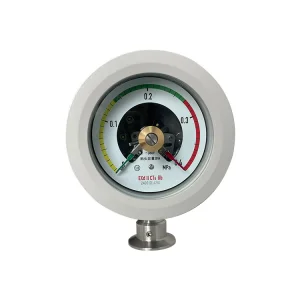
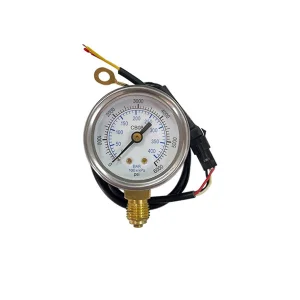
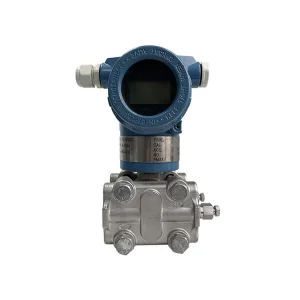
Expert insights regarding mercury capillary construction, calibration, safety standards, and ordering customization.
A mercury thermometer consists of a glass reservoir bulb fused to a fine-bore capillary tube sealed within a thick glass stem. The reservoir is filled with high-purity mercury, and the air in the capillary space is evacuated. As thermal energy expands the mercury in the bulb, it rises through the capillary bore, providing accurate visual readings against calibrated scale marks.
Because scale markings are linearly spaced, any variation in internal capillary diameter causes localized volumetric distortion. Uniform drawing tolerances (within ±0.001 mm) guarantee that each degree of thermal expansion results in identical linear displacement along the scale length.
We supply heavy-duty industrial V-shaped aluminum, brass, or 316L stainless steel protective cases. These armors feature shock-absorbing spring cushions that isolate the glass capillary tube from severe pipeline vibrations and mechanical impacts.
Our manufacturing workflow employs automated flame-sealing under precise thermal vacuum control, followed by 100% helium leak testing and thermal shock testing. Our quality management system maintains ISO 9001:2008 and ISO 17025 laboratory standards.
For markets regulated by the Minamata Convention or EU REACH directives, Huzhou Accuracy Instrument manufactures direct replacement bi-metal thermometers, organic spirit-filled glass thermometers, and non-toxic Galinstan liquid metal capillary gauges that fit identical thermowell dimensions.
Yes. Our 20-specialist R&D team provides complete OEM/ODM customization for capillary lengths, stem mounting threads (NPT, BSP, Metric), dual unit scales (°C/°F), and integrated electrical switch contacts for direct system integration.
 Accuracy Instrument