Explore our primary line of industrial-grade bimetallic thermometers, capillary systems, and pressure monitoring solutions engineered for high-rigor environments.
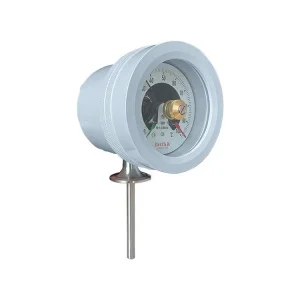
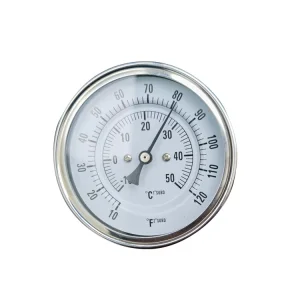
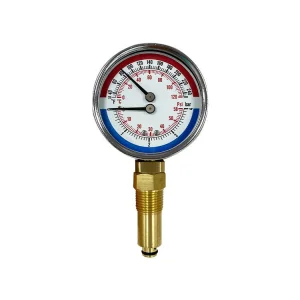
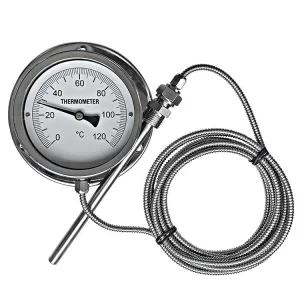
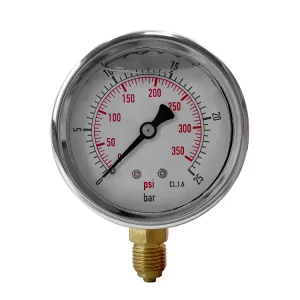
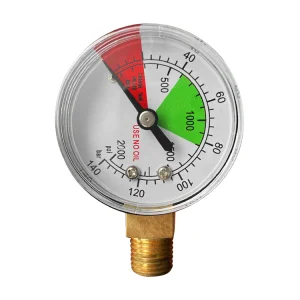
Understanding the physics of mechanical thermal expansion, differential coefficients, and precision kinetic transmission.
At the absolute heart of every bimetallic thermometer is the physical principle of volumetric expansion governed by thermal energy. Different metals possess unique Coefficients of Thermal Expansion ($\alpha$). A bimetal strip is constructed by permanently bonding two distinct metals together—typically a high-expansion alloy like brass or stainless steel ($\alpha \approx 18 \times 10^{-6}/\text{K}$) and a low-expansion alloy such as Invar (a 36% nickel-iron alloy with $\alpha \approx 1.2 \times 10^{-6}/\text{K}$).
When temperature changes occur, the high-expansion metal attempts to elongate significantly faster than the low-expansion metal. Because they are continuously bonded via cold welding, cladding, or high-energy bonding processes, this unequal expansion forces the flat strip to bend or curve toward the side with the lower expansion coefficient. The amount of mechanical curvature is directly proportional to the temperature change ($\Delta T$).
In industrial instrumentation, a simple straight strip does not offer enough linear displacement within a compact sensor stem. To amplify deflection within space-constrained environments, China manufacturers like Huzhou Accuracy Instrument Co., Ltd. wind the bimetallic strip into a tight helical coil (for stem-type bottom or back-connect thermometers) or a spiral coil (for flat dial surface readouts).
As temperature rises inside the stainless steel protection tube (stem), the helical coil rotates axially. This rotational motion eliminates the need for complex mechanical gears, transmitting motion directly to a central pointer spindle. The result is zero-backlash, smooth pointer rotation across a calibrated 270-degree dial arc with accuracy reaching $\pm 1.0\%$ to $\pm 0.5\%$ of full scale (ASME B40.3 Grade A / Class 1 EN 13190 standards).
The mathematical relationship governing the radius of curvature ($R$) of a bimetallic strip subjected to a temperature differential ($\Delta T$) is expressed via Timoshenko's classic beam theory formula:
Where m = t_A / t_B (ratio of thickness) and n = E_A / E_B (ratio of Elastic Moduli). When component thickness and elastic moduli are optimized ($m \approx 1, n \approx 1$), the equation simplifies to show that angular rotation is linear to temperature changes. This linear mechanical response makes bimetal elements exceptionally reliable for rugged, zero-drift industrial monitoring without requiring external electric power.
Why bimetallic gauges remain irreplaceable across modern infrastructure, energy, and processing industries worldwide.
Installed extensively in chilled water loops, hydronic heating networks, and air handling equipment. Integrated combined pressure-temperature (tridicator) units allow technicians to audit dual metrics instantly without piercing extra pipe taps.
Heavy-duty 316 Stainless Steel hermetically sealed bimetal gauges withstand ambient hydrogen sulfide, volatile chemicals, and continuous thermal cycling without internal fogging or element corrosion.
Used in pasteurization units, brewing kettles, and dairy processing. Stainless steel external surfaces allow CIP (Clean-In-Place) washdowns while meeting strict NSF and CE sanitary criteria.
Electric contact bimetal thermometers act as crucial mechanical safeties in liquid-immersed transformers, triggering auxiliary fans or emergency shutdowns when dielectric oil exceeds thermal thresholds.
Vibration-resistant liquid-filled cases (silicone or glycerine) dampen mechanical oscillations on hydraulic power units, protecting internal bimetal coils and gears from mechanical shock.
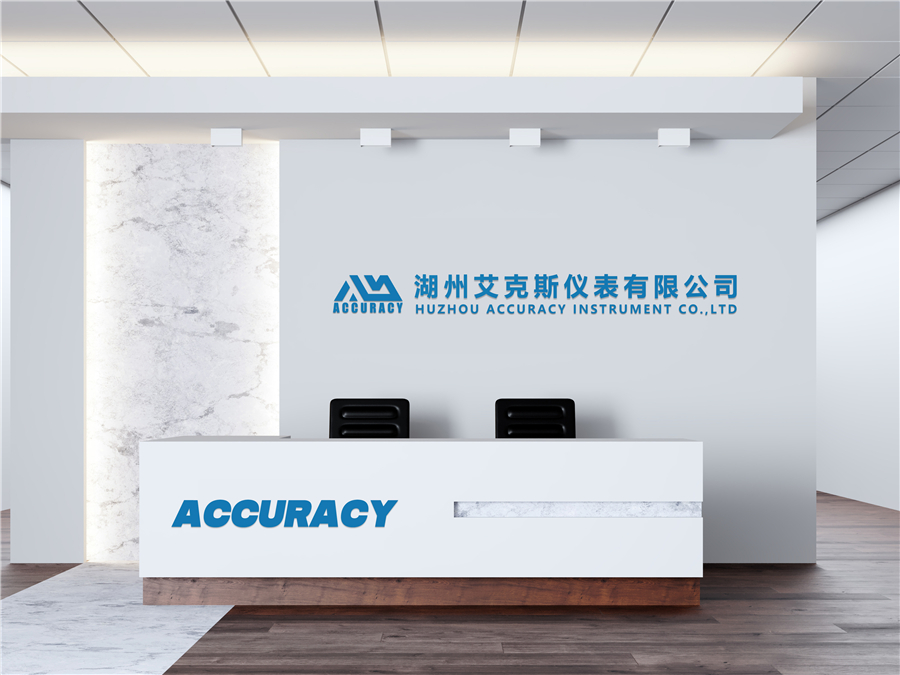
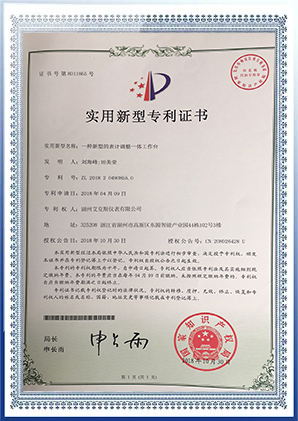
As industrial markets demand higher precision at competitive scale, Huzhou Accuracy Instrument Co., Ltd. stands as a benchmark for Chinese OEM/ODM manufacturing capability. Spanning a modern 3,000 square meter production center, our facility leverages fully automated coil-winding machines, laser-welded stem joints, and robotic dynamic dial calibration tables.
China's mature supply chain ecosystems for non-ferrous metals, precision stainless steel tubing, and sapphire bearings enable us to deliver tier-one European/American specification instruments at significantly compressed lead times and capital expenditure.
20 dedicated specialists focusing on smart sensor integration (bimetal + 4-20mA transmitters), thin-film pressure transducers, material metallurgy, and global compliance standards (ISO, API, ASME, EN).
120 skilled assembly technicians utilizing automated laser welding, helium mass-spectrometer leak testing, and temperature-controlled calibration baths to achieve zero-defect metrics.
15 international service professionals providing 24/7 technical consultation, custom drawing validation, and seamless export compliance to over 30 countries across Europe, the Americas, and Asia.
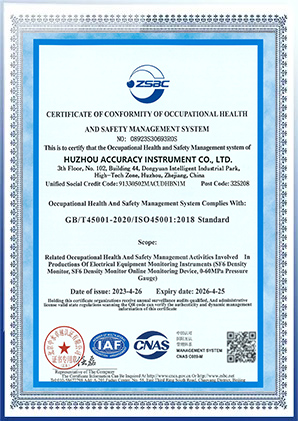
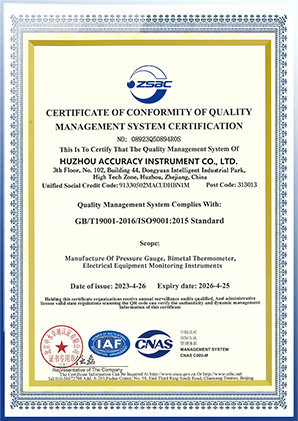
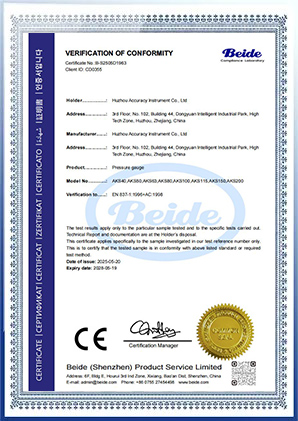
We rigorously enforce quality control systems where every individual thermometer and pressure sensor undergoes 100% calibration, thermal aging cycles, and pressure leak verification.
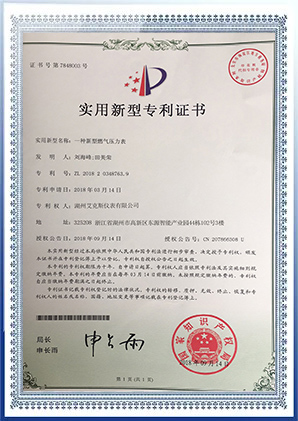
Essential engineering metrics for B2B buyers, procurement managers, and system integrators.
Procuring directly from China primary manufacturers like Huzhou Accuracy Instrument Co., Ltd. offers global buyers significant strategic advantages over regional distributors:
How smart technology, advanced thin-film sensors, and hybrid mechanical-digital designs are shaping Industry 4.0.
Combining mechanical dial readouts with integrated 4-20mA or HART protocol transmitters. This delivers continuous local visual reading for field technicians while simultaneously feeding digital telemetry into SCADA networks.
As seen in modern pressure-temperature transmitters, microfused glass silicon sensors provide zero-leakage, high dynamic response, and extreme vibration resilience ($\pm 0.5\%$ FS accuracy) for heavy industrial automation.
Transitioning toward 100% RoHS-compliant lead-free brass, 316L Stainless Steel, and PTFE coatings to survive highly acidic or saline environments in offshore marine operations.
Expert answers to common engineering, calibration, and procurement questions regarding bimetallic thermometers and thermal sensors.
Explore our extended catalog including electrical contact gauges, thin-film pressure transducers, and vibration-proof stainless instruments.
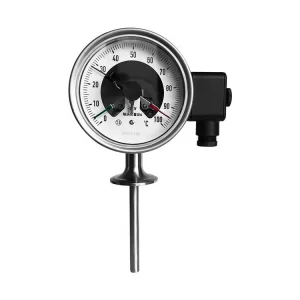
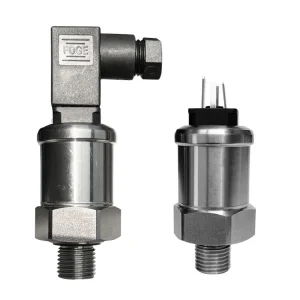
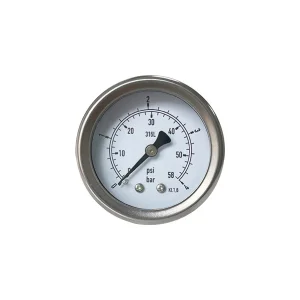
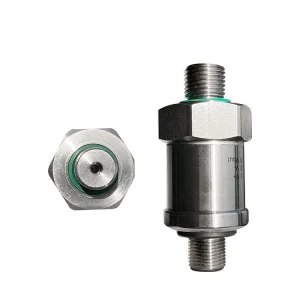
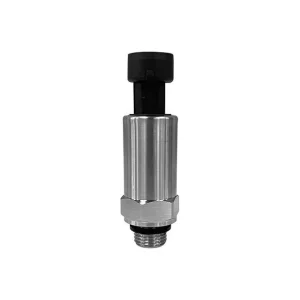
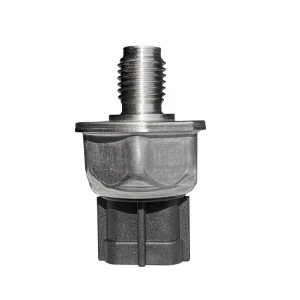
Your Trusted Manufacturing Partner for Mechanical Pressure Gauges, Bimetal Thermometers, SF6 Manometers, and Transducers.
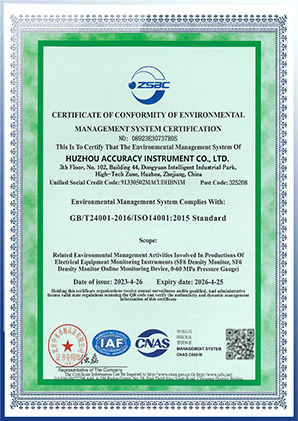
Following our core management philosophy of "Reasonable price, accurate delivery, reliable quality," Huzhou Accuracy operates under strict ISO 9001:2008 and ISO 17025 standard benchmarks. We conduct 100% pressure cycle testing, thermal calibration verification, and extreme environment simulations to ensure zero-leak performance and long-term operating accuracy for our global client network across over 30 countries.
 Accuracy Instrument