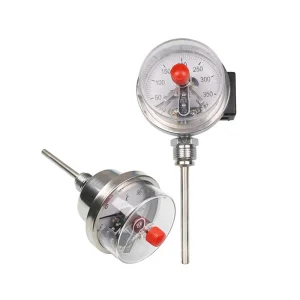
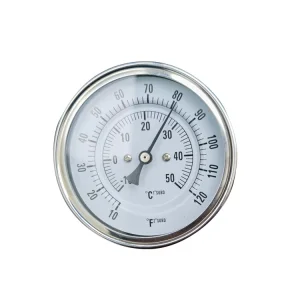
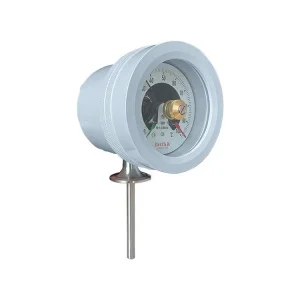
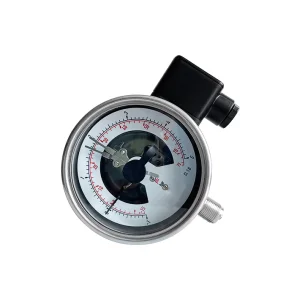
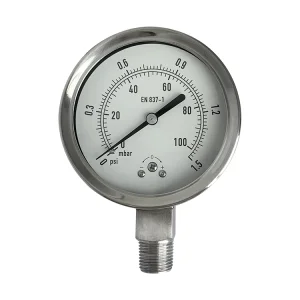
1. Pressure Temperature Gauge Definition & Fundamental Mechanics
In modern process engineering, a Pressure Temperature Gauge (frequently referred to in HVAC, industrial piping, and thermal hydraulics as a thermomanometer or dual-parameter indicator) is a specialized hybrid instrument engineered to measure and display both fluid dynamic pressure and thermodynamic thermal kinetic energy simultaneously on a single integrated dial face or digital interface.
From a mechanical design perspective, an OEM pressure temperature gauge merges two distinct physical sensing mechanisms into a single hermetically sealed housing:
Pressure Sensing Subsystem
Utilizes either a C-shaped Bourdon tube forged from AISI 316L stainless steel or a precision-engineered helical capsule. Under fluid static pressure, the tube flexes outward, transferring linear deflection into rotational gear movement that drives the pressure pointer across concentric scale arcs.
Temperature Sensing Subsystem
Employs a bimetallic strip coiled into a tight helix or a liquid/gas vapor bulb capillary extension. As ambient or media temperature shifts, differential thermal expansion between bonded metals forces thermal uncoiling, driving an independent coaxial shaft pointer.
Dual-Variable Calibration
Both systems operate independently without thermal-mechanical cross-talk. Precision laser alignment guarantees compliance with ASME B40.100 and EN 837-1 standards for high-vibration and corrosive chemical service.
"By integrating dual-parameter sensing into a single process connection tapping point, industrial operators cut pipeline penetration requirements by 50%, eliminating leak paths, reducing installation labor costs, and maintaining structural envelope integrity."
The industrial instrumentation market is undergoing a paradigm shift driven by digital transformation, IIoT (Industrial Internet of Things), and real-time asset performance management. Traditional analog mechanical dials are evolving into hybrid cyber-physical sensing hubs.
Wireless IIoT Integration
Next-generation OEM pressure temperature gauges incorporate ultra-low-power LoRaWAN, NB-IoT, and WirelessHART transceivers. Dual pressure-temperature readings are continuously digitized at 24-bit resolution and transmitted directly to SCADA or cloud-based asset management platforms.
Energy-Harvesting Self-Powered Sensing
Eliminating battery replacement cycles, advanced models harness thermoelectric energy (Seebeck effect) directly from process heat differentials alongside micro-vibration piezoelectric harvesters, guaranteeing perpetual 24/7 autonomous monitoring.
Edge Predictive Diagnostics
Integrated microcontrollers analyze pressure pulse harmonics and thermal transients at the sensing edge. High-frequency pressure spikes and thermal fatigue patterns are recognized early to trigger automated predictive maintenance alerts before failure occurs.
OEM pressure temperature gauges serve as critical safeguards across diverse continuous-process industries. Below is an engineering overview of customized deployments tailored to severe ambient and process environments:
Industry Sector
Operational Requirement
Technical Gauge Configuration
Key Safety/Compliance Metric
HVACR & Hydronic Heating
Simultaneous monitoring of boiler loop pressure & water thermal levels.
NACE MR0175 material standard compliance, burst pressure ratio > 4:1.
4. China Factory 4.0: Manufacturing Excellence & OEM Capacity
Huzhou Accuracy Instrument Co., Ltd.
20 YEARS OF EXPERIENCE AND RESEARCH
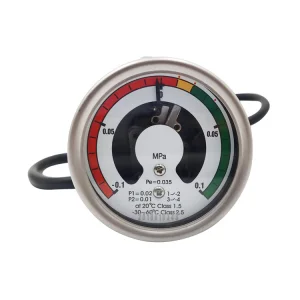
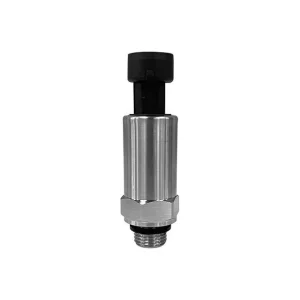
Huzhou Accuracy Instrument CO LTD is professionally engaged in the development, sales and service of industrial mechanical pressure gauges, bi-metal thermometers, SF6 manometer, pressure sensor. Products are widely used in various applications such as Mechanical Engineering, Chemical Engineering, Food Industry, Pharmaceutical, and high technology electric appliances.
Established over two decades ago, our pressure gauge manufacturing facility spans 3,000 square meters, equipped with advanced production lines and rigorous quality control systems. As an industry leader, we integrate innovation with precision engineering to deliver reliable measurement solutions for global clients.
Our Core Organizational Strengths
Expert R&D Division
20 Specialists: Dedicated to metallurgy innovation, smart IIoT micro-sensor integration, digital interface design, and maintaining international compliance (ISO, API, EN standards).
Precision Production Workforce
120 Skilled Technicians: Utilizing automated robotic laser welding, vacuum fluid filling stations, and multi-point laser calibration benches to ensure zero hysteresis and exceptional durability.
Global Sales & Support Unit
15 Technical Professionals: Delivering 24/7 client engineering support, custom OEM drawing validation, and localized customer assistance across more than 30 industrial nations.
Production Capacity & Global Reach
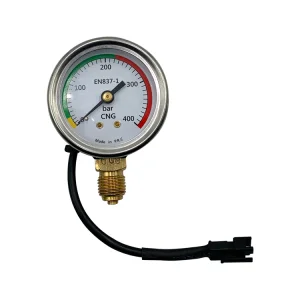
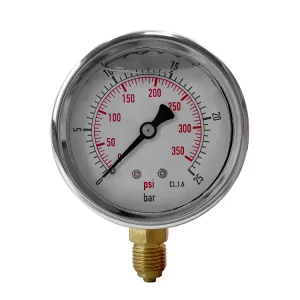
Our facility delivers an annual output exceeding 2 million units, encompassing industrial-grade gauges (including stainless steel gauges, black steel utility gauges, shock-proof liquid-filled manometers, SF6 density monitors, bimetallic thermometers, and diffused silicon pressure transmitters) optimized for oil/gas, HVAC, automotive CNG, and bio-pharmaceutical sectors.
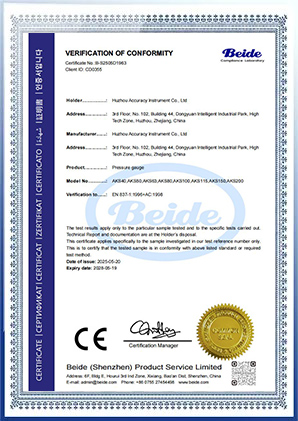
Exported worldwide, our instruments hold ISO, SGS, and CE certifications, earning an international reputation for superior corrosion resistance and high precision (up to ±0.5% full scale).
Rigorous Quality Commitment
Our state-of-the-art testing laboratory conducts 100% pressure cycle overload testing, thermal shocking simulations, and environmental stress screening adhering strictly to ISO 9001 and ISO 17025 standards. Continuous process refinement reinforces our operational guarantee of "zero-leak" performance in high-vibration and extreme-temperature service environments, supported by a full one-year factory warranty.
5. Global Enterprise OEM Procurement Technical Matrix
When specifying OEM custom pressure temperature gauges, engineering teams must evaluate structural and electrical parameter requirements to match specific operational conditions:
Technical Specification
Standard Options
High-Spec OEM Customization
Dial Nominal Diameters
40mm (1.5"), 50mm (2"), 63mm (2.5")
100mm (4"), 150mm (6"), 250mm (10") Heavy Duty Design
Inductive Proximity Contacts, Explosion-Proof Ex d Enclosures
Damping Fluid Filling
Dry (Unfilled)
99.5% Pure Glycerine, High-Temp Silicone Oil (Up to 250°C)
6. International Regulatory Compliance & Quality Accreditation
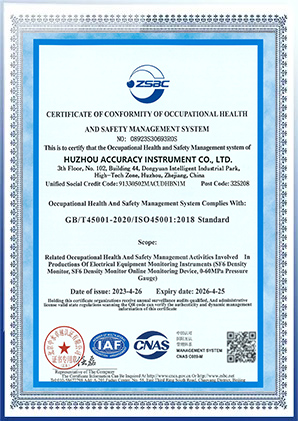
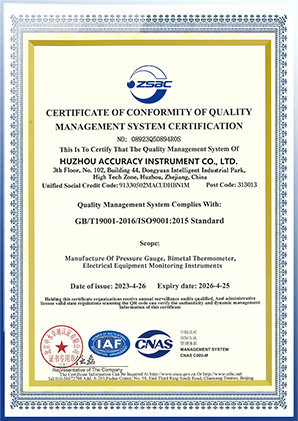
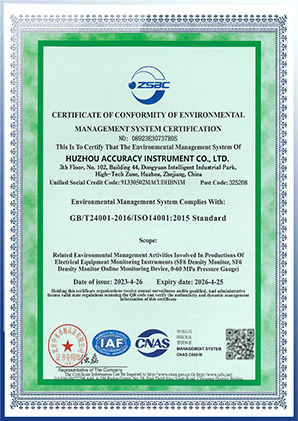
We maintain a business management framework committed to "Reasonable Pricing, Accurate Delivery, and Uncompromising Quality." Production and testing operations strictly adhere to ISO 9001:2008 standards to ensure product performance meets global engineering benchmarks.
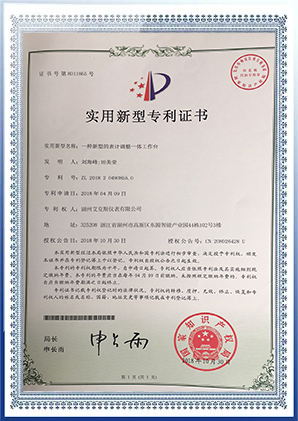
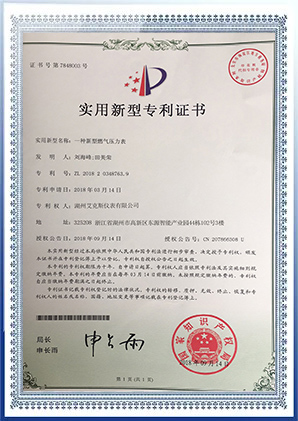
Certificate Display
7. Technical FAQ & Engineering Decision Blueprint
Q1: What is the key advantage of a combined pressure temperature gauge over two separate sensors?
A combined instrument reduces process connection points by 50%, cutting structural installation costs, reducing leak paths in pressurized piping, minimizing installation footprint, and simplifying inventory management for OEM equipment builders.
Q2: How does thermal expansion affect pressure measurement accuracy in a dual gauge?
High-grade OEM gauges physically isolate the temperature bimetallic stem or capillary bulb from the Bourdon tube chamber. Compensating balance springs ensure thermal expansion in the stem does not introduce mechanical drift or zero-point bias into the pressure movement.
Q3: When should liquid-filled (Glycerine/Silicone) gauges be specified?
Liquid filling is essential for applications with high mechanical vibration, rapid pressure pulsation (e.g., positive displacement pumps), or condensation-prone outdoor environments. Glycerine dampens pointer flutter, lubricates internal movements, and prevents internal frosting. Silicone oil is specified for extreme temperature ranges (-40°C to +200°C).
Q4: What certifications are mandatory for high-voltage SF6 switchgear gas monitors?
SF6 gas density monitors require CE certification, ISO quality verification, and helium mass spectrometer leak detection testing to guarantee a leak rate under 1×10⁻⁹ mbar·l/s. This prevents insulation breakdown and greenhouse gas leakage in electric power distribution.
Yes. We offer complete OEM customization including client branding, custom dual-scale units (PSI/Bar/kPa, °C/°F), color-coded operating zones, specialized logo prints, and custom scale geometries tailored to specific engineering parameters.
Featured OEM Pressure & Temperature Instrumentation (Catalog Part II)
 Accuracy Instrument