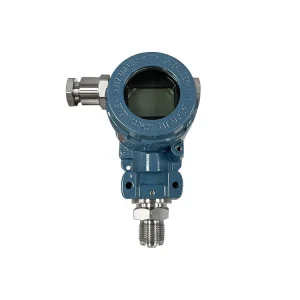
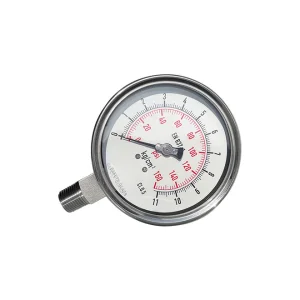
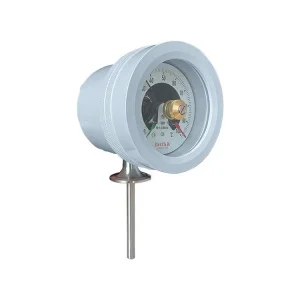
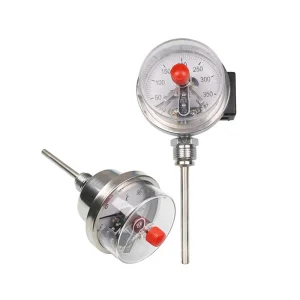
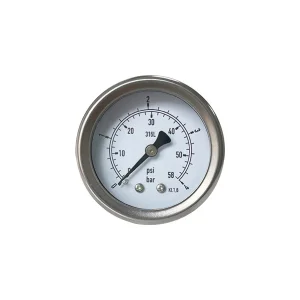
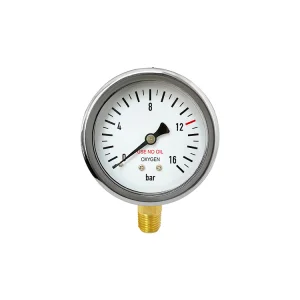
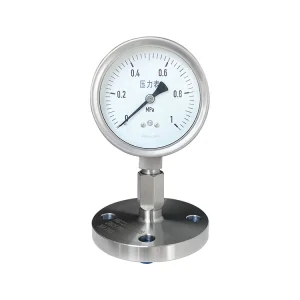
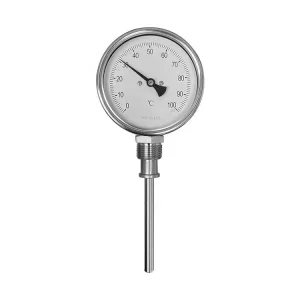
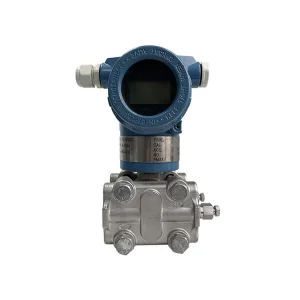
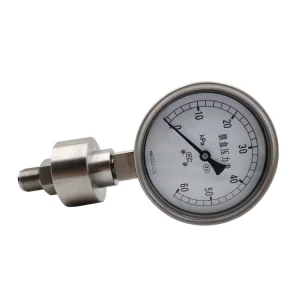
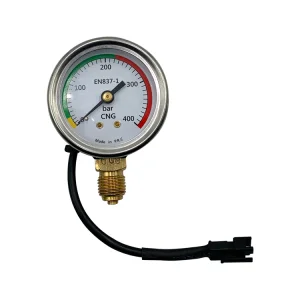
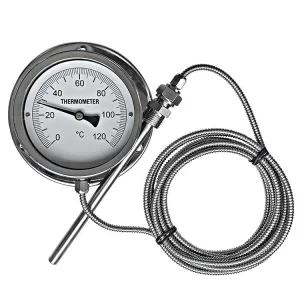
Explore our industrial-grade pressure transmitters, bi-metal thermometers, and high-durability pressure gauges manufactured under strict ISO guidelines.
A comprehensively detailed analysis on compressed natural gas pressure regulation dynamics, materials engineering, and modern OEM manufacturing paradigms.
In the rapidly evolving global energy sector, Compressed Natural Gas (CNG) has solidified its role as a critical transition fuel for clean transportation, industrial power generation, and distributed energy networks. Controlling methane ($CH_4$) at storage pressures up to 200–250 bar (2900–3600 PSI) demands unyielding precision, extreme thermal management, and fail-safe safety architectures.
As a leading China CNG Regulator Manufacturer & Supplier, our engineering philosophy revolves around solving the physical mechanics of gas expansion. When high-pressure CNG passes through a regulation orifice, it experiences a dramatic pressure drop accompanied by the Joule-Thomson thermodynamic cooling effect. For natural gas, this temperature drop averages approximately 0.5°C to 0.6°C for every bar of pressure reduction. Unregulated, this quick drop causes internal ice or hydrate formation, seal degradation, and dangerous output fluctuations.
Our multi-stage pressure regulators and integrated pressure monitoring instruments utilize optimized internal flow passages, dual-stage pressure reduction mechanisms, and specialized low-temperature fluoroelastomers (HNBR/FKM) to ensure uninterrupted flow, minimal pressure droop, and zero-leak reliability under ambient conditions ranging from -40°C to +125°C.
The global CNG ecosystem is undergoing a massive technological transition driven by global decarbonization mandates, corporate fleet ESG targets, and strict regional emissions laws (such as Euro VI-E and China VI standards). Key trends defining next-generation CNG regulation systems include:
Dual reduction chambers lower pressure progressively, mitigating freeze risk and eliminating destructive pressure spikes in downstream low-pressure lines.
Forged C37700 brass, anodized 6061-T6 aluminum, and passivated 316L stainless steel diaphragms ensure total resistance to aggressive gas contaminants.
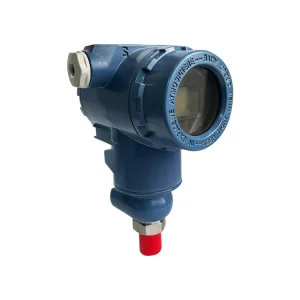
Equipped with resistive gas pressure gauges and digital transmitters compatible with CAN-bus vehicle networks and industrial SCADA platforms.
Global original equipment manufacturers (OEMs), station integrators, and gas utility procurement officers operate under zero-defect mandates. Selecting a reliable CNG regulator supplier requires thorough evaluation across critical parameters:
China's advanced manufacturing ecosystem has transformed high-precision industrial engineering. By integrating Industry 4.0 automation, intelligent robotics, and vertical supply chains, Chinese manufacturers deliver unmatched speed and quality:
Automated Multi-Axis CNC Machining: Modern machining centers ensure micro-inch surface finishes on valve seats and seal grooves, minimizing micro-leak paths.
Automated Helium Mass Spectrometer Testing: Modern assembly lines utilize helium leak detection accurate down to $1 \times 10^{-9} \, \text{mbar} \cdot \text{l/s}$, ensuring complete methane containment before shipment.
Vertical Supply Chain Synergy: Raw material sourcing, precision machining, vulcanization of custom elastomers, micro-electronics packaging, and final hydrostatic calibration are conducted in unified industrial clusters, reducing production lead times by up to 40% compared to Western suppliers.
20 YEARS OF EXPERIENCE AND RESEARCH IN PRECISION INSTRUMENTATION
Huzhou Accuracy Instrument Co., Ltd. specializes in the design, engineering, and manufacturing of premium industrial mechanical pressure gauges, bi-metal thermometers, SF6 manometers, gas pressure transmitters, and custom CNG gas regulation accessories. Our solutions are deployed worldwide across mechanical engineering, chemical processing, pharmaceutical production, HVAC, power generation, and natural gas vehicle (NGV) sectors.
Spanning over 3,000 square meters of high-tech production area, our facility operates automated assembly lines, laser welding cells, and dynamic laser calibration systems to produce over 2,000,000 precision units annually.
Providing high-precision pressure management adapted to diverse regional conditions and operational demands.
Custom bi-fuel and dedicated CNG regulators optimized for long-haul trucks and municipal buses, maintaining dynamic outlet pressure under sudden throttle load spikes.
High-flow pressure reduction skids designed to stepped-down compressed gas safely from storage cascades (250 bar) to dispensing pressures (200 bar) for rapid vehicle filling.
Depressurization units (PRUs) for off-grid factories, utilizing automated dual-redundant heating manifolds to prevent freezing during continuous heavy gas drawdowns.
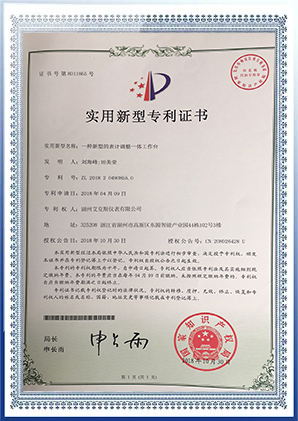
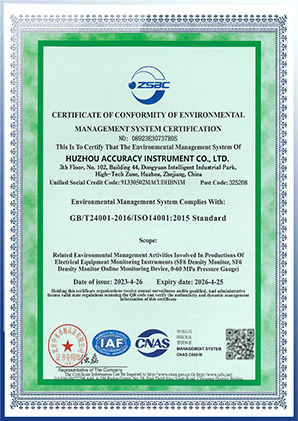
Operating under strict ISO9001:2008 management standards. Every unit undergoes 100% pressure cycle tests, zero-leak verification, and environmental simulation.
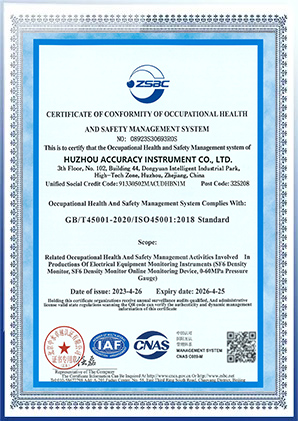
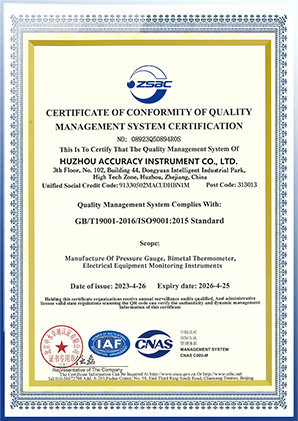
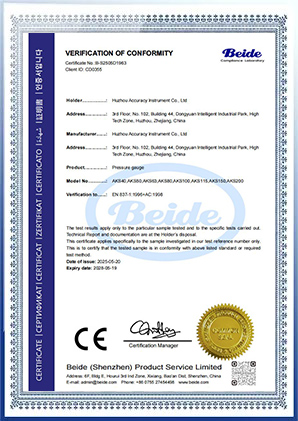
Expert engineering answers regarding selection, operation, maintenance, and technical parameters of CNG regulators and gauges.
Multi-stage regulators break down the pressure reduction into distinct steps (e.g., Stage 1: 200 bar to 10 bar; Stage 2: 10 bar to 2 bar). This limits the Joule-Thomson temperature drop per chamber. Additionally, integrated engine coolant channels pass hot fluid around the high-pressure orifice, supplying active thermal energy to neutralize freezing risks.
Standard NBR elastomers harden at extreme cold, leading to seal bypass. We utilize Hydrogenated Nitrile Butadiene Rubber (HNBR) or specialized low-temperature Fluoroelastomers (FKM) rated down to -40°C. These retain elasticity, resist gas explosive decompression (AED), and withstand trace chemical oils found in compressor lines.
Lock-up pressure is the stabilized static outlet pressure reached when downstream flow ceases completely. High-quality regulators maintain a low lock-up pressure (typically within 10-15% of dynamic set point), preventing over-pressurization of fragile downstream carburetors, injectors, or low-pressure sensors during engine idle or shutdown.
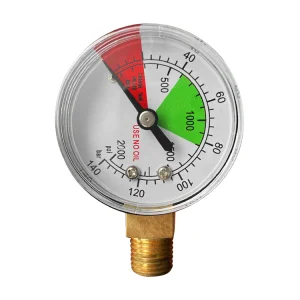
Yes. Our OEM CNG gas pressure gauges feature integrated 0–5V or 0–90Ω resistive sensors. These convert Bourdon tube deflection into an accurate electrical output, enabling precise fuel level gauge display on digital vehicle dashboards and ECU telemetry systems.
Automotive CNG regulators require ECE R110 (European Standard), ISO 15500, and ANSI NGV 3.1 certification. Industrial pipeline regulators require CE Pressure Equipment Directive (PED) and ATEX explosion-proof certification for electronic components. Our products comply with these global international standards.
We provide full OEM/ODM engineering customization, including custom pressure range calibration (0-400 bar), specialized thread porting (NPT, BSP, SAE), custom logo dial printing, private labeling, custom electrical output harnesses, and custom body materials for corrosive ambient environments.
Explore additional high-accuracy pressure transmitters, gas gauges, microfused sensors, and temperature switches for your industrial infrastructure.
 Accuracy Instrument