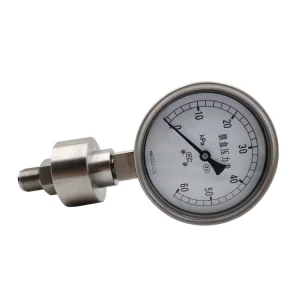
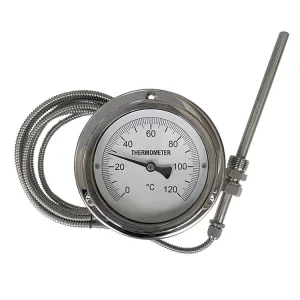
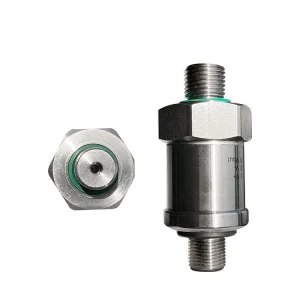
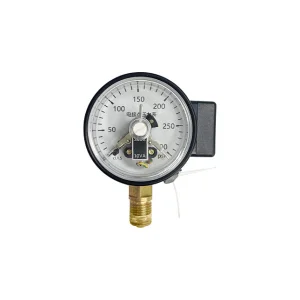
Precision-engineered pressure transmitters, bi-metal thermometers, and specialized density monitors certified for global heavy industrial and commercial applications.
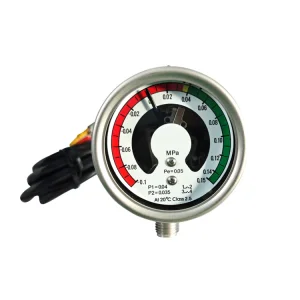
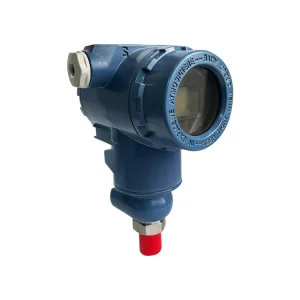
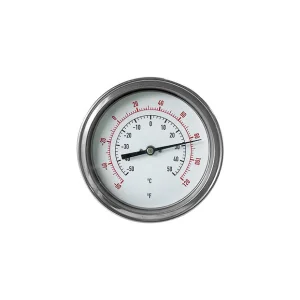
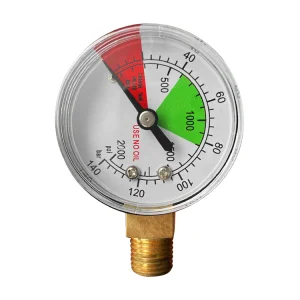
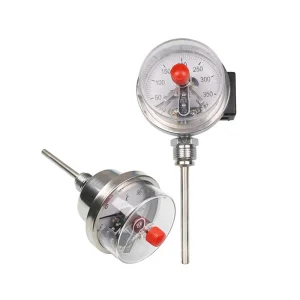
Understanding the Critical Role of Dual-Parameter Temperature and Pressure Sensing in Modern Thermal Fluid Engineering
Hydronic heating and cooling loops represent the thermodynamic circulatory system of modern infrastructure—spanning municipal district heating networks, high-efficiency commercial boiler plants, cryogenic industrial refrigeration, and large-scale HVAC systems. In these closed-loop fluid distribution architectures, simultaneous real-time monitoring of hydrostatic fluid pressure and thermodynamic fluid temperature is not merely an operational convenience; it is a fundamental safety and energy optimization prerequisite.
Historically, system designers were forced to specify separate mechanical pressure gauges and bi-metallic stem thermometers, requiring dual pipe tappings, increased potential leak points, expanded installation labor, and cluttered instrument manifolds. The emergence of specialized China Hydronic Temperature Pressure Gauges (commonly designated in North America as Tridicators or dual-function gauges) has revolutionized hydronic system commissioning. By integrating a bimetallic temperature coil concentric with or adjacent to a C-shaped Bourdon pressure tube within a single hermetically sealed housing, OEMs can provide dual-parameter diagnostic data through a single process connection.
As global energy regulations tighten (such as EU Building Energy Performance Directives and US ASHRAE 90.1 standards), industrial facility managers are tasked with reducing thermal losses and dynamic pump parasitic power. Fluctuations in system pressure directly affect fluid boiling points and thermal transfer rates, while temperature spikes can cause dangerous over-pressurization. Dual-scale hydronic gauges provide immediate visual validation of dynamic head pressure and system operating temperature, preventing cavitation in circulation pumps, thermal shock in heavy boilers, and catastrophic line ruptures.
Ensures that working fluids remain strictly within their liquid phase boundary by continuously measuring gauge pressure relative to fluid saturation temperature, preventing localized flashing and pump impeller degradation.
Instant visual indication of pressure drops alerts plant technicians to micro-leaks or expansion vessel diaphragm failures long before central SCADA alarms trigger thermal shutoffs.
Consolidating dual sensing elements into a unified 1/2" NPT or 1/4" NPT connection reduces piping tap requirements by 50%, minimizing potential leak paths in toxic or high-pressure loops.
Over Two Decades of Technological Innovation, Precision Calibration, and ISO-Certified Gauge Manufacturing
Huzhou Accuracy Instrument Co., Ltd. stands as an authoritative force in the development, manufacturing, and global distribution of high-precision mechanical pressure gauges, bi-metal thermometers, SF6 gas density monitors, and intelligent pressure sensors.
Established over two decades ago, our advanced manufacturing infrastructure spans 3,000 square meters, incorporating automated robotic soldering, laser-guided dial calibration, computer-controlled pressure cycle testers, and climate-simulated environmental test chambers.
Through rigid adherence to global manufacturing protocols, our hydronic temperature and pressure measurement devices guarantee ±1.0%, ±1.6%, or ±0.5% full-scale accuracy, ensuring long-term operational integrity across harsh chemical, heating, and power generation environments.
Focuses on advanced alloy metallurgy, smart digital sensor integration (4-20mA, Modbus), mechanical stress simulation, and compliance with ASME B40.100 and EN 837-1 standards.
Utilizes automated assembly systems, laser-welded diaphragm technology, zero-leak helico-coil fitting, and automated helium leak detection to ensure absolute zero-leak performance.
Provides 24/7 engineering consultation, customized OEM scale prints, custom capillary length matching, and rigorous 100% pressure cycle testing under ISO 9001 and ISO 17025 framework.
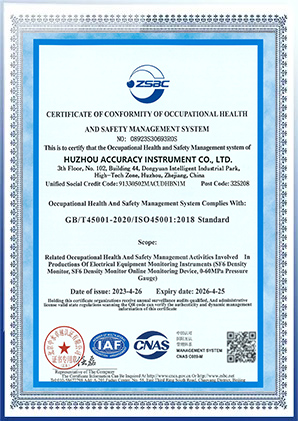
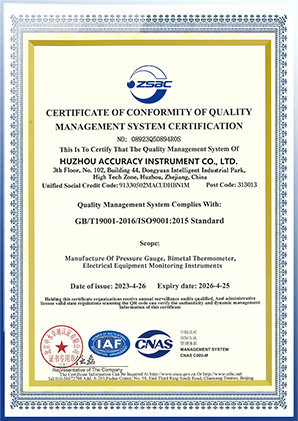
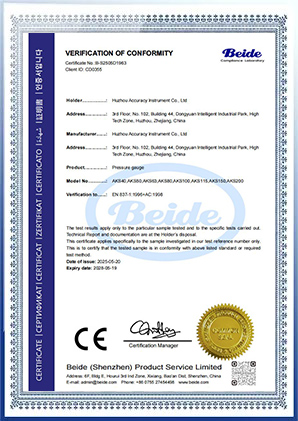
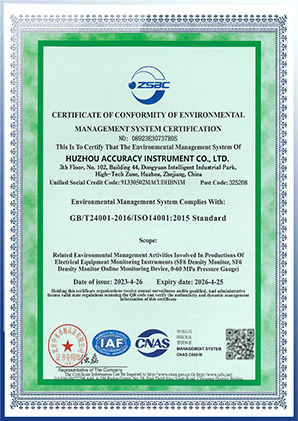
Adhering strictly to international directives including ISO9001:2008, CE Marking, and ISO 17025 laboratory standards to guarantee flawless operational safety.
Mechanical Engineering Principles of Concentric Mechanical Design, Materials Science, and Fluid Thermal Dynamics
A hydronic temperature pressure gauge operates in aggressive dynamic environments characterized by high hydraulic spikes, continuous thermal cycling, and systemic mechanical vibration. To achieve high fidelity without component drift or total fatigue failure, China OEM factories like Huzhou Accuracy utilize sophisticated dual-element construction.
Depending on the working fluid (treated boiler feed water, glycol mixtures, industrial brine, or demineralized water), material selection dictates longevity:
| Component | Standard Commercial Grade | Industrial Heavy-Duty Grade | Severe OEM Application (Chemical/Offshore) |
|---|---|---|---|
| Enclosure/Case | Black Steel (Powder Coated) | AISI 304 Stainless Steel | AISI 316 Stainless Steel / Bayonet Ring |
| Bourdon Tube | Phosphor Bronze (C5191) | 316L Stainless Steel | Monel K500 / Hastelloy C-276 |
| Movement | Cu-Zn Alloy (Precision Brass) | 304 Stainless Steel Gear Set | High-Damped Synthetic Jewel Bearings |
| Process Connection | 1/4" or 1/2" NPT/BSPT Brass | 316SS 1/2" NPT Rear/Bottom Mount | Laser Welded Diaphragm Seal / 316L SS |
| Window Dial | Instrument Glass / Acrylic | Laminated Safety Glass | High-Impact Polycarbonate / UV Resistant |
Hydronic loops frequently suffer from water hammer, rapid valve closures, and high-frequency pump pulsation. Un-damped gauges experience rapid pointer flutter, gear wear, and premature Bourdon fatigue. Huzhou Accuracy provides two advanced solution routes: Glycerin/Silicone Liquid Filling for complete internal submersion, or StabiliZR™ Mechanical Damped Movements which utilize synthetic silicone damping pots to isolate the gear train without requiring liquid fill, eliminating liquid leakage risks in sensitive cleanroom or boiler top locations.
Engineered Deployments Across Diverse Thermal Management Facilities Globally
In low and medium-pressure hot water boilers (ASME Section IV), maintaining precise operating boundaries is vital to prevent catastrophic flash steam explosions. China hydronic dual gauges are mounted directly onto supply lines and boiler headers, providing instantaneous visual feedback of water temp (0–250°F / 0–120°C) and hydrostatic pressure (0–60 psi / 0–100 psi), ensuring full compliance with municipal safety codes.
District heating systems transport high-temperature pressurized water across kilometers of underground piping networks. Our heavy-duty 100mm and 150mm stainless steel hydronic pressure gauges with capillary remote readers allow centralized monitoring inside sub-stations, maintaining thermal efficiency while monitoring head loss across heat exchangers.
Mission-critical hyperscale data centers require zero-downtime liquid cooling loops. Hydronic gauges equipped with precision bimetallic sensors monitor secondary cooling water loops. Highly visible dual-scale dials permit technicians during routine physical audits to rapidly identify pump cavitation, strainer blockages, or refrigerant-to-water heat exchanger fouling.
Vertical hydronic distribution in multi-story skyscrapers experiences high static head pressures. Dedicated dual temperature/pressure gauges installed at variable secondary pumping stations and pressure reducing valve (PRV) stations provide field verification for hydronic balancing contractors balancing flow rates across zones.
Ensuring Rigorous International Standards Compliance from Factory Floor to Installation Site
As a premier OEM manufacturer and supplier in China, Huzhou Accuracy Instrument Co., Ltd. builds every temperature pressure gauge in strict alignment with rigorous international engineering standardizations. Global buyers must evaluate technical compliance across three primary vectors:
Defines dial sizing, accuracy grades (Grade A to Grade 4A), safety blow-out disc requirements, connection thread geometry (NPT, G, BSPT), and burst pressure safety factors (minimum 125% to 400% of maximum scale value).
Compliance with the European Pressure Equipment Directive guarantees that pressure containment parts undergo finite element stress analysis, destructive burst testing, and non-destructive material traceability (EN 10204 3.1 certificates).
Our factory calibration laboratory uses primary deadweight testers and environmental simulation test chambers to ensure zero hysteresis errors, minimal thermal drift, and repeatable dial accuracy across extreme temperature ranges.
Every single batch of hydronic gauges leaving the Huzhou Accuracy facility undergoes a 5-stage quality check process:
Bridging Analog Field Visualization with Digital IoT & Predictive Maintenance Infrastructure
As Industry 4.0 and Smart Building Automation Systems (BAS) transform fluid handling, mechanical pressure gauges are evolving into hybrid digital-analog sensing hubs. Huzhou Accuracy Instrument Co., Ltd. is pioneering smart technological integration to meet emerging global demands:
Combining the absolute fail-safe readability of a mechanical needle pointer during total power outages with integrated piezoresistive thin-film silicon pressure transmitters and PT100/PT1000 RTD outputs. A single tapping point supplies local mechanical verification while transmitting telemetry to central SCADA systems.
For remote municipal heating lines or retrofitted commercial sites, battery-operated low-power wireless modules embedded directly inside the gauge casing periodically broadcast temperature and pressure telemetry over LoRaWAN or NB-IoT networks, eliminating expensive control wiring installation.
Next-generation electronic hydronic gauges incorporate micro-processors that calculate dynamic differential pressure drops across strainers, detect micro-vibration signatures indicating pump bearing wear, and warn operators of expansion tank failure before catastrophic pressure spikes occur.
In response to global drinking water directives (RoHS, NSF/ANSI 61, REACH), our advanced foundry lines utilize specialized lead-free brass formulations (C87850 / Eco-Brass) and electro-polished 316L SS to eliminate heavy metal leaching into potable hydronic and hot water supply lines.
Technical Guidelines for Specifying and Commissioning Hydronic Dual Gauges
Selecting the optimal China Hydronic Temperature Pressure Gauge requires rigorous evaluation of process fluid properties, dynamic operating conditions, and spatial orientation. Technical sales engineers recommend adhering to the following parameter checklist:
For maximum measurement resolution and internal spring longevity, select a pressure scale where the nominal operating system pressure falls between 50% and 75% of the total scale range (e.g., if a system operates at 30 PSI, select a 0–60 PSI gauge scale). Similarly, the expected operating temperature should center around the midpoint of the thermal dial scale.
The temperature-sensing stem must project into the center third of the pipe diameter to achieve rapid response times without causing excessive fluid vortex shedding or structural vibration. For pipes under 2 inches in diameter, install the thermowell into an elbow fitting pointing directly upstream.
When measuring hot water loops exceeding 100°C (212°F) or steam hydronic lines, install a pig-tail or U-type siphon filled with water between the pipe and the gauge connection. The siphon traps condensate, preventing hot steam from directly contacting the internal Bourdon tube solder joints. For high-pulsation pump discharge lines, install a porous metal or adjustable needle valve pressure snubber.
Expert Answers to Critical Engineering, Specification, and Sourcing Inquiries
A hydronic temperature pressure gauge (commonly known as a tridicator) is a dual-function mechanical instrument designed to measure both hydrostatic system pressure and thermal fluid temperature simultaneously through a single process connection. Inside the gauge, an independent metallic Bourdon tube measures fluid pressure while a concentric bimetallic helical coil measures fluid temperature, driving two distinct color-coded pointers across a dual-scale dial face.
Huzhou Accuracy Instrument Co., Ltd. brings over 20 years of dedicated manufacturing research, operating a 3,000 m² modern factory producing over 2 million units annually. By combining direct manufacturer pricing, ISO 9001 and CE certifications, advanced automated laser calibration, zero-leak quality controls, and full OEM custom design capabilities, Huzhou Accuracy delivers superior price-performance ratios for global OEMs and industrial distributors.
A thermowell acts as a closed-end metallic sleeve (copper alloy or 316SS) permanently threaded into the hydronic pipeline. The temperature stem of the dual gauge inserts tightly inside the thermowell. This design isolates the internal process fluid pressure from the gauge casing, allowing plant technicians to unscrew and service or re-calibrate the mechanical gauge without draining or depressurizing the entire heating or cooling loop.
Standard configurations include 1/4" NPT, 1/2" NPT, G 1/4", G 1/2", and BSPT threads. Mounting orientations include direct bottom radial mount, center-back rear mount, lower-back mount with front flange for panel mounting, and custom extended stem configurations designed for heavy thermal insulation jackets.
Liquid filling dampens high-frequency mechanical vibrations from surrounding pumps and dampens severe hydraulic pressure surges. Glycerin fill is ideal for standard indoor ambient operating temperatures (-20°C to +60°C), while liquid Silicone fill is specified for extreme outdoor temperature installations (-40°C to +100°C) or high thermal fluid applications, preventing internal glass condensation and gear movement wear.
Our industrial pressure gauges conform to ASME B40.100 Grade B (±3-2-3%), Grade A (±2-1-2%), and EN 837-1 Class 1.6 / Class 1.0 specifications. Temperature accuracy is calibrated to Class 1.5/2.0 of full scale across standard ranges such as 30–250°F / 0–120°C.
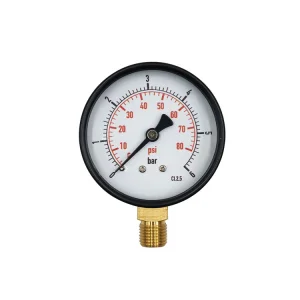
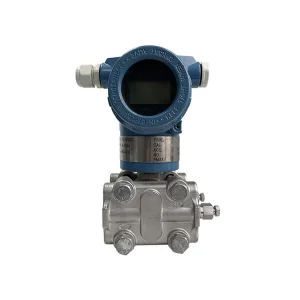
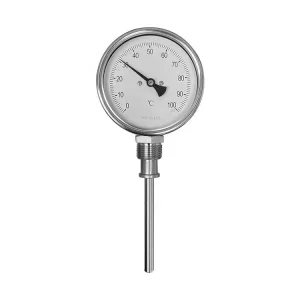
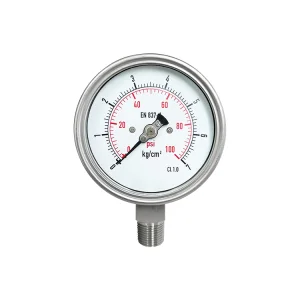
Explore our full line of industrial black steel, stainless steel, bimetal, and electric contact instruments.
 Accuracy Instrument