Explore our CE-certified precision instrumentation engineered for rigorous industrial processing and hazardous environments.
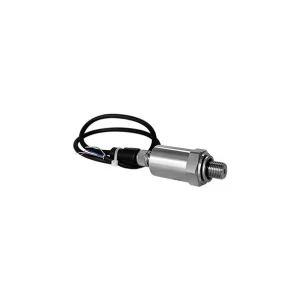
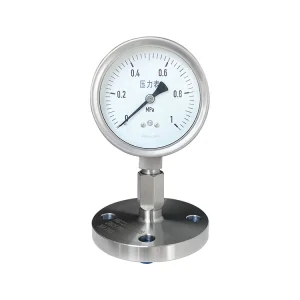
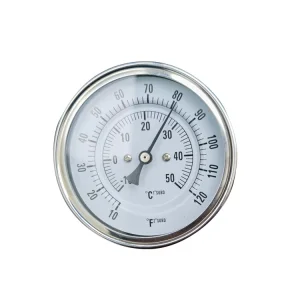
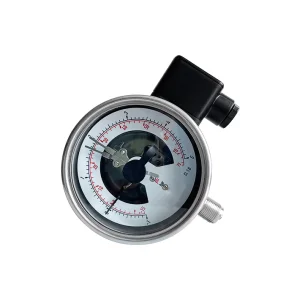
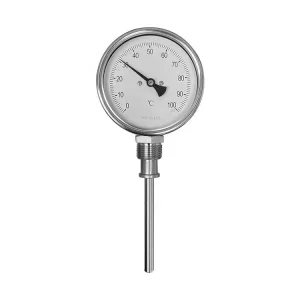
Understanding the thermodynamic principles, vapor-liquid phase equilibrium, and mechanical transduction in vapor-actuated dial thermometers.
Industrial thermal monitoring demands unwavering accuracy, rapid response times, and rugged mechanical independence. Among remote-reading thermal instruments, the Vapor Pressure Temperature Gauge (also known as a vapor-actuated thermometer or Class II thermal system) remains a fundamental choice for petrochemical plants, marine engines, HVAC boilers, and industrial autoclaves. But how exactly does vapor pressure transduce thermal energy into precise dial readings?
The operational core of a vapor pressure temperature gauge relies on the thermodynamic relationship defined by the Antoine Equation and the Clapeyron-Clausius relation. The instrument comprises a hermetically sealed system filled partially with a volatile organic liquid (such as methyl chloride, butane, or custom refrigerant mixtures) and partially with its saturated vapor.
When the sensing bulb is exposed to a temperature change:
| Parameter | Vapor Pressure Gauge (Class II) | Bimetallic Thermometer | Liquid Filled (Class I) | RTD Sensor (Pt100) |
|---|---|---|---|---|
| Operating Principle | Vapor-Liquid Equilibrium Pressure | Differential Thermal Expansion of Metals | Volumetric Thermal Expansion | Temperature-dependent Electrical Resistance |
| Response Speed | Ultra-Fast (3–6 sec response) | Moderate (10–20 sec) | Moderate (8–15 sec) | Fast (1–3 sec) |
| Capillary Remote Reading | Yes (up to 30 meters without ambient error) | No (Direct Stem Mount Only) | Yes (Requires Ambient Compensation) | Yes (via Wiring Signal) |
| Scale Linearity | Non-linear (Progressive, wider at top) | Linear | Linear | Linear |
| Power Requirement | None (Purely Mechanical) | None (Purely Mechanical) | None (Purely Mechanical) | Requires 24V DC / Loop Power |
Why do process engineers specifically select vapor pressure temperature gauges over liquid-in-glass or direct bimetallic units? The answer lies in their distinct physical advantages:
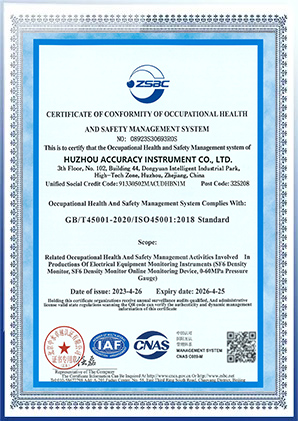
Ensuring operational safety, environmental health, and European market compliance through stringent engineering audits.
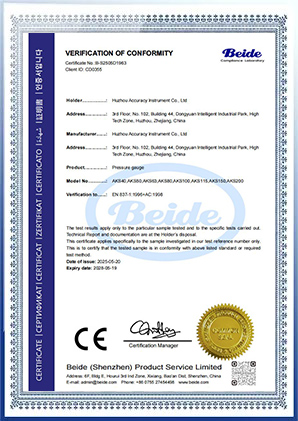
Compliance with the Pressure Equipment Directive (PED) guarantees that our pressure vessels, capillary tubes, and sensing elements withstand extreme overpressure limits without rupture or mechanical hazard.
Designed and manufactured according to European unified standards for pressure gauges, specifying dial sizes, accuracy classes (Class 1.0, Class 1.6), pointer travel, and burst pressure safety factors.
For explosive petrochemical applications, mechanical vapor pressure gauges eliminate spark risks. Optional non-sparking electric contact switches meet ATEX explosion-proof directives for Zone 1/21 environments.
Combining 20 years of mechanical expertise with automated smart manufacturing at Huzhou Accuracy Instrument Co., Ltd.
System leakages are the primary failure point of vapor pressure gauges. Our facility utilizes automated robotic TIG and laser seam welding for bulb-to-capillary joints. 100% helium mass spectrometer leak testing ensures a zero-leak seal, extending operational life beyond 10 years.
Every temperature and pressure gauge undergoes computer-assisted fluid calibration baths and multi-point pressure cycling. Calibrated against ISO 17025 accredited master instruments, we ensure full traceability from raw materials to final packaging.
Tailored thermal and pressure measurement systems deployed across critical infrastructure worldwide.
Heavy-duty stainless steel 316 gauge cases with armored capillary protection resist aggressive hydrogen sulfide (H2S) gases and marine corrosion.
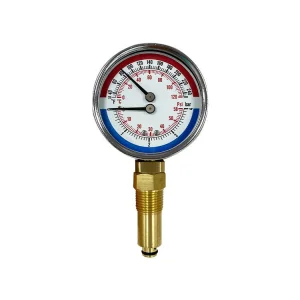
Combined pressure and temperature compound gauges allow HVAC technicians to monitor dual parameters simultaneously, reducing piping penetration points.
Integrated with high-purity alumina ceramic transmitters or hygienic flanged diaphragms to eliminate dead legs and prevent process fluid contamination.
Bridging traditional mechanical thermodynamics with digital Industry 4.0 telemetry.
Our upcoming generation of vapor pressure indicators integrates non-contact optical encoders or thin-film pressure sensor bridges directly into the Bourdon movement. This preserves local analog indication during power outages while transmitting real-time 4-20mA, Modbus RS485, or WirelessHART signals to DCS systems.
In accordance with global F-Gas regulations and climate initiatives, our R&D team is advancing zero GWP (Global Warming Potential) and zero ODP organic vapor fill compounds, maintaining flawless phase-change thermodynamics without environmental footprint.
Key technical criteria for engineering procurement managers and B2B buyers.
When selecting vapor pressure temperature gauges for international OEM projects or municipal plant retrofits, evaluating the following engineering parameters prevents costly field failures:
Select a temperature range where normal operating points fall within the middle 30%–70% of the dial. High-vapor pressure organic liquids are optimized for ranges from -40°C to +350°C.
Class II vapor gauges are classified into Class IIA (bulb temperature above ambient), Class IIB (bulb temperature below ambient), and Class IIC (bulb temperature crossing ambient). Specifying operating conditions ensures accurate liquid-vapor interface positioning.
Specify 304 SS, 316L SS, or spiral interlocked stainless armor over the capillary. Choose standardized process threads including 1/4" NPT, 1/2" NPT, G1/2", or custom flanged connections.
20 Years of Innovation, Quality Excellence, and International Precision Engineering

Huzhou Accuracy Instrument Co., Ltd. is professionally engaged in the development, sales, and service of industrial mechanical pressure gauges, bi-metal thermometers, SF6 manometers, and pressure sensors. Products are widely used across Mechanical Engineering, Chemical Processing, Food & Beverage, Pharmaceuticals, and high-technology electrical appliances.
Established over two decades ago, our pressure gauge manufacturing facility spans 3,000 square meters, equipped with advanced automated production lines and rigorous quality control systems. As an industry leader, we integrate innovation with precision engineering to deliver reliable measurement solutions across 30+ countries worldwide.
20 Specialists: Focuses on material innovation, smart sensor integration, and compliance with international standards (e.g., ISO, API, EN, DIN).
120 Technicians: Utilizes automated assembly lines, laser welding, and high-precision micro-calibration technologies to ensure extreme product durability.
15 Service Professionals: Provides 24/7 technical support, rapid OEM/ODM design cycles, and localized compliance consultation.
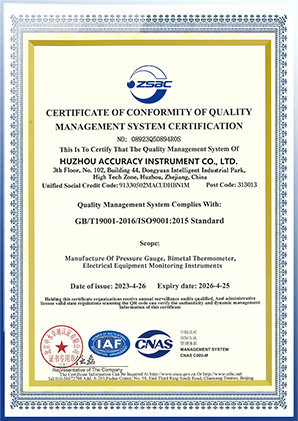
We strictly adhere to the quality philosophy of "Reasonable Price, Accurate Delivery, Zero Defects." Our test laboratory executes 100% pressure cycle testing and environmental stress simulations adhering to ISO 9001 and ISO 17025 benchmarks.
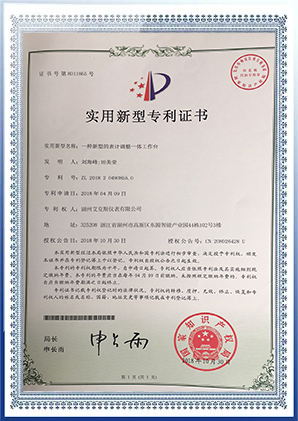
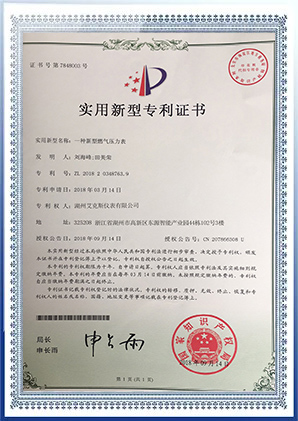
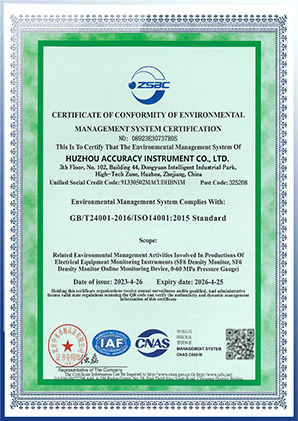
Expert engineering responses to common queries regarding vapor pressure temperature gauges and pressure instruments.
The capillary tube contains the pressurized fluid system. Minor bending without kinking will not alter calibration accuracy because internal volume changes are negligible compared to vapor expansion. However, sharp kinking or severing causes loss of volatile liquid, leading to total mechanical failure requiring factory recalibration or replacement.
Scale divisions expand at higher temperatures because vapor pressure follows an exponential vapor-pressure curve (Clausius-Clapeyron equation). As temperature rises, vapor pressure increases at an accelerating rate, providing enhanced visual resolution at the upper end of the thermal range.
CE Certification ensures the product complies with strict EU health, safety, and environmental protection standards (such as Pressure Equipment Directive 2014/68/EU). It guarantees third-party verified burst strength, material quality, and electromagnetic safety for contact gauges across European and global markets.
Yes! One of the key advantages of vapor pressure temperature gauges is remote reading capability. Capillary armor allows the sensing bulb to be inserted into high-temperature or toxic process lines while the readout dial is safely mounted up to 30 meters (100 feet) away.
We provide full OEM/ODM customization including custom dial faces, logos, dual temperature/pressure scales, stem lengths, capillary armor material (SS304/SS316), specialized thread connections (NPT, BSP, Metric), electrical contact switches, and liquid filling (glycerin or silicone oil) for anti-vibration performance.
Browse our expanded portfolio of ceramic, thin-film, and bimetallic measuring instruments factory-direct from China.
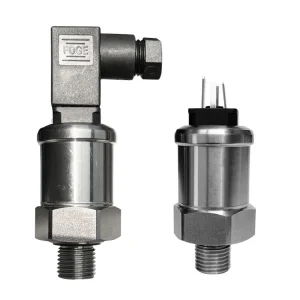
 Accuracy Instrument