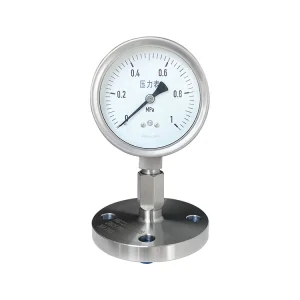
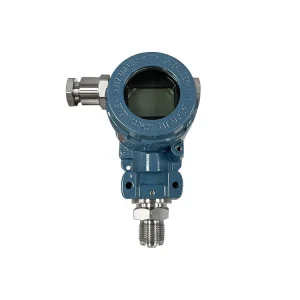
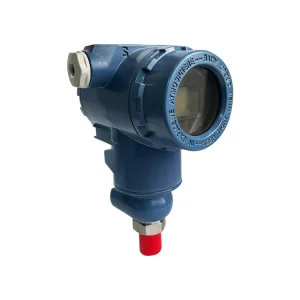
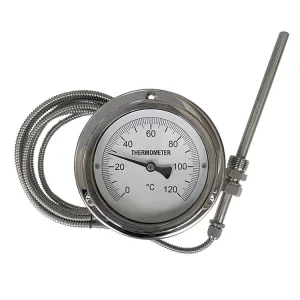
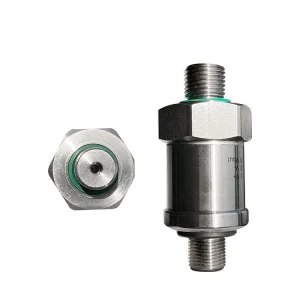
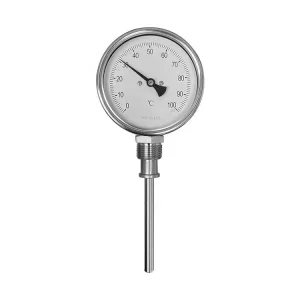
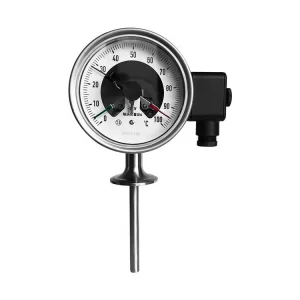
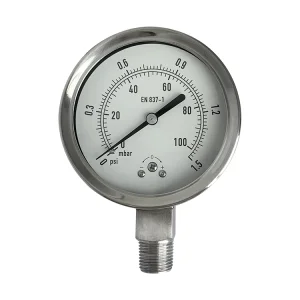
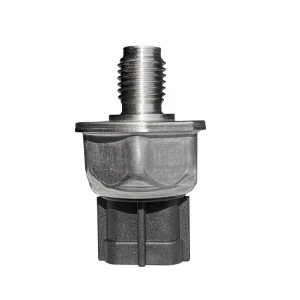
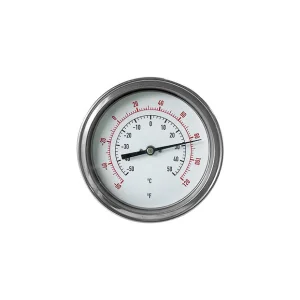
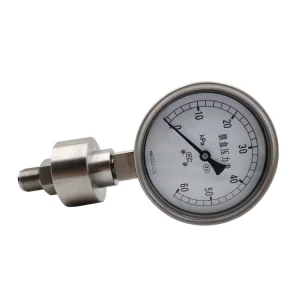
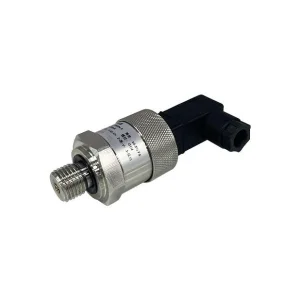
Precision-engineered CE Certified industrial pressure gauges, microfused transmitters, and bimetal instruments built for zero-leak performance.
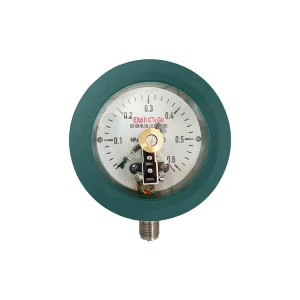
Sulfur Hexafluoride ($SF_6$) is widely recognized as the premier dielectric insulation gas in high-voltage electrical switchgear, gas-insulated lines (GIL), and circuit breakers due to its extraordinary arc-quenching capability and high thermal stability. However, evaluating the functional state of $SF_6$ inside sealed switchgear cannot rely solely on simple pressure measurement. Because gas pressure varies dynamically with ambient temperature according to gas law principles, a direct pressure gauge reading provides a misleading picture of total gas mass.
True operational safety demands continuous monitoring of gas density rather than pure pressure. In a closed container with constant volume (an isochoric system), gas density ($\rho$) is directly proportional to the ratio of absolute pressure ($P$) to absolute temperature ($T$). To achieve standardized evaluation, modern CE-certified $SF_6$ Gas Density Monitors utilize internal bimetallic temperature compensation mechanisms or integrated silicon microfused pressure-temperature digital microprocessors. These mechanisms automatically normalize measured dynamic pressures to a reference temperature of +20°C ($P_{20}$).
When an internal micro-leak occurs, total gas mass decreases, triggering immediate alarm or lockout thresholds on $P_{20}$ readings regardless of whether ambient temperatures shift between $-40^\circ C$ and $+60^\circ C$. Precision monitoring guarantees grid operators maintain critical insulation safety margins well above dielectric breakdown points.
Navigating global grid transformation, stringent fluorinated gas emissions mandates, and the shift toward digital substation asset intelligence.
With $SF_6$ identified as a potent greenhouse gas under the Kyoto Protocol and subject to tight European EU F-Gas Regulation (EU 517/2014 & 2024 revisions), electrical utilities are required to maintain strict mass balance accounting. CE-certified density monitors serve as primary compliance compliance sensors, providing audited continuous leakage records ($dL/dt$) to prevent fugitive atmospheric emissions.
Global investments in Ultra-High Voltage (UHV) transmission networks across North America, Europe, and Asia-Pacific require maximum equipment up-time. Unplanned switchgear outages cost utilities millions per hour. Implementing reliable $SF_6$ monitors ensures predictive asset health analytics, moving utilities from reactive fix-it maintenance to proactive condition-based monitoring.
Deploying high-precision, temperature-compensated density instruments extends the operational life of switchgear assemblies beyond 30 years. Eliminating false low-pressure alarms caused by cold climate ambient drops ensures continuity of service while minimizing field dispatch costs for maintenance personnel.
Engineered transition from traditional mechanical bimetallic gauges to digital hybrid sensors and eco-friendly alternative gas telemetry.
Combining independent mechanical bimetallic contact switches with integrated digital piezoresistive transducers. This guarantees hardware failsafe redundancy: even during total power grid blackouts, the mechanical safety contacts operate flawlessly to trip switchgear lockouts.
Integration of RS485 Modbus RTU, IEC 61850 protocol suites, and wireless telemetry (LoRaWAN / NB-IoT). Digital sensors continuously stream normalized density ($P_{20}$), raw pressure, ambient temperature, and humidity directly into central smart grid management control centers.
As utilities transition from pure $SF_6$ to alternative green gas mixtures (such as Fluoronitrile-based $C_4$-FN mixtures, Novec 4710, $C_5$-FK, or Technical Clean Air), our sensors adapt instantly via dynamic gas-curve software compensation matrices built into the microprocessor firmware.
Huzhou Accuracy Instrument Co., Ltd. is professionally engaged in the development, sales, and service of industrial mechanical pressure gauges, bi-metal thermometers, SF6 manometers, and advanced pressure sensors. Products are extensively integrated into critical global infrastructure including Mechanical Engineering, Chemical Processing, Marine, Pharmaceutical, and high-technology Electric Grid Power Appliances.
Established over two decades ago, our high-precision pressure instrument manufacturing facility spans over 3,000 square meters. It is fully equipped with automated assembly lines, laser welding technology, and continuous automated calibration rigs adhering to zero-defect quality management principles.
Focuses on advanced alloy material innovation, smart microfused sensor integration, hermetic sealing tech, and total compliance with international power industry standards (ISO, API, IEC).
Utilizes fully automated temperature-compensated calibration lines to deliver over 2 million precision gauge units annually with zero-leak guarantee.
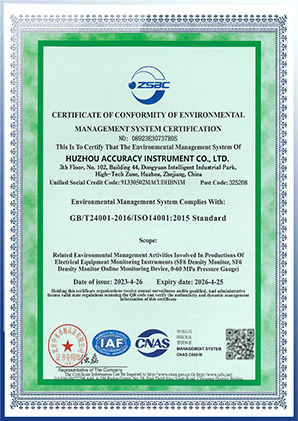
Operating under ISO 9001 and ISO 17025 laboratory guidelines. 100% pressure cycle testing, environmental thermal shock testing, and helium leak detection across 30+ export countries.
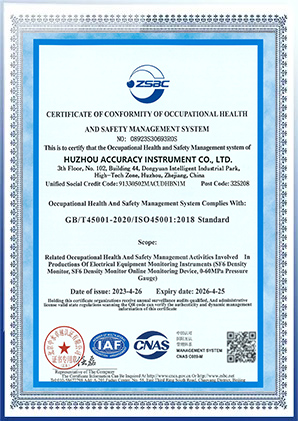
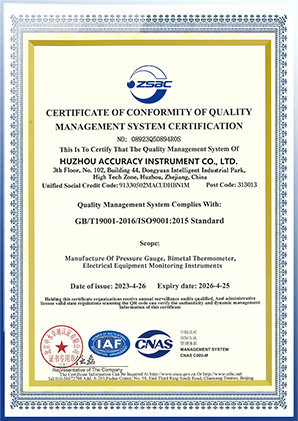
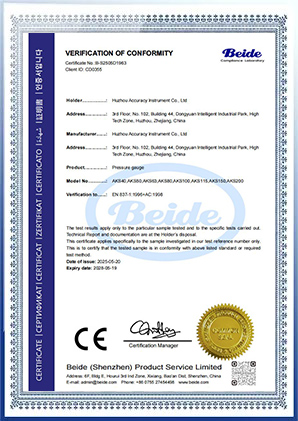
We strictly adhere to "Reasonable Price, Accurate Delivery, Uncompromised Quality" under ISO 9001:2008 and CE Certification benchmarks.
Purpose-built engineering solutions designed to thrive under severe environmental, electrical, and mechanical stress.
Installed directly on high-voltage GIS switchgear bays (ranging from 66kV to 1100kV). Monitors provide multi-stage alarm and lockout contacts to prevent breaker operation if gas density drops below dielectric safety limits.
For long-distance underground high-power transmission conduits, our remote capillary and digital sensors provide continuous sectionalized leakage localized detection along vast kilometers of sealed pipelines.
Engineered with severe anti-vibration shock mounts and silicone oil-filled casings to withstand high mechanical recoil forces during sudden fault-clearing switch operations.
Built with 316 Stainless Steel hermetic enclosures, IP67 ingress protection, and anti-UV window lenses, operating flawlessly from arctic conditions ($-50^\circ C$) to tropical desert heat ($+65^\circ C$).
Expert engineering insights covering density compensation, compliance standards, calibration, and smart grid integration.
According to ideal and real gas laws, gas pressure fluctuates significantly with changing temperature inside a sealed constant-volume tank. A drop in temperature causes a pressure drop even if no gas has leaked out. Measuring gas density (normalized to pressure at +20°C) eliminates thermal variation noise, ensuring alerts are triggered only when physical gas leakage occurs.
The interior mechanism links the measuring Bourdon tube element to a precisely calibrated bimetallic strip compensator. As ambient temperature changes, the bimetal deflects in exact equal and opposite magnitude to the pressure change induced by temperature alone. The movement of the indicator needle thus reflects solely the gas density change ($P_{20}$).
CE Certification requires strict evaluation under multiple European Directives: the Low Voltage Directive (LVD 2014/35/EU), Electromagnetic Compatibility Directive (EMC 2014/30/EU), and Pressure Equipment Directive (PED 2014/68/EU). Testing mandates surge immunity, electrostatic discharge resistance, dielectric insulation strength, thermal shock endurance, and helium leak tightness test rates below $1 \times 10^{-9} \text{ mbar}\cdot\text{l/s}$.
Yes. Our advanced hybrid and digital density monitors feature dual RS485 interfaces utilizing Modbus RTU or IEC 61850 protocols. They output multi-parameter digital telemetry including real-time density ($P_{20}$), raw pressure, temperature, trend analysis, and early-warning leakage velocity predictions ($dL/dt$) directly into substation asset management software.
Under standard operational guidelines, mechanical density monitors should undergo on-site verification or bench calibration every 3 to 5 years using ISO 17025 accredited reference equipment. Digital sensors with self-diagnostics continuously auto-verify sensor drift, extending physical calibration intervals up to 8–10 years.
Explore our full catalog of high-precision industrial instruments, bimetal gauges, microfused sensors, and specialized switchgear monitors.
 Accuracy Instrument