Engineered for low-pressure, high-voltage switchgear, and critical OEM gas-handling compliance.
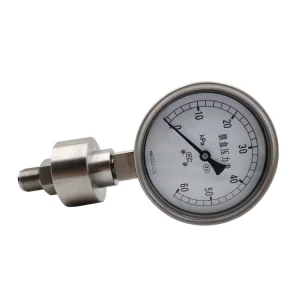
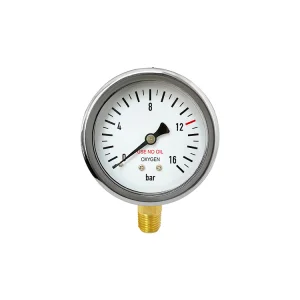
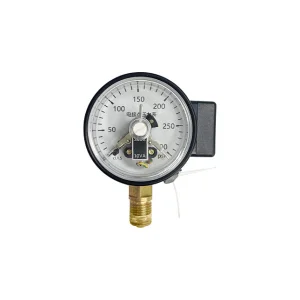
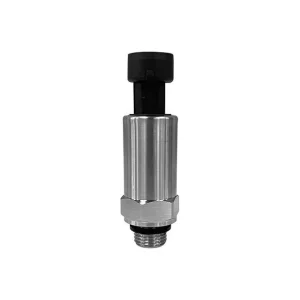
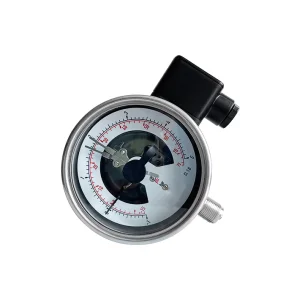
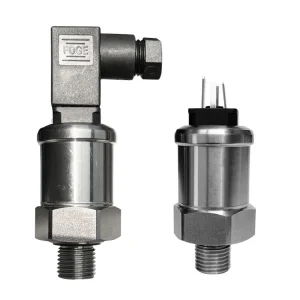
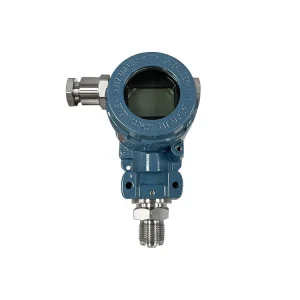
An authoritative analysis of environmental mandates, gas-insulated switchgear (GIS) integrity, and precision gas density instrumentation.
Sulfur Hexafluoride (SF6) remains an indispensable dielectric medium in high-voltage (HV) and extra-high-voltage (EHV) electrical infrastructure worldwide due to its exceptional arc-quenching capabilities and high dielectric strength. However, with a Global Warming Potential (GWP) 24,300 times that of carbon dioxide ($CO_2$) and an atmospheric lifetime exceeding 3,200 years, SF6 is under intense global regulatory scrutiny. Power utilities, original equipment manufacturers (OEMs), and industrial plant operators must navigate a rapidly tightening matrix of environmental mandates, international standards (IEC 62271), and localized emission containment rules.
China, as the world's largest producer and consumer of high-voltage transmission equipment, has established rigorous national frameworks to monitor, contain, and systematically reduce SF6 emissions. For global procurement officers, grid operators, and engineering firms sourcing pressure and gas density monitoring devices from Chinese manufacturers, understanding these regulatory structures is critical to ensuring long-term operational uptime, zero-leak compliance, and seamless grid interoperability.
Key Takeaway for B2B Buyers: Compliance with China SF6 gas regulations requires more than standardized hardware. It demands precision temperature-compensated gas density monitors, laser-welded stainless steel hermetic seals, and verified annual leakage rates below 0.5% (IEC 62271-102 benchmark), backed by ISO 17025 laboratory testing.
Regulatory frameworks governing SF6 gas lifecycle management have transitioned from voluntary reporting guidelines to strict legal enforcement with substantial financial penalties for non-compliance. Below is a detailed technical comparative analysis of key global regulations impacting power distribution hardware and gas monitoring systems:
| Regulatory Domain | Governing Framework | Primary Technical Mandate | Monitoring & Leak Rate Thresholds |
|---|---|---|---|
| China (National Standards) | GB/T 28537, GB 3906, MEE Dual-Carbon Directives | Mandatory lifetime gas tracking, standardized eco-recovery, and closed-loop recycling. | Max annual leakage rate < 0.5% for GIS; mandatory continuous density monitoring on HV equipment. |
| European Union | EU F-Gas Regulation (EU) 2024/573 | Phase-out timelines for new SF6 switchgear up to 24 kV by 2026, and up to 145 kV by 2030. | Strict mandatory leakage logs, automated leak detection systems, and certified personnel servicing. |
| United States | EPA Subpart DD & CARB Regulations | Systematic decrease of maximum allowable annual SF6 emission rates across power utility fleets. | Fleet-wide emission limits reduced down to 1.0%; continuous pressure/density verification. |
| International Electrotechnical | IEC 62271-1, IEC 62271-203 | Standardized pressure vessel design, gas tightness testing, and thermal compensation metrics. | Class 0.5 and Class 1.0 accuracy standards for density instruments under ambient variations (-40°C to +60°C). |
Under China's "Dual Carbon" initiative (Peak Carbon by 2030 and Carbon Neutrality by 2060), the Ministry of Ecology and Environment (MEE) together with the State Grid Corporation of China (SGCC) have implemented comprehensive quality assurance requirements. Manufacturers of SF6 gas density monitors and pressure gauges must comply with strict calibration protocols to ensure that gas containment vessels operate without micro-fissures or seal degradation across 30+ year lifecycle design spans.
Solving complex gas containment challenges with advanced sensor engineering and automated monitoring architectures.
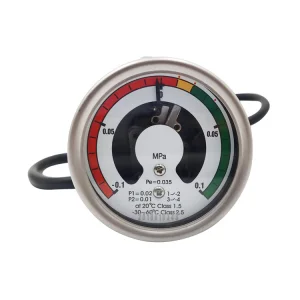
Gas pressure varies drastically with ambient temperature according to Gay-Lussac’s Law. Our SF6 gas density monitors utilize specialized bimetallic or gas-filled reference systems to follow the isochoric curve, measuring true gas density rather than simple static pressure to prevent false low-pressure alarms.
To eliminate leak paths inherent to traditional mechanical joints, our premium pressure instruments incorporate 100% full-penetration laser welding for diaphragm seals and stainless steel casings, guaranteeing zero-leak integrity under high vibration and extreme outdoor conditions.
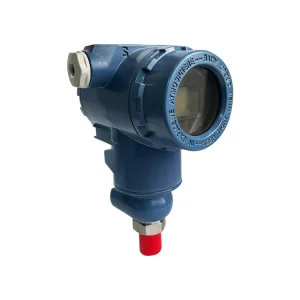
Transitioning from pure mechanical dials to hybrid digital monitoring, our advanced transductive solutions incorporate Modbus-RTU RS485 digital signals alongside local analog displays, providing real-time data streaming to substation SCADA systems for predictive leak analytics.
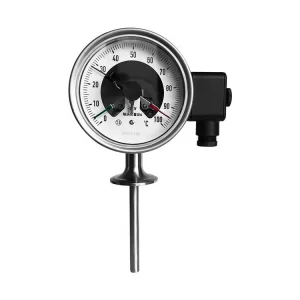
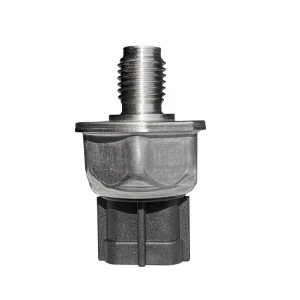
Huzhou Accuracy Instrument Co., Ltd. is professionally engaged in the development, sales, and service of industrial mechanical pressure gauges, bi-metal thermometers, SF6 manometers, and pressure sensors. Our products are widely used in critical applications such as Mechanical Engineering, Chemical Engineering, Food & Beverage, Pharmaceuticals, and High-Technology Electric Power Appliances.
Established over two decades ago, our modern manufacturing facility spans over 3,000 square meters, fully equipped with automated assembly lines, high-vacuum helium mass spectrometer leak detectors, and precise automated laser calibration systems. As a recognized industry leader, we seamlessly integrate continuous design innovation with rigorous precision engineering to deliver world-class measurement solutions for global enterprise clients.
Comprising 20 senior specialists focused on material science innovation, micro-fused silicon pressure sensor integration, and total alignment with international engineering codes including ISO, API, and IEC standards.
120 highly trained technicians utilizing automated robotic assembly, laser hermetic welding, and automated temperature compensation calibration cells to ensure long-term physical durability and zero drift.
A dedicated 15-professional sales and technical unit supplying custom engineering solutions, 24/7 client consultation, and fast-track global shipping across more than 30 industrial nations.
The roadmap toward alternative gas mixtures, zero-emission switchgear, and micro-sensor diagnostic systems.
The global power transmission sector is experiencing a paradigm shift. While SF6 remains installed in millions of legacy assets worldwide, regulatory drivers in Europe, North America, and China are accelerating two concurrent technical vectors: Advanced Asset Lifetime Optimization for existing SF6 gear, and the deployment of SF6-Free Alternative Gases ($C_4-FN$, $C_5-FK$, $N_2/CO_2$ dry air mixtures) for new GIS installations.
Alternative insulating gases exhibit different physical behavior, pressure-temperature relationships, and condensation points compared to pure SF6. Manufacturers in China are actively developing multi-gas compatible density monitors equipped with dual-calibration algorithm chips capable of switching between SF6, $C_4$-Fluoronitrile mixtures, and Clean Air environments without requiring physical instrument replacement.
Traditional periodic manual inspection routines are rapidly being replaced by continuous online monitoring systems. Modern substations require integrated sensors that combine gas density, internal humidity, temperature, and partial discharge ($PD$) detection into a single digital node. By feeding high-frequency telemetry into cloud-based predictive algorithms, power grid operators can identify micro-leaks months before critical lockout thresholds are reached, eliminating un-planned power outages.
Focus on bimetallic compensation, micro-switch contacts, IP67 ruggedized stainless steel housings, and low-pressure laser welded seals for guaranteed zero leakages.
Integration of Modbus-RTU RS485 communication, digital temperature sensors, and self-diagnostic error codes directly connected to substation automation networks.
Full compatibility with G3/C4-FN alternative gas mixtures, integrated optical sensors for real-time decomposition product analysis, and automated compliance logging.
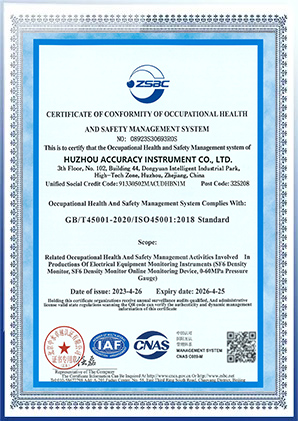
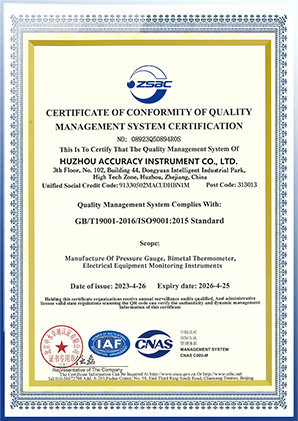
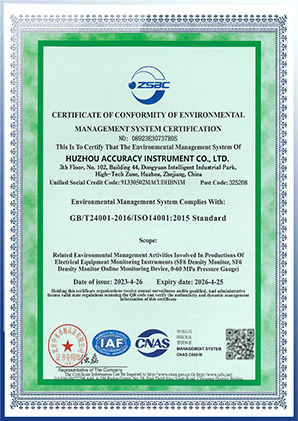
Operating under ISO 9001:2008 and international quality management frameworks to ensure defect-free precision.
Our testing laboratory conducts 100% pressure cycle testing, thermal shock testing (-40°C to +85°C), and environmental helium leak detection, strictly adhering to ISO 9001 and ISO 17025 standards. Continuous product improvement drives our market reputation for zero-leak performance under extreme operational conditions, backed by a comprehensive one-year product replacement warranty.
Expert insights regarding SF6 compliance, gauge selection, OEM customization, and maintenance protocols.
SF6 gas inside high-voltage switchgear is a sealed gas system. According to the ideal gas law, pressure fluctuates significantly with ambient temperature changes even when the amount of gas remains constant. A standard pressure gauge would falsely indicate over-pressure on hot days or low-pressure lockouts during extreme cold. SF6 gas density monitors utilize bimetallic temperature compensation mechanisms or electronic pressure-temperature algorithm matrixing to output true gas density (kg/m³ or equivalent compensated pressure relative to 20°C), eliminating false readings.
According to Chinese national standards GB/T 28537 and international standard IEC 62271-1, the maximum allowable annual leak rate for high-voltage Gas Insulated Switchgear (GIS) and components is ≤ 0.5% per year. Advanced equipment manufacturers, such as Huzhou Accuracy Instrument Co., Ltd., test 100% of SF6 density monitors and sealed sensor assemblies using helium mass spectrometry, ensuring actual leakage rates well below ≤ 1 × 10⁻⁸ mbar·l/s (equivalent to < 0.1% per year).
Yes. OEM customization is one of our primary core strengths. We supply custom thread connections (including G1/2, NPT1/2, M20x1.5, and specialized flange fittings), tailored scale ranges (-0.1 to 0.9 MPa, 0 to 1.0 MPa, etc.), customized alarm/lockout electrical contact configurations (normally open, normally closed, magnetic snap-action contacts), and integrated RS485 digital communication modules matching your exact technical specifications.
Traditional mechanical pressure gauges rely on elastomer O-rings or threaded joints to isolate the process fluid. Over time, exposure to high UV radiation, extreme temperature cycles (-40°C to +60°C), and corrosive atmospheric pollutants causes elastomer breakdown, leading to gas leaks or gauge fluid loss. Laser-welded diaphragm seals fuse the SS316L diaphragm to the stainless steel body with a 100% metallic molecular bond, completely removing soft seal degradations and securing zero-leak long-term stability.
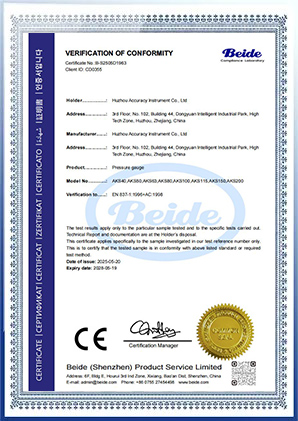
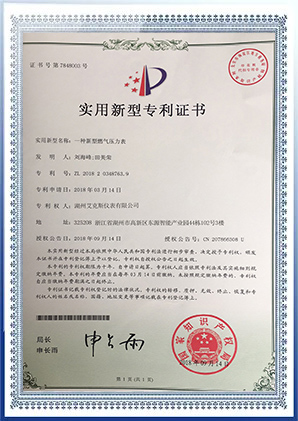
Our manufacturing facility operates under a certified ISO 9001:2008 Quality Management System. Our key product series carry official CE certifications, SGS inspection reports, and undergo rigorous calibration against standards traceable to national metrology institutes. Each shipment includes factory calibration certificates verifying accuracy classes up to ±0.5% or ±1.0% full scale.
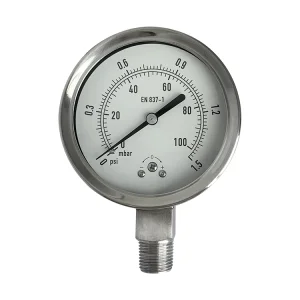
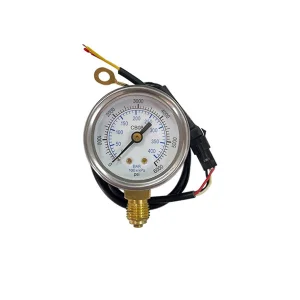
Explore our wide selection of certified gas density monitors, pressure transmitters, and bimetal thermometers.
 Accuracy Instrument