Factory-direct OEM solutions calibrated to international standards for zero-defect field performance.
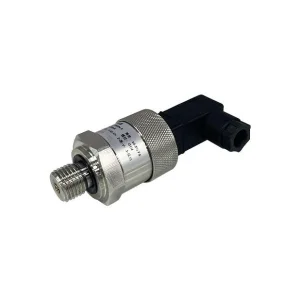
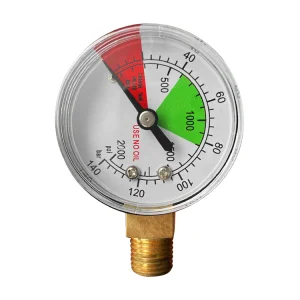
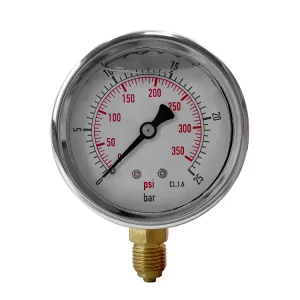
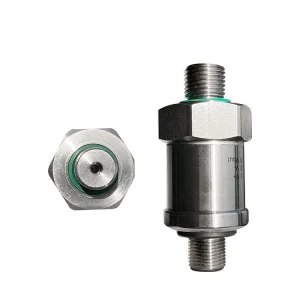
A comprehensive engineering assessment for global procurement directors, quality controllers, and instrumentation engineers.
In modern industrial operations, thermal measurement accuracy is paramount. When enterprise buyers search for solutions regarding "OEM Electronic Thermometer Not Accurate Factories & Factory" issues, they are typically confronting underlying engineering flaws in mass-manufactured sensor assemblies. Temperature measurement errors—whether manifested as thermal drift, signal non-linearity, or mechanical hysteresis—can compromise critical processes in chemical synthesis, food processing, HVAC-R monitoring, and energy infrastructure.
Measurement inaccuracies from substandard OEM thermometer factories generally originate from four failure vectors: high component thermal coefficient degradation, inadequate electromagnetic shielding (EMI/RFI), micro-fractures in stem seals leading to ambient humidity ingress, and improper factory calibration protocols that fail to simulate operational thermal extremes.
Unpacking the physical and electrical root causes behind measurement variance in factory environments.
Thermistor elements (NTC/PTC) or RTDs (Pt100/Pt1000) sourced from low-cost suppliers often suffer from sub-standard semiconductor doping. Over repeated thermal cycling, the resistance-temperature curve shifts permanently, yielding errors from ±1.5°C up to ±5.0°C within months of installation.
In unshielded OEM electronic thermometer housings, industrial high-voltage machinery creates electromagnetic field interference. This introduces high-frequency noise into the Analog-to-Digital Converter (ADC), causing jumping or inconsistent digital displays on factory monitoring panels.
Thermometer stems subject to washdowns or ambient condensation often experience seal degradation. Moisture entering the probe chamber creates parasitic parallel resistance paths across the sensing element, falsely indicating artificially lower or erratic temperature values.
Budget OEM factories perform single-point ambient calibration rather than multi-point thermal bath calibration. As process temperatures move away from 25°C ambient, non-linear sensor response generates increasing margin-of-error divergence.
Poor mechanical tolerances between internal thermistors and the outer stainless steel protective sheath create insulating air pockets. This dramatically slows thermal conduction, producing extreme response lags in dynamic fluid processes.
Inadequate microcontroller processing speed or low-bit resolution ADCs (e.g., 8-bit vs 16-bit) truncate temperature curves, creating stepping artifacts and rounding inaccuracies across industrial display interfaces.
Evaluating technical specifications to eliminate thermometer inaccuracies in enterprise procurement.
| Performance Metrics | Generic OEM Electronics Thermometer | Huzhou Precision Industrial Assembly | Operational Impact |
|---|---|---|---|
| Accuracy Standard | ±1.5°C to ±3.0°C | ±0.5% Full Scale (Class A RTD / Thin Film) | Prevents process deviation and batch contamination. |
| Thermal Drift Rate | > 0.5°C per annum | < 0.05°C per annum (Laser Sealed) | Eliminates frequent re-calibration downtime. |
| Environmental Ingress | IP54 to IP62 (Crimped) | IP67 / IP68 (Laser Welded 316 Stainless Steel) | Resists high-pressure steam washdowns and moisture. |
| Signal Conditioning | Unshielded 8-bit ADC | Linearized 16-bit ASIC with EMI Filter | Ensures stable, noise-free output signals. |
| Calibration Method | Single-point ambient bath | 24-Point Dynamic Environmental Simulation | Guarantees linearity across wide temperature spans. |
20 YEARS OF EXPERTISE AND RESEARCH IN PRECISION INSTRUMENTATION
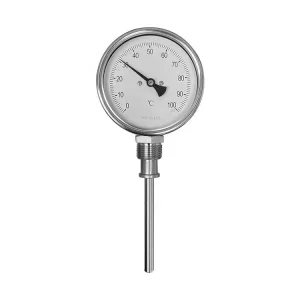
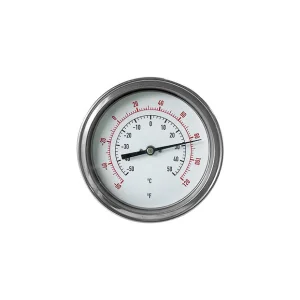
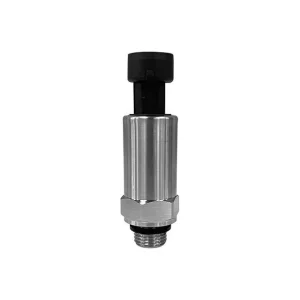
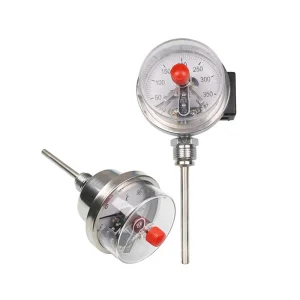
Huzhou Accuracy Instrument Co., Ltd. is professionally engaged in the development, sales, and service of industrial mechanical pressure gauges, bi-metal thermometers, SF6 manometers, and advanced pressure sensors. Our high-precision products are widely utilized across complex applications including Mechanical Engineering, Chemical Engineering, Food Processing, Pharmaceuticals, and high-technology electric appliances.
Established over two decades ago, our specialized pressure and temperature gauge manufacturing facility spans 3,000 square meters, fully equipped with automated production lines and rigorous quality control infrastructure. As an industry pioneer, we seamlessly integrate innovation with precision engineering to deliver zero-drift thermal and pressure measurement solutions for enterprise clients across 30+ countries.
Annual manufacturing output exceeds 2 million units, covering industrial-grade instruments including stainless steel gauges, black steel gauges, shock-proof liquid-filled gauges, SF6 density monitors, bimetal thermometers, and electronic pressure sensors.
Our instruments serve oil/gas, HVAC-R, power generation, and pharmaceutical sectors worldwide, backed by ISO, SGS, and CE certifications for corrosion resistance and ±0.5% accuracy performance.
Our specialized testing laboratory performs 100% pressure cycle testing, thermal shock testing, and environmental seal simulations adhering strictly to ISO 9001 and ISO 17025 standards.
Continuous innovation drives our global reputation for "zero-leak" and "zero-drift" performance in extreme operational conditions, fully supported by a standard 1-year comprehensive warranty.
Following the core concept of "Reasonable Price, Accurate Delivery, Superior Quality," our manufacturing management models maintain production quality above international benchmarks certified under ISO 9001:2008.
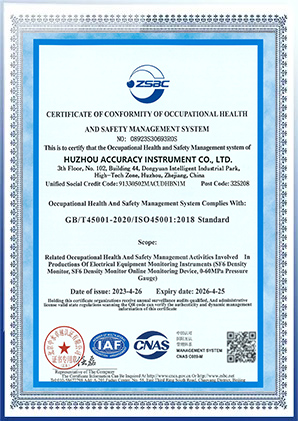
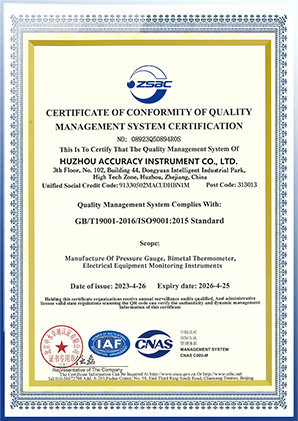
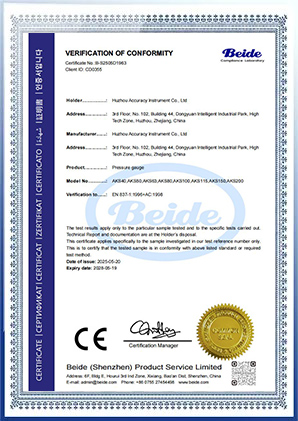
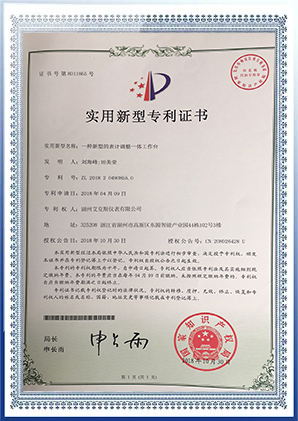
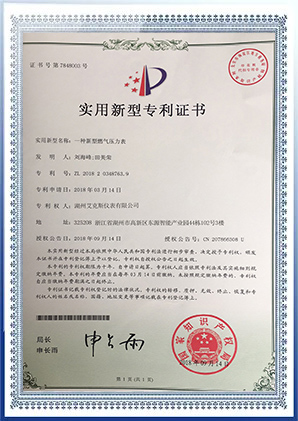
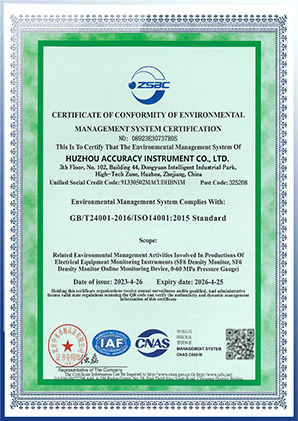
A strategic checklist for enterprise procurement managers sourcing high-volume OEM temperature sensors.
Specify 316 Stainless Steel argon-arc laser-welded stem construction. Eliminating epoxy adhesives and mechanical crimping prevents moisture ingress, which is the leading cause of internal electrical drift in electronic thermometers.
Mandate amplified 4-20mA, 0-10V, or Modbus RS485 digital output models equipped with integrated EMI suppression capacitors when deploying sensors near heavy electrical motors or high-frequency switches.
Require OEM suppliers to provide NIST or ISO 17025 traceable calibration certificates verifying accuracy across at least 5 equidistant thermal points across the operating range to prevent span compression.
Expert answers regarding electronic and mechanical thermometer accuracy, OEM custom manufacturing, and quality control.
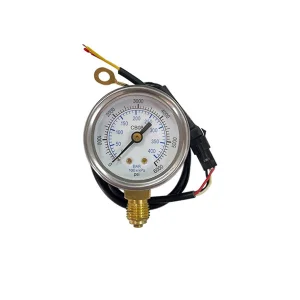
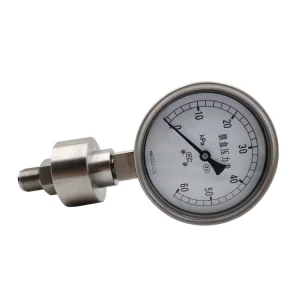
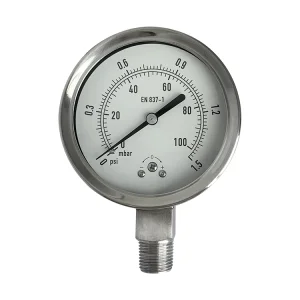
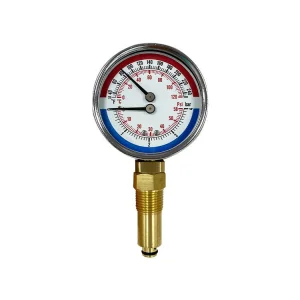
Explore our complete range of certified mechanical and electrical contact instruments.
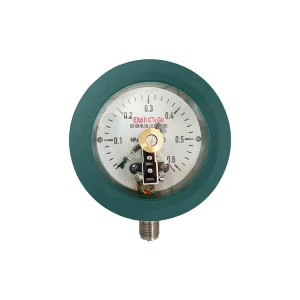
 Accuracy Instrument