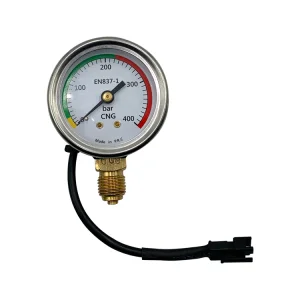
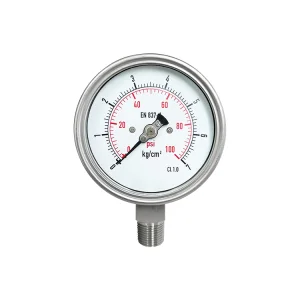
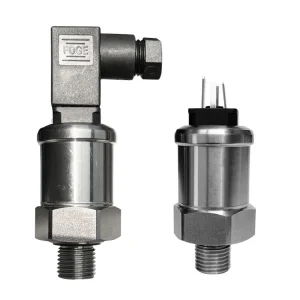
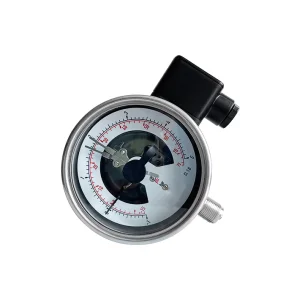
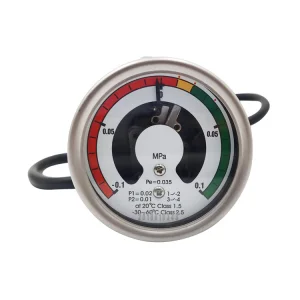
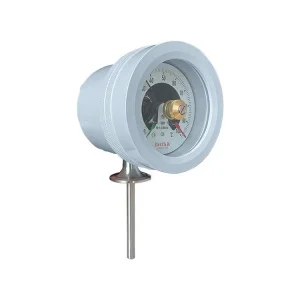
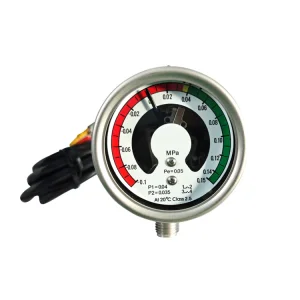
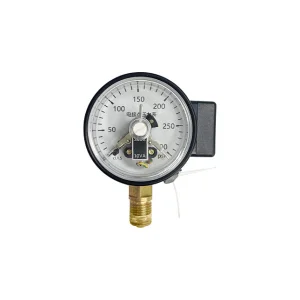
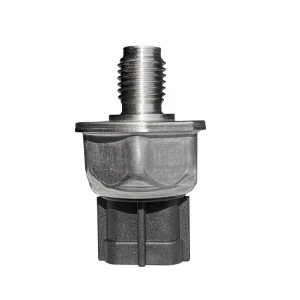
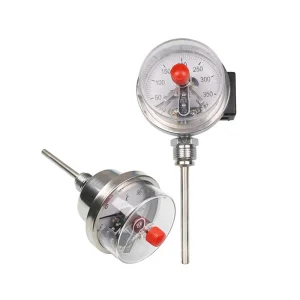
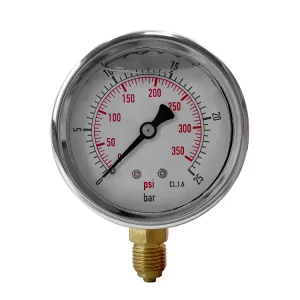
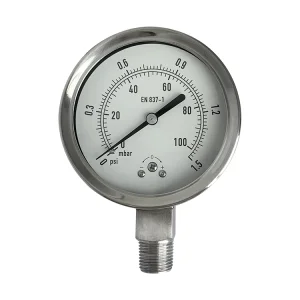
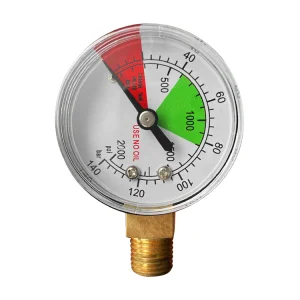
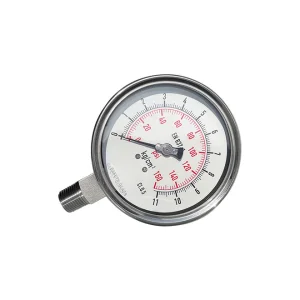
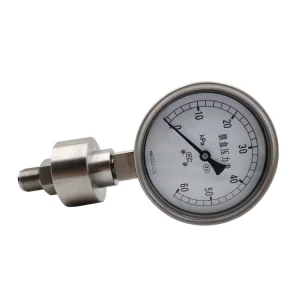
In high-pressure steam distribution systems, power generation boilers, and chemical refining facilities, steam temperature frequently exceeds 300°C (572°F) to 600°C (1112°F). Standard mechanical pressure gauges equipped with conventional Bourdon tubes and organic filling fluids experience catastrophic failure under these thermal loads. Thermal expansion of the elastic element leads to zero-point drift, degradation of internal solder joints, elastic hysteresis, and premature diaphragm rupture.
As a leading OEM High Temperature Steam Pressure Gauge Manufacturer & Supplier, Huzhou Accuracy Instrument Co., Ltd. resolves these operational bottlenecks through advanced thermodynamics engineering, specialized metallurgical selection (316L SS, Hastelloy C-276, Monel 400), and state-of-the-art condensate siphon thermal dissipation technology. This engineering guide details the mechanical principles, thermal isolation systems, and supply chain standards required to maintain ±0.5% to ±1.0% Full Scale (FS) accuracy across continuous high-temperature steam applications.
Superheated steam cannot directly enter the internal elastic sensing element without causing severe thermal deformation. High-temperature steam gauges rely on condensate siphon loops (pig-tail, U-tube, or cooling towers) to form a dense liquid condensate barrier, dropping steam temperatures from >400°C down to ambient levels (<60°C) before medium contacts the Bourdon spring.
For corrosive or particulate-laden steam lines, laser-welded diaphragm seals isolated by high-temperature synthetic silicone oil (e.g., Syltherm 800 operating up to 400°C) prevent media crystallisation and mechanical clog while transmitting hydromechanical pressure seamlessly.
Pressure pulsations caused by rapid steam valve actuation or water hammer are mitigated via integral restrictors, silicone fluid damping, and heavy-duty movement gearing crafted from anti-wear copper alloys or stainless steel.
Huzhou Accuracy Instrument Co., Ltd. is professionally engaged in the development, sales, and service of industrial mechanical pressure gauges, bi-metal thermometers, SF6 manometers, and advanced pressure sensors. Our products are widely deployed across challenging applications such as Mechanical Engineering, Chemical Engineering, Food & Beverage, Pharmaceuticals, District Energy, and high-technology electrical infrastructure.
Established over two decades ago, our specialized pressure gauge manufacturing facility spans 3,000 square meters, equipped with automated production lines, laser welding cells, and rigorous quality control calibration systems. As an OEM industry leader, we integrate micro-machining innovation with robust thermal engineering to deliver dependable pressure monitoring solutions across 30+ countries worldwide.
Our dedicated R&D Department consists of 20 specialists focused on extreme temperature material innovation, smart sensor integration, and strict adherence to international standard frameworks including ISO, ASME B40.100, EN 837-1, and API specifications.
A skilled production workforce of 120 technicians operates automated multi-station assembly lines, high-frequency brazing units, and micro-laser calibration apparatus to guarantee mechanical structural integrity under extreme operating pressures.
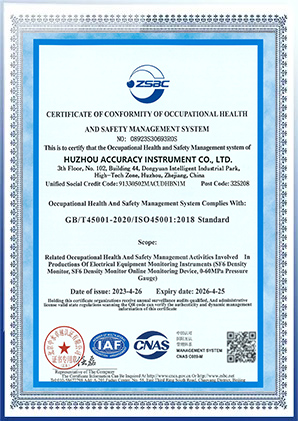
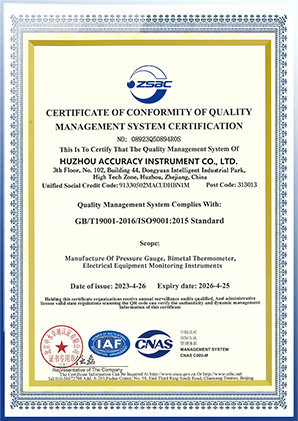
Supported by a 15-professional sales and service team offering 24/7 technical assistance. All instruments undergo 100% pressure cycle testing, thermal soak testing, and zero-leak inspection adhering to ISO 9001 and ISO 17025 benchmarks.
The primary defense mechanism against steam-induced thermal degradation is the impulse line siphon. When steam enters the loop, it condenses into water. The incoming pressure pushes against this cool condensate column rather than allowing dry steam into the gauge interior.
Thermal expansion of metallic elements changes the Young's Modulus ($E$) of the Bourdon tube. The thermal drift error can be calculated via the standard international relation:
ΔP = ± 0.04% × (T₂ - T₁) × Full Scale Span
Where $T_1$ is the standard calibration reference (+20°C) and $T_2$ is the actual operating ambient. Our engineering team utilizes bimetallic compensation links to maintain accuracy across $-40^\circ\text{C}$ to $+200^\circ\text{C}$ ambient fluctuations.
| Material Grade | Max Process Temp | Yield Strength (MPa) | Corrosion Resistance Level | Recommended Steam Medium |
|---|---|---|---|---|
| AISI 316L Stainless Steel | Up to 260°C (500°F) | 290 | High (Standard Steam) | Clean Saturated Steam, HVAC, Food SIP |
| Monel 400 Alloy | Up to 350°C (662°F) | 340 | Very High (Acidic Steam) | Geothermal Steam, Sour Gas Contaminated Steam |
| Hastelloy C-276 | Up to 450°C (842°F) | 355 | Extreme (Chloride/Sulfur) | Petrochemical Steam Cracking, Chemical Process Lines |
| Inconel 625 with Radiator | Up to 600°C (1112°F) | 460 | Ultra-High Thermal Load | Superheated Power Plant Steam Turbines |
Situated in Huzhou, Zhejiang Province, our facility benefits from immediate proximity to China’s primary raw material suppliers for high-grade seamless 316L stainless steel tubing, precision copper forgings, and specialized electronic components. This reduces raw material procurement lead times by over 40% compared to Western competitors.
We utilize automated TIG and fiber laser welding stations for joining Bourdon tubes to process connections. Laser welding eliminates heat-affected zones (HAZ), reducing structural stress concentrations and ensuring zero leak rates even under rapid pressure cyclic pulses up to 1,000,000 cycles.
From custom dial logos, dual-scale pressure ranges (Bar/PSI/kPa), capillary tube lengths, mounting flanges, to specialized electrical contact switches for automatic steam boiler shutoff systems, our engineering team delivers turnkey OEM prototypes within 7 to 10 business days.
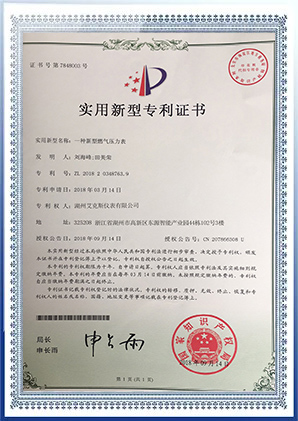
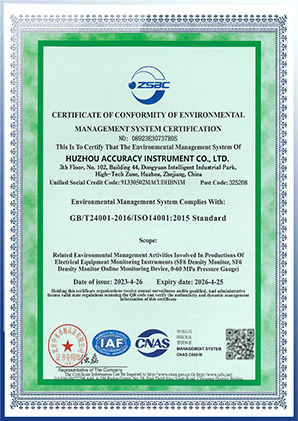
Deploying pressure equipment globally requires strict adherence to regional safety and environmental mandates. Huzhou Accuracy Instrument Co., Ltd. ensures full compliance paperwork and physical safety features:
Combining legacy mechanical dials with local micro-thin-film piezoresistive sensors to deliver visual on-site readouts alongside 4-20mA HART or RS485 Modbus digital signal outputs for centralized DCS monitoring.
Incorporating embedded temperature sensors inside the diaphragm seal capillary fluid line to continuously monitor seal fluid integrity and alert operators to potential thermal breakdown before pressure drift occurs.
Ultra-low power LoRaWAN and WirelessHART high-temperature gauge nodes designed for battery-operated remote district steam pipe monitoring in smart cities.
We have long followed the concept of "reasonable price, accurate delivery, good quality" and several business management models to keep our production quality above the required benchmark. Our laboratory conducts 100% pressure cycle tests and environmental simulations, adhering to ISO 9001 and ISO 17025 standards.
High-temperature steam exceeding 100°C (212°F) directly entering the Bourdon tube will heat the internal brass or stainless steel mechanism, altering its elastic modulus. This leads to substantial measurement drift, loss of zero calibration, solder point failure, or dial face discoloration. A siphon (coil, pig-tail, or U-tube) acts as a cooling trap where steam condenses into liquid water. The gauge measures the hydrostatic pressure of this cool condensate column, insulating the internal spring from destructive temperatures.
Before powering up a steam line or opening process valves, the siphon tube MUST be manually primed with clean distilled water or condensed liquid. If an unprimed siphon is exposed to live high-pressure steam, steam will shoot directly into the gauge movement before condensation can naturally occur, causing thermal shock damage. Fill the siphon via the top thread connection prior to mounting the gauge body.
Standard glycerin case filling decomposes and turns brown at temperatures above 60°C (140°F). For high-temperature steam applications where pulsation or machinery vibration is present, we recommend high-temperature Silicone Oil (e.g., DC-200 series or Syltherm) capable of continuous operation up to 200°C (392°F) ambient without discoloration, viscosity collapse, or internal pressure buildup.
A standard Bourdon tube gauge with a siphon is suitable for clean, non-crystallizing steam lines. However, if the steam contains boiler feed water treatment chemicals, particulates, or corrosive additives, a diaphragm seal is required. The flexible metal diaphragm (316L, Hastelloy, or Tantalum) isolates the process fluid completely, transmitting pressure hydraulically through a high-temp fill fluid to the gauge instrument.
Yes. As an established OEM/ODM manufacturer, we offer full customization including dual scales (Bar/PSI, MPa/PSI, kg/cm²), customer brand logos, custom dial color coding (green safe zones, red warning thresholds), specialized process threads (NPT, BSP, G, Metric), and custom electrical contact configurations for automated pump and valve control.
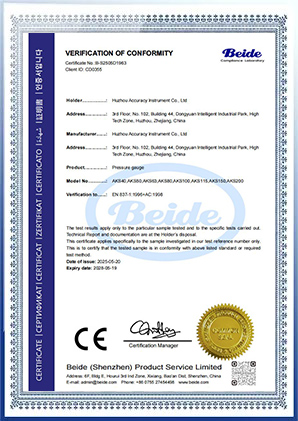
Every shipment from our factory is backed by ISO 9001 factory inspection reports, CE conformity certificates, material mill test certificates (EN 10204 3.1), and individualized calibration certificates guaranteeing compliance with ASME B40.100 or EN 837-1 accuracy classes (±1.0% or ±1.6% standard, ±0.5% high-precision options).
 Accuracy Instrument