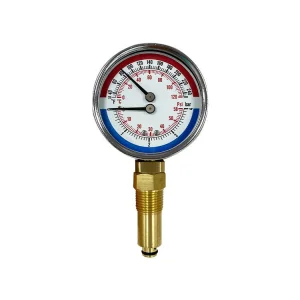
Explore our flagship OEM solutions certified for rigorous industrial temperature and pressure applications globally.
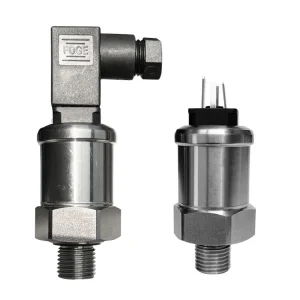
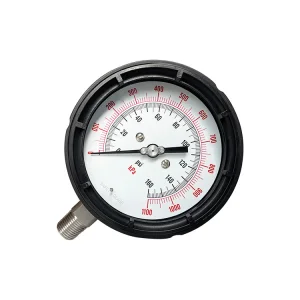
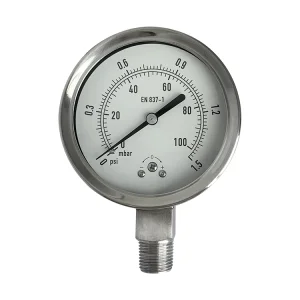
A technical synthesis on preventing measurement drift, elastomeric degradation, and mechanical fatigue in high-temperature media.
In modern industrial process engineering, accurate pressure measurement under elevated thermal conditions presents a dual challenge: maintaining sensor calibration accuracy while preventing catastrophic seal failure. High process temperatures—whether originating from superheated steam, thermal oil loops, or hot hydrocarbon refining—directly impact pressure sensing instruments. Exposure of standard mechanical gauges or digital transducers to temperatures exceeding 60°C (140°F) induces rapid structural deformation of internal sensing components, such as the Bourdon tube or piezoresistive silicon element.
For every 10°C rise above calibrated ambient temperature (20°C), uncompensated stainless steel Bourdon tubes experience a modulus of elasticity reduction of approximately 0.04%. Unmitigated thermal conduction results in zero-point drift, span calibration errors up to ±2.5%, and premature metal fatigue failure due to thermal stress hysteresis.
To deliver reliable performance, an OEM Pressure Gauge Temperature Protection Supplier must design dynamic multi-stage thermal barriers into the instrument architecture. Thermal decoupling separates the high-temperature process fluid from the sensitive pressure measuring mechanism. Key engineering approaches include:
Constructed with radial cooling fins machined from SS316L or exotic alloys, cooling elements dissipate thermal energy into ambient air before media contacts the elastic element. Temperature drops of up to 150°C can be achieved across a compact 100mm tower.
Armored stainless steel capillary tubing (1.5mm to 3mm inner diameter) creates a flexible remote barrier. By routing process pressure through liquid-filled capillary lines up to 10 meters long, media temperatures exceeding 400°C are normalized to ambient levels at the gauge head.
Welded diaphragm isolation seals utilize high-temperature fill fluids (such as High-Temp Silicone oil rated up to 315°C or Halocarbon fluids for oxygen service) to transfer hydraulic pressure while completely isolating the instrument from corrosive or scorching media.
In liquid-filled diaphragm seal assemblies, fluid thermal expansion is a critical design metric. Improper selection causes volumetric expansion against the diaphragm, manifesting as false high-pressure readings. The table below highlights engineering properties for specialized fill fluids utilized in our Huzhou manufacturing plant:
| Fill Fluid Type | Operating Temp Range | Viscosity at 25°C | Thermal Expansion Coeff. | Primary Application |
|---|---|---|---|---|
| Standard Silicone (DC 200) | -40°C to +200°C | 50 cSt | 0.00096 /°C | General Industrial & HVAC Systems |
| High-Temp Synthetic (DC 704) | -10°C to +315°C | 39 cSt | 0.00085 /°C | Superheated Steam & Thermal Oil Loops |
| Halocarbon Oil | -40°C to +175°C | 27 cSt | 0.00082 /°C | Oxygen Service & Chemical Oxidizers |
| Food-Grade Glycerin/Water | -20°C to +100°C | 1100 cSt | 0.00061 /°C | Pharma & Food Processing (FDA Compliant) |
How international procurement managers and EPC contractors are evolving safety and thermal protection standards in 2025 and beyond.
Global procurement demands are shifting rapidly toward hybrid mechanical-digital instruments. Plants require local analog dial reading for field technicians alongside 4-20mA HART or RS485 Modbus output with integrated temperature compensation algorithms for DCS/SCADA control rooms.
Industrial compliance frameworks (such as SIL-2/SIL-3 ratings, ASME B40.100, and ATEX/IECEx explosion protection) are mandatory. OEMs must supply traceably calibrated devices capable of withstanding rapid thermal shock without diaphragm rupture or toxic fill leakage.
International buyers are reducing Total Cost of Ownership (TCO) by sourcing modular temperature-protected pressure assemblies. Standardizing process connections while customizing thermal dissipation neck lengths allows flexible plant-wide deployment.
As an international buyer, securing supply chain resilience without compromising accuracy is paramount. Huzhou Accuracy Instrument Co., Ltd. operates at the intersection of automated Industry 4.0 technology and deep metallurgical craft.
Customized thermal protection gauge configurations engineered for critical sector operation.
Continuous steam monitoring at 300°C+ requires specialized pigtail or U-type siphons combined with diaphragm seals. Our remote reading capillary gauges isolate the mechanical dial from pipe radiation, preserving dial glass clarity and internal gear alignment.
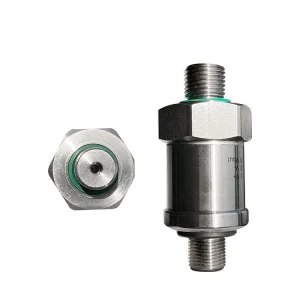
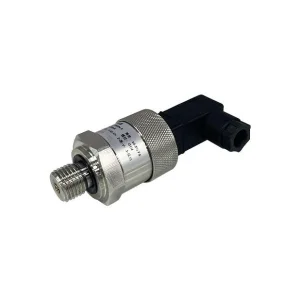
High-pressure fluid power systems subject instruments to intense thermal friction spikes and mechanical vibration. Thin-film pressure transducers (IP65/IP67 rated) with high thermal dissipation bodies safeguard delicate electronics against thermal breakdown.
Thermal cracking units handle toxic, highly aggressive chemicals at elevated temperatures. All-SS316L explosion-proof electric contact diaphragm gauges offer real-time pressure threshold switching alongside thermal isolation.
Delivering precision measurement engineering and zero-defect quality systems globally.
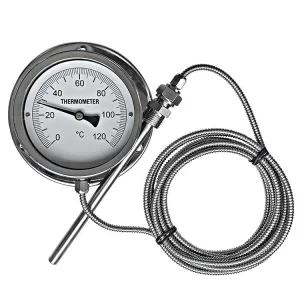
Huzhou Accuracy Instrument CO LTD is professionally engaged in the development, sales and service of industrial mechanical pressure gauges, bi-metal thermometers, SF6 manometer, pressure sensor. Products are widely used in various applications such as Mechanical Engineering, Chemical Engineering, Food Industry, Pharmaceutical, and high technology electric appliances.
Established over two decades ago, our pressure gauge manufacturing facility spans 3,000 square meters, equipped with advanced production lines and rigorous quality control systems. As an industry leader, we integrate innovation with precision engineering to deliver reliable measurement solutions for global clients.
R&D Department (20 specialists): Focuses on material innovation, smart sensor integration, and compliance with international standards (e.g., ISO, API).
Production Workforce (120 technicians): Utilizes automated assembly and laser calibration technologies to ensure product durability and accuracy.
Sales & Service Unit (15 professionals): Provides 24/7 technical support and customized solutions across 30+ countries.
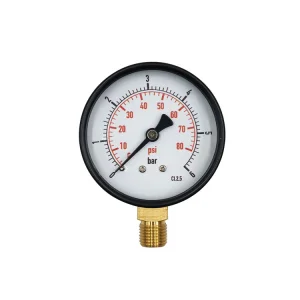
Annual output exceeds 2 million units, covering industrial-grade gauges (e.g., stainless steel gauge, black steel gauge, shock-proof gauge, sf6 gauge, thermometer, pressure sensor) for oil/gas, HVAC, and pharmaceutical sectors.
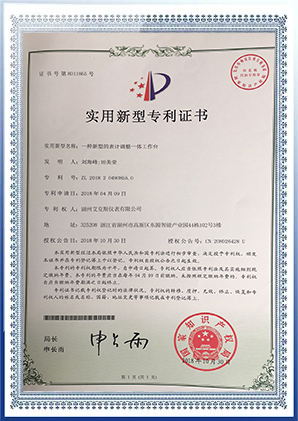
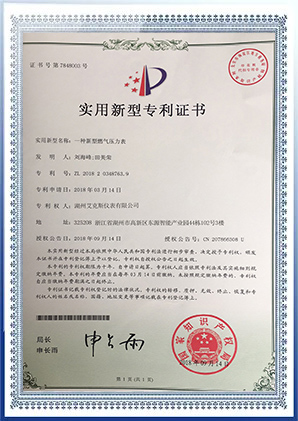
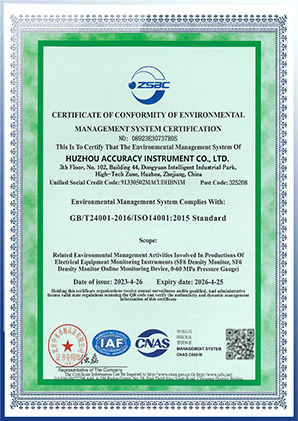
Products exported worldwide, with certifications including ISO, SGS, and CE, earning recognition for corrosion resistance and ±0.5% precision.
Our laboratory conducts 100% pressure cycle tests and environmental simulations, adhering to ISO 9001 and ISO 17025 standards. Continuous improvement drives our reputation for "zero-leak" performance in extreme conditions, supported by a one-year warranty.
We have long followed the concept of "reasonable price, accurate delivery, good quality" and several business management models to keep our production quality above the required benchmark under ISO9001:2008 certified.
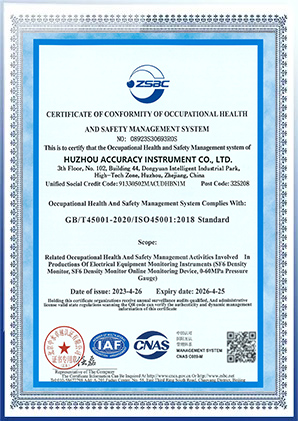
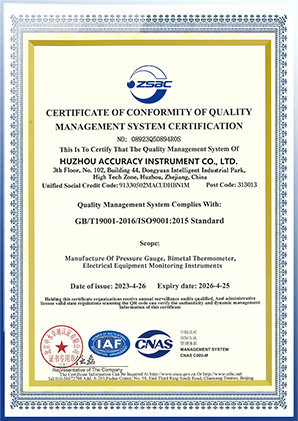
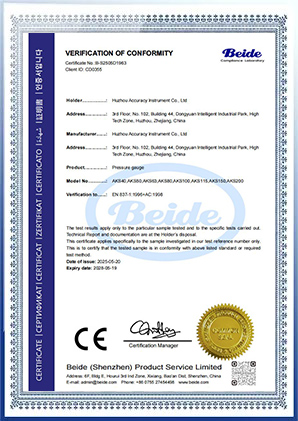
Direct expert responses to complex industrial procurement and technical installation queries.
Standard unfilled stainless steel mechanical gauges are designed for continuous process temperatures up to 60°C (140°F). Exceeding this limit causes thermal expansion of internal brass/steel movements, leading to zero-point drift, solder joint degradation, and eventual calibration breakdown. For process temperatures above 60°C up to 400°C+, dedicated thermal cooling towers, siphons, or remote capillary diaphragm seals must be specified.
Cooling elements feature a series of high-surface-area radial metal fins machined along the gauge stem. As media pressure travels up the stem, convection and ambient radiative heat transfer cool the internal fluid static column. Under ambient airflow conditions (20°C), a standard 100mm cooling fin assembly drops a 250°C media temperature down to under 60°C before reaching the sensitive gauge mechanism.
We provide full ISO 9001 certified quality guarantees including 100% individual pressure chamber testing, factory calibration certificates according to EN 837-1 or ASME B40.100, zero-leak laser weld integrity verification, and a comprehensive 12-month replacement warranty on all OEM gauge shipments.
Remote capillary lines introduce dynamic hydraulic drag depending on length, inner diameter, and fill fluid viscosity. A standard 2-meter armored capillary filled with 50 cSt silicone oil introduces negligible response lag (< 50 milliseconds). For high-viscosity media or extreme capillary lengths (up to 10m), our engineering team optimizes capillary bore size and fluid selection to preserve rapid pressure response.
Explore our comprehensive industrial catalog manufactured to international standards.
 Accuracy Instrument