 Accuracy Instrument
Whitepaper: Industrial Automation & Pressure Control Infrastructure in Peru
An Executive Guide for Procurement Managers, Plant Engineers, and OEM Systems Integrators
1. Executive Summary & Market Context: Peru's Industrial Landscape
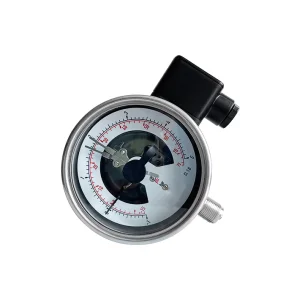
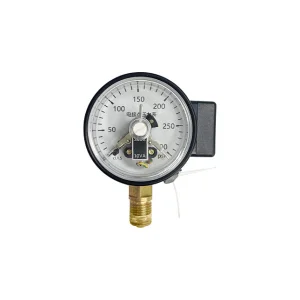
Peru stands as one of Latin America's primary industrial powerhouses, driven heavily by copper and gold extraction in regions like Arequipa, Ancash, and Moquegua, as well as expansive energy infrastructure projects such as the Talara Refinery modernization and Camisea Gas operations. Industrial facilities in Peru demand extremely resilient, accurate, and fail-safe process monitoring instrumentation. Among these critical components, electric contact pressure gauges serve as vital electro-mechanical control units that automate circuit breaking, trigger warning alarms, and regulate pump sequences without relying on vulnerable external PLC software loops.
Operating in Peru presents distinct environmental and mechanical challenges: extreme altitude atmospheric variations (exceeding 4,000 meters above sea level in Andean mining operations), high ambient vibration in ore crushing plants, highly corrosive saline moisture along the coastal Pacific ports (Callao, Paita), and aggressive process media. Purchasing reliable electric contact pressure gauges engineered to withstand these unique environmental factors is essential for minimizing costly operational downtime and ensuring human safety.
2. Macro Sector Demands in Peru
Mining & Mineral Processing
Concentrators, froth flotation cells, and slurry transport pipelines in mines such as Cerro Verde and Antamina require IP65/IP67 stainless steel magnetic-contact gauges that resist abrasive media and high mechanical vibration.
Hydropower & Energy Generation
Andean hydroelectric powerhouses utilize dual electric contact gauges (Upper/Lower Limit switches) for automated governor oil pressure regulation, cooling water loop alarms, and hydraulic turbine control systems.
Water & Municipal Infrastructure
Entities like SEDAPAL rely on robust electric contact gauges to regulate municipal booster pump stations, preventing water hammer damage and keeping pressure stable across urban and rural supply grids.
3. Technical Deep-Dive: Working Mechanics of Electric Contact Gauges
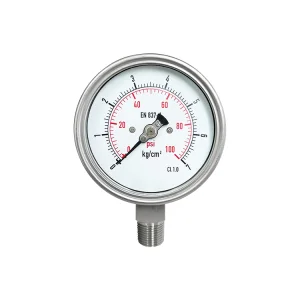
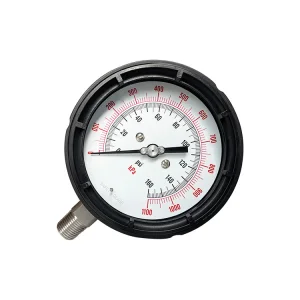
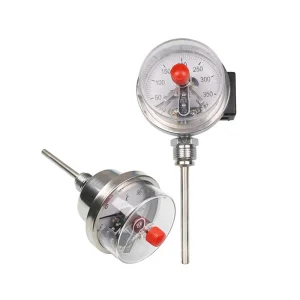
An electric contact pressure gauge integrates a conventional mechanical Bourdon tube or diaphragm pressure gauge with adjustable electrical limit switch arms mounted inside the dial face window. When the process fluid pressure moves the pointer to a pre-selected setpoint (high or low pressure threshold), the pointer physically engages or disengages electrical contacts to trigger external relays, solenoid valves, or emergency motor shutdowns.
Primary Contact Configurations:
- Magnetic Snap-Action Contacts (Model Contact Type): Features permanent magnets behind the contact points. When the signal arm approaches the setpoint, magnetic attraction pulls the contacts together abruptly. This rapid snap prevents electric arc discharge, minimizes oxidation, and enables high switching power (up to 30VA/50VA).
- Inductive Contacts (Namur / Intrinsically Safe): Designed for hazardous oil & gas environments (e.g., Camisea gas distribution facilities). Operating contactlessly via proximity sensors, they eliminate sparks entirely and are certified for ATEX / IECEx Zone 0 and Zone 1 application.
- Independently Adjustable Double Contacts (1NO + 1NC, 2NO, 2NC): Offers dynamic range control, allowing automatic pump startup at lower limit $P_{min}$ and automatic shut-off at upper limit $P_{max}$.
4. High-Altitude Calibration: Solving the Andean Atmospheric Shift
A frequent failure mode for imported pressure gauges in Peru is calibration shift at elevated altitudes. Standard gauges calibrated at sea level (101.3 kPa / 1 atm) experience a false positive reading shift when installed at high-altitude mining sites (e.g., Cerro de Pasco at 4,330m, where ambient pressure drops to ~60 kPa). Our specialized manufacturing process incorporates zero-point recalibration screws and hermetically sealed atmospheric compensation valves, ensuring ±1.0% or ±0.5% full-scale accuracy anywhere in the Andes.